
Verwandte Artikel zu Devoted to Nature: The Religious Roots of American...
Inhaltsangabe
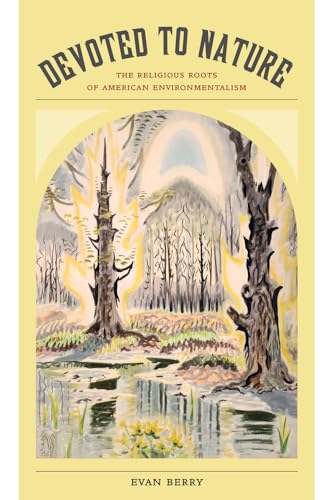
Devoted to Nature explores the religious underpinnings of American environmentalism, tracing the theological character of American environmental thought from its Romantic foundations to contemporary nature spirituality. During the Gilded Age and the Progressive Era, religious sources were central to the formation of the American environmental imagination, shaping ideas about the natural world, establishing practices of engagement with environments and landscapes, and generating new modes of social and political interaction. Building on the work of seminal environmental historians who acknowledge the environmental movement's religious roots, Evan Berry offers a potent theoretical corrective to the narrative that explained the presence of religious elements in the movement well into the twentieth century. In particular, Berry argues that an explicitly Christian understanding of salvation underlies the movement's orientation toward the natural world. Theologically derived concepts of salvation, redemption, and spiritual progress have not only provided the basic context for Americans' passion for nature but have also established the horizons of possibility within the national environmental imagination.
Die Inhaltsangabe kann sich auf eine andere Ausgabe dieses Titels beziehen.
Über die Autorin bzw. den Autor
Evan Berry is Associate Professor of Philosophy and Religion at American University and Codirector of its Ethics, Peace, and Global Affairs master's program.
Von der hinteren Coverseite
“This pathbreaking work changes the way we think about American environmentalism and its religious history. In particular, it challenges us to think about why we are ‘devoted to nature’ and how we are entangled with its processes. Berry has made a valuable contribution—clarifying our history so as to see a path forward.” —Mary Evelyn Tucker, Director of the Forum on Religion and Ecology at Yale University and coauthor of Journey of the Universe
“In this fascinating study that fuses environmental history and religious studies, Evan Berry has profitably illuminated the religious roots of environmentalism in the early twentieth century. His provocative interpretations and claims deserve a robust pondering and will engender debate, no doubt.”—Bron Taylor, Professor of Religion and Nature at the University of Florida and author of Dark Green Religion
“In this fascinating study that fuses environmental history and religious studies, Evan Berry has profitably illuminated the religious roots of environmentalism in the early twentieth century. His provocative interpretations and claims deserve a robust pondering and will engender debate, no doubt.”—Bron Taylor, Professor of Religion and Nature at the University of Florida and author of Dark Green Religion
Aus dem Klappentext
This pathbreaking work changes the way we think about American environmentalism and its religious history. In particular, it challenges us to think about why we are devoted to nature and how we are entangled with its processes. Berry has made a valuable contribution clarifying our history so as to see a path forward. Mary Evelyn Tucker, Director of the Forum on Religion and Ecology at Yale University and coauthor of Journey of the Universe
In this fascinating study that fuses environmental history and religious studies, Evan Berry has profitably illuminated the religious roots of environmentalism in the early twentieth century. His provocative interpretations and claims deserve a robust pondering and will engender debate, no doubt. Bron Taylor, Professor of Religion and Nature at the University of Florida and author of Dark Green Religion
In this fascinating study that fuses environmental history and religious studies, Evan Berry has profitably illuminated the religious roots of environmentalism in the early twentieth century. His provocative interpretations and claims deserve a robust pondering and will engender debate, no doubt. Bron Taylor, Professor of Religion and Nature at the University of Florida and author of Dark Green Religion
Auszug. © Genehmigter Nachdruck. Alle Rechte vorbehalten.
Devoted to Nature
The Religious Roots of American Environmentalism
By Evan BerryUNIVERSITY OF CALIFORNIA PRESS
Copyright © 2015 The Regents of the University of California
All rights reserved.
ISBN: 978-0-520-28573-6All rights reserved.
Contents
Acknowledgments, vii,
Introduction: Whither Religion?, 1,
1. Recreation and Soteriology, 25,
2. Congregating around Nature, 60,
3. Sacred Space and the American Environmental Imagination, 102,
4. Recreation and Spiritual Experience, 148,
Conclusion: The Mechanics of Religious Change, 177,
Notes, 191,
For Further Reading and Research, 241,
Index, 255,
CHAPTER 1
Recreation and Soteriology
Nature-Worship is assumed to be an essentially pagan characteristic, and Christianity ... aiming at things that appear not, seems to centre its efforts on drawing man away from the contact and tangle of matter, that he may rise to a life supernal.
— Rev. Joseph McSorley
To seek the cool breeze of a remote alpine meadow or to spend an afternoon scrambling up a mountainside in hopes of a commanding view are undoubtedly modern desires. Such leisurely pursuits would not have appealed to Europeans of the Middle Ages but might already have been intriguing to early American settlers. Between the thirteenth and eighteenth centuries, ideas about the natural world in Christian societies changed dramatically: this historical shift is but one element of a broader historical revolution, the advent of modernity, which included simultaneous changes in human self-understanding, scientific curiosity, technological capacity, anthropological awareness, and sociopolitical organization. Gradually, outdoor recreation entered the cultural mainstream, and by the middle of the twentieth century the family camping trip had become an utterly unsurprising image of domesticity. To the medieval mind, however, venturing into the forest with women and children in tow would have seemed akin to the beginning of a morbid folk story and would certainly have provoked great anxiety. The modern American enthusiasm for vigorous movement in pristine environments — mountain biking, rock climbing, camping, hiking, geocaching, kayaking, surfing, and the like — does not square with the seriousness of antiquity. Recreational enthusiasts themselves have long been aware of this historical convolution: "Why is it that we camp and hike and ski and climb cliff s and scale peaks? Until the last two hundred years such things were simply not done. What brought about the change? What is its significance? [Why] among the peoples we are accustom to call 'the Ancients' were there apparently no activities resembling those of the modern hiking or mountaineering club?" How is it that Western ideas about nature and the activities appropriate for its enjoyment have shifted so dramatically during the past several centuries? Precisely when and how did these changes come about?
The central differences between modern and premodern ideas about nature are theological. For its first fifteen centuries, Christianity took nature as profane and juxtaposed it with a radically transcendent God. Human beings were the point of connection between two ontological extremes: the human body is material but animated by an immaterial, immortal soul. Medieval theology destabilized this arrangement, and as modern habits of mind evolved from the sixteenth century through the nineteenth, new ideas about nature and its theological significance flourished. These ideas celebrated the beauty and ingenuity of the created world and represented a major divergence from centuries of theological tradition. Yet no matter how far modern ideas of nature strayed from their sources, the trajectory they followed was charted by their theological histories.
The disjuncture between modern and premodern ideas about physical nature, generally, and mountain and forest landscapes, in particular, is nowhere more eloquently treated than in Marjorie Hope Nicolson's Mountain Gloom and Mountain Glory. Nicolson derives the terms gloom and glory from John Ruskin and uses them to distinguish between a premodern sentiment about rugged landscapes primarily characterized by apprehension and disdain and a modern celebration of the sublime in nature. In her view "mountain gloom" dominated the Western aesthetic from the Hellenistic period until the eighteenth century, when it was gradually displaced by the ascendency of "mountain glory." Although Nicolson gives ample attention to the theological origins of this massive shift in European perceptions of nature, her narrative is premised on the view that the romantic aesthetic was a radical break with the Western intellectual heritage. She claims that the various "literary, theological, and philosophical conventions and traditions" that underwrote the European disregard for mountains and forests necessarily had to "disappear before the attitudes we take for granted [could] emerge." While it is clear that the onset of modernity was accompanied by radically new ideas about nature, Nicolson's insistence that such newness requires old ideas to disappear falsely posits modernity as an absolutely secular epoch. In fact, the realization of modernity cannot be reduced to a rejection of theological tradition in favor of reason and empiricism. The new sensibilities that emerged from the seventeenth through the nineteenth centuries, the period with which Nicolson is most concerned, were not divorced from Christian thought; rather, they were born of it, produced in response to it, and perpetually indebted to it. Accounting for these debts is the primary work of this chapter.
A deeper look into theological history helps us to map the role of certain elements of religious thought as they conditioned the emergence of modern environmental consciousness, what some have called the contemporary "environmental milieu." Of chief importance among these theological elements were the soteriological ramifications of the human position within the natural world. The material world had long been understood as the backdrop for the divine drama of the Creation, Fall, and redemption. The appearance of modern environmental sensibilities, evident in the aesthetics of "mountain glory" and in the proliferating enthusiasm for the natural sciences, brought nature into the foreground of this divine drama. Nature became a potential agent of salvation rather than its obstacle. This chapter charts the core features of this theological transmutation and recounts the emergence of outdoor recreation as a distinctively modern form of leisure, characterized by its potential to "re-create" persons.
For recreation to attain its contemporary cultural position, the theologically conservative view of nature, that is, the idea that nature is no more than brute material, eroded in three significant areas. First, notions of "mountain gloom" were superseded by a distinction between human depravity and the positive moral status of the natural world. This was a resolution of a long-standing debate about whether persons and nature shared equally in the consequences of the fall from grace. Second, Christian anthropology needed to warm to the idea that human beings could be powerful agents in their own redemption, capable of achieving progress toward their own salvation. A theology premised on a God who was the sole possessor of redemptive capacities was limited in its ability to develop soteriological rituals rooted in worldly, physical practices. Such concerns were among the central contestations of the Protestant...
„Über diesen Titel“ kann sich auf eine andere Ausgabe dieses Titels beziehen.
Suchergebnisse für Devoted to Nature: The Religious Roots of American...

Beispielbild für diese ISBN
Devoted to Nature: The Religious Roots of American Environmentalism
Verlag:
University of California Press, 2015
ISBN 10: 0520285735
ISBN 13: 9780520285736
Gebraucht
Paperback
Anbieter: HPB-Emerald, Dallas, TX, USA
Verkäuferbewertung 5 von 5 Sternen

Paperback. Zustand: Very Good. Connecting readers with great books since 1972! Used books may not include companion materials, and may have some shelf wear or limited writing. We ship orders daily and Customer Service is our top priority! Bestandsnummer des Verkäufers S_464275131
Gebraucht kaufen
EUR 10,06
EUR 3,34 Versand
Versand innerhalb von USA
Versand innerhalb von USA
Anzahl: 1 verfügbar
Beispielbild für diese ISBN
Devoted to Nature: The Religious Roots of American Environmentalism
Verlag:
University of California Press, 2015
ISBN 10: 0520285735
ISBN 13: 9780520285736
Gebraucht
Paperback
Anbieter: ThriftBooks-Atlanta, AUSTELL, GA, USA
Verkäuferbewertung 5 von 5 Sternen
Paperback. Zustand: Very Good. No Jacket. May have limited writing in cover pages. Pages are unmarked. ~ ThriftBooks: Read More, Spend Less. Bestandsnummer des Verkäufers G0520285735I4N00
Gebraucht kaufen
EUR 13,73
Versand gratis
Versand innerhalb von USA
Versand innerhalb von USA
Anzahl: 1 verfügbar
Beispielbild für diese ISBN
Devoted to Nature: The Religious Roots of American Environmentalism
Verlag:
University of California Press, 2015
ISBN 10: 0520285735
ISBN 13: 9780520285736
Gebraucht
Soft cover
Erstausgabe
Anbieter: Bear Pond Books, Montpelier, VT, USA
Verkäuferbewertung 4 von 5 Sternen

Soft cover. Zustand: Fine. No Jacket. 1st Edition. A clean and bright copy. 271pp. Bestandsnummer des Verkäufers ABE-1632857874613
Gebraucht kaufen
EUR 22,04
EUR 6,46 Versand
Versand innerhalb von USA
Versand innerhalb von USA
Anzahl: 1 verfügbar
Foto des Verkäufers
Devoted to Nature : The Religious Roots of American Environmentalism
Verlag:
University of California Press, 2015
ISBN 10: 0520285735
ISBN 13: 9780520285736
Gebraucht
Softcover
Anbieter: GreatBookPrices, Columbia, MD, USA
Verkäuferbewertung 5 von 5 Sternen
Zustand: As New. Unread book in perfect condition. Bestandsnummer des Verkäufers 23729534
Gebraucht kaufen
EUR 28,15
EUR 2,35 Versand
Versand innerhalb von USA
Versand innerhalb von USA
Anzahl: 1 verfügbar
Beispielbild für diese ISBN
Devoted to Nature: The Religious Roots of American Environmentalism
Verlag:
University of California Press 2015-10-30, 2015
ISBN 10: 0520285735
ISBN 13: 9780520285736
Neu
Paperback
Anbieter: Chiron Media, Wallingford, Vereinigtes Königreich
Verkäuferbewertung 5 von 5 Sternen
Paperback. Zustand: New. Brand new book, sourced directly from publisher. Dispatch time is 3-4 days from our warehouse. Book will be sent in robust, secure packaging to ensure it reaches you securely. Bestandsnummer des Verkäufers 6666-WLY-9780520285736
Neu kaufen
EUR 28,97
EUR 5,95 Versand
Versand von Vereinigtes Königreich nach USA
Versand von Vereinigtes Königreich nach USA
Anzahl: 2 verfügbar
Foto des Verkäufers
Devoted to Nature : The Religious Roots of American Environmentalism
Verlag:
University of California Press, 2015
ISBN 10: 0520285735
ISBN 13: 9780520285736
Neu
Softcover
Anbieter: GreatBookPrices, Columbia, MD, USA
Verkäuferbewertung 5 von 5 Sternen
Zustand: New. Bestandsnummer des Verkäufers 23729534-n
Neu kaufen
EUR 33,12
EUR 2,35 Versand
Versand innerhalb von USA
Versand innerhalb von USA
Anzahl: 1 verfügbar
Foto des Verkäufers
Devoted to Nature
Verlag:
University of California Press, US, 2015
ISBN 10: 0520285735
ISBN 13: 9780520285736
Neu
Paperback
Anbieter: Rarewaves.com USA, London, LONDO, Vereinigtes Königreich
Verkäuferbewertung 5 von 5 Sternen
Paperback. Zustand: New. Devoted to Nature explores the religious underpinnings of American environmentalism, tracing the theological character of American environmental thought from its Romantic foundations to contemporary nature spirituality. During the Gilded Age and the Progressive Era, religious sources were central to the formation of the American environmental imagination, shaping ideas about the natural world, establishing practices of engagement with environments and landscapes, and generating new modes of social and political interaction. Building on the work of seminal environmental historians who acknowledge the environmental movement's religious roots, Evan Berry offers a potent theoretical corrective to the narrative that explained the presence of religious elements in the movement well into the twentieth century. In particular, Berry argues that an explicitly Christian understanding of salvation underlies the movement's orientation toward the natural world.Theologically derived concepts of salvation, redemption, and spiritual progress have not only provided the basic context for Americans' passion for nature but have also established the horizons of possibility within the national environmental imagination. Bestandsnummer des Verkäufers LU-9780520285736
Neu kaufen
EUR 35,55
Versand gratis
Versand von Vereinigtes Königreich nach USA
Versand von Vereinigtes Königreich nach USA
Anzahl: 1 verfügbar
Beispielbild für diese ISBN
Devoted to Nature
Print-on-DemandAnbieter: PBShop.store US, Wood Dale, IL, USA
Verkäuferbewertung 5 von 5 Sternen
PAP. Zustand: New. New Book. Shipped from UK. THIS BOOK IS PRINTED ON DEMAND. Established seller since 2000. Bestandsnummer des Verkäufers L0-9780520285736
Neu kaufen
EUR 35,86
Versand gratis
Versand innerhalb von USA
Versand innerhalb von USA
Anzahl: Mehr als 20 verfügbar
Foto des Verkäufers
Devoted to Nature
Verlag:
University of California Press, US, 2015
ISBN 10: 0520285735
ISBN 13: 9780520285736
Neu
Paperback
Anbieter: Rarewaves USA, HEBRON, KY, USA
Verkäuferbewertung 5 von 5 Sternen
Paperback. Zustand: New. Devoted to Nature explores the religious underpinnings of American environmentalism, tracing the theological character of American environmental thought from its Romantic foundations to contemporary nature spirituality. During the Gilded Age and the Progressive Era, religious sources were central to the formation of the American environmental imagination, shaping ideas about the natural world, establishing practices of engagement with environments and landscapes, and generating new modes of social and political interaction. Building on the work of seminal environmental historians who acknowledge the environmental movement's religious roots, Evan Berry offers a potent theoretical corrective to the narrative that explained the presence of religious elements in the movement well into the twentieth century. In particular, Berry argues that an explicitly Christian understanding of salvation underlies the movement's orientation toward the natural world.Theologically derived concepts of salvation, redemption, and spiritual progress have not only provided the basic context for Americans' passion for nature but have also established the horizons of possibility within the national environmental imagination. Bestandsnummer des Verkäufers LU-9780520285736
Neu kaufen
EUR 36,77
Versand gratis
Versand innerhalb von USA
Versand innerhalb von USA
Anzahl: Mehr als 20 verfügbar
Beispielbild für diese ISBN
Devoted to Nature: The Religious Roots of American Environmentalism
Verlag:
University of California Press, 2015
ISBN 10: 0520285735
ISBN 13: 9780520285736
Neu
Softcover
Anbieter: Kennys Bookshop and Art Galleries Ltd., Galway, GY, Irland
Verkäuferbewertung 5 von 5 Sternen
Zustand: New. Tracing the theological character of American environmental thought from its Romantic foundations to contemporary nature spirituality, this book explores the religious underpinnings of American environmentalism. Num Pages: 272 pages. BIC Classification: 1KBB; HRAM1; HRCM; RN. Category: (G) General (US: Trade). Dimension: 231 x 151 x 26. Weight in Grams: 404. . 2015. Paperback. . . . . Bestandsnummer des Verkäufers V9780520285736
Neu kaufen
EUR 28,46
EUR 9,50 Versand
Versand von Irland nach USA
Versand von Irland nach USA
Anzahl: 1 verfügbar