
Verwandte Artikel zu Institutions, Institutional Change and Economic Performance...
Institutions, Institutional Change and Economic Performance (Political Economy of Institutions and Decision) - Softcover
Buch 2 von 81: Political Economy of Institutions and Decisions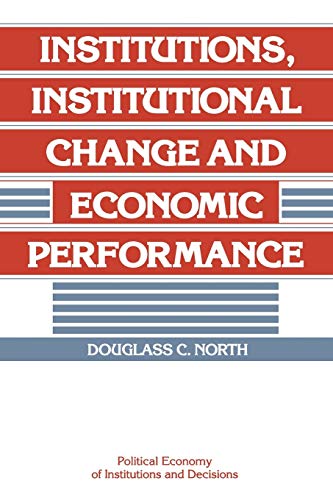
Inhaltsangabe
Explores the nature of institutions and institutional change.
Die Inhaltsangabe kann sich auf eine andere Ausgabe dieses Titels beziehen.
Von der hinteren Coverseite
Continuing his groundbreaking analysis of economic structures, Douglass North here develops an analytical framework for explaining the ways in which institutions and institutional change affect the performance of economies, both at a given time and over time. Institutions exist, he argues, due to the uncertainties involved in human interaction; they are the constraints devised to structure that interaction. Yet institutions vary widely in their consequences for economic performance; some economies develop institutions that produce growth and development, while other economies develop institutions that produce stagnation.
„Über diesen Titel“ kann sich auf eine andere Ausgabe dieses Titels beziehen.
Suchergebnisse für Institutions, Institutional Change and Economic Performance...

Beispielbild für diese ISBN
Institutions, Institutional Change and Economic Performance
Verlag:
Cambridge University Press, 1990
ISBN 10: 0521397340
ISBN 13: 9780521397346
Gebraucht
Paperback
Anbieter: World of Books (was SecondSale), Montgomery, IL, USA
Verkäuferbewertung 5 von 5 Sternen

Paperback. Zustand: Fair. Continuing his groundbreaking analysis of economic structures, Douglass North develops an analytical framework for explaining the ways in which institutions and institutional change affect the performance of economies, both at a given time and over time. Institutions exist, he argues, due to the uncertainties involved in human interaction; they are the constraints devised to structure that interaction. Yet, institutions vary widely in their consequences for economic performance; some economies develop institutions that produce growth and development, while others develop institutions that produce stagnation. North first explores the nature of institutions and explains the role of transaction and production costs in their development. The second part of the book deals with institutional change. Institutions create the incentive structure in an economy, and organisations will be created to take advantage of the opportunities provided within a given institutional framework. North argues that the kinds of skills and knowledge fostered by the structure of an economy will shape the direction of change and gradually alter the institutional framework. He then explains how institutional development may lead to a path-dependent pattern of development. In the final part of the book, North explains the implications of this analysis for economic theory and economic history. He indicates how institutional analysis must be incorporated into neo-classical theory and explores the potential for the construction of a dynamic theory of long-term economic change. Douglass C. North is Director of the Center of Political Economy and Professor of Economics and History at Washington University in St. Louis. He is a past president of the Economic History Association and Western Economics Association and a Fellow, American Academy of Arts and Sciences. He has written over sixty articles for a variety of journals and is the author of The Rise of the Western World: A New Economic History (CUP, 1973, with R.P. Thomas) and Structure and Change in Economic History (Norton, 1981). Professor North is included in Great Economists Since Keynes edited by M. Blaug (CUP, 1988 paperback ed.). Bestandsnummer des Verkäufers 00106232891
Gebraucht kaufen
EUR 5,06
Versand gratis
Versand innerhalb von USA
Versand innerhalb von USA
Anzahl: 2 verfügbar
Beispielbild für diese ISBN
Institutions, Institutional Change and Economic Performance
Verlag:
Cambridge University Press, 1990
ISBN 10: 0521397340
ISBN 13: 9780521397346
Gebraucht
Paperback
Anbieter: World of Books (was SecondSale), Montgomery, IL, USA
Verkäuferbewertung 5 von 5 Sternen
Paperback. Zustand: Very Good. Continuing his groundbreaking analysis of economic structures, Douglass North develops an analytical framework for explaining the ways in which institutions and institutional change affect the performance of economies, both at a given time and over time. Institutions exist, he argues, due to the uncertainties involved in human interaction; they are the constraints devised to structure that interaction. Yet, institutions vary widely in their consequences for economic performance; some economies develop institutions that produce growth and development, while others develop institutions that produce stagnation. North first explores the nature of institutions and explains the role of transaction and production costs in their development. The second part of the book deals with institutional change. Institutions create the incentive structure in an economy, and organisations will be created to take advantage of the opportunities provided within a given institutional framework. North argues that the kinds of skills and knowledge fostered by the structure of an economy will shape the direction of change and gradually alter the institutional framework. He then explains how institutional development may lead to a path-dependent pattern of development. In the final part of the book, North explains the implications of this analysis for economic theory and economic history. He indicates how institutional analysis must be incorporated into neo-classical theory and explores the potential for the construction of a dynamic theory of long-term economic change. Douglass C. North is Director of the Center of Political Economy and Professor of Economics and History at Washington University in St. Louis. He is a past president of the Economic History Association and Western Economics Association and a Fellow, American Academy of Arts and Sciences. He has written over sixty articles for a variety of journals and is the author of The Rise of the Western World: A New Economic History (CUP, 1973, with R.P. Thomas) and Structure and Change in Economic History (Norton, 1981). Professor North is included in Great Economists Since Keynes edited by M. Blaug (CUP, 1988 paperback ed.). Bestandsnummer des Verkäufers CIN0521397340VG
Gebraucht kaufen
EUR 5,06
Versand gratis
Versand innerhalb von USA
Versand innerhalb von USA
Anzahl: 1 verfügbar
Beispielbild für diese ISBN
Institutions, Institutional Change and Economic Performance
Verlag:
Cambridge University Press, 1990
ISBN 10: 0521397340
ISBN 13: 9780521397346
Gebraucht
Paperback
Anbieter: World of Books (was SecondSale), Montgomery, IL, USA
Verkäuferbewertung 5 von 5 Sternen
Paperback. Zustand: Good. Continuing his groundbreaking analysis of economic structures, Douglass North develops an analytical framework for explaining the ways in which institutions and institutional change affect the performance of economies, both at a given time and over time. Institutions exist, he argues, due to the uncertainties involved in human interaction; they are the constraints devised to structure that interaction. Yet, institutions vary widely in their consequences for economic performance; some economies develop institutions that produce growth and development, while others develop institutions that produce stagnation. North first explores the nature of institutions and explains the role of transaction and production costs in their development. The second part of the book deals with institutional change. Institutions create the incentive structure in an economy, and organisations will be created to take advantage of the opportunities provided within a given institutional framework. North argues that the kinds of skills and knowledge fostered by the structure of an economy will shape the direction of change and gradually alter the institutional framework. He then explains how institutional development may lead to a path-dependent pattern of development. In the final part of the book, North explains the implications of this analysis for economic theory and economic history. He indicates how institutional analysis must be incorporated into neo-classical theory and explores the potential for the construction of a dynamic theory of long-term economic change. Douglass C. North is Director of the Center of Political Economy and Professor of Economics and History at Washington University in St. Louis. He is a past president of the Economic History Association and Western Economics Association and a Fellow, American Academy of Arts and Sciences. He has written over sixty articles for a variety of journals and is the author of The Rise of the Western World: A New Economic History (CUP, 1973, with R.P. Thomas) and Structure and Change in Economic History (Norton, 1981). Professor North is included in Great Economists Since Keynes edited by M. Blaug (CUP, 1988 paperback ed.). Bestandsnummer des Verkäufers 00109765677
Gebraucht kaufen
EUR 5,06
Versand gratis
Versand innerhalb von USA
Versand innerhalb von USA
Anzahl: 3 verfügbar
Foto des Verkäufers
Institutions, Institutional Change and Economic Performance (Political Economy of Institutions and Decisions)
Verlag:
Cambridge University Press, 1990
ISBN 10: 0521397340
ISBN 13: 9780521397346
Gebraucht
Softcover
Anbieter: Bay State Book Company, North Smithfield, RI, USA
Verkäuferbewertung 5 von 5 Sternen
Zustand: good. The book is in good condition with all pages and cover intact, including the dust jacket if originally issued. The spine may show light wear. Pages may contain some notes or highlighting, and there might be a "From the library of" label. Boxed set packaging, shrink wrap, or included media like CDs may be missing. Bestandsnummer des Verkäufers BSM.1F83Y
Gebraucht kaufen
EUR 5,07
Versand gratis
Versand innerhalb von USA
Versand innerhalb von USA
Anzahl: 1 verfügbar
Beispielbild für diese ISBN
Institutions, Institutional Change and Economic Performance
Verlag:
Cambridge University Press, 1990
ISBN 10: 0521397340
ISBN 13: 9780521397346
Gebraucht
Paperback
Anbieter: ThriftBooks-Atlanta, AUSTELL, GA, USA
Verkäuferbewertung 5 von 5 Sternen
Paperback. Zustand: Good. No Jacket. Former library book; Pages can have notes/highlighting. Spine may show signs of wear. ~ ThriftBooks: Read More, Spend Less. Bestandsnummer des Verkäufers G0521397340I3N10
Gebraucht kaufen
EUR 6,74
Versand gratis
Versand innerhalb von USA
Versand innerhalb von USA
Anzahl: 1 verfügbar
Beispielbild für diese ISBN
Institutions, Institutional Change and Economic Performance
Verlag:
Cambridge University Press, 1990
ISBN 10: 0521397340
ISBN 13: 9780521397346
Gebraucht
Paperback
Anbieter: World of Books Inc, Montgomery, IL, USA
Verkäuferbewertung 4 von 5 Sternen

Paperback. Zustand: Fair. Continuing his groundbreaking analysis of economic structures, Douglass North develops an analytical framework for explaining the ways in which institutions and institutional change affect the performance of economies, both at a given time and over time. Institutions exist, he argues, due to the uncertainties involved in human interaction; they are the constraints devised to structure that interaction. Yet, institutions vary widely in their consequences for economic performance; some economies develop institutions that produce growth and development, while others develop institutions that produce stagnation. North first explores the nature of institutions and explains the role of transaction and production costs in their development. The second part of the book deals with institutional change. Institutions create the incentive structure in an economy, and organisations will be created to take advantage of the opportunities provided within a given institutional framework. North argues that the kinds of skills and knowledge fostered by the structure of an economy will shape the direction of change and gradually alter the institutional framework. He then explains how institutional development may lead to a path-dependent pattern of development. In the final part of the book, North explains the implications of this analysis for economic theory and economic history. He indicates how institutional analysis must be incorporated into neo-classical theory and explores the potential for the construction of a dynamic theory of long-term economic change. Douglass C. North is Director of the Center of Political Economy and Professor of Economics and History at Washington University in St. Louis. He is a past president of the Economic History Association and Western Economics Association and a Fellow, American Academy of Arts and Sciences. He has written over sixty articles for a variety of journals and is the author of The Rise of the Western World: A New Economic History (CUP, 1973, with R.P. Thomas) and Structure and Change in Economic History (Norton, 1981). Professor North is included in Great Economists Since Keynes edited by M. Blaug (CUP, 1988 paperback ed.). Bestandsnummer des Verkäufers CIN0521397340A
Gebraucht kaufen
EUR 6,91
Versand gratis
Versand innerhalb von USA
Versand innerhalb von USA
Anzahl: 2 verfügbar
Beispielbild für diese ISBN
Institutions, Institutional Change and Economic Performance
Verlag:
Cambridge University Press, 1990
ISBN 10: 0521397340
ISBN 13: 9780521397346
Gebraucht
Paperback
Anbieter: World of Books Inc, Montgomery, IL, USA
Verkäuferbewertung 4 von 5 Sternen
Paperback. Zustand: Good. Continuing his groundbreaking analysis of economic structures, Douglass North develops an analytical framework for explaining the ways in which institutions and institutional change affect the performance of economies, both at a given time and over time. Institutions exist, he argues, due to the uncertainties involved in human interaction; they are the constraints devised to structure that interaction. Yet, institutions vary widely in their consequences for economic performance; some economies develop institutions that produce growth and development, while others develop institutions that produce stagnation. North first explores the nature of institutions and explains the role of transaction and production costs in their development. The second part of the book deals with institutional change. Institutions create the incentive structure in an economy, and organisations will be created to take advantage of the opportunities provided within a given institutional framework. North argues that the kinds of skills and knowledge fostered by the structure of an economy will shape the direction of change and gradually alter the institutional framework. He then explains how institutional development may lead to a path-dependent pattern of development. In the final part of the book, North explains the implications of this analysis for economic theory and economic history. He indicates how institutional analysis must be incorporated into neo-classical theory and explores the potential for the construction of a dynamic theory of long-term economic change. Douglass C. North is Director of the Center of Political Economy and Professor of Economics and History at Washington University in St. Louis. He is a past president of the Economic History Association and Western Economics Association and a Fellow, American Academy of Arts and Sciences. He has written over sixty articles for a variety of journals and is the author of The Rise of the Western World: A New Economic History (CUP, 1973, with R.P. Thomas) and Structure and Change in Economic History (Norton, 1981). Professor North is included in Great Economists Since Keynes edited by M. Blaug (CUP, 1988 paperback ed.). Bestandsnummer des Verkäufers CIN0521397340G
Gebraucht kaufen
EUR 6,91
Versand gratis
Versand innerhalb von USA
Versand innerhalb von USA
Anzahl: 3 verfügbar
Beispielbild für diese ISBN
Institutions, Institutional Change and Economic Performance
Verlag:
Cambridge University Press, 1990
ISBN 10: 0521397340
ISBN 13: 9780521397346
Gebraucht
Paperback
Anbieter: World of Books Inc, Montgomery, IL, USA
Verkäuferbewertung 4 von 5 Sternen
Paperback. Zustand: Very Good. Continuing his groundbreaking analysis of economic structures, Douglass North develops an analytical framework for explaining the ways in which institutions and institutional change affect the performance of economies, both at a given time and over time. Institutions exist, he argues, due to the uncertainties involved in human interaction; they are the constraints devised to structure that interaction. Yet, institutions vary widely in their consequences for economic performance; some economies develop institutions that produce growth and development, while others develop institutions that produce stagnation. North first explores the nature of institutions and explains the role of transaction and production costs in their development. The second part of the book deals with institutional change. Institutions create the incentive structure in an economy, and organisations will be created to take advantage of the opportunities provided within a given institutional framework. North argues that the kinds of skills and knowledge fostered by the structure of an economy will shape the direction of change and gradually alter the institutional framework. He then explains how institutional development may lead to a path-dependent pattern of development. In the final part of the book, North explains the implications of this analysis for economic theory and economic history. He indicates how institutional analysis must be incorporated into neo-classical theory and explores the potential for the construction of a dynamic theory of long-term economic change. Douglass C. North is Director of the Center of Political Economy and Professor of Economics and History at Washington University in St. Louis. He is a past president of the Economic History Association and Western Economics Association and a Fellow, American Academy of Arts and Sciences. He has written over sixty articles for a variety of journals and is the author of The Rise of the Western World: A New Economic History (CUP, 1973, with R.P. Thomas) and Structure and Change in Economic History (Norton, 1981). Professor North is included in Great Economists Since Keynes edited by M. Blaug (CUP, 1988 paperback ed.). Bestandsnummer des Verkäufers CIN0521397340VG
Gebraucht kaufen
EUR 6,91
Versand gratis
Versand innerhalb von USA
Versand innerhalb von USA
Anzahl: 1 verfügbar
Beispielbild für diese ISBN
Institutions, Institutional Change and Economic Performance (Political Economy of Institutions and Decisions)
Verlag:
Cambridge University Press (edition 59262nd), 1990
ISBN 10: 0521397340
ISBN 13: 9780521397346
Gebraucht
Paperback
Anbieter: BooksRun, Philadelphia, PA, USA
Verkäuferbewertung 5 von 5 Sternen
Paperback. Zustand: Very Good. 59262nd. It's a well-cared-for item that has seen limited use. The item may show minor signs of wear. All the text is legible, with all pages included. It may have slight markings and/or highlighting. Bestandsnummer des Verkäufers 0521397340-11-1
Gebraucht kaufen
EUR 7,93
Versand gratis
Versand innerhalb von USA
Versand innerhalb von USA
Anzahl: 2 verfügbar
Beispielbild für diese ISBN
Institutions, Institutional Change and Economic Performance
Verlag:
Cambridge University Press, 1990
ISBN 10: 0521397340
ISBN 13: 9780521397346
Gebraucht
Softcover
Anbieter: Better World Books, Mishawaka, IN, USA
Verkäuferbewertung 5 von 5 Sternen
Zustand: Very Good. Former library copy. Pages intact with possible writing/highlighting. Binding strong with minor wear. Dust jackets/supplements may not be included. Includes library markings. Stock photo provided. Product includes identifying sticker. Better World Books: Buy Books. Do Good. Bestandsnummer des Verkäufers GRP71219890
Gebraucht kaufen
EUR 8,39
Versand gratis
Versand innerhalb von USA
Versand innerhalb von USA
Anzahl: 1 verfügbar