
The First Boat People (Cambridge Studies in Biological and Evolutionary Anthropology, 47, Band 47) - Hardcover
Buch 14 von 52: Cambridge Studies in Biological and Evolutionary Anthropology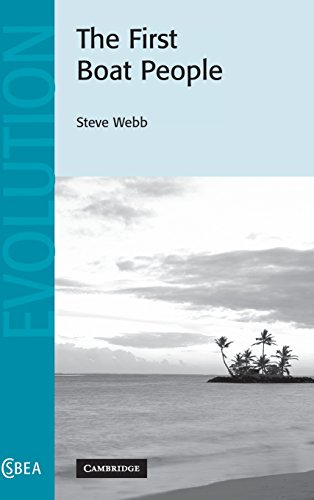
Inhaltsangabe
Challenging current theories of how modern humans emerged, this book explores how people travelled from Africa to Australia in the Pleistocene.
Die Inhaltsangabe kann sich auf eine andere Ausgabe dieses Titels beziehen.
Über die Autorin bzw. den Autor
STEVE WEBB is Professor of Australian Studies at Bond University, in Queensland, Australia. He has previously carried out a pioneering palaeopathological study of Aboriginal health patterns prior to European colonisation, and has previously published Paleopathology of Aboriginal Australians (1995; ISBN 0521 460441). His research now concentrates on Australian regional human evolution, reasons for the extinction of Australia's megafauna, Upper Pleistocene migration and the earliest human settlement of the continent. His particular focus is on palaeoenvironmental change accompanying the last two glaciations in Central Australia to understand more fully megafaunal extinction in the region, and the timing of the first human entry into Australia.
„Über diesen Titel“ kann sich auf eine andere Ausgabe dieses Titels beziehen.
Weitere beliebte Ausgaben desselben Titels

Suchergebnisse für The First Boat People (Cambridge Studies in Biological...

Beispielbild für diese ISBN
The First Boat People (Cambridge Studies in Biological and Evolutionary Anthropology, Series Number 47)
Verlag:
Cambridge University Press, 2006
ISBN 10: 0521856566
ISBN 13: 9780521856560
Gebraucht
Hardcover
Anbieter: Anybook.com, Lincoln, Vereinigtes Königreich
Verkäuferbewertung 5 von 5 Sternen

Zustand: Fair. This is an ex-library book and may have the usual library/used-book markings inside.This book has hardback covers. In fair condition, suitable as a study copy. No dust jacket. Please note the Image in this listing is a stock photo and may not match the covers of the actual item,750grams, ISBN:9780521856560. Bestandsnummer des Verkäufers 5841956
Gebraucht kaufen
EUR 14,46
EUR 15,67 Versand
Versand von Vereinigtes Königreich nach USA
Versand von Vereinigtes Königreich nach USA
Anzahl: 1 verfügbar
Beispielbild für diese ISBN
The First Boat People
Verlag:
Cambridge University Press, 2006
ISBN 10: 0521856566
ISBN 13: 9780521856560
Gebraucht
Hardcover
Anbieter: N. Fagin Books, Chicago, IL, USA
Verkäuferbewertung 5 von 5 Sternen
2006. South Pacific, Australia, Human Evolution. Cambridge University Press. Very good - fine pictorial boards 318p. Bestandsnummer des Verkäufers 17615
Gebraucht kaufen
EUR 31,45
EUR 5,23 Versand
Versand innerhalb von USA
Versand innerhalb von USA
Anzahl: 1 verfügbar
Beispielbild für diese ISBN
The First Boat People (Cambridge Studies in Biological and Evolutionary Anthropology)
Verlag:
Cambridge University Press, 2006
ISBN 10: 0521856566
ISBN 13: 9780521856560
Gebraucht
Hardcover
Erstausgabe
Anbieter: Prior Books Ltd, Cheltenham, Vereinigtes Königreich
Verkäuferbewertung 5 von 5 Sternen
Hardcover. Zustand: Like New. First Edition. Hardback book in nearly new condition with just a small publisher's 'damaged' stamp; even so not showing any defects, no splits, no cracks, no pen-marks, just some very minor surface rubbing and moderate shelf wear. Contents are crisp, tight and fresh. Thus a never read book still in very presentable condition now offered for sale at a sensible price. Bestandsnummer des Verkäufers 107271
Gebraucht kaufen
EUR 14,82
EUR 25,35 Versand
Versand von Vereinigtes Königreich nach USA
Versand von Vereinigtes Königreich nach USA
Anzahl: 3 verfügbar
Beispielbild für diese ISBN
The First Boat People
Verlag:
Cambridge University Press CUP, 2006
ISBN 10: 0521856566
ISBN 13: 9780521856560
Neu
Hardcover
Anbieter: Books Puddle, New York, NY, USA
Verkäuferbewertung 4 von 5 Sternen

Zustand: New. pp. xvii + 318, Maps. Bestandsnummer des Verkäufers 26236739
Neu kaufen
EUR 87,28
EUR 3,48 Versand
Versand innerhalb von USA
Versand innerhalb von USA
Anzahl: 1 verfügbar
Beispielbild für diese ISBN
The First Boat People
Anbieter: Majestic Books, Hounslow, Vereinigtes Königreich
Verkäuferbewertung 4 von 5 Sternen
Zustand: New. pp. xvii + 318 Illus., Maps. Bestandsnummer des Verkäufers 7611164
Neu kaufen
EUR 86,14
EUR 7,49 Versand
Versand von Vereinigtes Königreich nach USA
Versand von Vereinigtes Königreich nach USA
Anzahl: 1 verfügbar
Beispielbild für diese ISBN
The First Boat People (Hardcover)
Verlag:
Cambridge University Press, Cambridge, 2006
ISBN 10: 0521856566
ISBN 13: 9780521856560
Neu
Hardcover
Anbieter: Grand Eagle Retail, Bensenville, IL, USA
Verkäuferbewertung 5 von 5 Sternen
Hardcover. Zustand: new. Hardcover. The First Boat People concerns how people travelled across the world to Australia in the Pleistocene. It traces movement from Africa to Australia, offering a new view of population growth at that time, challenging current ideas, and underscoring problems with the 'Out of Africa' theory of how modern humans emerged. The variety of routes, strategies and opportunities that could have been used by those first migrants is proposed against the very different regional geography that existed at that time. Steve Webb shows the impact of human entry into Australia on the megafauna using fresh evidence from his work in Central Australia, including a description of palaeoenvironmental conditions existing there during the last two glaciations. He argues for an early human arrival and describes in detail the skeletal evidence for the first Australians. This is a stimulating account for students and researchers in biological anthropology, human evolution and archaeology. The First Boat People concerns how people travelled across the world to Australia in the Pleistocene. It traces movement from Africa to Australia, offering a new view of population growth at that time, challenging current ideas, and underscoring problems with the 'Out of Africa' theory of how modern humans emerged. The variety of routes, strategies and opportunities that could have been used by those first migrants is proposed against the very different regional geography that existed at that time. Steve Webb shows the impact of human entry into Australia on the megafauna using fresh evidence from his work in Central Australia, including a description of palaeoenvironmental conditions existing there during the last two glaciations. He argues for an early human arrival and describes in detail the skeletal evidence for the first Australians. This is a stimulating account for students and researchers in biological anthropology, human evolution and archaeology. Shipping may be from multiple locations in the US or from the UK, depending on stock availability. Bestandsnummer des Verkäufers 9780521856560
Beispielbild für diese ISBN
The First Boat People (Cambridge Studies in Biological and Evolutionary Anthropology, Series Number 47)
Anbieter: Ria Christie Collections, Uxbridge, Vereinigtes Königreich
Verkäuferbewertung 5 von 5 Sternen
Zustand: New. In. Bestandsnummer des Verkäufers ria9780521856560_new
Neu kaufen
EUR 159,95
EUR 13,80 Versand
Versand von Vereinigtes Königreich nach USA
Versand von Vereinigtes Königreich nach USA
Anzahl: Mehr als 20 verfügbar
Beispielbild für diese ISBN
The First Boat People
Print-on-DemandAnbieter: Revaluation Books, Exeter, Vereinigtes Königreich
Verkäuferbewertung 5 von 5 Sternen
Hardcover. Zustand: Brand New. 318 pages. 9.25x6.50x0.75 inches. In Stock. This item is printed on demand. Bestandsnummer des Verkäufers __0521856566
Neu kaufen
EUR 166,36
EUR 14,40 Versand
Versand von Vereinigtes Königreich nach USA
Versand von Vereinigtes Königreich nach USA
Anzahl: 1 verfügbar
Beispielbild für diese ISBN
The First Boat People
Print-on-DemandAnbieter: THE SAINT BOOKSTORE, Southport, Vereinigtes Königreich
Verkäuferbewertung 5 von 5 Sternen
Hardback. Zustand: New. This item is printed on demand. New copy - Usually dispatched within 5-9 working days. Bestandsnummer des Verkäufers C9780521856560
Neu kaufen
EUR 171,26
EUR 20,31 Versand
Versand von Vereinigtes Königreich nach USA
Versand von Vereinigtes Königreich nach USA
Anzahl: Mehr als 20 verfügbar
Beispielbild für diese ISBN
The First Boat People: 47 (Cambridge Studies in Biological and Evolutionary Anthropology, Series Number 47)
Anbieter: Kennys Bookshop and Art Galleries Ltd., Galway, GY, Irland
Verkäuferbewertung 5 von 5 Sternen
Zustand: New. Challenging current theories of how modern humans emerged, this book explores how people travelled from Africa to Australia in the Pleistocene. Series: Cambridge Studies in Biological and Evolutionary Anthropology. Num Pages: 338 pages, 62 b/w illus. 35 tables. BIC Classification: PSX. Category: (P) Professional & Vocational; (U) Tertiary Education (US: College). Dimension: 228 x 152 x 22. Weight in Grams: 658. . 2006. Illustrated. hardcover. . . . . Bestandsnummer des Verkäufers V9780521856560
Neu kaufen
EUR 181,27
EUR 10,50 Versand
Versand von Irland nach USA
Versand von Irland nach USA
Anzahl: Mehr als 20 verfügbar