
Verwandte Artikel zu July, July: A Wistful and Funny Literary Novel About...
July, July: A Wistful and Funny Literary Novel About the Class of '69 and the Enduring Power of Friendship - Softcover
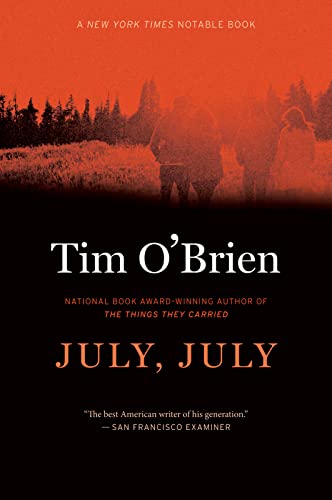
Inhaltsangabe
“Insidiously, compulsively readable.” — MSNBC
At the thirtieth reunion of the Darton Hall College class of 1969, ten old friends join their classmates for a summer weekend of dancing, drinking, flirting, reminiscing, and regret. The three decades since graduation have brought marriage and divorce, children and careers, hopes deferred and replaced. July, July tells the heart-rending and often hilarious story of men and women who came into adulthood at a moment when American ideals and innocence began to fade. These lives will ring familiar to anyone who has dreamed, worked, and struggled to keep course toward a happy ending.
With humor and a sense of wistful hope, July, July speaks directly to the American character and its resilience, striking deep at the emotional center of our lives.
"A symphony of American life.” — All Things Considered, NPR
“A small-scale tour de force by an American original . . . O’Brien is one of the most accomplished members of a generation of writers that includes Don DeLillo and Thomas Pynchon.” — Atlanta Journal-Constitution
"Astonishing for [its] clarity of character, for [its] narrative thrills and surprises, for [its] humor and hard-won wisdom . . . July, July gives readers plenty of reasons to celebrate." — Chicago Sun-Times
"Perceptive, affectionate and often very funny." — Boston Herald
"A deeply satisfying story . . . O’Brien is intelligent and daring, but he is also eminently accessible.” — O, the Oprah Magazine
"Taut and compelling." — Los Angeles Times Book Review
"Beautifully realized, heartbreakingly honest." — Providence Journal-Bulletin
“Almost impossible to put down.” — Austin American-Statesman
At the thirtieth reunion of the Darton Hall College class of 1969, ten old friends join their classmates for a summer weekend of dancing, drinking, flirting, reminiscing, and regret. The three decades since graduation have brought marriage and divorce, children and careers, hopes deferred and replaced. July, July tells the heart-rending and often hilarious story of men and women who came into adulthood at a moment when American ideals and innocence began to fade. These lives will ring familiar to anyone who has dreamed, worked, and struggled to keep course toward a happy ending.
With humor and a sense of wistful hope, July, July speaks directly to the American character and its resilience, striking deep at the emotional center of our lives.
"A symphony of American life.” — All Things Considered, NPR
“A small-scale tour de force by an American original . . . O’Brien is one of the most accomplished members of a generation of writers that includes Don DeLillo and Thomas Pynchon.” — Atlanta Journal-Constitution
"Astonishing for [its] clarity of character, for [its] narrative thrills and surprises, for [its] humor and hard-won wisdom . . . July, July gives readers plenty of reasons to celebrate." — Chicago Sun-Times
"Perceptive, affectionate and often very funny." — Boston Herald
"A deeply satisfying story . . . O’Brien is intelligent and daring, but he is also eminently accessible.” — O, the Oprah Magazine
"Taut and compelling." — Los Angeles Times Book Review
"Beautifully realized, heartbreakingly honest." — Providence Journal-Bulletin
“Almost impossible to put down.” — Austin American-Statesman
Die Inhaltsangabe kann sich auf eine andere Ausgabe dieses Titels beziehen.
Über die Autorin bzw. den Autor
TIM O’BRIEN received the National Book Award for Going After Cacciato. The Things They Carried has sold more than seven million copies; it was a finalist for the Pulitzer Prize for Fiction and was named a New York Times Book of the Century. In the Lake of the Woods won the James Fenimore Cooper Prize. Awarded the Pritzker Literature Award for lifetime achievement in military writing, O’Brien has been elected to both the American Academy of Arts and Letters and the American Academy of Arts and Sciences.
Von der hinteren Coverseite
“Insidiously, compulsively readable.” — MSNBC
At the thirtieth reunion of the Darton Hall College class of 1969, ten old friends join their classmates for a summer weekend of dancing, drinking, flirting, reminiscing, and regret. The three decades since graduation have brought marriage and divorce, children and careers, hopes deferred and replaced. July, July tells the heart-rending and often hilarious story of men and women who came into adulthood at a moment when American ideals and innocence began to fade. These lives will ring familiar to anyone who has dreamed, worked, and struggled to keep course toward a happy ending.
With humor and a sense of wistful hope, July, July speaks directly to the American character and its resilience, striking deep at the emotional center of our lives.
"A symphony of American life.” — All Things Considered, NPR
“A small-scale tour de force by an American original . . . O’Brien is one of the most accomplished members of a generation of writers that includes Don DeLillo and Thomas Pynchon.” — Atlanta Journal-Constitution
"Astonishing for [its] clarity of character, for [its] narrative thrills and surprises, for [its] humor and hard-won wisdom . . . July, July gives readers plenty of reasons to celebrate." — Chicago Sun-Times
"Perceptive, affectionate and often very funny." — Boston Herald
"A deeply satisfying story . . . O’Brien is intelligent and daring, but he is also eminently accessible.” — O, the Oprah Magazine
"Taut and compelling." — Los Angeles Times Book Review
"Beautifully realized, heartbreakingly honest." — Providence Journal-Bulletin
“Almost impossible to put down.” — Austin American-Statesman
TIM O’BRIEN received the 1979 National Book Award for Going After Cacciato. Among his other books are The Things They Carried, a Pulitzer Prize Finalist and a New York Times Book of the Century, and In the Lake of the Woods, winner of the James Fenimore Cooper Prize. He is a recipient of the Holbrooke Distinguished Achievement Award from the Dayton Literary Peace Prize Foundation.
Author photograph © Meredith O’Brien
Mariner
www.marinerbooks.com
$15.95
ISBN 978-0-544-21757-7
Fiction
0614/1561995
At the thirtieth reunion of the Darton Hall College class of 1969, ten old friends join their classmates for a summer weekend of dancing, drinking, flirting, reminiscing, and regret. The three decades since graduation have brought marriage and divorce, children and careers, hopes deferred and replaced. July, July tells the heart-rending and often hilarious story of men and women who came into adulthood at a moment when American ideals and innocence began to fade. These lives will ring familiar to anyone who has dreamed, worked, and struggled to keep course toward a happy ending.
With humor and a sense of wistful hope, July, July speaks directly to the American character and its resilience, striking deep at the emotional center of our lives.
"A symphony of American life.” — All Things Considered, NPR
“A small-scale tour de force by an American original . . . O’Brien is one of the most accomplished members of a generation of writers that includes Don DeLillo and Thomas Pynchon.” — Atlanta Journal-Constitution
"Astonishing for [its] clarity of character, for [its] narrative thrills and surprises, for [its] humor and hard-won wisdom . . . July, July gives readers plenty of reasons to celebrate." — Chicago Sun-Times
"Perceptive, affectionate and often very funny." — Boston Herald
"A deeply satisfying story . . . O’Brien is intelligent and daring, but he is also eminently accessible.” — O, the Oprah Magazine
"Taut and compelling." — Los Angeles Times Book Review
"Beautifully realized, heartbreakingly honest." — Providence Journal-Bulletin
“Almost impossible to put down.” — Austin American-Statesman
TIM O’BRIEN received the 1979 National Book Award for Going After Cacciato. Among his other books are The Things They Carried, a Pulitzer Prize Finalist and a New York Times Book of the Century, and In the Lake of the Woods, winner of the James Fenimore Cooper Prize. He is a recipient of the Holbrooke Distinguished Achievement Award from the Dayton Literary Peace Prize Foundation.
Author photograph © Meredith O’Brien
Mariner
www.marinerbooks.com
$15.95
ISBN 978-0-544-21757-7
Fiction
0614/1561995
Auszug. © Genehmigter Nachdruck. Alle Rechte vorbehalten.
July, July
By Tim O'BrienHoughton Mifflin Harcourt Publishing Company
Copyright © 2002 Tim O'Brien
All rights reserved.
ISBN: 978-0-544-21757-7All rights reserved.
Contents
Title Page,
Table of Contents,
Copyright,
Acknowledgments,
Dedications,
Epigraph,
Class of '69,
July '69,
Class of '69,
The Streak,
Little People,
Class of '69,
Well Married,
Class of '69,
Winnipeg,
Class of '69,
Hearing,
Class of '69,
Loon Point,
Class of '69,
Half Gone,
Class of '69,
Nogales,
Class of '69,
Too Skinny,
Class of '69,
What Went Wrong,
Class of '69,
About the Author,
CHAPTER 1
Class of '69
The reunion dance had started only an hour ago, but already a good many of the dancers were tipsy, and most others were well along, and now the gossip was flowing and confessions were under way and old flames were being extinguished and rekindled under cardboard stars in the Darton Hall College gymnasium.
Amy Robinson was telling Jan Huebner, a former roommate, about the murder last year of Karen Burns, another former roommate. "It's such a Karen sort of thing," Amy said. "Getting killed like that. Nobody else. Only Karen."
"Right," Jan said. She waited a moment. "Move your tongue, sugar. Details."
Amy made a weary, dispirited movement with her shoulders. "Nothing new, I'm afraid. Same old Karen story, naive as a valentine. Trust the world. Get squished."
"Poor girl," Jan said.
"Poor woman," said Amy.
Jan winced and said, "Woman, corpse, whatever. Still single, I suppose? Karen?"
"Naturally."
"And some guy —?"
"Naturally."
"God," Jan said.
"Yeah, yeah," said Amy.
Earlier in the evening, they had liberated a bottle of Darton Hall vodka, which was now almost gone, and both of them were feeling the sting of strong spirits and misplaced sentiment. They were fifty-three years old. They were drunk. They were divorced. Time and heartbreak had exacted a toll. Amy Robinson still had her boyish figure, her button nose and freckles, but collegiate perkiness had been replaced by something taut and haggard. Jan Huebner had never been perky. She'd never been pretty, or cute, or even passable, and at the moment her bleached hair and plucked eyebrows and Midnight Plum lipstick offered only the most dubious correctives.
"What I love about men," Jan was saying, "is their basic overall cockiness. That much I adore. Follow me?"
"I do," said Amy.
"Take away that, what the heck have you got?"
"You've got zero."
"Ha!" said Jan.
"Pricks," Amy said.
They fell quiet then, sipping vodka, watching the class of '69 rediscover itself on a polished gymnasium dance floor. Unofficially, this was a thirtieth reunion — one year tardy due to someone's oversight, an irony that had been much discussed over cocktails that evening, and much joked about, though not yet entirely deciphered. Still, it made them feel special. So, too, did the fact that they were convening on a deserted campus, in the heart of summer, more than a month after the standard graduation-day gatherings. The school had a forlorn, haunted feel to it, many memories, many ghosts, which seemed appropriate.
"Well," Jan Huebner finally said. "Bad news, of course — Karen's dead. But here's some good news. Gal never went through a divorce."
"That's a fact," Amy said.
"I mean, ouch."
"Ouch is accurate," Amy said.
Jan nodded. "Twenty-nine years, almost thirty, and guess what? That slick ex-hubby of mine, Richard the Oily, he grins and waves at me and strolls out the door. Doesn't walk, doesn't run. Strolls. Talk about murder. Am I wrong about that?"
"You are not wrong," said Amy.
"We're discussing the male gender, aren't we?"
"We are."
"Well, there's your moral," Jan said. "One way or the other, they'll kill you dead. Every time, flowers and gravestones. No exceptions."
"Stone dead," Amy said, and leaned back to scan the crowd of aging dancers. Thirty-one years, she thought. After a time she sighed and freshened their drinks and said, "What say we get laid tonight?" "Yes, ma'am," said Jan. "By pricks. Big, dumb, bald ones."
Amy raised her glass. "To Karen Burns."
"To divorce," said Jan, and then she turned and waved at Marv Bertel, a come-dance-with-us motion, but Marv shook his head, tapped his chest, and leaned back heavily against the bar.
Marv was recovering from a dance with Spook Spinelli, wondering if his heart could take another hit. He doubted it. He doubted, too, that he should risk another bourbon, except the drink was already in his hand, cold as a coffin, and might quiet the jump in his heart. Partly the problem was Spook Spinelli: those daredevil eyes of hers, that candid, little-girl laugh. Over half a lifetime, through two tepid marriages, Marv had been massaging the fantasy that something might develop between them. Pitiful, he thought, yet even now he couldn't stop hoping. All those years, all that wee-hour solitaire, and he was still snagged up in Spook Spinelli. Also, there was the issue of a failing triple bypass, the butter in his arteries, the abundant flab at his waist. All the same, Marv reasoned, this was a goddamn reunion, possibly his last, so he knocked the drink back and asked the bartender for one more, on the rocks, double trouble.
Across the gym, under a flashing blue spotlight, Spook Spinelli was dancing with Billy McMann. They hammed it up, making faces, being sexy for each other, but Billy did not once take his eyes off Dorothy Stier, who stood talking near the bandstand with Paulette Haslo. After three decades, Billy still hated Dorothy. He also loved her. The love and the hate had hardened inside him, one reinforcing the other like layers of brick and mortar. In a few minutes, Billy decided, he would treat himself to another drink, or maybe three or four, and then he would amble up to Dorothy and explain the love-hate dynamic to her in all its historic detail.
Dorothy knew Billy was watching. She knew, too, that Billy still worshipped her. Later, she told herself, there would be time to take him outside and admit to the terrible mistake she had made in 1969. Not that it was a mistake, not in the long run, because Dorothy had a sweet husband and two incredible kids and memberships in a couple of smart-set country clubs. Still, if Billy needed a lie, she saw no harm in offering one. Almost certainly she would kiss him. Almost certainly she would cry a little. For now, though, Dorothy was busy telling Paulette Haslo about her breast cancer, which thank God was in remission, and how supportive her sweet husband and two incredible kids had been.
It was July 7, 2000, a humid Friday evening.
The war was over, passions were moot, and the band played a slow, hollowed-out version of an old Buffalo Springfield tune. For everyone, there was a sense of nostalgia made fluid by present possibility.
"So sad, so bizarre," Amy Robinson was saying, "but so predictable, too. The old Karenness, that's what killed her. She never stopped being Karen."
"Who did it?" said Jan Huebner.
Amy wagged her head. "Nobody knows for sure. Some guy she had a crush on, some creep, which is par for Karen's course. Never any luck."
"Never, ever," Jan said. "And the thing is, she could've been a knockout, all the ingredients. That gorgeous red hair, tons and tons of it. I mean, she was a knockout."
"Weight problem, of...
„Über diesen Titel“ kann sich auf eine andere Ausgabe dieses Titels beziehen.
Suchergebnisse für July, July: A Wistful and Funny Literary Novel About...

Beispielbild für diese ISBN
July July
Anbieter: World of Books (was SecondSale), Montgomery, IL, USA
Verkäuferbewertung 5 von 5 Sternen

Paperback. Zustand: Good. Tim O'Brien's ambitious, compassionate, and terrifically compelling seventh novel, called his "masterwork" by Texas Monthly, sees one of our greatest writers return to his signature themes--passion, memory, and yearning in American twentieth-century life At the thirtieth reunion of the Darton Hall College class of 1969, ten old friends join their classmates for a summer weekend of dancing, drinking, flirting, reminiscing, and regret. The three decades since graduation have brought marriage and divorce, children and careers, hopes deferred and replaced. July, July tells the heart-rending and often hilarious story of men and women who came into adulthood at a moment when American ideals and innocence began to fade. These lives will ring familiar to anyone who has dreamed, worked, and struggled to keep course toward a happy ending. With humor and a sense of wistful hope, July, July speaks directly to the American character and its resilience, striking deep at the emotional center of our lives. "A symphony of American life." -- All Things Considered, NPR "A small-scale tour de force by an American original . . . O'Brien is one of the most accomplished members of a generation of writers that includes Don DeLillo and Thomas Pynchon." -- Atlanta Journal-Constitution "Insidiously, compulsively readable." -- MSNBC "Astonishing for [its] clarity of character, for [its] narrative thrills and surprises, for [its] humor and hard-won wisdom . . . July, July gives readers plenty of reasons to celebrate." -- Chicago Sun-Times "Perceptive, affectionate and often very funny." -- Boston Herald "A deeply satisfying story . . . O'Brien is intelligent and daring, but he is also eminently accessible." -- O, the Oprah Magazine. Bestandsnummer des Verkäufers 00089426613
Gebraucht kaufen
EUR 5,22
Versand gratis
Versand innerhalb von USA
Versand innerhalb von USA
Anzahl: 2 verfügbar
Beispielbild für diese ISBN
July, July
Verlag:
Mariner Books (edition Reprint), 2014
ISBN 10: 0544217578
ISBN 13: 9780544217577
Gebraucht
Paperback
Anbieter: BooksRun, Philadelphia, PA, USA
Verkäuferbewertung 5 von 5 Sternen
Paperback. Zustand: Very Good. Reprint. It's a well-cared-for item that has seen limited use. The item may show minor signs of wear. All the text is legible, with all pages included. It may have slight markings and/or highlighting. Bestandsnummer des Verkäufers 0544217578-11-1
Gebraucht kaufen
EUR 5,23
Versand gratis
Versand innerhalb von USA
Versand innerhalb von USA
Anzahl: 1 verfügbar
Beispielbild für diese ISBN
July, July
Verlag:
HarperCollins Publishers, 2014
ISBN 10: 0544217578
ISBN 13: 9780544217577
Gebraucht
Softcover
Anbieter: Better World Books: West, Reno, NV, USA
Verkäuferbewertung 5 von 5 Sternen
Zustand: Very Good. Pages intact with possible writing/highlighting. Binding strong with minor wear. Dust jackets/supplements may not be included. Stock photo provided. Product includes identifying sticker. Better World Books: Buy Books. Do Good. Bestandsnummer des Verkäufers 6550535-6
Gebraucht kaufen
EUR 6,59
Versand gratis
Versand innerhalb von USA
Versand innerhalb von USA
Anzahl: 1 verfügbar
Beispielbild für diese ISBN
July, July
Verlag:
HarperCollins Publishers, 2014
ISBN 10: 0544217578
ISBN 13: 9780544217577
Gebraucht
Softcover
Anbieter: Better World Books, Mishawaka, IN, USA
Verkäuferbewertung 5 von 5 Sternen
Zustand: Good. Pages intact with minimal writing/highlighting. The binding may be loose and creased. Dust jackets/supplements are not included. Stock photo provided. Product includes identifying sticker. Better World Books: Buy Books. Do Good. Bestandsnummer des Verkäufers 9699975-6
Gebraucht kaufen
EUR 6,59
Versand gratis
Versand innerhalb von USA
Versand innerhalb von USA
Anzahl: 1 verfügbar
Beispielbild für diese ISBN
July, July
Anbieter: ThriftBooks-Phoenix, Phoenix, AZ, USA
Verkäuferbewertung 5 von 5 Sternen
Paperback. Zustand: Very Good. No Jacket. May have limited writing in cover pages. Pages are unmarked. ~ ThriftBooks: Read More, Spend Less. Bestandsnummer des Verkäufers G0544217578I4N00
Gebraucht kaufen
EUR 6,75
Versand gratis
Versand innerhalb von USA
Versand innerhalb von USA
Anzahl: 1 verfügbar
Beispielbild für diese ISBN
July, July
Anbieter: ThriftBooks-Phoenix, Phoenix, AZ, USA
Verkäuferbewertung 5 von 5 Sternen
Paperback. Zustand: Good. No Jacket. Pages can have notes/highlighting. Spine may show signs of wear. ~ ThriftBooks: Read More, Spend Less. Bestandsnummer des Verkäufers G0544217578I3N00
Gebraucht kaufen
EUR 6,75
Versand gratis
Versand innerhalb von USA
Versand innerhalb von USA
Anzahl: 1 verfügbar
Beispielbild für diese ISBN
July, July
Anbieter: ThriftBooks-Reno, Reno, NV, USA
Verkäuferbewertung 5 von 5 Sternen
Paperback. Zustand: Good. No Jacket. Pages can have notes/highlighting. Spine may show signs of wear. ~ ThriftBooks: Read More, Spend Less. Bestandsnummer des Verkäufers G0544217578I3N00
Gebraucht kaufen
EUR 6,75
Versand gratis
Versand innerhalb von USA
Versand innerhalb von USA
Anzahl: 1 verfügbar
Beispielbild für diese ISBN
July, July
Anbieter: ThriftBooks-Reno, Reno, NV, USA
Verkäuferbewertung 5 von 5 Sternen
Paperback. Zustand: Very Good. No Jacket. May have limited writing in cover pages. Pages are unmarked. ~ ThriftBooks: Read More, Spend Less. Bestandsnummer des Verkäufers G0544217578I4N00
Gebraucht kaufen
EUR 6,75
Versand gratis
Versand innerhalb von USA
Versand innerhalb von USA
Anzahl: 1 verfügbar
Beispielbild für diese ISBN
July, July
Anbieter: ThriftBooks-Dallas, Dallas, TX, USA
Verkäuferbewertung 5 von 5 Sternen
Paperback. Zustand: Fair. No Jacket. Readable copy. Pages may have considerable notes/highlighting. ~ ThriftBooks: Read More, Spend Less. Bestandsnummer des Verkäufers G0544217578I5N00
Gebraucht kaufen
EUR 6,80
Versand gratis
Versand innerhalb von USA
Versand innerhalb von USA
Anzahl: 1 verfügbar
Beispielbild für diese ISBN
July, July
Anbieter: ThriftBooks-Atlanta, AUSTELL, GA, USA
Verkäuferbewertung 5 von 5 Sternen
Paperback. Zustand: Good. No Jacket. Pages can have notes/highlighting. Spine may show signs of wear. ~ ThriftBooks: Read More, Spend Less. Bestandsnummer des Verkäufers G0544217578I3N00
Gebraucht kaufen
EUR 6,80
Versand gratis
Versand innerhalb von USA
Versand innerhalb von USA
Anzahl: 2 verfügbar