
Verwandte Artikel zu Loss (Riders of the Apocalypse)
Inhaltsangabe
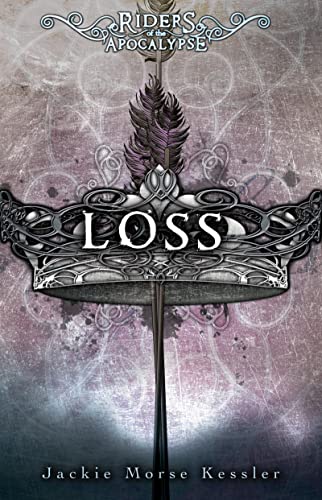
Fifteen-year-old Billy Ballard is the kid that everyone picks on. But things change
drastically when Death tells Billy he must stand in as Pestilence, the White Rider of
the Apocalypse. Now armed with a Bow that allows him to strike with disease from
a distance, Billy lashes out at his tormentors...and accidentally causes an outbreak of
meningitis. Horrified by his actions, Billy begs Death to take back the Bow. For that to
happen, says Death, Billy must track down the real White Rider, and stop him from
unleashing something awful on humanity—something that could make the Black
Plague look like a summer cold. Does one bullied teenager have the strength to stand
his ground—and the courage to save the world?
Die Inhaltsangabe kann sich auf eine andere Ausgabe dieses Titels beziehen.
Über die Autorin bzw. den Autor
Jackie Morse Kessler is the author of the the Riders of the Apocalypse quartet for teen readers, along with several paranormal and dark fantasy books for adults. She lives in upstate New York. Visit her website at www.jackiemorsekessler.com.
Auszug. © Genehmigter Nachdruck. Alle Rechte vorbehalten.
Chapter 2 BILLY LURCHED OUT OF BED . . .. . . and ripped the buds from his ears as he staggered to the bedroom door. He was on autopilot, his body reacting to his mother hollering "Dad!" again and again while his brain tried to process that he wasn’t still sleeping. He’d been dreaming the sort of dream that felt like it was really happening. The images were already fading—the threads had begun unraveling as soon as his mom had started screaming—but one memory remained: the man in white.The Ice Cream Man, Billy thought muddily as he opened his door, the Ice Cream Man’s going to let me ride the white horse . . .His mother raced down the hallway, screaming for her father. "Dad! Dad, where are you? Martin! Come out!"Billy had to shout to get her attention. "Did Gramps get out again?""I don’t know," she said too fast. "He might have, or he could be here in the house somewhere, there’s so many places he could be if he jimmied the locks and . . . oh God, the kitchen cabinet!" She bolted down the hallway, banking the corner and heading for the kitchen.Billy’s heartbeat thundered in his throat, his ears, behind his eyes. Here we go again, he thought bleakly, even as patted down his pockets to make sure he still had his keys and phone. The last time Gramps had been alone, he’d almost set the house on fire. When Billy had gotten the matches away from him, his grandfather had slugged him in the eye. The rest of the night, Gramps had screeched at Billy, calling him horrible names and threatening to kill him."It’s not him," his mom had told Billy all that night, the next morning, the next week."It’s the Alzheimer’s talking, not him." As if that magically made everything better.Billy locked his bedroom door and joined his mom in the kitchen. She was tugging on the cabinet under the sink, testing the child-safety lock. It was still on, so his grandfather couldn’t have gotten into the drain cleaner. Billy asked, "Any doors open?"His mom didn’t answer. She was still pulling at the cabinet door, fixated on it, as if breaking the lock would somehow produce Gramps.Billy tried the back door, but it was locked tight. Same with the door to the garage. But the front door, the one masked by the wall poster of a bookcase, was slightly ajar—the same poster that usually hid the door also camouflaged how the door hadn’t been completely closed.Gritting his teeth, Billy called out, "Front door!" And then he raced outside, looking around for any sign of his grandfather. "Gramps!" he yelled, then switched to cries of "Martin! Martin Walker! Can you hear me?" His voice echoed back at him like music.That was when he realized the block was oddly quiet. Usually, midafternoon on a weekday, cars streamed up and down the street; on a warm afternoon like today, kids should be hanging out, riding bikes or skateboards. But today, the street was barren. Dead.No, not quite. Down at the end of the block, a guy was playing a guitar.Thank God, Billy thought, racing down the sidewalk. When Gramps escaped the house, he tended to walk a straight line, so there was a good chance he’d gone right by the street musician. The guitarist was blond and lean, doing the grunger thing like he’d sprung out of a Seattle 1990s brochure. Not bad at the guitar, either. The musician started singing as Billy approached—a familiar tune, but Billy couldn’t quite place it. He stumbled to a halt in front of the guitarist’s open case, which was lying open on the pavement and sparkled with coins reflecting the sunlight.Pennies. All of the coins were pennies. Billy thought that was both odd and, for some reason, strangely appropriate."Years and years I’ve roamed," the blond guitarist sang.That had to be a good omen. "Hey," Billy said, huffing from his sprint. "Did you see an old man walk this way?"The guitarist stopped singing, but his fingers kept strumming, keeping the tune alive. He smiled lazily. "What, walking hunched over and gasping for breath? Nope. But I did see a man wander past not even five minutes ago."Billy blinked, absorbed both the joke and the information, then asked, "Did he keep going straight?" He pointed farther down the street."Yep.""Thanks," said Billy, then reached in his pocket for some change, just a small tip to thank the guy. But before he could toss the money into the guitar case, the musician grabbed his arm. Billy was stunned by the contact, and even more by the strength and chill of the guitarist’s fingers. It felt like frozen branches had wrapped around his wrist."No need for that," said the musician.Billy stammered, "Wanted to thank you."The guitarist kept smiling, but now there was an edge to it. "Then give thanks instead of coin, William Ballard. Otherwise, you’ll get what you pay for, and there’s no time."Shocked speechless, Billy couldn’t ask how the musician knew his name."You have only three minutes before your grandfather causes a rather messy accident," said the guitarist. His blue eyes glinted wickedly in the sunlight. "He’s walking in the street, and the driver’s about to text his girlfriend."Billy’s mouth worked silently, gaping like a fish suffocating in air."Go," commanded the guitarist, releasing Billy’s wrist. "Less than three minutes now. You’d better run."Billy ran.The pale horse shook its head, as if shaking away a fly."What?" said Death. "It was just a little friendly advice."The horse snorted.Death smiled at his steed. "You’re just annoyed that he didn’t see you."If the horse had a comment, the steed kept it to itself.Still smiling, Death began to play the guitar once more.Rushing forward, Billy’s thoughts were a mad jumble as he wondered how the street musician knew his name.Not a musician. A Rider. He’s the Pale Rider and he says Gramps is going to be in an accident, have to hurry, hurry, find Gramps . . .Lost in his mind’s free flow, Billy sprinted down the street. He was thinking now about his grandfather, of the man who’d read him bedtime stories and chased away any monsters crouching in the closet. Martin Walker had been a bear of a man when Billy was young, a towering presence that had filled the house and made Billy feel safe—(even after the Ice Cream Man, a voice whispered in the back of Billy’s mind)—even after his dad had gone away. Without Gramps, he never would have learned to ride a bike, or catch a fish, or so many other things. He vividly remembered the feeling of his grandfather’s calloused fingers over his smaller, softer ones as Gramps taught him how to swing a baseball bat; he heard pride in the memory of his grandfather’s voice, pride and love as Gramps encouraged him and congratulated him every time the bat connected and sent the ball sailing across the sky.Just believe you can do it, Gramps would say. Believe, and stand tall.He had to find his grandfather. Had to.You have only three minutes before your grandfather causes a rather messy accident.How long had Billy been running? A minute? Two? Surely not three. Only three minutes, the guitarist had said, and never mind how the blond man knew that his...
„Über diesen Titel“ kann sich auf eine andere Ausgabe dieses Titels beziehen.
Suchergebnisse für Loss (Riders of the Apocalypse)

Foto des Verkäufers
Loss (Riders of the Apocalypse)
Anbieter: Zoom Books East, Glendale Heights, IL, USA
Verkäuferbewertung 5 von 5 Sternen

Zustand: very_good. Book is in very good condition and may include minimal underlining highlighting. The book can also include "From the library of" labels. May not contain miscellaneous items toys, dvds, etc. . We offer 100% money back guarantee and 24 7 customer service. Bestandsnummer des Verkäufers ZEV.0547712154.VG
Gebraucht kaufen
EUR 4,26
Versand gratis
Versand innerhalb von USA
Versand innerhalb von USA
Anzahl: 1 verfügbar
Beispielbild für diese ISBN
Loss (Riders of the Apocalypse)
Anbieter: World of Books (was SecondSale), Montgomery, IL, USA
Verkäuferbewertung 5 von 5 Sternen
Zustand: Good. Item in good condition. Textbooks may not include supplemental items i.e. CDs, access codes etc. Bestandsnummer des Verkäufers 00098034561
Gebraucht kaufen
EUR 4,54
Versand gratis
Versand innerhalb von USA
Versand innerhalb von USA
Anzahl: 1 verfügbar
Beispielbild für diese ISBN
Loss (Riders of the Apocalypse)
Anbieter: World of Books (was SecondSale), Montgomery, IL, USA
Verkäuferbewertung 5 von 5 Sternen
Zustand: Very Good. Item in very good condition! Textbooks may not include supplemental items i.e. CDs, access codes etc. Bestandsnummer des Verkäufers 00098641684
Gebraucht kaufen
EUR 4,54
Versand gratis
Versand innerhalb von USA
Versand innerhalb von USA
Anzahl: 1 verfügbar
Beispielbild für diese ISBN
Loss
Anbieter: ThriftBooks-Atlanta, AUSTELL, GA, USA
Verkäuferbewertung 5 von 5 Sternen
Paperback. Zustand: Very Good. No Jacket. May have limited writing in cover pages. Pages are unmarked. ~ ThriftBooks: Read More, Spend Less. Bestandsnummer des Verkäufers G0547712154I4N00
Gebraucht kaufen
EUR 6,13
Versand gratis
Versand innerhalb von USA
Versand innerhalb von USA
Anzahl: 1 verfügbar
Beispielbild für diese ISBN
Loss, 3
Anbieter: World of Books Inc, Montgomery, IL, USA
Verkäuferbewertung 4 von 5 Sternen

Paperback. Zustand: Very Good. Fifteen-year-old Billy Ballard is the kid that everyone picks on. But things change drastically when Death tells Billy he must stand in as Pestilence, the White Rider of the Apocalypse. Now armed with a Bow that allows him to strike with disease from a distance, Billy lashes out at his tormentors.and accidentally causes an outbreak of meningitis. Horrified by his actions, Billy begs Death to take back the Bow. For that to happen, says Death, Billy must track down the real White Rider, and stop him from unleashing something awful on humanity--something that could make the Black Plague look like a summer cold. Does one bullied teenager have the strength to stand his ground--and the courage to save the world? Bestandsnummer des Verkäufers CIN0547712154VG
Gebraucht kaufen
EUR 6,34
Versand gratis
Versand innerhalb von USA
Versand innerhalb von USA
Anzahl: 1 verfügbar
Beispielbild für diese ISBN
Loss, 3
Anbieter: World of Books Inc, Montgomery, IL, USA
Verkäuferbewertung 4 von 5 Sternen
Paperback. Zustand: Good. Fifteen-year-old Billy Ballard is the kid that everyone picks on. But things change drastically when Death tells Billy he must stand in as Pestilence, the White Rider of the Apocalypse. Now armed with a Bow that allows him to strike with disease from a distance, Billy lashes out at his tormentors.and accidentally causes an outbreak of meningitis. Horrified by his actions, Billy begs Death to take back the Bow. For that to happen, says Death, Billy must track down the real White Rider, and stop him from unleashing something awful on humanity--something that could make the Black Plague look like a summer cold. Does one bullied teenager have the strength to stand his ground--and the courage to save the world? Bestandsnummer des Verkäufers CIN0547712154G
Gebraucht kaufen
EUR 6,34
Versand gratis
Versand innerhalb von USA
Versand innerhalb von USA
Anzahl: 1 verfügbar
Beispielbild für diese ISBN
Loss
Verlag:
HarperCollins Publishers, 2012
ISBN 10: 0547712154
ISBN 13: 9780547712154
Gebraucht
Softcover
Erstausgabe
Anbieter: Better World Books, Mishawaka, IN, USA
Verkäuferbewertung 5 von 5 Sternen
Zustand: Good. 1st Edition. Pages intact with minimal writing/highlighting. The binding may be loose and creased. Dust jackets/supplements are not included. Stock photo provided. Product includes identifying sticker. Better World Books: Buy Books. Do Good. Bestandsnummer des Verkäufers 9716451-75
Gebraucht kaufen
EUR 6,42
Versand gratis
Versand innerhalb von USA
Versand innerhalb von USA
Anzahl: 1 verfügbar
Beispielbild für diese ISBN
Loss
Verlag:
HarperCollins Publishers, 2012
ISBN 10: 0547712154
ISBN 13: 9780547712154
Gebraucht
Softcover
Erstausgabe
Anbieter: Better World Books, Mishawaka, IN, USA
Verkäuferbewertung 5 von 5 Sternen
Zustand: Good. 1st Edition. Former library copy. Pages intact with minimal writing/highlighting. The binding may be loose and creased. Dust jackets/supplements are not included. Includes library markings. Stock photo provided. Product includes identifying sticker. Better World Books: Buy Books. Do Good. Bestandsnummer des Verkäufers GRP91601753
Gebraucht kaufen
EUR 6,42
Versand gratis
Versand innerhalb von USA
Versand innerhalb von USA
Anzahl: 4 verfügbar
Beispielbild für diese ISBN
Loss (Riders of the Apocalypse)
Verlag:
HMH Books for Young Readers, 2012
ISBN 10: 0547712154
ISBN 13: 9780547712154
Gebraucht
Paperback
Anbieter: HPB Inc., Dallas, TX, USA
Verkäuferbewertung 5 von 5 Sternen
Paperback. Zustand: Very Good. Connecting readers with great books since 1972! Used books may not include companion materials, and may have some shelf wear or limited writing. We ship orders daily and Customer Service is our top priority! Bestandsnummer des Verkäufers S_482024612
Gebraucht kaufen
EUR 4,03
EUR 3,27 Versand
Versand innerhalb von USA
Versand innerhalb von USA
Anzahl: 1 verfügbar
Beispielbild für diese ISBN
Loss (Riders of the Apocalypse) (Riders of the Apocalypse, 3)
Anbieter: Hawking Books, Edgewood, TX, USA
Verkäuferbewertung 4 von 5 Sternen
Zustand: Good. Ex-library book with usual markings. Meets or exceeds the good condition guidelines. Nice copy. Five star seller - Buy with confidence! Bestandsnummer des Verkäufers X0547712154X3
Gebraucht kaufen
EUR 8,78
Versand gratis
Versand innerhalb von USA
Versand innerhalb von USA
Anzahl: 1 verfügbar