
Verwandte Artikel zu The Cat Who Cried for Help: Attitudes, Emotions, and...
Inhaltsangabe
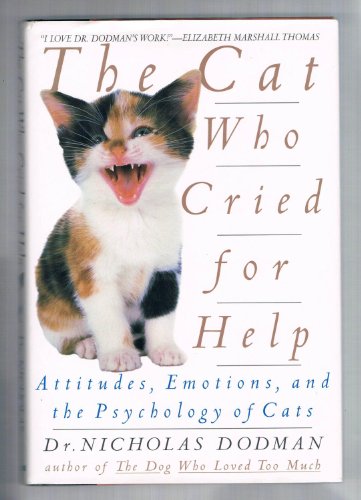
The veterinarian and author of The Dog Who Loved Too Much shows how to treat cats for such disorders as panic attacks, litter-box aversion, depression, and phobias through nutrition, pharmacology, and behavior modification.
Die Inhaltsangabe kann sich auf eine andere Ausgabe dieses Titels beziehen.
Über die Autorinnen und Autoren
Nicholas Dodman, B.V.M.S., M.R.C.V.S., professor of behavioral pharmacology at Tufts University School of Veterinary Medicine and director of the Behavior Clinic, is the author of The Dog Who Loved Too Much. He is an internationally known specialist in domestic animal behavioral research, as well as in the veterinary practice of animal psychology. A board-certified member of the Amencan College of Veterinary Behaviorists, he holds four patents for the pharmacological control of behavior problems, in which field he is a well-known expert
Nicholas Dodman, B.V.M.S., M.R.C.V.S. is professor of behavioral pharmacology at Tufts University School of Veterinary Medicine and director of the Behavior Clinic.
Aus dem Klappentext
ndbreaking book, Dr. Nicholas Dodman does for feline psychology what he did for canines in his widely acclaimed The Dog Who Loved Too Much. Here he reveals the fascinating, and often frustrating, mind of one of our most popular--and certainly most independent--animal companions, and shows how we can coexist peacefully with even the stubbornest of cats.
What do you do about a cat determined to tear your sofa to shreds? Or one who gorges himself on your best running shoes . . . or attacks anyone who dares to open the refrigerator door? Drawing on remarkable real-life stories from his practice at the prestigious Tufts University School of Veterinary Medicine, Dr. Dodman shares the unique, compassionate, dramatically successful treatment programs that have given problem cats a new lease on life . . . and their perplexed owners long-term solutions to even the most intractable disorders.
As any cat owner knows, changing a cat's behavior
Auszug. © Genehmigter Nachdruck. Alle Rechte vorbehalten.
Cats have overtaken dogs as the most popular pet in the United States. The gradual change in the demographics of the workplace plus the cat's independence and intrinsic charm have somehow come together to produce this surge in popularity for this cousin of the king of beasts. The fact that the density of the human population is increasing, the average age of the population is on the rise, and we are in an age of convenience may also have a bearing on the new trend. Cats are relatively inexpensive to buy and keep; they can be left alone while both parents work, do not require intensive management, and are clean and self-sufficient; they do not bark, bite the mailman, chase cars, or make a mess on the sidewalk. These strong suits, coupled with affection on demand, make the cat a fairly attractive package for yuppies and seniors alike.
These considerations all center around our own requirements, not the cats'. What would cats ask for if they had a say in things? They might request a piece of real estate to patrol, some trees to climb, a mate, a few rodents to chase, and somewhere warm and comfortable to take naps. For various reasons, some good and some not so good, we don't come even close to fulfilling this wish list. We limit their freedom, prevent their romantic aspirations, strive to curb their "barbaric" tendencies to grab their lunch on the run, and have a thing about growing trees in our living rooms. So what's left? Free lunch, a warm place to take a nap afterward, and with luck a window through which to gaze out on life in the real world. Some cats settle into this unnatural existence quite well, particularly if their territory is not invaded and their social life remains stable. They may adapt so well that in time, given the choice between staying in or going out, they will peer nervously at the great outdoors through an open door and then turn around and head in, refusing to cross the threshold. This does not necessarily mean that the environment they live in is optimal. Farm animals that have lived in restricted environments will initially select the familiar prison over the open range, but the selection reverses if the choice is provided frequently enough for them to explore and adjust. For other cats, apartment life is a precarious balance easily disrupted by the comings and goings of other members of the household. The addition of new members to the home, changes in routine, and boredom can take their toll and lead to the kind of behavior problems described in this book.
Some of the fundamental issues cannot be addressed to suit the cat. It's too late for that. We can't stop neutering cats and then let them run around loose on city streets. If we did, we would see worse problems than the ones that we currently see. What we can do, though, is to realize what makes our cats tick, take steps to prevent sudden change, and fill as many of the voids as possible. We can think carefully before adding a new cat to the family and make any such additions gradually. We can provide prey facsimiles and take time to awaken those stalking, hunting, and pouncing instincts. Constructive interactive exercises such as click-and-treat training are also helpful, and good old-fashioned care and affection are musts. In addition, we can provide climbing structures, cat nests, scratching posts, and other environmental enrichment strategies to liven up our cats' surroundings and daily existence. At least we can make the effort, and even if we fall a little short of the ideal, they'll be better off than if we didn't try--and they'll probably understand. After all, we're only human.
Many of the problems that arise in the domestic situation stem from the cat's natural behavioral tendencies. It is often difficult to remember that, size aside, a cat is not far removed from its wild cousins. A cat is in some ways like a miniature tiger in your living room. But despite the obvious differences, we have a lot in common with our wild friends. Territoriality and aggression, dominance and fear, anxiety and compulsions are all very human-sounding drives and emotions. This is hardly surprising when one considers the other side of the coin, our biological relatedness. We both inhabit the third rock from the sun and are warm-blooded mammals more closely related to each other than to a fish or a reptile. We have similar brains with similar control centers and identical chemical messengers. Humans just happen to have a few more corrugations in the cerebral cortex, but who's counting? Our peripheral nervous systems, autonomic nervous systems, and hormonal systems are also so similar that they are discussed in the same breath in physiology class as examples of each other. In light of such striking congruence it is hardly surprising that we experience comparable psychological problems. Cats' response to psychogenic medication alone is a powerful piece of evidence to support the view that cats are sentient creatures with feelings and emotions similar to our own. Why else would an apparently anxious cat have its symptoms alleviated with human anxiety-reducing medication? Although scientists have failed to give full credit to the cat's cognitive abilities because they can't quantify them, the concept of feline intelligence is nothing that would surprise the average cat owner. It will just take time for the pundits to prove what the rest of us already intuitively know to be true: that cats have feelings, too.
Excerpted from The Cat Who Cried for Help: Attitudes, Emotions and the Psychology of Cats by Dr. Nicholas Dodman. Copyright (c) 1997 by Nicholas H. Dodman. Excerpted by permission of Bantam Books, a division of the Bantam Doubleday Dell Publishing Group, Inc. All rights reserved. No part of this excerpt may be reproduced or reprinted without permission in writing from the publisher.
„Über diesen Titel“ kann sich auf eine andere Ausgabe dieses Titels beziehen.
Suchergebnisse für The Cat Who Cried for Help: Attitudes, Emotions, and...

Beispielbild für diese ISBN
The Cat Who Cried for Help: Attitudes, Emotions, and the Psychology of Cats
Anbieter: World of Books (was SecondSale), Montgomery, IL, USA
Verkäuferbewertung 5 von 5 Sternen

Zustand: Good. Item in good condition. Textbooks may not include supplemental items i.e. CDs, access codes etc. Bestandsnummer des Verkäufers 00096834401
Gebraucht kaufen
EUR 3,94
Versand gratis
Versand innerhalb von USA
Versand innerhalb von USA
Anzahl: 6 verfügbar
Beispielbild für diese ISBN
The Cat Who Cried for Help: Attitudes, Emotions, and the Psychology of Cats
Anbieter: World of Books (was SecondSale), Montgomery, IL, USA
Verkäuferbewertung 5 von 5 Sternen
Zustand: Very Good. Item in very good condition! Textbooks may not include supplemental items i.e. CDs, access codes etc. Bestandsnummer des Verkäufers 00106469538
Gebraucht kaufen
EUR 3,94
Versand gratis
Versand innerhalb von USA
Versand innerhalb von USA
Anzahl: 4 verfügbar
Beispielbild für diese ISBN
The Cat Who Cried for Help: Attitudes, Emotions, and the Psychology of Cats
Anbieter: World of Books (was SecondSale), Montgomery, IL, USA
Verkäuferbewertung 5 von 5 Sternen
Zustand: Acceptable. Item in acceptable condition! Textbooks may not include supplemental items i.e. CDs, access codes etc. Bestandsnummer des Verkäufers 00105908754
Gebraucht kaufen
EUR 3,94
Versand gratis
Versand innerhalb von USA
Versand innerhalb von USA
Anzahl: 2 verfügbar
Foto des Verkäufers
The Cat Who Cried for Help: Attitudes, Emotions, and the Psychology of Cats
Anbieter: Greenworld Books, Arlington, TX, USA
Verkäuferbewertung 5 von 5 Sternen
Zustand: very_good. Fast Free Shipping â" Very Good condition book with a firm cover and clean pages. Shows normal use and some light wear or limited notes markings. A solid, nice copy to enjoy. Bestandsnummer des Verkäufers GWV.0553104535.VG
Gebraucht kaufen
EUR 4,59
Versand gratis
Versand innerhalb von USA
Versand innerhalb von USA
Anzahl: 2 verfügbar
Foto des Verkäufers
The Cat Who Cried for Help: Attitudes, Emotions, and the Psychology of Cats
Anbieter: Greenworld Books, Arlington, TX, USA
Verkäuferbewertung 5 von 5 Sternen
Zustand: good. Fast Free Shipping â" Good condition. It may show normal signs of use, such as light writing, highlighting, or library markings, but all pages are intact and the book is fully readable. A solid, complete copy that's ready to enjoy. Bestandsnummer des Verkäufers GWV.0553104535.G
Gebraucht kaufen
EUR 4,59
Versand gratis
Versand innerhalb von USA
Versand innerhalb von USA
Anzahl: 2 verfügbar
Foto des Verkäufers
The Cat Who Cried for Help: Attitudes, Emotions, and the Psychology of Cats
Anbieter: ZBK Books, Carlstadt, NJ, USA
Verkäuferbewertung 5 von 5 Sternen
Zustand: very_good. Fast & Free Shipping â" Very Good condition book with a firm cover and clean pages. Shows normal use and some light wear or limited notes markings. A solid, nice copy to enjoy. Bestandsnummer des Verkäufers ZWV.0553104535.VG
Gebraucht kaufen
EUR 4,59
Versand gratis
Versand innerhalb von USA
Versand innerhalb von USA
Anzahl: 2 verfügbar
Beispielbild für diese ISBN
The Cat Who Cried for Help: Attitudes, Emotions, and the Psychology of Cats
Verlag:
Bantam (edition First Edition), 1997
ISBN 10: 0553104535
ISBN 13: 9780553104530
Gebraucht
Hardcover
Erstausgabe
Anbieter: BooksRun, Philadelphia, PA, USA
Verkäuferbewertung 5 von 5 Sternen
Hardcover. Zustand: Fair. First Edition. The item might be beaten up but readable. May contain markings or highlighting, as well as stains, bent corners, or any other major defect, but the text is not obscured in any way. Bestandsnummer des Verkäufers 0553104535-7-1
Gebraucht kaufen
EUR 5,07
Versand gratis
Versand innerhalb von USA
Versand innerhalb von USA
Anzahl: 1 verfügbar
Beispielbild für diese ISBN
The Cat Who Cried for Help: Attitudes, Emotions, and the Psychology of Cats
Anbieter: Evergreen Goodwill, Seattle, WA, USA
Verkäuferbewertung 5 von 5 Sternen
hardcover. Zustand: Good. Bestandsnummer des Verkäufers mon0000766156
Gebraucht kaufen
EUR 1,59
EUR 3,49 Versand
Versand innerhalb von USA
Versand innerhalb von USA
Anzahl: 1 verfügbar
Foto des Verkäufers
The Cat Who Cried for Help: Attitudes, Emotions, and the Psychology of Cats
Anbieter: Off The Shelf, Antonia, MO, USA
Verkäuferbewertung 5 von 5 Sternen
Zustand: good. The item shows wear from consistent use, but it remains in good condition and works perfectly. All pages and cover are intact including the dust cover, if applicable . Spine may show signs of wear. Pages may include limited notes and highlighting. May NOT include discs, access code or other supplemental materials. Bestandsnummer des Verkäufers 4WILKM00NLRC
Gebraucht kaufen
EUR 1,35
EUR 4,36 Versand
Versand innerhalb von USA
Versand innerhalb von USA
Anzahl: 1 verfügbar
Beispielbild für diese ISBN
The Cat Who Cried for Help
Verlag:
Bantam Doubleday Dell Publishing Group Inc, 1997
ISBN 10: 0553104535
ISBN 13: 9780553104530
Gebraucht
Hardcover
Anbieter: World of Books Inc, Montgomery, IL, USA
Verkäuferbewertung 4 von 5 Sternen

Hardback. Zustand: Very Good. In this groundbreaking book, Dr. Nicholas Dodman does for feline psychology what he did for canines in his widely acclaimed The Dog Who Loved Too Much. Here he reveals the fascinating, and often frustrating, mind of one of our most popular--and certainly most independent--animal companions, and shows how we can coexist peacefully with even the stubbornest of cats. What do you do about a cat determined to tear your sofa to shreds? Or one who gorges himself on your best running shoes . . . or attacks anyone who dares to open the refrigerator door? Drawing on remarkable real-life stories from his practice at the prestigious Tufts University School of Veterinary Medicine, Dr. Dodman shares the unique, compassionate, dramatically successful treatment programs that have given problem cats a new lease on life . . . and their perplexed owners long-term solutions to even the most intractable disorders. As any cat owner knows, changing a cat's behavior can seem like an impossible task. But contrary to popular belief, cats can be trained and cured of irritating habits and undesirable behaviors. The Cat Who Cried for Help shows how minor adjustments in diet, exercise regimen, and environment can effect dramatic breakthroughs in resolving almost any feline problem. From cat panic attacks to eating disorders, from litterbox aversion to depression and a wide range of feline phobias, Dr. Dodman has successfully treated and resolved these and many other heretofore untreatable behaviors. Inside, you'll meet Ashley, the boss-cat who literally bites the hand that feeds him; Jonathan, the binge-eater; Rubles, the Abyssinian Jekyll and Hyde, pussycat one minute, man-eating tiger the next; and Thomas, the cat who cried for help--a little too loudly. Dr. Dodman's techniques are based on the most up-to-date research in pharmacology and feline behaviorism. Yet the primary objective of his treatments is to respect and protect the qualities of independence and dignity fundamental to a cat's nature. Including descriptions of symptoms, treatment options, and tips on prevention, The Cat Who Cried for Help provides everything you need to know to ensure both you and your feline friend a long, happy, and healthy relationship. If you've ever wanted to better understand the nature of this mysterious, enigmatic, and fascinating creature, Dr. Dodman's book provides a penetrating look into the intriguing and intricate world of the cat in your life. Bestandsnummer des Verkäufers CIN0553104535VG
Gebraucht kaufen
EUR 5,74
Versand gratis
Versand innerhalb von USA
Versand innerhalb von USA
Anzahl: 4 verfügbar