
Verwandte Artikel zu The Skin Type Solution: Are You Certain Tthat You Are...
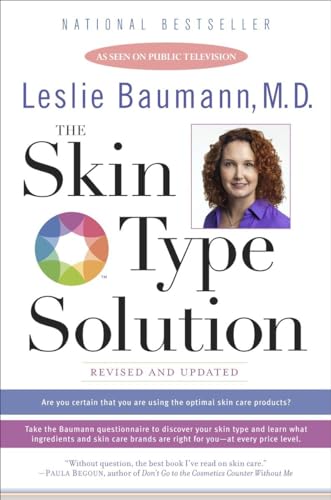
The Skin Type Solution: Are You Certain Tthat You Are Using the Optimal Skin Care Products? Revised and Updated - Softcover
Inhaltsangabe
REVISED AND UPDATED
FORGET EVERYTHING YOU THOUGHT YOU KNEW ABOUT WHAT’S GOOD FOR YOUR SKIN—AND LEARN THE TRUTH.
Take the simple questionnaire inside this book and within minutes discover which of the sixteen unique skin types describes your skin, which ingredients to avoid, the skin care brands that are right for you, and your new time- and money-saving regimen. In this revised edition of her classic bestseller, world-renowned Miami Beach dermatologist and researcher Dr. Leslie Baumann helps you shop for the optimal skin care products. She provides detailed lists of recommended products suited to every skin type and budget. Inside you’ll find
• your personal skin type profile detailing exactly what will work—and what won’t—for your unique complexion
• the newest products for healthy, radiant skin—cleansers, moisturizers, toners, sun blocks, foundations, and more
• tips on preventing skin aging and “problem” skin
• vital information on the new world of prescription products, facials, chemical peels, Retin-A, Botox, and Restylane injections
Now you can look like a million bucks without spending a fortune. This book is almost as good as having Dr. Baumann give you a personal consultation!
Die Inhaltsangabe kann sich auf eine andere Ausgabe dieses Titels beziehen.
Über die Autorin bzw. den Autor
Leslie Baumann, M.D., founded the University of Miami Cosmetic Medicine and Research Institute in 1997, the first university-run research center dedicated to cosmetic dermatology and skin care. Her revolutionary skin typing system has been adopted worldwide. She is also the author of the bestselling textbook Cosmetic Dermatology and is a regular contributor to Yahoo! Health.
Auszug. © Genehmigter Nachdruck. Alle Rechte vorbehalten.
Chapter One
Why Skin Typing?
Introduction
How many times have you gone to a cosmetic counter and spent $50 to $150 on products you never again use? Has a saleswoman or cosmetologist sold you a line that “did wonders for me,” but does nothing for you? Have you developed an allergy or irritation to a product without knowing them cause? Why does your best friend swear by a facial care product that makes your skin look and feel terrible? Should you or shouldn’t you use soap? Why do you hate the feel of sunscreen, though you know you should use it? Is a chemical face peel right for you? Should you consider using Retin-A? If you owned a Subaru Forester, you wouldn’t follow the maintenance procedures for a Volkswagen Golf. So if you happen to have dry, sensitive skin, why on earth would you use a moisturizer, cleanser, and cosmetic procedure
more suited to someone with oily, resistant skin?
The reason? You don’t know what type of skin you have; therefore, you don’t know how to care for your skin. Until the publication of The Skin Type Solution, the Baumann Skin Typing System was not widely known or available. While many people have a general understanding of their skin, most have relied on commonly known but imprecise, unscientific definitions that fall short of providing a true and complete picture.
My many years as a dermatologist, researcher, and professor of dermatology have convinced me that no one ever needs to have a “bad skin day.”
Knowing your Skin Type is the missing, essential step to finding your way to beneficial products and treatments–and beautiful skin. But if you’re like the typical first-time patient at my bustling University of Miami clinic, I’ll bet you:
·Don’t know your Skin Type
·Don’t know that it’s essential to base skin care decisions on your Skin Type
·Use the wrong products for your Skin Type
·Spend much more than you should on those products
·Use the wrong procedures for your Skin Type
·Fail to take advantage of procedures that would benefit your Skin Type
When it comes to using skin care products and services, most people have been in the Dark Ages, wandering through a maze of product misinformation and overzealous marketing, lucky to stumble on anything that works. To properly care for your skin and prevent aging, you need a treatment model that describes and captures the very real and scientifically verifiable distinctions in skin physiology.
Skin Typing does just that.
Plus, you need a concrete program specifically and individually tailored to the unique attributes of your Skin Type. The Skin Type Solution provides all of that vital information and guidance.
Once you’ve discovered your Skin Type (through answering a questionnaire in Chapter Three), you can go straight to the chapter on your Skin Type and find everything you need right there. There is a science to skin care, and once you know your Skin Type, it all gets a lot easier.
I’ve spent the last ten years defining and clinically testing my Skin Type solutions on thousands of patients at my University of Miami clinic to assure that my scientific criteria will work for everyone, of every skin color, ethnicity, age, and sex. And it does.
Perhaps you’ve already benefited from understanding your psychological type, your learning style, or your Ayurvedic type. If so, you’ll appreciate how critical it is to get a handle on your Skin Type. This understanding lets you take control of your skin.
My Special Expertise
The guidance and gems I’ll give you won’t appear anywhere else. I launched, and currently direct, the University of Miami Cosmetic Center, the first university-run cosmetic research center in the United States, where I treat thousands of patients every year. In addition to being an MD, I am a professor at the University of Miami and the chief of the Division of Cosmetic Dermatology, making me the first cosmetic dermatologist in the United States dedicated to the field of cosmetic dermatology who is also a full-time university faculty member, teaching and conducting research.
This unprecedented combination affords me a unique position. My academic responsibilities keep me right on the cutting edge of research, while my clinical work has been a proving ground for refining the recommendations that arise from my findings.
My clients–who range from gorgeous fashion models to topflight professionals, to fellow physicians, to all kinds of men and women concerned about aging–have reaped the benefits of my unique understanding of the role of Skin Type in skin care.
As a scientist who is also a woman who loves to experiment with beauty and skin care products and routines, I’m tireless in seeking out and researching all beauty options because I use them myself. What’s more, as a person who wants to look my best all my life, I can put myself in your shoes and figure out how to best serve your skin care needs.
Defining a New Typology
Up until now, the field of dermatology lacked a rational model that people could learn to follow and apply for themselves. Prior to Skin Typing, the preexisting mode of analyzing skin differences dated back to the early 1900s, when cosmetic giant Helena Rubenstein first divided skin into four categories: normal, combination, dry, and sensitive. While that was revolutionary for its time, today we can apply more accurate scientific criteria to the range of skin differences.
Before Skin Typing, even dermatologists felt frustrated, since we all want to understand skin better and offer our patients tailor-made solutions. But until now, the revolutionary classification of the sixteen Skin Types was not there to help.
Here’s just one example of the kind of confusion that runs rampant, even among professionals. I recently was on the advisory board of a major company with two prominent dermatologists. One was an “R” (someone with resistant, nonreactive skin) and the other one was an “S” (someone with sensitive skin). Right there in front of the company president, the two had a huge argument, with the “R” dermatologist claiming that there was no difference in skin care products and that it was all marketing hype. She could use anything on her facial skin, she told us, even Ivory soap, without a problem. The “S” skin dermatologist was shocked. Almost everything made her skin turn red and sting, she retorted. These two skin professionals did not understand that their opposing points of view stemmed from their opposite Skin Types. I saw very clearly that something was missing and wanted to simplify skin care, once and for all.
As a clinician, I’d seen the damage caused by following an inappropriate skin care routine. As a caring doctor, I’d heard the frustration and confusion of people trying to make good skin care choices while barraged by a plethora of products and overwhelmed by conflicting and often misleading marketing claims. Because each person had particular skin care needs, I noticed that the same products did not work for everyone, so I tailored individualized skin care regimens for my clients. Over time a clear, consistent, and replicable typology emerged. The sixteen Skin Types are the keys to a complete diagnostic and treatment program that covers every significant skin factor and that really works.
My system measures four factors in skin: oiliness vs. dryness, resistance vs. sensitivity, pigmentation vs. non-pigmentation, and tightness vs. wrinkling. Determining where you fall in each of the four categories serves as the foundation for typing your skin. Your Skin...
„Über diesen Titel“ kann sich auf eine andere Ausgabe dieses Titels beziehen.
Suchergebnisse für The Skin Type Solution: Are You Certain Tthat You Are...

Foto des Verkäufers
The Skin Type Solution: Are You Certain That You Are Using the Optimal Skin Care Products? Revised and Updated
Verlag:
Random House Publishing Group, 2006
ISBN 10: 0553383302
ISBN 13: 9780553383300
Gebraucht
Softcover
Anbieter: Reliant Bookstore, El Dorado, KS, USA
Verkäuferbewertung 5 von 5 Sternen

Zustand: acceptable. This book is a well used but readable copy. Integrity of the book is still intact with no missing pages. May have notes or highlighting. Cover image on the book may vary from photo. Ships out quickly in a secure plastic mailer. Bestandsnummer des Verkäufers RDV.0553383302.A
Gebraucht kaufen
EUR 4,48
Versand gratis
Versand innerhalb von USA
Versand innerhalb von USA
Anzahl: 1 verfügbar
Beispielbild für diese ISBN
The Skin Type Solution: Are You Certain Tthat You Are Using the Optimal Skin Care Products? Revised and Updated
Verlag:
Random House Publishing Group (edition Reprint), 2006
ISBN 10: 0553383302
ISBN 13: 9780553383300
Gebraucht
Paperback
Anbieter: BooksRun, Philadelphia, PA, USA
Verkäuferbewertung 5 von 5 Sternen
Paperback. Zustand: Fair. Reprint. The item might be beaten up but readable. May contain markings or highlighting, as well as stains, bent corners, or any other major defect, but the text is not obscured in any way. Bestandsnummer des Verkäufers 0553383302-7-1
Gebraucht kaufen
EUR 4,72
Versand gratis
Versand innerhalb von USA
Versand innerhalb von USA
Anzahl: 1 verfügbar
Foto des Verkäufers
The Skin Type Solution: Are You Certain Tthat You Are Using the Optimal Skin Care Products? Revised and Updated
Verlag:
Random House Publishing Group, 2006
ISBN 10: 0553383302
ISBN 13: 9780553383300
Gebraucht
Softcover
Anbieter: Dream Books Co., Denver, CO, USA
Verkäuferbewertung 5 von 5 Sternen
Zustand: acceptable. This copy has clearly been enjoyedâ"expect noticeable shelf wear and some minor creases to the cover. Binding is strong, and all pages are legible. May contain previous library markings or stamps. Bestandsnummer des Verkäufers DBV.0553383302.A
Gebraucht kaufen
EUR 4,95
Versand gratis
Versand innerhalb von USA
Versand innerhalb von USA
Anzahl: 1 verfügbar
Beispielbild für diese ISBN
The Skin Type Solution Are You
Verlag:
Random House Publishing Group, 2006
ISBN 10: 0553383302
ISBN 13: 9780553383300
Gebraucht
Softcover
Anbieter: World of Books (was SecondSale), Montgomery, IL, USA
Verkäuferbewertung 5 von 5 Sternen
Zustand: Good. Item in good condition. Textbooks may not include supplemental items i.e. CDs, access codes etc. Bestandsnummer des Verkäufers 00102303328
Gebraucht kaufen
EUR 6,08
Versand gratis
Versand innerhalb von USA
Versand innerhalb von USA
Anzahl: 6 verfügbar
Beispielbild für diese ISBN
The Skin Type Solution: Are You Certain Tthat You Are Using the Optimal Skin Care Products? Revised andUpdated
Verlag:
Random House Publishing Group, 2006
ISBN 10: 0553383302
ISBN 13: 9780553383300
Gebraucht
Paperback
Anbieter: ThriftBooks-Dallas, Dallas, TX, USA
Verkäuferbewertung 5 von 5 Sternen
Paperback. Zustand: Good. No Jacket. Pages can have notes/highlighting. Spine may show signs of wear. ~ ThriftBooks: Read More, Spend Less. Bestandsnummer des Verkäufers G0553383302I3N00
Gebraucht kaufen
EUR 6,41
Versand gratis
Versand innerhalb von USA
Versand innerhalb von USA
Anzahl: 1 verfügbar
Beispielbild für diese ISBN
The Skin Type Solution : Are You Certain Tthat You Are Using the Optimal Skin Care Products? Revised AndUpdated
Verlag:
Random House Publishing Group, 2006
ISBN 10: 0553383302
ISBN 13: 9780553383300
Gebraucht
Softcover
Anbieter: Better World Books, Mishawaka, IN, USA
Verkäuferbewertung 5 von 5 Sternen
Zustand: Good. Reprint. Pages intact with minimal writing/highlighting. The binding may be loose and creased. Dust jackets/supplements are not included. Stock photo provided. Product includes identifying sticker. Better World Books: Buy Books. Do Good. Bestandsnummer des Verkäufers 5190372-6
Gebraucht kaufen
EUR 7,00
Versand gratis
Versand innerhalb von USA
Versand innerhalb von USA
Anzahl: 1 verfügbar
Beispielbild für diese ISBN
The Skin Type Solution : Are You Certain Tthat You Are Using the Optimal Skin Care Products? Revised AndUpdated
Verlag:
Random House Publishing Group, 2006
ISBN 10: 0553383302
ISBN 13: 9780553383300
Gebraucht
Softcover
Anbieter: Better World Books: West, Reno, NV, USA
Verkäuferbewertung 5 von 5 Sternen
Zustand: Very Good. Reprint. Former library copy. Pages intact with possible writing/highlighting. Binding strong with minor wear. Dust jackets/supplements may not be included. Includes library markings. Stock photo provided. Product includes identifying sticker. Better World Books: Buy Books. Do Good. Bestandsnummer des Verkäufers 14403628-75
Gebraucht kaufen
EUR 7,00
Versand gratis
Versand innerhalb von USA
Versand innerhalb von USA
Anzahl: 1 verfügbar
Beispielbild für diese ISBN
The Skin Type Solution: Are You Certain Tthat You Are Using the Optimal Skin Care Products? Revised and Updated
Anbieter: World of Books Inc, Montgomery, IL, USA
Verkäuferbewertung 2 von 5 Sternen

Paperback. Zustand: Good. REVISED AND UPDATED FORGET EVERYTHING YOU THOUGHT YOU KNEW ABOUT WHAT'S GOOD FOR YOUR SKIN--AND LEARN THE TRUTH. Take the simple questionnaire inside this book and within minutes discover which of the sixteen unique skin types describes your skin, which ingredients to avoid, the skin care brands that are right for you, and your new time- and money-saving regimen. In this revised edition of her classic bestseller, world-renowned Miami Beach dermatologist and researcher Dr. Leslie Baumann helps you shop for the optimal skin care products. She provides detailed lists of recommended products suited to every skin type and budget. Inside you'll find * your personal skin type profile detailing exactly what will work--and what won't--for your unique complexion * the newest products for healthy, radiant skin--cleansers, moisturizers, toners, sun blocks, foundations, and more * tips on preventing skin aging and "problem" skin * vital information on the new world of prescription products, facials, chemical peels, Retin-A, Botox, and Restylane injections Now you can look like a million bucks without spending a fortune. This book is almost as good as having Dr. Baumann give you a personal consultation! Bestandsnummer des Verkäufers CIN0553383302G
Gebraucht kaufen
EUR 7,87
Versand gratis
Versand innerhalb von USA
Versand innerhalb von USA
Anzahl: 7 verfügbar
Beispielbild für diese ISBN
The Skin Type Solution: Are You Certain Tthat You Are Using the Optimal Skin Care Products? Revised andUpdated
Verlag:
Random House Publishing Group, 2006
ISBN 10: 0553383302
ISBN 13: 9780553383300
Gebraucht
paperback
Anbieter: HPB-Diamond, Dallas, TX, USA
Verkäuferbewertung 5 von 5 Sternen
paperback. Zustand: Very Good. Connecting readers with great books since 1972! Used books may not include companion materials, and may have some shelf wear or limited writing. We ship orders daily and Customer Service is our top priority! Bestandsnummer des Verkäufers S_479554340
Gebraucht kaufen
EUR 5,35
EUR 3,25 Versand
Versand innerhalb von USA
Versand innerhalb von USA
Anzahl: 1 verfügbar
Beispielbild für diese ISBN
The Skin Type Solution: Are You Certain Tthat You Are Using the Optimal Skin Care Products? Revised and Updated
Verlag:
Random House Publishing Group, 2006
ISBN 10: 0553383302
ISBN 13: 9780553383300
Gebraucht
Softcover
Anbieter: Read&Dream, SAINT LOUIS, MO, USA
Verkäuferbewertung 4 von 5 Sternen

Zustand: Good. Bestandsnummer des Verkäufers 600K_MG_H0006CXM
Gebraucht kaufen
EUR 9,24
Versand gratis
Versand innerhalb von USA
Versand innerhalb von USA
Anzahl: 1 verfügbar