
Verwandte Artikel zu The Magician and the Fool: A Novel
Inhaltsangabe
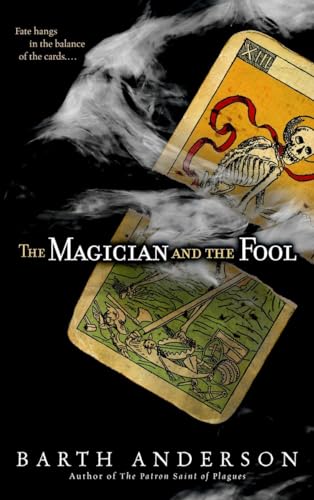
For hundreds of years, men have sought their hidden futures in the legendary images of the tarot—but what secrets of the past are harbored by the priestess, the magician, the hanged man…and the fool? The author of the explosive The Patron Saint of Plagues returns with a richly textured mystical mystery exploring the dark heart of one of our oldest traditions.
Years ago, fallen scholar Jeremiah Rosemont left the bitter rivalries of academia behind and now lives a simple nomadic existence in South America, far from the arguments that once defined his life. But he can’t outrun his past…or the dangerous truth that lurks beneath his abandoned studies. Following an enigmatic summons to Rome, Rosemont finds himself at the center of a mystery that dates back to the fall of Troy, the pursuit of a mystical treasure many are willing to sacrifice fortunes and lives for: the earliest known tarot deck.
As Rosemont delves deeper and deeper into the tarot’s unsettling secret origins, his own fate is inexorably intertwined with that of the Boy King, a homeless man with an unspeakable gift…and a mysterious past of his own. For these two men—and the demons, dupes, and power seekers drawn to them—the cards will reveal everything, even the shattering, unseen truths of human life itself.…
Die Inhaltsangabe kann sich auf eine andere Ausgabe dieses Titels beziehen.
Über die Autorin bzw. den Autor
Barth Anderson lives in Minnesota with his wife and children. He has written short fiction in numerous publications and anthologies, and six of his stories have received honorable mentions in The Year’s Best Fantasy and Horror. He was the winner of the Spectrum Award for best short fiction in 2004. The Magician and the Fool is his second novel.
Auszug. © Genehmigter Nachdruck. Alle Rechte vorbehalten.
Chapter One
Nicaraguan roosters never need the excuse of a sun to start screaming. A prowler startles one, or maybe it's a pair of headlights or another chicken, but with one loud cluck, that lone rooster sets off a chain reaction of shrieking across Managua. Nicaraguans never seemed to notice; to a local, a crying rooster was like a taxi horn to a New Yorker. You tuned it out or you never slept. Tonight, they started at 3 a.m. This was only his second night in Managua, and Rosemont hadn't learned to ignore them yet. He unwrapped himself from the sleeping priest and slid from bed.
After stepping into sweatpants, he walked around to the main gate leading into the Casa Evangelista courtyard. Enfolded in amniotic darkness, a broad-leafed tree nodding overhead in the night's sultry breeze, he sat by the bookcases in the open-roofed atrium where he could see through the front security gate into the street. Rosemont liked this hostel. He'd been backpacking south from Mexico and this was the fanciest place he'd stayed in since Costa Rica. Meals of gallo pinto (beans and rice), a hard-boiled egg, and a little cheese. Fans in the rooms. Showers with no warm water, but no one wanted it. Travelers from all over the world intersected here, some coming with church groups to offer aid, some to see the volcano south of Managua.
From the atrium, Rosemont could hear the Australian couple having noisy sex in the bathroom. Just that afternoon they'd been arguing bitterly, and just as loudly. He could also hear the group of European students drinking, flirting, and lamely trying to be quiet in one of their rooms. After translating for the hostel's cook, who had a crush on one of the French women, Rosemont had left that party a couple of hours ago.
Mentioned in most of the backpack travel guides, Casa Evangelista was an oasis after the trip that Rosemont had taken down from the Segovia region in northwest Nicaragua on Saturday. In exchange for food and board, he'd been picking coffee in that frontier for weeks. The harvest was over now, it was May, so he followed one of the shipments of beans south to market. Hopping aboard a wide wooden flatbed used for transporting one-hundred-pound bags of green coffee, he left the cloud-rinsed farms of the high Isabel mountains. Unfortunately for him, just before reaching the arid, middle regions of the country, Rosemont lost his hat when standing to hand a bottle of rum to a fellow hitchhiker. The man laughed, watching it spin along the dirt road behind the truck, and saluted it. "Go with God, hat!" Rosemont had laughed too. But when the sun vaulted to midheaven less than an hour later, he was baking like the wet coffee beans drying on wide, concrete patios that they passed along the road—nothing between him and the pounding Nicaraguan sun.
Around noon, as the mountain road stepped down into the deserts outside Matagalpa, his breakfast rum-buzz had worn off and Rosemont realized he was in trouble. He drank all the water in his one water bottle. He traded places to take advantage of what little shade he could get from the flatbed's crossbeam. He draped a T-shirt from his pack over his head, but he was already near heatstroke, dehydrated from rum and sun, and his whole body rumbled in a fevery hallucination of bouncing farm trucks, leafy boughs of coffee growing out of the stuffed burlap bags around him, and his landed-gentry grandparents back in the States scolding him that he'd never secure tenure for himself this way. When the truck stopped in Matagalpa at Cecocafen Coffee cooperative's offices, his fellow traveler had taken pity on him and bought him a couple of bottles of water, offering them with a wry smile, saying, "Vaya con dios, Se–or Sin Sombrero." Go with God, Mr. Hatless.
While Rosemont sat in the back of the truck, drinking water and waiting for the driver, a little boy had approached him with his palm out. From his sickbed of coffee bags, Rosemont looked down into that hand, and in his delirium, it had seemed the boy was holding a broken shellfish, offering it to Rosemont. He looked into the boy's face for an explanation.
"ÀPor favor?" said the boy. Rosemont looked back and realized that the hand had only three fingers.
What we do to kids in this world.
Rosemont nodded at the boy's fingers. "How'd that happen?"
The kid shrugged one shy shoulder. Then he managed, "Angels."
Rosemont hadn't understood, nor was he certain what he'd put into that hand, but it was the last two bills he had in his pocket. "Steer clear of angels, okay?"
The kid took the money, and as Rosemont's truck pulled away from the curb, he baffled Rosemont by saying, "You're the one who should watch out for angels."
The smooth highway to Managua had soon droned the strange warning from Rosemont's mind, and the bottles of water helped drown his thundering headache. By the time he'd reached Managua, well after sundown, the shirt-soaking humidity of the Pacific was almost a relief. With the help of a Finnish cab driver, Rosemont had made his way from the bustling terminal coffee market to the only hostel whose name he knew: Casa Evangelista. He was wary of the religious name—evangelista basically meant Protestant—but the Casa's reputation among travelers was sterling. He was greeted in the maroon-tiled atrium by the hostel's proprietor, who introduced himself as Aurelio, though he was obviously American.
"Budget-trail traveler, caught in the desert without a hat," guessed Aurelio. His blue linen shirt was open at the collar, revealing coarse, white chest hair. He took Rosemont's pack and slid it next to the front desk. "German?"
He got that a lot. Rosemont smiled, feeling dilapidated. "Not too many of us down here, but I'm American."
Aurelio laughed and looked him over again. "To quote the Bard," he said, "you do look all horse-piss." Aurelio took Rosemont's hand in both of his and then led him through the Casa's courtyard, where dark palm fronds bobbed, and to the guest rooms. The room that Aurelio assigned to Rosemont had an engraved door, painted with a rough portrait of bespectacled and goateed Carlos Fonseca. He said, "For you, Fonseca, my favorite room." He smiled affectionately. "We have a Sunday service tomorrow morning with Communion. You're invited but not expected to come."
Hector, the bellman and guard, had arrived a moment later with Rosemont's bags, slid them into the room, turned on the electric fan, and set a big dispenser of water on the dresser, flashing a winning smile as he departed.
"I won't attend," said Rosemont over the loudly oscillating fan, again wondering if he'd made a mistake selecting this hostel. "I'm not feeling very well, and—"
"So sleep in," said Aurelio, smiling and stepping back from Rosemont.
An Australian couple came to stand behind Aurelio, just outside Rosemont's room. They were quarreling over money.
Their dissonance wore on him. The welcome firmness of Aurelio's hand had reminded Rosemont how long it had been—weeks—since he'd even touched another human being. He wished that the couple would find a gentler way to speak, that the man wouldn't go.
"Perhaps I'll check back on you later tonight?" Aurelio said. "See how you're feeling?"
It begins, thought Rosemont. He should have said that wasn't necessary, but he was not himself. "Yes, do that."
As it happened, Aurelio did not come back to check on him, and Managua's roosters had woken Rosemont early that first night. The headache he suffered in the Matagalpa desert was gone, though he'd drifted in and out of a sunburnt sleep, drinking from his water...
„Über diesen Titel“ kann sich auf eine andere Ausgabe dieses Titels beziehen.
Suchergebnisse für The Magician and the Fool: A Novel

Beispielbild für diese ISBN
The Magician and the Fool: A Novel
Anbieter: World of Books (was SecondSale), Montgomery, IL, USA
Verkäuferbewertung 5 von 5 Sternen

Paperback. Zustand: Good. For hundreds of years, men have sought their hidden futures in the legendary images of the tarot--but what secrets of the past are harbored by the priestess, the magician, the hanged man.and the fool? The author of the explosive The Patron Saint of Plagues returns with a richly textured mystical mystery exploring the dark heart of one of our oldest traditions. Years ago, fallen scholar Jeremiah Rosemont left the bitter rivalries of academia behind and now lives a simple nomadic existence in South America, far from the arguments that once defined his life. But he can't outrun his past.or the dangerous truth that lurks beneath his abandoned studies. Following an enigmatic summons to Rome, Rosemont finds himself at the center of a mystery that dates back to the fall of Troy, the pursuit of a mystical treasure many are willing to sacrifice fortunes and lives for: the earliest known tarot deck. As Rosemont delves deeper and deeper into the tarot's unsettling secret origins, his own fate is inexorably intertwined with that of the Boy King, a homeless man with an unspeakable gift.and a mysterious past of his own. For these two men--and the demons, dupes, and power seekers drawn to them--the cards will reveal everything, even the shattering, unseen truths of human life itself. Bestandsnummer des Verkäufers 00109095372
Gebraucht kaufen
EUR 3,60
Versand gratis
Versand innerhalb von USA
Versand innerhalb von USA
Anzahl: 1 verfügbar
Beispielbild für diese ISBN
The Magician and the Fool: A Novel
Anbieter: World of Books (was SecondSale), Montgomery, IL, USA
Verkäuferbewertung 5 von 5 Sternen
Paperback. Zustand: Fair. For hundreds of years, men have sought their hidden futures in the legendary images of the tarot--but what secrets of the past are harbored by the priestess, the magician, the hanged man.and the fool? The author of the explosive The Patron Saint of Plagues returns with a richly textured mystical mystery exploring the dark heart of one of our oldest traditions. Years ago, fallen scholar Jeremiah Rosemont left the bitter rivalries of academia behind and now lives a simple nomadic existence in South America, far from the arguments that once defined his life. But he can't outrun his past.or the dangerous truth that lurks beneath his abandoned studies. Following an enigmatic summons to Rome, Rosemont finds himself at the center of a mystery that dates back to the fall of Troy, the pursuit of a mystical treasure many are willing to sacrifice fortunes and lives for: the earliest known tarot deck. As Rosemont delves deeper and deeper into the tarot's unsettling secret origins, his own fate is inexorably intertwined with that of the Boy King, a homeless man with an unspeakable gift.and a mysterious past of his own. For these two men--and the demons, dupes, and power seekers drawn to them--the cards will reveal everything, even the shattering, unseen truths of human life itself. Bestandsnummer des Verkäufers 00110087130
Gebraucht kaufen
EUR 3,60
Versand gratis
Versand innerhalb von USA
Versand innerhalb von USA
Anzahl: 1 verfügbar
Beispielbild für diese ISBN
The Magician and the Fool: A Novel
Anbieter: World of Books Inc, Montgomery, IL, USA
Verkäuferbewertung 4 von 5 Sternen

Paperback. Zustand: Fair. For hundreds of years, men have sought their hidden futures in the legendary images of the tarot--but what secrets of the past are harbored by the priestess, the magician, the hanged man.and the fool? The author of the explosive The Patron Saint of Plagues returns with a richly textured mystical mystery exploring the dark heart of one of our oldest traditions. Years ago, fallen scholar Jeremiah Rosemont left the bitter rivalries of academia behind and now lives a simple nomadic existence in South America, far from the arguments that once defined his life. But he can't outrun his past.or the dangerous truth that lurks beneath his abandoned studies. Following an enigmatic summons to Rome, Rosemont finds himself at the center of a mystery that dates back to the fall of Troy, the pursuit of a mystical treasure many are willing to sacrifice fortunes and lives for: the earliest known tarot deck. As Rosemont delves deeper and deeper into the tarot's unsettling secret origins, his own fate is inexorably intertwined with that of the Boy King, a homeless man with an unspeakable gift.and a mysterious past of his own. For these two men--and the demons, dupes, and power seekers drawn to them--the cards will reveal everything, even the shattering, unseen truths of human life itself. Bestandsnummer des Verkäufers CIN0553383590A
Gebraucht kaufen
EUR 5,41
Versand gratis
Versand innerhalb von USA
Versand innerhalb von USA
Anzahl: 1 verfügbar
Beispielbild für diese ISBN
The Magician and the Fool
Anbieter: ThriftBooks-Atlanta, AUSTELL, GA, USA
Verkäuferbewertung 5 von 5 Sternen
Paperback. Zustand: Good. No Jacket. Pages can have notes/highlighting. Spine may show signs of wear. ~ ThriftBooks: Read More, Spend Less. Bestandsnummer des Verkäufers G0553383590I3N00
Gebraucht kaufen
EUR 8,10
Versand gratis
Versand innerhalb von USA
Versand innerhalb von USA
Anzahl: 1 verfügbar
Foto des Verkäufers
Magician and the Fool
Anbieter: GreatBookPrices, Columbia, MD, USA
Verkäuferbewertung 5 von 5 Sternen
Zustand: New. Bestandsnummer des Verkäufers 5511237-n
Neu kaufen
EUR 9,03
EUR 2,32 Versand
Versand innerhalb von USA
Versand innerhalb von USA
Anzahl: Mehr als 20 verfügbar
Foto des Verkäufers
The Magician and the Fool
Anbieter: Rarewaves USA, HEBRON, KY, USA
Verkäuferbewertung 5 von 5 Sternen
Paperback. Zustand: New. Bestandsnummer des Verkäufers LU-9780553383591
Neu kaufen
EUR 11,43
Versand gratis
Versand innerhalb von USA
Versand innerhalb von USA
Anzahl: Mehr als 20 verfügbar
Foto des Verkäufers
Magician and the Fool
Anbieter: GreatBookPrices, Columbia, MD, USA
Verkäuferbewertung 5 von 5 Sternen
Zustand: As New. Unread book in perfect condition. Bestandsnummer des Verkäufers 5511237
Gebraucht kaufen
EUR 10,47
EUR 2,32 Versand
Versand innerhalb von USA
Versand innerhalb von USA
Anzahl: Mehr als 20 verfügbar
Beispielbild für diese ISBN
The Magician and the Fool Format: Paperback
Anbieter: INDOO, Avenel, NJ, USA
Verkäuferbewertung 5 von 5 Sternen
Zustand: As New. Unread copy in mint condition. Bestandsnummer des Verkäufers RH9780553383591
Gebraucht kaufen
EUR 12,87
Versand gratis
Versand innerhalb von USA
Versand innerhalb von USA
Anzahl: Mehr als 20 verfügbar
Beispielbild für diese ISBN
The Magician and the Fool Format: Paperback
Anbieter: INDOO, Avenel, NJ, USA
Verkäuferbewertung 5 von 5 Sternen
Zustand: New. Brand New. Bestandsnummer des Verkäufers 9780553383591
Neu kaufen
EUR 12,95
Versand gratis
Versand innerhalb von USA
Versand innerhalb von USA
Anzahl: Mehr als 20 verfügbar
Beispielbild für diese ISBN
The Magician and the Fool (Paperback)
Anbieter: Grand Eagle Retail, Bensenville, IL, USA
Verkäuferbewertung 5 von 5 Sternen
Paperback. Zustand: new. Paperback. For hundreds of years, men have sought their hidden futures in the legendary images of the tarotbut what secrets of the past are harbored by the priestess, the magician, the hanged manand the fool? The author of the explosive The Patron Saint of Plagues returns with a richly textured mystical mystery exploring the dark heart of one of our oldest traditions.Years ago, fallen scholar Jeremiah Rosemont left the bitter rivalries of academia behind and now lives a simple nomadic existence in South America, far from the arguments that once defined his life. But he cant outrun his pastor the dangerous truth that lurks beneath his abandoned studies. Following an enigmatic summons to Rome, Rosemont finds himself at the center of a mystery that dates back to the fall of Troy, the pursuit of a mystical treasure many are willing to sacrifice fortunes and lives for: the earliest known tarot deck. As Rosemont delves deeper and deeper into the tarots unsettling secret origins, his own fate is inexorably intertwined with that of the Boy King, a homeless man with an unspeakable giftand a mysterious past of his own. For these two menand the demons, dupes, and power seekers drawn to themthe cards will reveal everything, even the shattering, unseen truths of human life itself. The author of the explosive "The Patron Saint of Plagues" returns with a richly textured mystical thriller exploring the hidden secrets of the tarot and the workings of a dark god just beyond reach. Shipping may be from multiple locations in the US or from the UK, depending on stock availability. Bestandsnummer des Verkäufers 9780553383591