
Verwandte Artikel zu The Girl of Ink & Stars
Inhaltsangabe
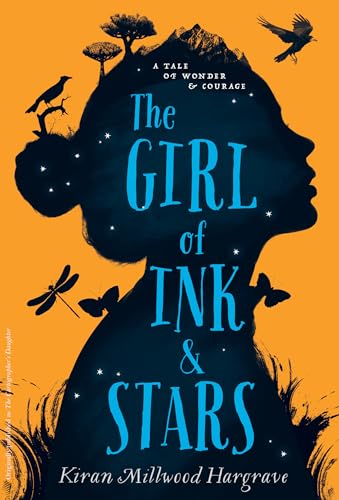
A beautifully written story of friendship, discovery, myths, and magic that the London Times called "reminiscent of fantasy greats such as Philip Pullman and Neil Gaiman."
Legends say that the island of Joya was once a place where songbirds sang in every tree and the islanders were free to come and go as they pleased. That was before the harsh-ruling Governor arrived, and ravens drove out the native birds. Now there are no songbirds, and the people are forbidden to travel beyond the forest that separates them from the rest of the island.
But for Isabella, the legends of her island home have always seemed like more than just stories. And when a series of mysterious events shakes the community, it’s Isabella—daughter to the island’s only mapmaker—who will lead a party of explorers into the forest in search of answers. As the group ventures deeper and deeper into the island, dark secrets begin to surface, and the legends Isabella has listened to all these years show signs of coming to life.
Debut novelist Kiran Millwood Hargrave draws on the cultural folklore of the Canary Islands in this richly told story of a girl’s quest to map her own place in a world that legends alone have shaped.
Advance Praise:
"[R]eminiscent of fantasy greats such as Philip Pullman and Neil Gaiman." --The London Times
Die Inhaltsangabe kann sich auf eine andere Ausgabe dieses Titels beziehen.
Über die Autorin bzw. den Autor
Kiran Millwood Hargrave is an award-winning poet and novelist. A graduate of Oxford University’s Creative Writing MA, she currently lives and writes in Oxford, England. Learn more about her at kiranmillwoodhargrave.com.
Auszug. © Genehmigter Nachdruck. Alle Rechte vorbehalten.
1
They say the day the Governor arrived, the ravens did too. All the smaller birds flew backward into the sea, and that is why there are no songbirds on Joya. Only huge, ragged ravens. I’d watch them perch on the rooftops like omens, and try to squint them into the chaffinches and goldcrests Da drew from memory. If I imagined hard enough, I could almost hear them singing.
“Why did the songbirds leave, Da?” I’d ask.
“Because they could, Isabella.”
“And the wolves? The deer?”
Da’s face would darken. “Seems the sea was better than what they were running from.”
Da would tell me another story then, about the girl-warrior Arinta, or Joya’s mythical past as a floating island, and refuse to say more about the wolves and the backward birds. But I kept asking, until the day came when I found my own answers.
The morning it began was like any other.
I woke in my narrow bed, sunrise just starting to brighten the mud walls of my room. The smell of burnt porridge hung on the air. Da must have been up for hours, as it took a long time for the fire to heat the heavy clay pot. I could hear Miss La, our hen, scratching about outside my room, seeking out crumbs. She was twelve years old, same as me, but even though it’s young for a person, it’s very, very old for a chicken. Her feathers were gray, her mood was black, and even our cat, Pep, was scared of her.
My tummy rumbled as I stretched out my arms. Pep was sprawled across my legs, and he yowled loudly as I sat up.
“You awake, Isabella?” Da called from the kitchen.
“Morning, Da.”
“Porridge is ready. A little overready, in fact . . .”
“Coming!” I eased my legs out and smoothed the cat’s rough fur where it had ruffled in the night. “Sorry, Pep.”
He purred and closed his green eyes.
I washed my face in the basin by the window and stuck a tongue out at the reflection in the polished metal above Gabo’s bed. I straightened his sheets, dustier every day but still made, and traced the voice line arched next to his pillow--a long, thin hollow Da had etched for us up the walls and over the ceiling. When we pressed our lips to it and whispered, it carried our voices so we could talk even when we were at each end of the room in our separate beds.
Three years now. Three years since I sat there, my twin’s hand fire in mine as he faded in the night, fast as a blown-out match.
But still I could conjure him. Easy as breathing.
It would not do to start the day sad. Shaking the thoughts out of my head, I pulled on my school dress instead. It was as big as it had been six weeks before. My best friend, Lupe, would laugh. Still the shortest in the class! she’d say.
I quickly braided my unbrushed hair and hoped Da wouldn’t notice I hadn’t untangled it all summer. Pep was rolling on the bed, but I wasn’t allowed to stroke him with my uniform on. My teacher, Señora Feliz, was always picking ginger hairs off my dress with irritated fingers.
I pulled aside the curtain that served as my bedroom door and carefully stepped over Miss La, who squawked as I scattered her small pile of crumbs. She narrowed her misty eyes and pecked at my ankles, chasing me farther into the main room, where we ate, talked, and planned adventures.
A big bowl of blackened porridge sat on our large pine-plank table, marooned among a sea of maps. More of Da’s maps were stuck to the walls, and they rustled as I passed, like a talking breeze.
I traced the papers with my finger, as I did every morning, watching how the silver pigment of Afrik’s rivers met those of Æygpt, how Æygpt clung to the curve of Europa Bay like one hand grasping another across the sea. On the opposite wall hung the sketchy coast of Amrica and its dragging ocean currents, labeled with strange, wondrous names: the Frozen Circle, the Vanishing Triangle, the Cerulean Sea. The paper was dyed a beautiful deep blue, and the currents were picked out in thread against it. Da had used a needle and thread thin as a hair for these: gold for Cerulean, black for the Triangle, white for the Frozen Circle. But past the eastern coast, everything stopped. Only one word broke the blankness:
Incognito. Unknown.
I could almost feel Da’s disappointment in the long-dried ink of the word. Unfavorable tides on his last trip had meant an early return to Joya, and Da never again made it across that wild expanse before the Governor arrived on our island. Governor Adori closed the ports and made the forest that stretched coast to coast between our village of Gromera and the rest of the island into a border, banishing anyone who resisted his rule to the other side. Gromera was cut off from the rest of Joya, and the forest was strung with thick thorns and enormous bells to warn the Governor’s guards if anyone came through. I had never heard the bells ring.
I knew Da dreamt of filling in the gaps on his Amrica maps, whereas what I wanted, more than anything else, was to cross the forest border and chart the Forgotten Territories, which lay beyond, though I had never told him so.
There was only one map that showed the whole of our island, and it hung in Da’s study. I called it Ma’s map because it had been passed down through her family for generations, maybe even as far back as Arinta’s time a thousand years ago. It had always felt like a sign that Ma and Da were meant for each other, that he was a cartographer and her only heirloom was a map.
Each of us carries the map of our lives on our skin, in the way we walk, even the way we grow, Da would often say. See here how my blood runs not blue at my wrist, but black? Your mother always said it was ink. I am a cartographer through to my heart.
“Fetch the jug, would you?” Da’s voice made me jump, pulling me back into the room.
I dragged a chair to the shelves, carefully taking the jug from high up, and put it on the table next to the porridge. It was forest green and special because it was the last thing Ma had made. We used it only on the first and last days of school, or birthdays and feast days. Da kept it out of reach and washed it with great care.
I could remember Ma sometimes--dark-eyed and mostly smiling, smelling of the black clay she worked with, making pots for the villagers and delicate pieces for the Governor. Or maybe I imagined her, like the songbirds.
“Good morning, little one.” Da limped from the kitchen. I rushed to take the milk pail and cups he was carrying.
“You shouldn’t walk without your stick,” I scolded.
Da had broken his leg as a young man, leaping from the jetty of an Æygptian port onto a moving ship that was leaving for Amrica without him, and now used a walking stick carved from a fragment of his great-grandfather’s fishing boat. It was my favorite thing out of the many favorite things in the room. Light as paper, it floated in even the thinnest skim of water, but most miraculous of all, it glowed in the dark. Da said it was because of the sap, but I knew it was magic.
I hurried to clear a space on the table, shifting the Himalay Mountains onto a shelf.
Da poured the milk...
„Über diesen Titel“ kann sich auf eine andere Ausgabe dieses Titels beziehen.
Suchergebnisse für The Girl of Ink & Stars

Beispielbild für diese ISBN
The Girl of Ink & Stars
Anbieter: Half Price Books Inc., Dallas, TX, USA
Verkäuferbewertung 5 von 5 Sternen

paperback. Zustand: Very Good. Connecting readers with great books since 1972! Used books may not include companion materials, and may have some shelf wear or limited writing. We ship orders daily and Customer Service is our top priority! Bestandsnummer des Verkäufers S_474947415
Gebraucht kaufen
EUR 2,48
EUR 3,24 Versand
Versand innerhalb von USA
Versand innerhalb von USA
Anzahl: 1 verfügbar
Beispielbild für diese ISBN
The Girl of Ink & Stars
Anbieter: ThriftBooks-Reno, Reno, NV, USA
Verkäuferbewertung 5 von 5 Sternen
Paperback. Zustand: Fair. No Jacket. Former library book; Readable copy. Pages may have considerable notes/highlighting. ~ ThriftBooks: Read More, Spend Less. Bestandsnummer des Verkäufers G0553535315I5N10
Gebraucht kaufen
EUR 5,76
Versand gratis
Versand innerhalb von USA
Versand innerhalb von USA
Anzahl: 1 verfügbar
Beispielbild für diese ISBN
The Girl of Ink & Stars
Anbieter: ThriftBooks-Phoenix, Phoenix, AZ, USA
Verkäuferbewertung 5 von 5 Sternen
Paperback. Zustand: Fair. No Jacket. Readable copy. Pages may have considerable notes/highlighting. ~ ThriftBooks: Read More, Spend Less. Bestandsnummer des Verkäufers G0553535315I5N00
Gebraucht kaufen
EUR 5,76
Versand gratis
Versand innerhalb von USA
Versand innerhalb von USA
Anzahl: 1 verfügbar
Beispielbild für diese ISBN
The Girl of Ink & Stars
Anbieter: ThriftBooks-Atlanta, AUSTELL, GA, USA
Verkäuferbewertung 5 von 5 Sternen
Paperback. Zustand: Fair. No Jacket. Former library book; Readable copy. Pages may have considerable notes/highlighting. ~ ThriftBooks: Read More, Spend Less. Bestandsnummer des Verkäufers G0553535315I5N10
Gebraucht kaufen
EUR 5,76
Versand gratis
Versand innerhalb von USA
Versand innerhalb von USA
Anzahl: 1 verfügbar
Beispielbild für diese ISBN
The Girl of Ink & Stars
Anbieter: ThriftBooks-Dallas, Dallas, TX, USA
Verkäuferbewertung 5 von 5 Sternen
Paperback. Zustand: Very Good. No Jacket. May have limited writing in cover pages. Pages are unmarked. ~ ThriftBooks: Read More, Spend Less. Bestandsnummer des Verkäufers G0553535315I4N00
Gebraucht kaufen
EUR 5,76
Versand gratis
Versand innerhalb von USA
Versand innerhalb von USA
Anzahl: 1 verfügbar
Beispielbild für diese ISBN
The Girl of Ink & Stars
Anbieter: ThriftBooks-Reno, Reno, NV, USA
Verkäuferbewertung 5 von 5 Sternen
Paperback. Zustand: Very Good. No Jacket. May have limited writing in cover pages. Pages are unmarked. ~ ThriftBooks: Read More, Spend Less. Bestandsnummer des Verkäufers G0553535315I4N00
Gebraucht kaufen
EUR 5,76
Versand gratis
Versand innerhalb von USA
Versand innerhalb von USA
Anzahl: 1 verfügbar
Beispielbild für diese ISBN
The Girl of Ink & Stars
Anbieter: ThriftBooks-Dallas, Dallas, TX, USA
Verkäuferbewertung 5 von 5 Sternen
Paperback. Zustand: Fair. No Jacket. Readable copy. Pages may have considerable notes/highlighting. ~ ThriftBooks: Read More, Spend Less. Bestandsnummer des Verkäufers G0553535315I5N00
Gebraucht kaufen
EUR 5,76
Versand gratis
Versand innerhalb von USA
Versand innerhalb von USA
Anzahl: 1 verfügbar
Beispielbild für diese ISBN
The Girl of Ink & Stars
Anbieter: ThriftBooks-Atlanta, AUSTELL, GA, USA
Verkäuferbewertung 5 von 5 Sternen
Paperback. Zustand: Fair. No Jacket. Readable copy. Pages may have considerable notes/highlighting. ~ ThriftBooks: Read More, Spend Less. Bestandsnummer des Verkäufers G0553535315I5N00
Gebraucht kaufen
EUR 5,76
Versand gratis
Versand innerhalb von USA
Versand innerhalb von USA
Anzahl: 2 verfügbar
Beispielbild für diese ISBN
The Girl of Ink & Stars
Anbieter: ThriftBooks-Atlanta, AUSTELL, GA, USA
Verkäuferbewertung 5 von 5 Sternen
Paperback. Zustand: Very Good. No Jacket. May have limited writing in cover pages. Pages are unmarked. ~ ThriftBooks: Read More, Spend Less. Bestandsnummer des Verkäufers G0553535315I4N00
Gebraucht kaufen
EUR 5,76
Versand gratis
Versand innerhalb von USA
Versand innerhalb von USA
Anzahl: 2 verfügbar
Beispielbild für diese ISBN
The Girl of Ink & Stars
Anbieter: ThriftBooks-Phoenix, Phoenix, AZ, USA
Verkäuferbewertung 5 von 5 Sternen
Paperback. Zustand: Fair. No Jacket. Former library book; Readable copy. Pages may have considerable notes/highlighting. ~ ThriftBooks: Read More, Spend Less. Bestandsnummer des Verkäufers G0553535315I5N10
Gebraucht kaufen
EUR 5,76
Versand gratis
Versand innerhalb von USA
Versand innerhalb von USA
Anzahl: 1 verfügbar