
Verwandte Artikel zu Silver Bells: A Holiday Tale
Inhaltsangabe
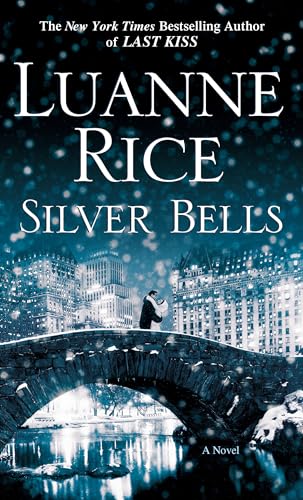
The enchantment of the holidays meets the pure storytelling genius of New York Times bestselling author Luanne Rice, as she presents readers with a special gift for the season and a Christmas classic in the making…
On a quaint, snowy Chelsea street, librarian Catherine Tierney and a widowed Christmas tree seller from Nova Scotia will rediscover the magic of the season where they least expect it: in a chance encounter that leads to a holiday surprise of love and hope powerful enough to last a lifetime.
Die Inhaltsangabe kann sich auf eine andere Ausgabe dieses Titels beziehen.
Über die Autorin bzw. den Autor
Luanne Rice is the author, most recently, of Last Kiss and Light of the Moon, among many other New York Times bestsellers. She lives in New York City and on the Connecticut shore.
Auszug. © Genehmigter Nachdruck. Alle Rechte vorbehalten.
Chapter One
All summer long the trees had grown tall and full, roots deep in the rich island soil, branches yearning toward the golden sun. The salt wind had blown in from the east, gilding the pine needles silver. Everyone knew that the best Christmas trees came from the north, with the best of all coming from Nova Scotia, where the stars hung low in the sky. It was said that starlight lodged in the branches, the northern lights charged the needles with magic. Nova Scotia trees were made hardy by the sea and luminous by the stars.
On Cape Breton's Pleasant Bay, in the remote north of Nova Scotia, was a tree farm owned by Christopher Byrne. His family had immigrated to Canada from Ireland when he was a child; they'd answered an ad to work on a Christmas tree farm. It was brutally hard work, and they were very poor, and Christy remembered going to sleep with a gnawing hunger in his belly.
By the time he was twelve, he was six feet tall, growing too fast for the family to afford—and his mother had often sacrificed her own food so her oldest child would have enough to eat. He'd need it to withstand the elements. For the north wind would roar, and Arctic snows would fly, and summer heat would blaze into flash fires, and Christy would work through it all. His mother would ring the dinner bell, to call them home from the field. He loved that sound, for no matter how little they had, his mother would do her best to make sure Christy had more than enough love and almost enough food.
His hunger had made Christy Byrne a fierce worker, and it had given him a wicked drive for success. He saved every penny he made, buying land of his own, using the skills and instincts he'd learned from his father to plant his trees and survive the brutal elements. His mother's love and generosity had made Christy a fine man, and that had made him a good father. He knew he was a good father. It couldn't be in doubt; he had a fire in his heart for his children. So that was why this year, cutting the trees on the mountainside in preparation for going south to sell them, he felt such a storm of hope and confusion.
Every year on the first day of December, Christy drove south to New York City. Hordes of tree salespeople would descend upon the glittering island of Manhattan, from the flatlands of Winnipeg, the snowy forests north of Toronto and east of Quebec, the green woodlands of Vermont and Maine, the lakes of Wisconsin, the lonely peninsulas of Michigan. Their trees would be cut and tied, hauled by flatbed trucks over the brilliant garland bridges spanning the East and Hudson Rivers, offloaded on street corners from Little Italy to Gramercy Park, from Tribeca to Morningside Heights, in the hopes of making a year's worth of income from one month's worth of selling.
A scruffy bunch, the tree salespeople were. Dungarees and Carhartt jackets were their uniform. Some arrived in caravans, like Gypsies, parked their trailers by the curb, and lived out December in the vans' cramped chill, carbon monoxide pumping out along with the meager heat. Some would stick a huge illuminated Santa or snowman on the van roof.
When it came to vending Christmas trees, Christy had no peer. He used to leave his family behind and travel alone—set up his stand on the corner in Chelsea, string up white lights to show off his trees with their salt-sparkle, and use his silver Irish tongue to sell every last one at top dollar in time to get home on Christmas Eve—laden with sugarplums, walnuts, fine chocolates, and cheeses from the best Manhattan markets; golden-haired dolls, tin soldiers, silver skates, and Flexible Flyer sleds for Bridget and Danny; soft red wool sweaters and fine cream silk nightgowns for Mary. Why not spend some of the profits on his family? He'd made plenty off the glamorous people of New York City.
He'd go home and tell everyone about it, tell Danny what he had to look forward to. "We'll be partners, you and I," Christy had said. "When you get old enough, you're going to own half this farm. Study up in school, son. You can't take farming for granted. You've got to be a scientist—learn all about weather patterns, and soil acidity, and grubs."
"You're saying it takes book knowledge? To be a farmer?" Mary had asked, laughing. Christy had held in his hurt—she'd never appreciated the skills it took. Her father had done two years of college in Halifax, worked in the front office of a lobster company, and Christy knew she had similar designs for their son.
"That, and instincts," Christy had replied, aware that Danny was listening, wanting him to be proud of his tree-farming heritage. "Running the land takes the best we have—all of it! It's magical work, it is, to make Christmas trees grow out of nothing much more than sun and dirt."
"And precipitation," Danny had said. "Moderate rainfall and occluded fronts." Christy had laughed affectionately at the big words and the serious look in his boy's eyes.
But after Mary's death four years ago, he had had to take the children with him to New York. Danny had been twelve then, and Bridget eight. The school always gave them permission, along with a month's worth of lessons and homework to do while their father hustled the trees. Danny's eyes had just about sprung out of his head, the first time he saw the city: the towers, bridges, fancy stores.
"This is New York City?" he'd asked that first year, mesmerized. "It's so—big, Pa! Like a forest of buildings, all lit up."
"Just don't lose sight of the farm," Christy had warned.
"Never, Pa," Danny had said.
So Christy would rent two rooms at Mrs. Quinn's boardinghouse right there on Ninth Avenue, where he could keep an eye on the trees. A big room for him and Danny, a smaller one for Bridget—he could afford it, because his blue and white spruces, Douglas firs, and Scotch pines were the best, and he could always get the rich New Yorkers to pay half again as much as they would for the trees on other street corners. He would rig a chain around the trees, so no one could steal them—and he'd sleep with one eye open, besides. He'd put nothing past New Yorkers—the street people would take anything, and the moneyed people would get away with what they could.
"It's how the rich get richer," he'd say.
Mary used to chide him for his cynical attitude about the wealthy denizens of Manhattan. "Christy,
they're paying our way the year round. They've been meeting the mortgage on our land, and they're going to pay for college—if you'll ever let Danny off the farm long enough to go. So don't go putting your mouth on them!"
"Ah, they've got so much money, they don't even notice the air they breathe," Christy said, ignoring her dig. "They don't notice the snow, except to complain that it ruins their expensive shoes. They're so busy rushing to get out of the wind, they forget to feel the sting on their faces, letting them know they're alive."
"Well, you're happy enough to take their dollars," she'd say.
"That I am," Christy would laugh. "Believe me, they've enough so they won't miss it. If I doubled my prices, I'd probably sell out twice as fast—the rich people love to spend their money, and if something costs them a lot, it gives them a reason to swagger."
"You're a scandal, Christy Byrne," Mary would say, shaking her head. "Selling Christmas trees with that kind of a mentality is some kind of a sin, it is. It's going to get you in trouble—mark my words."
Mary's family had been comfortable, and she'd never gone to bed hungry. What did she know? He'd ask himself in the tree...
„Über diesen Titel“ kann sich auf eine andere Ausgabe dieses Titels beziehen.
Suchergebnisse für Silver Bells: A Holiday Tale

Beispielbild für diese ISBN
Silver Bells
Verlag:
Bantam Doubleday Dell Publishing Group Inc, 2005
ISBN 10: 0553588559
ISBN 13: 9780553588552
Gebraucht
Softcover
Anbieter: World of Books (was SecondSale), Montgomery, IL, USA
Verkäuferbewertung 5 von 5 Sternen

Zustand: Very Good. Every year on the first day of December, Christopher Byrne traveled from his farm in Nova Scotia to sell his Christmas trees on the streets of Manhattan. But this year there'd be no cheer for the widower and his twelve-year-old daughter, Bridget. For New York City had taken Christy's only son, headstrong sixteen-year-old Danny, who'd run off without a trace. Librarian Catherine Tierney used to love the holidays: the lights, the carols, the nip in the air. But after her husband's death on Christmas Eve three years ago, the festivities seemed to start too early and last too long. Just before he died, Brian told his wife that he'd never leave her, that every Christmas he'd send Catherine a sign. On the quaint Chelsea street where she lives, Catherine will meet the tree seller from Novia Scotia. Both figured the world had forgotten the true meaning of Christmas. But they hadn't counted on finding each other, on fate, on second chances. . . and on a holiday gift of new love and new hope to last a lifetime. From the Hardcover edition. Bestandsnummer des Verkäufers 00095849960
Gebraucht kaufen
EUR 3,54
Versand gratis
Versand innerhalb von USA
Versand innerhalb von USA
Anzahl: 3 verfügbar
Beispielbild für diese ISBN
Silver Bells
Anbieter: World of Books (was SecondSale), Montgomery, IL, USA
Verkäuferbewertung 5 von 5 Sternen
Zustand: Acceptable. Item in acceptable condition! Textbooks may not include supplemental items i.e. CDs, access codes etc. Bestandsnummer des Verkäufers 00095197261
Gebraucht kaufen
EUR 3,54
Versand gratis
Versand innerhalb von USA
Versand innerhalb von USA
Anzahl: 6 verfügbar
Beispielbild für diese ISBN
Silver Bells
Anbieter: BRT Resales, DeLand, FL, USA
Verkäuferbewertung 5 von 5 Sternen
Soft cover. Zustand: Good. Spine shows wear, pages very good. Paperback 0553588559. Bestandsnummer des Verkäufers ABE-1777049735383
Gebraucht kaufen
EUR 3,55
Versand gratis
Versand innerhalb von USA
Versand innerhalb von USA
Anzahl: 1 verfügbar
Beispielbild für diese ISBN
Silver Bells
Anbieter: Gulf Coast Books, Cypress, TX, USA
Verkäuferbewertung 5 von 5 Sternen
Mass Market Paperback. Zustand: Very Good. Bestandsnummer des Verkäufers 0553588559-2-18364031
Gebraucht kaufen
EUR 3,73
Versand gratis
Versand innerhalb von USA
Versand innerhalb von USA
Anzahl: 3 verfügbar
Beispielbild für diese ISBN
Silver Bells
Anbieter: Gulf Coast Books, Cypress, TX, USA
Verkäuferbewertung 5 von 5 Sternen
Mass Market Paperback. Zustand: Fair. Bestandsnummer des Verkäufers 0553588559-4-20254882
Gebraucht kaufen
EUR 3,73
Versand gratis
Versand innerhalb von USA
Versand innerhalb von USA
Anzahl: 1 verfügbar
Beispielbild für diese ISBN
Silver Bells
Anbieter: Your Online Bookstore, Houston, TX, USA
Verkäuferbewertung 5 von 5 Sternen
Mass Market Paperback. Zustand: Very Good. Bestandsnummer des Verkäufers 0553588559-2-20430079
Gebraucht kaufen
EUR 3,73
Versand gratis
Versand innerhalb von USA
Versand innerhalb von USA
Anzahl: 3 verfügbar
Beispielbild für diese ISBN
Silver Bells
Anbieter: Orion Tech, Kingwood, TX, USA
Verkäuferbewertung 5 von 5 Sternen
Mass Market Paperback. Zustand: Very Good. Bestandsnummer des Verkäufers 0553588559-2-13942763
Gebraucht kaufen
EUR 3,73
Versand gratis
Versand innerhalb von USA
Versand innerhalb von USA
Anzahl: 3 verfügbar
Beispielbild für diese ISBN
Silver Bells
Anbieter: Your Online Bookstore, Houston, TX, USA
Verkäuferbewertung 5 von 5 Sternen
Mass Market Paperback. Zustand: Fair. Bestandsnummer des Verkäufers 0553588559-4-21152602
Gebraucht kaufen
EUR 3,91
Versand gratis
Versand innerhalb von USA
Versand innerhalb von USA
Anzahl: 1 verfügbar
Foto des Verkäufers
Silver Bells
Anbieter: Used Book Company, Egg Harbor Township, NJ, USA
Verkäuferbewertung 5 von 5 Sternen
Zustand: Very Good. Former library copy. Shows minimal signs of wear and previous use. Can include notes/highlighting. A portion of your purchase benefits nonprofits! - Note: Edition & format may differ from what is shown in stock photo & item details. May not include supplementary material such as toys, access code, dvds, etc. Bestandsnummer des Verkäufers UBCV.0553588559.VG
Gebraucht kaufen
EUR 3,92
Versand gratis
Versand innerhalb von USA
Versand innerhalb von USA
Anzahl: 1 verfügbar
Beispielbild für diese ISBN
Silver Bells
Anbieter: NW Book Rescue, Hubbard, OR, USA
Verkäuferbewertung 2 von 5 Sternen

mass_market. Zustand: Very Good. Pages are clean with no markings. Very little, if any, shelf wear. Any images shown are stock photographs and product may differ from what is shown. Bestandsnummer des Verkäufers SFRC-20260420-0167-787.9K-A6047
Gebraucht kaufen
EUR 4,04
Versand gratis
Versand innerhalb von USA
Versand innerhalb von USA
Anzahl: 1 verfügbar