
Verwandte Artikel zu The Prince (Vintage Classics)
Inhaltsangabe
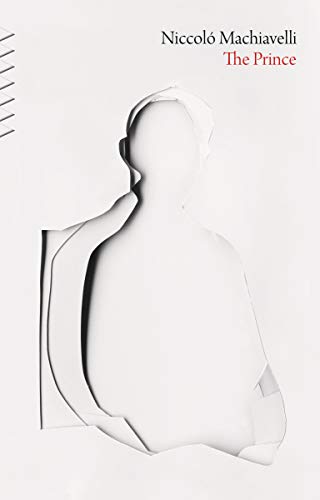
That Machiavelli’s name has become synonymous with cold-eyed political calculation only heightens the intrinsic fascination of The Prince—the world’s preeminent how-to manual on the art of getting and keeping power and one of the literary landmarks of the Italian Renaissance. Written in a vigorous, straightforward style that reflects its author’s realism, this treatise on states, statecraft, and the ideal ruler is essential reading for anyone seeking to understand how human society actually works.
Die Inhaltsangabe kann sich auf eine andere Ausgabe dieses Titels beziehen.
Über die Autorin bzw. den Autor
NICCOLÒ MACHIAVELLI (1469-1527) was a Florentine statesman who was forced out of public life. He then devoted himself to studying and writing political philosophy, history, fiction, and drama.
Auszug. © Genehmigter Nachdruck. Alle Rechte vorbehalten.
Niccolò Machiavelli to His Magnificence Lorenzo de’ Medici
Those who wish to win the favor of a prince will generally approach him with gifts of what they value most or what they believe will most delight him. Hence we see princes being offered horses, arms, vestments of gold, precious stones, and similar accoutrements worthy of their grandeur. Wishing to present myself to Your Magnificence with a token of my deepest respect, I have found among my possessions nothing that I value or esteem higher than my knowledge of the deeds of great men. I have acquired this knowledge through my long experience of modern affairs and a lifelong study of ancient times, all of which I have weighed and examined with great diligence and brought together into this small volume, which I am now offering to Your Magnificence. Though I deem this work unworthy of being in Your illustrious presence, my confidence in Your benevolence persuades me that it will be accepted, and that Your Magnificence will recognize that I cannot offer You a greater gift than the prospect of Your understanding in the shortest period all that I have experienced and learned over so many years and with so much danger and hardship. I have not filled this volume with pompous rhetoric, with bombast and magnificent words, or with the unnecessary artifice with which so many writers gild their work. I wanted nothing extraneous to ornament my writing, for it has been my purpose that only the range of material and the gravity of the subject should make it pleasing. Nor do I wish it to be thought presumptuous that a man of low and humble condition like myself should presume to map out and direct the government of princes. But just as a cartographer will descend into the plains in order to study the nature of the mountains, and will then climb the highest peaks in order to study the low-lying land, so, too, only an exalted prince can grasp the nature of the people, and only a lesser man can perceive the nature of a prince.
I hope therefore that Your Magnificence will accept this humble gift in the spirit in which it is offered. Should You condescend to read and consider it carefully, You will perceive in its pages my profound desire that Your Magnificence will rise to the greatness that Fortune and Your qualities promise. And should Your Magnificence deign to look down from the lofty summit of Your eminence to these lowly depths, You will see how I have suffered undeservedly Fortune’s great and continuing malignity.
Chapter One
Of the kinds of principalities that exist, and how they can be acquired
All states, all dominions that rule or have ruled over men, are or have been either republics or principalities. Principalities are either hereditary, with a long-established bloodline, or new. And the new principalities are either entirely new, as Milan was to Francesco Sforza2, or are like limbs added to the hereditary state of the prince who acquires them, as the Kingdom of Naples was to the King of Spain3. States obtained in this way are accustomed either to living under a prince, or to being free. They are acquired either with the arms of others, or with one’s own, either by chance or by skill.
2. Francesco Sforza (1401—66) was a soldier of fortune who became Duke of Milan in 1450.
3. Ferdinand the Catholic (1452—1516), King of Aragon, also became Ferdinand III of Naples in 1504.
Chapter Two
Of hereditary principalities
I will not discuss republics, as I have already done so at some length elsewhere. I shall only concentrate on principalities, and shall weave together the threads I have already laid out. I will show how these principalities can be governed and main- tained.
First, states that are hereditary and tied to the bloodline of their prince are easier to maintain than new ones. It is enough not to diverge from the practices of one’s forebears, and to handle unforeseen issues as they arise. If such a prince is of at least average ability he can retain his posi- tion of power, so long as no extraordinary or excessive force deprive him of it. If this prince is deprived of his state, he will find he can reacquire it if any misfortune befalls the usurper.
In Italy we have the example of the Duke of Ferrara, who resisted the assaults of the Venetians in 1484 and of Pope Julius II in 1510, for the simple reason that he had inherited an ancient principality4. A hereditary prince has less cause to mistreat his subjects, and so is more loved by them. If unusual vices do not make him hated, it is to be expected that he will be loved by his people.
The long continuum of the dominion obliterates the memories and issues that make men yearn for innovation, for one change will inevitably forge a link to another.
4. In fact, Duke Ercole d’Este of Ferrara managed to end the war with Venetians in 1484, while his son Duke Alfonso managed to stay in power despite excommunication and an ongoing war with the papal forces.
Chapter Three
Of mixed principalities
It is in the new principality that the difficulties lie. First, if the principality is not completely new, but is like a limb or extension added to another principality (in which case we could almost call the whole state a mixed principality), its volatility stems mainly from a difficulty inherent in all new principalities. This is that men will willingly change their ruler in the hope that they will fare better, a hope that leads them to take up arms against their old ruler. But in this they are deceived, because, as they invariably discover, their lot under a new ruler is inevitably worse. This is the result of another natural and basic inevitability: that you cannot avoid offending those whose new ruler you are, both with your armed soldiers and with innumerable other provocations that come in the wake of a conquest. You end up making enemies of all those you have offended during your conquest of the principality, and you find that you cannot keep the friendship of those who helped you to power, since you cannot satisfy them in the way they had envisioned. Furthermore, you cannot take strong measures against them, as you are indebted to them. Even with the most powerful army, if you want to invade a state, you need the support of the people. It was for these reasons that King Louis XII of France was quick to occupy Milan, and just as quick to lose it. Duke Ludovico’s own forces were enough to win Milan back the first time, because the same masses that had opened the gates for Louis, finding themselves misled in their hopes for a better future, could not endure the new prince’s offenses5.
It is a fact that once a prince acquires a rebellious state for the second time, it also proves harder to lose that state a second time6. This is because the prince who seizes the opportunity of the rebellion has fewer scruples about securing his position by punishing offenders, flushing out suspects, and strengthening all the places where he is weakest. In this sense, it was enough for a Duke Ludovico to make a little noise along the borders for Louis XII to lose Milan the first time. But for him to lose Milan a second time the whole world had to unite against him, defeat his army, and chase it out of Italy7. This followed from the causes I have already laid out. Nonetheless, both the first and second time, Milan was taken from him.
The general reasons for the first loss have been discussed. It now remains to discuss the second, and to see what recourse someone in Louis’s position could have taken to maintain himself more securely in his new acquisition. I must stress that the states a prince acquires and adds to his own are either of the same country and language, or are not. If they are it is much easier to retain them, particularly...
„Über diesen Titel“ kann sich auf eine andere Ausgabe dieses Titels beziehen.
Suchergebnisse für The Prince (Vintage Classics)

Beispielbild für diese ISBN
The Prince
Anbieter: World of Books (was SecondSale), Montgomery, IL, USA
Verkäuferbewertung 5 von 5 Sternen

Paperback. Zustand: Very Good. That Machiavelli's name has become synonymous with cold-eyed political calculation only heightens the intrinsic fascination of The Prince--the world's preeminent how-to manual on the art of getting and keeping power and one of the literary landmarks of the Italian Renaissance. Written in a vigorous, straightforward style that reflects its author's realism, this treatise on states, statecraft, and the ideal ruler is essential reading for anyone seeking to understand how human society actually works. Bestandsnummer des Verkäufers CIN0593310861VG
Gebraucht kaufen
EUR 5,50
Versand gratis
Versand innerhalb von USA
Versand innerhalb von USA
Anzahl: 1 verfügbar
Beispielbild für diese ISBN
The Prince
Anbieter: ThriftBooks-Atlanta, AUSTELL, GA, USA
Verkäuferbewertung 5 von 5 Sternen
Paperback. Zustand: Good. No Jacket. Pages can have notes/highlighting. Spine may show signs of wear. ~ ThriftBooks: Read More, Spend Less. Bestandsnummer des Verkäufers G0593310861I3N00
Gebraucht kaufen
EUR 6,60
Versand gratis
Versand innerhalb von USA
Versand innerhalb von USA
Anzahl: 1 verfügbar
Beispielbild für diese ISBN
The Prince
Anbieter: World of Books Inc, Montgomery, IL, USA
Verkäuferbewertung 4 von 5 Sternen

Paperback. Zustand: Very Good. That Machiavelli's name has become synonymous with cold-eyed political calculation only heightens the intrinsic fascination of The Prince--the world's preeminent how-to manual on the art of getting and keeping power and one of the literary landmarks of the Italian Renaissance. Written in a vigorous, straightforward style that reflects its author's realism, this treatise on states, statecraft, and the ideal ruler is essential reading for anyone seeking to understand how human society actually works. Bestandsnummer des Verkäufers CIN0593310861VG
Gebraucht kaufen
EUR 7,34
Versand gratis
Versand innerhalb von USA
Versand innerhalb von USA
Anzahl: 1 verfügbar
Beispielbild für diese ISBN
The Prince (Vintage Classics)
Anbieter: Lakeside Books, Benton Harbor, MI, USA
Verkäuferbewertung 5 von 5 Sternen
Zustand: New. Brand New! Not Overstocks or Low Quality Book Club Editions! Direct From the Publisher! We're not a giant, faceless warehouse organization! We're a small town bookstore that loves books and loves it's customers! Buy from Lakeside Books! Bestandsnummer des Verkäufers OTF-S-9780593310861
Beispielbild für diese ISBN
Prince
Anbieter: GreatBookPrices, Columbia, MD, USA
Verkäuferbewertung 5 von 5 Sternen
Zustand: New. Bestandsnummer des Verkäufers 41199607-n
Neu kaufen
EUR 7,49
EUR 2,35 Versand
Versand innerhalb von USA
Versand innerhalb von USA
Anzahl: 15 verfügbar
Foto des Verkäufers
The Prince (Paperback or Softback)
Verlag:
Vintage 10/13/2020, 2020
ISBN 10: 0593310861
ISBN 13: 9780593310861
Neu
Paperback or Softback
Anbieter: BargainBookStores, Grand Rapids, MI, USA
Verkäuferbewertung 5 von 5 Sternen
Paperback or Softback. Zustand: New. The Prince. Book. Bestandsnummer des Verkäufers BBS-9780593310861
Foto des Verkäufers
The Prince
Anbieter: Rarewaves USA, HEBRON, KY, USA
Verkäuferbewertung 5 von 5 Sternen
Paperback. Zustand: New. Bestandsnummer des Verkäufers LU-9780593310861
Neu kaufen
EUR 11,30
Versand gratis
Versand innerhalb von USA
Versand innerhalb von USA
Anzahl: Mehr als 20 verfügbar
Beispielbild für diese ISBN
Prince
Anbieter: GreatBookPrices, Columbia, MD, USA
Verkäuferbewertung 5 von 5 Sternen
Zustand: As New. Unread book in perfect condition. Bestandsnummer des Verkäufers 41199607
Gebraucht kaufen
EUR 9,00
EUR 2,35 Versand
Versand innerhalb von USA
Versand innerhalb von USA
Anzahl: 15 verfügbar
Beispielbild für diese ISBN
ThePrince Format: Paperback
Anbieter: INDOO, Avenel, NJ, USA
Verkäuferbewertung 5 von 5 Sternen
Zustand: As New. Unread copy in mint condition. Bestandsnummer des Verkäufers RH9780593310861
Gebraucht kaufen
EUR 11,43
Versand gratis
Versand innerhalb von USA
Versand innerhalb von USA
Anzahl: Mehr als 20 verfügbar
Beispielbild für diese ISBN
ThePrince Format: Paperback
Anbieter: INDOO, Avenel, NJ, USA
Verkäuferbewertung 5 von 5 Sternen
Zustand: New. Brand New. Bestandsnummer des Verkäufers 9780593310861
Neu kaufen
EUR 11,53
Versand gratis
Versand innerhalb von USA
Versand innerhalb von USA
Anzahl: Mehr als 20 verfügbar