
Verwandte Artikel zu Where I Come From: Stories from the Deep South
Inhaltsangabe
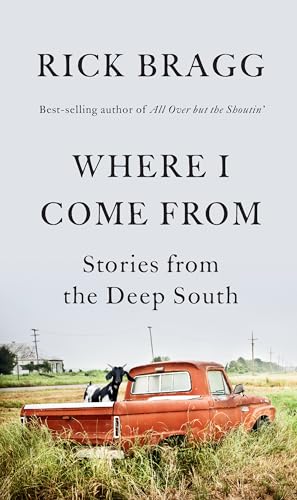
From the best-selling, Pulitzer Prize-winning author of All Over but the Shoutin' and The Best Cook in the World, a collection of irresistible columns from Southern Living and Garden & Gun
Celebrated author and newspaper columnist Rick Bragg brings us an ode to the stories and history of the Deep South, filled with “eclectic nuggets about places and people he knows well” (USA Today) and written with honesty, wit, and deep affection.
A collection of wide-ranging and endearingly personal columns—from Bragg’s love of Tupperware (his mother preferred margarine tubs and thought Tupperware was “just showing off”) to the decline of country music, from the legacy of Harper Lee to the metamorphosis of the pickup truck to the best way to kill fire ants—Where I Come From is a book that will be treasured by fans old and new.
Die Inhaltsangabe kann sich auf eine andere Ausgabe dieses Titels beziehen.
Über die Autorin bzw. den Autor
Rick Bragg is the author of twelve books, including the best-selling Ava’s Man and All Over but the Shoutin’. He writes a monthly column for Southern Living, teaches writing at the University of Alabama, and is also a regular contributor to Garden & Gun magazine. He lives in Alabama.
Auszug. © Genehmigter Nachdruck. Alle Rechte vorbehalten.
The Outcast
I should have given up, I suppose, after the goat.
He was not a regular goat. He was more part goat, part rhinoceros, about the size of a small horse, but with devil horns. He looked out on the world through spooky yellow eyes, and smelled like . . . well, I do not have the words to say. My little brother, Mark, bought him at the sprawling trade day in Collinsville, Alabama, for seventy-five dollars; I would have given him a hundred not to. The first thing the creature did, after coming into our possession, was butt the side of a truck. You have to be one terror of a goat to assault a Ford. His name, my little brother said, was Ramrod.
“Why would you buy such a thing?” I asked my brother. He told me he planned to purchase a bunch of nanny goats to “get with” Ramrod, after whatever courtship it was that goats required. Ramrod would beget little Ramrods, who would beget more, till the whole world was covered in ill-tempered mutant goats. I think, sometimes, we did not love that boy enough.
Ramrod moved into his new home in a beautiful mountain pasture in northeastern Alabama, and, first thing, butted heads with my mother’s equally ill-tempered donkey, Buckaroo. Buck staggered a few steps, and his head wobbled drunkenly from side to side, but he did not fall unconscious. This, in Buck’s mind, constituted a victory, and he trotted off, snorting and blowing, like he was somebody.
My point is, Ramrod was a goat not to be messed with.
Later that year, I was fishing with my brothers in the stock pond in that same pasture. The water was mostly clear, and you could see the bream in the shallows and the dark shapes of bass in the deeper end. For a change, even I was catching fish and pulled in a few nice little bass. My cast, to me, was immaculate, my aim perfect, my mechanics sound, especially for the clunky crankbait I was throwing.
“But I’m not gettin’ much distance,” I complained to my big brother, Sam.
“It’s fine,” he said, and with an easy flick of his wrist sent a black rubber worm sailing beyond my best cast of the day.
I decided to put a little more mustard on it. I let my lure dangle about a foot and a half from the tip of the rod, reared back, torqued, and started forward with a powerful heave . . . and hooked Ramrod, who had crept up behind me to do me some kind of grievous harm, right between his horns.
Ramrod, who for perhaps the first time in his long life seemed unsure of what to do, took off running. My drag, which was not set for a goat of any size, sang.
Sam, who has never been too surprised by anything in his whole laconic, irritating life, gazed at the retreating goat as if this were a thing he witnessed every single day.
“Can’t remember if that was a ten-pound test I put on that baitcaster,” he said, as if it made a difference. “You can’t catch no fish with heavy line. They can see it,” and he made another cast.
The goat ran on. I considered, briefly, just standing my ground and trying to reel him in, to play him like a great tarpon, or a marlin. Instead, I began to run parallel with him, reeling in the slack as I did, as I have seen great anglers do with giant fish on the TV. I guess I thought I could eventually get close enough to reach out and snatch the hook out of his head. I truly did not want to hurt him, but that was foolish, of course; you could not hurt Ramrod with a hammer or hand grenade.
As it turned out, the point of the hook, not even to the barb, had snagged in the bony base of one horn, and the crankbait jangled atop his head. He was not wounded; he was just mad. He quit running about the time I ran out of line, and my little brother, who had a sort of telepathic bond with this creature, calmly walked over and pulled the hook free while the goat stood there like a pet. Then he and the goat both gave me a dirty look, as if hooking him were something I woke up that morning intending to do.
I went back to the pond, frazzled, and— I am not kidding—immediately hooked a water oak, a blackberry bush, and a low-slung power line. There are witnesses to this. I shuffled off with a rubber worm dangling high above me; it was Cherokee Electric’s problem now. I was done fishing that day, and seriously considered being done for good. I walked to the house defeated, but not ashamed, at least as far as Ramrod was concerned. That goat never liked me, anyhow.
This is a true story. Great anglers, the kind who tie their own flies and read the tides and have fished the deep blue for leviathans, will most likely shake their sun-bronzed heads in pity and sad wonder over this. But the bad fishermen out there—you know who you are—will merely nod in understanding and sympathy and, I hope, some degree of solidarity. The only reason they have not caught a goat is that, so far, one has not made their acquaintance, or wandered into the proximity of their backswing.
But perhaps the worst thing about it is that the best fisherman I know, my brother Sam, did not even think that, in the long, sad epic of my fishing life, this episode was remarkable at all. He did not even tell it to anyone, not in the decade since. To him, it was just the kind of thing a poor fisherman like me was likely to do, was somehow fated or destined to do, assuming of course that he did not, first, fall out of a boat and drown.
“What is it, truly,” I asked, “I do wrong?” He was too kind to give voice to it.
He just spread his hands, palms up, as if to say: Everything.
The proof hangs on the wall of the garage, row after row of tangled, rusty, and forever abandoned rods and reels, some of them hopelessly entangled with others. One day, with my toolbox and a bottle of good oil, I’ll resurrect them, or try. I’ve caught my big brother staring at them with the saddest look on his face. He used to fix them himself, till it dawned on him it was a thing without hope, or end.
I remember the first good fish I ever caught, the first one I was proud of, and it made me, for good and bad, a fisherman the rest of my life. I remember, most clearly, my bait, a knot of red worms in a clump of topsoil that was at least part cow manure. I kept them in a discarded blue plastic margarine tub that I had carefully, scientifically aerated, using a hammer and a nail to poke holes in the snap-on lid.
I was maybe seven years old, perched on a slab of rock by a jade-colored slow-moving creek that was easing toward the Coosa. I cast into the deep pools with a closed-face Zebco 202, not catching a thing at first, just loving the motion of it, and the peace it seemed to create inside my mind even then.
The sunlight was losing its battle with the thick trees, and I knew I had to be getting home soon; then, I felt that hard pull on the line. I did not have to set the hook, but I pretended to, to look like a big boy, and reeled in a pretty little bass, just a pound or so, even allowing for the inevitable lie. For a few fine seconds, I just looked at it—the color, the pattern on its scales—and as I worked the hook free, it did what fish do, and as it squirmed, I hooked myself in the thumb.
I let the fish go, and a kindly old drunk man fishing upstream shakily but carefully unsnagged the hook, which had not gone in past the barb, from my thumb. I wailed.
“Hush,” he said. “You ain’t kilt.”
And while it hurt like hell, I knew, even then, two true and perfect...
„Über diesen Titel“ kann sich auf eine andere Ausgabe dieses Titels beziehen.
Weitere beliebte Ausgaben desselben Titels

Suchergebnisse für Where I Come From: Stories from the Deep South

Beispielbild für diese ISBN
Where I Come from: Stories fro
Anbieter: World of Books (was SecondSale), Montgomery, IL, USA
Verkäuferbewertung 5 von 5 Sternen

Zustand: Very Good. Item in very good condition! Textbooks may not include supplemental items i.e. CDs, access codes etc. Bestandsnummer des Verkäufers 00107033769
Gebraucht kaufen
EUR 8,53
Versand gratis
Versand innerhalb von USA
Versand innerhalb von USA
Anzahl: 1 verfügbar
Beispielbild für diese ISBN
Where I Come from: Stories fro
Anbieter: World of Books (was SecondSale), Montgomery, IL, USA
Verkäuferbewertung 5 von 5 Sternen
Zustand: Good. Good condition ex-library book with usual library markings and stickers. Bestandsnummer des Verkäufers 00105857373
Gebraucht kaufen
EUR 8,53
Versand gratis
Versand innerhalb von USA
Versand innerhalb von USA
Anzahl: 1 verfügbar
Beispielbild für diese ISBN
Where I Come From : Stories from the Deep South
Verlag:
Knopf Doubleday Publishing Group, 2020
ISBN 10: 0593317785
ISBN 13: 9780593317785
Gebraucht
Hardcover
Anbieter: Better World Books: West, Reno, NV, USA
Verkäuferbewertung 5 von 5 Sternen
Zustand: Very Good. Former library copy. Pages intact with possible writing/highlighting. Binding strong with minor wear. Dust jackets/supplements may not be included. Includes library markings. Stock photo provided. Product includes identifying sticker. Better World Books: Buy Books. Do Good. Bestandsnummer des Verkäufers 39043161-6
Gebraucht kaufen
EUR 8,58
Versand gratis
Versand innerhalb von USA
Versand innerhalb von USA
Anzahl: 1 verfügbar
Beispielbild für diese ISBN
Where I Come From : Stories from the Deep South
Verlag:
Knopf Doubleday Publishing Group, 2020
ISBN 10: 0593317785
ISBN 13: 9780593317785
Gebraucht
Hardcover
Anbieter: Better World Books, Mishawaka, IN, USA
Verkäuferbewertung 5 von 5 Sternen
Zustand: Good. Former library copy. Pages intact with minimal writing/highlighting. The binding may be loose and creased. Dust jackets/supplements are not included. Includes library markings. Stock photo provided. Product includes identifying sticker. Better World Books: Buy Books. Do Good. Bestandsnummer des Verkäufers 40046247-6
Gebraucht kaufen
EUR 8,58
Versand gratis
Versand innerhalb von USA
Versand innerhalb von USA
Anzahl: 2 verfügbar
Beispielbild für diese ISBN
Where I Come From : Stories from the Deep South
Verlag:
Knopf Doubleday Publishing Group, 2020
ISBN 10: 0593317785
ISBN 13: 9780593317785
Gebraucht
Hardcover
Anbieter: Better World Books, Mishawaka, IN, USA
Verkäuferbewertung 5 von 5 Sternen
Zustand: Good. Pages intact with minimal writing/highlighting. The binding may be loose and creased. Dust jackets/supplements are not included. Stock photo provided. Product includes identifying sticker. Better World Books: Buy Books. Do Good. Bestandsnummer des Verkäufers 39958017-6
Gebraucht kaufen
EUR 8,58
Versand gratis
Versand innerhalb von USA
Versand innerhalb von USA
Anzahl: 4 verfügbar
Beispielbild für diese ISBN
Where I Come From : Stories from the Deep South
Verlag:
Knopf Doubleday Publishing Group, 2020
ISBN 10: 0593317785
ISBN 13: 9780593317785
Gebraucht
Hardcover
Anbieter: Better World Books, Mishawaka, IN, USA
Verkäuferbewertung 5 von 5 Sternen
Zustand: Very Good. Pages intact with possible writing/highlighting. Binding strong with minor wear. Dust jackets/supplements may not be included. Stock photo provided. Product includes identifying sticker. Better World Books: Buy Books. Do Good. Bestandsnummer des Verkäufers 39565389-6
Gebraucht kaufen
EUR 8,58
Versand gratis
Versand innerhalb von USA
Versand innerhalb von USA
Anzahl: 1 verfügbar
Beispielbild für diese ISBN
Where I Come From : Stories from the Deep South
Verlag:
Knopf Doubleday Publishing Group, 2020
ISBN 10: 0593317785
ISBN 13: 9780593317785
Gebraucht
Hardcover
Anbieter: Better World Books: West, Reno, NV, USA
Verkäuferbewertung 5 von 5 Sternen
Zustand: Good. Former library copy. Pages intact with minimal writing/highlighting. The binding may be loose and creased. Dust jackets/supplements are not included. Includes library markings. Stock photo provided. Product includes identifying sticker. Better World Books: Buy Books. Do Good. Bestandsnummer des Verkäufers 40046247-6
Gebraucht kaufen
EUR 8,58
Versand gratis
Versand innerhalb von USA
Versand innerhalb von USA
Anzahl: 1 verfügbar
Foto des Verkäufers
Where I Come From: Stories from the Deep South
Anbieter: Shakespeare Book House, Rockford, IL, USA
Verkäuferbewertung 5 von 5 Sternen
Zustand: very_good. The book is clean and shows minor shelf ware, Bestandsnummer des Verkäufers EBBV.0593317785.VG
Gebraucht kaufen
EUR 6,59
EUR 3,46 Versand
Versand innerhalb von USA
Versand innerhalb von USA
Anzahl: 1 verfügbar
Beispielbild für diese ISBN
Where I Come From: Stories from the Deep South
Anbieter: HPB-Ruby, Dallas, TX, USA
Verkäuferbewertung 5 von 5 Sternen
Hardcover. Zustand: Very Good. Connecting readers with great books since 1972! Used books may not include companion materials, and may have some shelf wear or limited writing. We ship orders daily and Customer Service is our top priority! Bestandsnummer des Verkäufers S_481344747
Gebraucht kaufen
EUR 7,13
EUR 3,25 Versand
Versand innerhalb von USA
Versand innerhalb von USA
Anzahl: 1 verfügbar
Beispielbild für diese ISBN
Where I Come From: Stories from the Deep South
Verlag:
Alfred A. Knopf, New York, 2020
ISBN 10: 0593317785
ISBN 13: 9780593317785
Gebraucht
Hardcover
Erstausgabe
Anbieter: Abacus Bookshop, Pittsford, NY, USA
Verkäuferbewertung 5 von 5 Sternen
hardcover. Zustand: Fine copy in fine dust jacket. 1st. 8vo, 237 pp. Bestandsnummer des Verkäufers 114614
Gebraucht kaufen
EUR 8,92
EUR 3,47 Versand
Versand innerhalb von USA
Versand innerhalb von USA
Anzahl: 1 verfügbar