
Verwandte Artikel zu The Perfectionist's Guide to Losing Control: A...
Inhaltsangabe
Selected for USA Today's Best Books of 2023
Selected as Editor's Pick in Amazon's Best Books of 2023
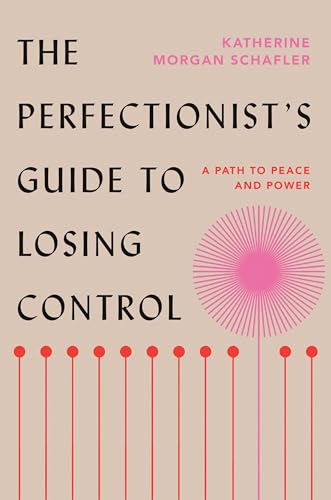
From psychotherapist Katherine Morgan Schafler, an invitation to every “recovering perfectionist” to challenge the way they look at perfectionism, and the way they look at themselves.
We’ve been looking at perfectionism all wrong. As psychotherapist and former on-site therapist at Google Katherine Morgan Schafler argues in The Perfectionist's Guide to Losing Control, you don’t have to stop being a perfectionist to be healthy. For women who are sick of being given the generic advice to “find balance,” a new approach has arrived.
Which of the five types of perfectionist are you? Classic, intense, Parisian, messy, or procrastinator? As you identify your unique perfectionist profile, you'll learn how to manage each form of perfectionism to work for you, not against you. Beyond managing it, you'll learn how to embrace and even enjoy your perfectionism. Yes, enjoy!
Full of stories and brimming with humor, empathy, and depth, this book is a love letter to the ambitious, high achieving, full-of-life clients who filled the author’s private practice, and who changed her life. It’s a clarion call for all women to dare to want more without feeling greedy or ungrateful. Ultimately, this book will show you how to make the single greatest trade you’ll ever make in your life, which is to exchange superficial control for real power.
Die Inhaltsangabe kann sich auf eine andere Ausgabe dieses Titels beziehen.
Über die Autorin bzw. den Autor
Katherine Morgan Schafler is a psychotherapist, writer and speaker, and former on-site therapist at Google. She earned degrees and trained at UC Berkeley and Columbia University, with post-graduate certification from the Association for Spirituality and Psychotherapy in NYC.
Auszug. © Genehmigter Nachdruck. Alle Rechte vorbehalten.
1
Expect to Be Graded on This
The Five Types of Perfectionists
When an inner situation is not made
conscious, it happens outside as fate.
C. G. Jung
A procrastinator perfectionist would experience immense difficulty writing this sentence because it comes at the beginning of a book about perfectionism and, accordingly, needs to be perfect (and there's no better first sentence than the one a procrastinator perfectionist imagines in her head but never actually writes down).
A classic perfectionist writes the first sentence, hates it, tries her best to forget it ever existed, but is inevitably haunted by it for a minimum of eight years.
An intense perfectionist writes it, hates it, and then channels her frustration into aggression about something entirely unrelated.
A Parisian perfectionist pretends not to notice she wrote a first sentence, affecting an air of, "Oh yeah, I guess I did. Huh." Then she secretly, desperately hopes everyone loves it and, as a result, loves her. Who wrote that first sentence? I must be friends with her immediately!
A messy perfectionist writes the first sentence, loves it, and then writes seventeen other, very different versions of the first sentence and loves each one of those and couldn't possibly pick just one because you can't have a favorite child, and those are all her sentence babies.
One thing they all have in common: they might not even know they're perfectionists, nor appreciate all the ways perfectionism can hold them back or allow them to soar, depending on how it's managed.
In the most basic sense, managing your perfectionism looks like becoming aware of the core impulse all perfectionists reflexively experience: noticing room for improvement-Hmm, this could be better-and then consciously responding to that reflex instead of unconsciously reacting to it. Perfectionists are people who consistently notice the difference between an ideal and a reality, and who strive to maintain a high degree of personal accountability. This results in the perfectionist experiencing, more often than not, a compulsion to bridge the gulf between reality and an ideal themselves.
When left unchallenged, the perfectionist mindset hooks itself on the motive to perfect (as opposed to improve upon or accept) that which could be made better. This impulse to enhance evolves into a belief that urgently wallpapers itself on all sides of the perfectionist's mind, including the ceiling and floor: "I need something to be different about this moment before I can be satisfied."
Perfectionism is the invisible language your mind thinks in, the type of perfectionism that shows up in your everyday life based on your personality is just the accent.
I built my private practice around perfectionism because I so enjoy the energy of the perfectionist. Always pushing limits, forever poking the bear, unafraid to travel to the depth of their anger or desire, eternally seeking a connection to something bigger, to more.
Acknowledging that you want more is an act of boldness, and every perfectionist (when they're being honest, which people generally are in therapy) flaunts a bold streak I'm magnetically drawn towards.
I work mostly with women who can present well, who can seem completely put together when they want to seem that way, and whose problems aren't immediately apparent to others. This is exceedingly nuanced work because, as I suspect you know all too well, no one can hide their suffering better than the highly functioning person. I thrive on the constant challenge because, as I realized during one of the most disorienting moments of my life, I'm a perfectionist myself.
The cliché of it all bothers me still-I never realized how attached I was to control until I started to lose so much of it. In the exact moment that my personal and professional life began skyrocketing, I was diagnosed with cancer. I lost a pregnancy and had no opportunity to freeze my eggs before chemotherapy. I lost an extraordinary amount of time to the busyness of being sick. I lost my pretty brown hair. I lost confidence in my brand-new marriage. I lost professional opportunities I had spent years working towards. I lost control over the life I had painstakingly, perfectly constructed.
One moment I was riding the rapids, then the next it was as if something yanked me by the stomach into the still, quiet, and unseen place behind the waterfall. I was looking at what I'd always been looking at (perfectionism) but from a different vantage point. Why was I in a different position? Because in a misguided effort to be more balanced and healthy, I was resisting my own perfectionism.
I was sick, so of course I should've been relaxing, doing the bare minimum. It all made sense on paper. So I tried, I really did. And it was terrible, it really was. I was plopping pink bath bombs into my tub and sitting there watching them fizz away, bored out of my fucking mind, when I would've much rather been working, pushing, doing. Not pushing from a compensatory or avoidant place, not pushing to the extent that it disrupted my healing, but pushing because I enjoy being intensely engaged in my work and in my life.
The energy my perfectionist clients brought into the room presented in stark contrast to what I had started to feel in my private life. Their energy was charged, magnetic, brimming with infinite potentialities, destructive and constructive all at once. In noticing the burgeoning differences between myself and my clients, I simultaneously recognized the similarities that had been there the whole time.
I saw perfectionism for the power that it is, a strength I wanted to reclaim. It was a dynamic energy I had been helping my clients harness and exploit to their advantage for years, without having the language I have now for what I was doing. It wasn't until I tried to suppress the drive of my own perfectionism that I realized what I had in it.
I also realized that if I could be a perfectionist, me, the woman who could never find her phone and who extolled the work of social scientist extraordinaire Dr. Brené Brown to people behind her in line at the grocery store, then anybody could be a perfectionist and not even know it. What exactly was happening here?
I started to reverse engineer perfectionism, turn it inside out. In examining my own perfectionism and diving into the years I spent working with perfectionists, clear patterns emerged-five distinct presentations of one core concept, the five types of perfectionists.
Because perfectionism operates on a continuum, all perfectionists can embody aspects of each type within them. Though one type is usually dominant, it's also possible to experience contextually specific manifestations of perfectionism. For example, you can be a messy perfectionist when it comes to dating but a classic perfectionist during the holidays. Since I'm not a procrastinator perfectionist and can easily pick an entry point, let's start our discussion of the five types at the beginning: classic perfectionists.
The Five Types of Perfectionism
Tuesday, 10:58 a.m.
I opened the door for my 11:00 a.m. session. Claire was standing in the waiting room, hovering around four empty chairs, finishing an email on her phone. "And, done," she said as she efficiently gathered her small army of belongings to bring into my office: a jacket, two phones, a laptop bag, an indiscriminately labeled commuter bag for her heels, a not indiscriminately labeled Prada bag, and two grande, unsweetened, iced passion teas from Starbucks.
"We talked about this," I said after noticing the extra drink. "Can I help you with any of that?"
"I got it," she replied, modern-day juggling act in motion.
Claire entered my office seamlessly, swaying through the door...
„Über diesen Titel“ kann sich auf eine andere Ausgabe dieses Titels beziehen.
Suchergebnisse für The Perfectionist's Guide to Losing Control: A...

Beispielbild für diese ISBN
The Perfectionist's Guide to Losing Control: A Path to Peace and Power
Anbieter: HPB-Diamond, Dallas, TX, USA
Verkäuferbewertung 5 von 5 Sternen

hardcover. Zustand: Very Good. Connecting readers with great books since 1972! Used books may not include companion materials, and may have some shelf wear or limited writing. We ship orders daily and Customer Service is our top priority! Bestandsnummer des Verkäufers S_477339712
Gebraucht kaufen
EUR 6,78
EUR 3,34 Versand
Versand innerhalb von USA
Versand innerhalb von USA
Anzahl: 1 verfügbar
Beispielbild für diese ISBN
The Perfectionist's Guide to Losing Control: A Path to Peace and Power
Anbieter: HPB-Ruby, Dallas, TX, USA
Verkäuferbewertung 5 von 5 Sternen
hardcover. Zustand: Very Good. Connecting readers with great books since 1972! Used books may not include companion materials, and may have some shelf wear or limited writing. We ship orders daily and Customer Service is our top priority! Bestandsnummer des Verkäufers S_469366520
Gebraucht kaufen
EUR 6,78
EUR 3,34 Versand
Versand innerhalb von USA
Versand innerhalb von USA
Anzahl: 1 verfügbar
Foto des Verkäufers
The Perfectionist's Guide to Losing Control: A Path to Peace and Power
Anbieter: clickgoodwillbooks, Indianapolis, IN, USA
Verkäuferbewertung 4 von 5 Sternen

Zustand: acceptable. Used - Acceptable: All pages and the cover are intact, but shrink wrap, dust covers, or boxed set case may be missing. Pages may include limited notes, highlighting, or minor water damage but the text is readable. Item may be missing bundled media. Bestandsnummer des Verkäufers CSIV.059332952X.A
Gebraucht kaufen
EUR 6,78
EUR 3,56 Versand
Versand innerhalb von USA
Versand innerhalb von USA
Anzahl: 1 verfügbar
Beispielbild für diese ISBN
The Perfectionist's Guide to Losing Control: A Path to Peace and Power
Anbieter: Books From California, Simi Valley, CA, USA
Verkäuferbewertung 4 von 5 Sternen
hardcover. Zustand: Very Good. Bestandsnummer des Verkäufers mon0004238965
Gebraucht kaufen
EUR 6,08
EUR 4,45 Versand
Versand innerhalb von USA
Versand innerhalb von USA
Anzahl: 1 verfügbar
Foto des Verkäufers
The Perfectionist's Guide to Losing Control: A Path to Peace and Power
Anbieter: Goodwill of Central and Coastal Virginia, Richmond, VA, USA
Verkäuferbewertung 4 von 5 Sternen
Zustand: acceptable. Bestandsnummer des Verkäufers CCVV.059332952X.A
Gebraucht kaufen
EUR 6,50
EUR 5,12 Versand
Versand innerhalb von USA
Versand innerhalb von USA
Anzahl: 2 verfügbar
Beispielbild für diese ISBN
The Perfectionist's Guide to Losing Control: A Path to Peace and Power
Anbieter: HPB-Emerald, Dallas, TX, USA
Verkäuferbewertung 5 von 5 Sternen
hardcover. Zustand: Very Good. Connecting readers with great books since 1972! Used books may not include companion materials, and may have some shelf wear or limited writing. We ship orders daily and Customer Service is our top priority! Bestandsnummer des Verkäufers S_467504641
Gebraucht kaufen
EUR 8,65
EUR 3,34 Versand
Versand innerhalb von USA
Versand innerhalb von USA
Anzahl: 1 verfügbar
Beispielbild für diese ISBN
The Perfectionist's Guide to Losing Control: A Path to Peace and Power
Anbieter: BookOutlet, Jefferson City, TN, USA
Verkäuferbewertung 5 von 5 Sternen
Hardcover. Zustand: New. Hardcover. Publisher overstock, may contain remainder mark on edge. Bestandsnummer des Verkäufers 9780593329528B
Neu kaufen
EUR 9,18
EUR 2,90 Versand
Versand innerhalb von USA
Versand innerhalb von USA
Anzahl: Mehr als 20 verfügbar
Beispielbild für diese ISBN
The Perfectionist's Guide to Losing Control: A Path to Peace and Power
Anbieter: World of Books (was SecondSale), Montgomery, IL, USA
Verkäuferbewertung 5 von 5 Sternen
Hardback. Zustand: Good. Selected for USA Today's Best Books of 2023 Selected as Editor's Pick in Amazon's Best Books of 2023 From psychotherapist Katherine Morgan Schafler, an invitation to every "recovering perfectionist" to challenge the way they look at perfectionism, and the way they look at themselves. We've been looking at perfectionism all wrong. As psychotherapist and former on-site therapist at Google Katherine Morgan Schafler argues in The Perfectionist's Guide to Losing Control, you don't have to stop being a perfectionist to be healthy. For women who are sick of being given the generic advice to "find balance," a new approach has arrived. Which of the five types of perfectionist are you? Classic, intense, Parisian, messy, or procrastinator? As you identify your unique perfectionist profile, you'll learn how to manage each form of perfectionism to work for you, not against you. Beyond managing it, you'll learn how to embrace and even enjoy your perfectionism. Yes, enjoy! Full of stories and brimming with humor, empathy, and depth, this book is a love letter to the ambitious, high achieving, full-of-life clients who filled the author's private practice, and who changed her life. It's a clarion call for all women to dare to want more without feeling greedy or ungrateful. Ultimately, this book will show you how to make the single greatest trade you'll ever make in your life, which is to exchange superficial control for real power. Bestandsnummer des Verkäufers 00109839077
Gebraucht kaufen
EUR 13,65
Versand gratis
Versand innerhalb von USA
Versand innerhalb von USA
Anzahl: 10 verfügbar
Beispielbild für diese ISBN
The Perfectionist's Guide to Losing Control: A Path to Peace and Power
Anbieter: World of Books (was SecondSale), Montgomery, IL, USA
Verkäuferbewertung 5 von 5 Sternen
Hardback. Zustand: Very Good. Selected for USA Today's Best Books of 2023 Selected as Editor's Pick in Amazon's Best Books of 2023 From psychotherapist Katherine Morgan Schafler, an invitation to every "recovering perfectionist" to challenge the way they look at perfectionism, and the way they look at themselves. We've been looking at perfectionism all wrong. As psychotherapist and former on-site therapist at Google Katherine Morgan Schafler argues in The Perfectionist's Guide to Losing Control, you don't have to stop being a perfectionist to be healthy. For women who are sick of being given the generic advice to "find balance," a new approach has arrived. Which of the five types of perfectionist are you? Classic, intense, Parisian, messy, or procrastinator? As you identify your unique perfectionist profile, you'll learn how to manage each form of perfectionism to work for you, not against you. Beyond managing it, you'll learn how to embrace and even enjoy your perfectionism. Yes, enjoy! Full of stories and brimming with humor, empathy, and depth, this book is a love letter to the ambitious, high achieving, full-of-life clients who filled the author's private practice, and who changed her life. It's a clarion call for all women to dare to want more without feeling greedy or ungrateful. Ultimately, this book will show you how to make the single greatest trade you'll ever make in your life, which is to exchange superficial control for real power. Bestandsnummer des Verkäufers 00109045651
Gebraucht kaufen
EUR 13,65
Versand gratis
Versand innerhalb von USA
Versand innerhalb von USA
Anzahl: 1 verfügbar
Beispielbild für diese ISBN
The Perfectionist's Guide to Losing Control: A Path to Peace and Power
Anbieter: Half Price Books Inc., Dallas, TX, USA
Verkäuferbewertung 5 von 5 Sternen
hardcover. Zustand: Very Good. Connecting readers with great books since 1972! Used books may not include companion materials, and may have some shelf wear or limited writing. We ship orders daily and Customer Service is our top priority! Bestandsnummer des Verkäufers S_482604655
Gebraucht kaufen
EUR 10,65
EUR 3,34 Versand
Versand innerhalb von USA
Versand innerhalb von USA
Anzahl: 1 verfügbar