
Verwandte Artikel zu Platonic: How the Science of Attachment Can Help You...
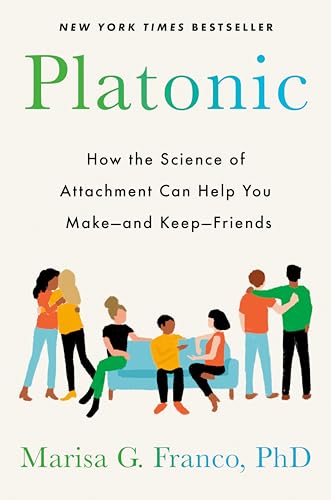
Inhaltsangabe
Instant New York Times bestseller
Is understanding the science of attachment the key to building lasting friendships and finding “your people” in an ever-more-fragmented world?
How do we make and keep friends in an era of distraction, burnout, and chaos, especially in a society that often prizes romantic love at the expense of other relationships? In Platonic, Dr. Marisa G. Franco unpacks the latest, often counterintuitive findings about the bonds between us—for example, why your friends aren’t texting you back (it’s not because they hate you!), and the myth of “friendships happening organically” (making friends, like cultivating any relationship, requires effort!). As Dr. Franco explains, to make and keep friends you must understand your attachment style—secure, anxious, or avoidant: it is the key to unlocking what’s working (and what’s failing) in your friendships.
Making new friends, and deepening longstanding relationships, is possible at any age—in fact, it’s essential. The good news: there are specific, research-based ways to improve the number and quality of your connections using the insights of attachment theory and the latest scientific research on friendship. Platonic provides a clear and actionable blueprint for forging strong, lasting connections with others—and for becoming our happiest, most fulfilled selves in the process.
Die Inhaltsangabe kann sich auf eine andere Ausgabe dieses Titels beziehen.
Über die Autorin bzw. den Autor
Dr. Marisa G. Franco holds a Ph.D. in Counseling Psychology from the University of Maryland and works as a professor there currently. She writes for Psychology Today and she has been a featured psychologist in The New York Times, NPR, and Good Morning America. Dr. Franco delivers talks about connection and belonging all over the country to private companies, universities, and non-profit organizations.
Auszug. © Genehmigter Nachdruck. Alle Rechte vorbehalten.
Chapter 1
How Friendship Transforms Our Lives
Connecting with Others Makes Us Ourselves
"Some of the widowed sit at home and watch television for the rest of their lives. They may be alive, but they're not really living," seventy-three-year-old Harriet remarks, referencing the members of the grief group she attended after her husband's death. Harriet could have easily faced this same fate if it wasn't for one thing: friendship.
Harriet didn't always value friendship. In fact, up until she married Federico at the age of fifty, it wasn't a priority. She was ambitious, working twelve-hour days and traveling enough to eventually meet her goal of visiting every country in the world. To ascend in her career, she moved across the US, chasing jobs-from the Northeast to the Midwest to the West and back to the Northeast again-disposing of friendships along the way.
But her ambitions never impeded her search for a spouse. "That was the training of my culture-to live your life to find a husband," she says. She had a string of boyfriends throughout her life, and when those relationships clipped, she would hunt for someone new. She remembered visiting her co-worker Denise's home and envying how she had it all: an impressive job, a husband, beautiful twins. Single at forty, she struggled to accept the reality that she might never have the husband and children she dreamed of. But, without the towering domestic obligations that arose from family life, she filled her hours with work.
Harriet admits friendship wasn't all that fulfilling in her younger years because of how she approached it. She was ashamed of her childhood, as she grew up on a farm, dirt poor. During the summers, she worked on neighbors' farms to pay for school. As she rose in her career, and her network increasingly churned with wealthy elites, she never felt like she belonged. Friendship was a place for her to live a double life, to perform the culture of affluence she never felt fully accustomed to: attending estate sales, dropping Benjamins on dinners, arguing over mundanities like the color of neighbors' lawns. She never let herself get too comfortable around friends, lest they figure out where she really came from, who she really was.
Then, two things happened that resuscitated her view on friendship. First, when she married Federico, a social butterfly, she acquiesced to hosting friends in their home for regular gatherings. "People wanted to be around us because of how happy we were," she says. From him, she learned that being around others could be a joy rather than a toll.
But it wasn't until Federico died that she truly understood the value of friends. To heal her grief, she attended counseling for the first time, where she learned how to be vulnerable. She transferred the skill of vulnerability to her friendships. When she did, she experienced old friendships in new ways, as her bonds ceased to be places of pretend. While some friendships buckled under the honesty of her grief, others deepened, and she realized that being vulnerable, asking for support, could be a portal to deep intimacy.
In her old age, Harriet values friends more than ever. One friendship, she realized, has been her longest love story. She met Shirleen in college, when she was studying abroad in Marseilles. Shirleen was the least judgmental person she ever met, one of the only people Harriet could open up to. Although they lost touch after college, fourteen years later, Shirleen tracked her down and called her. Shirleen lived in London but made the effort to visit Harriet in Washington DC five times over the course of a couple of years. As much as Harriet loved Federico, he wasn't one to talk about feelings, so throughout her life, Shirleen was her only true confidante. "For our life to feel significant, we crave someone to witness it, to verify its importance. Shirleen was my witness," Harriet says. They still talk weekly, despite their five-hour time difference, and Shirleen has brought up moving to DC to be closer to Harriet.
Now, for Harriet, having friends is more important than having a spouse. She has a male friend with whom she goes for walks, and she's unsure whether the relationship will remain platonic or become romantic. But she's at peace either way: "I take measure of the value of the relationship in terms of whether we enjoy each other's company, do things together, and share things with each other. The answer to all those questions is yes." She's in no rush to determine the fate of the relationship because "friendship is good too, and it's not a second resort."
At seventy-three, Harriet describes the way she's come to value friendship as a sign that "I've finally grown up." Every evening, she meets a friend for tea, dinner, or a walk. In this way, friends help her slow down and be present for life. "I don't know about you, but when I'm alone, I eat standing up," she says. "When I'm with friends, I eat paying attention." In her old age, Harriet can't travel as extensively as she used to, but instead she gets her thrills through the adventure of interacting with her different friends.
Harriet doesn't have many regrets in her life-certainly not marrying Federico, even though he was nineteen years her senior and she spent a few years being his caretaker after he slipped into dementia. But she does wish she could have recognized the power of friendship sooner. Still, she's thankful she came to value it before it was too late: "As you approach the end of your life, you realize each day is a gift, and you want to spend it in ways that are truly important. And for me, that means spending it with friends."
Harriet's trajectory reveals what we sacrifice when we diminish the importance of friends and what we gain when we value it. In Harriet's time, and still today, friendship is cast as a lesser relationship, a buffer to soften the purgatory between leaving our family and finding a new one. But friendship doesn't have to be so second-rate. As Harriet learned, it can be powerful, deep, and loving. And just like what happened with Harriet, friendship can save and transform us. In fact, it likely already has.
Why Friendship Matters
Friendship's impact is as profound as it is underestimated. Ancient Greeks philosophized that it is a key to eudaimonia, or flourishing. Aristotle, for example, argued in Nicomachean Ethics that without friendship, "No one would choose to live." Priests in the Middle Ages distrusted friendship, fearing its love could eclipse our love for God. Then, in the seventeenth century, it enchanted priests, who saw it as a channel to demonstrate our love for God.
These days, we typically see platonic love as somehow lacking-like romantic love with the screws of sex and passion missing. But this interpretation strays from the term's original meaning. When Italian scholar Marsilio Ficino coined the term "platonic love" in the fifteenth century, the word reflected Plato's vision of a love so powerful it transcended the physical. Platonic love was not romantic love undergoing subtraction. It was a purer form of love, one for someone's soul, as Ficino writes, "For it does not desire this or that body, but desires the splendor of the divine light shining through bodies." Platonic love was viewed as superior to romance.
The power of friendship isn't just a relic of ancient thinking. It's demonstrated by science. Psychologists theorize that our relationships, like oxygen, food, and water, are necessary for us to function. When stripped of them, we cannot thrive, which explains why friendship powerfully influences mental and physical health. Scientists have found that of 106 factors that influence depression, having someone to confide in is the...
„Über diesen Titel“ kann sich auf eine andere Ausgabe dieses Titels beziehen.
Suchergebnisse für Platonic: How the Science of Attachment Can Help You...

Beispielbild für diese ISBN
Platonic: How the Science of Attachment Can Help You Make?and Keep?Friends
Anbieter: BookOutlet, Jefferson City, TN, USA
Verkäuferbewertung 5 von 5 Sternen

Hardcover. Zustand: New. Hardcover. Publisher overstock, may contain remainder mark on edge. Bestandsnummer des Verkäufers 9780593331897B
Beispielbild für diese ISBN
Platonic : How the Science of Attachment Can Help You Make--And Keep--Friends
Verlag:
Penguin Publishing Group, 2022
ISBN 10: 0593331893
ISBN 13: 9780593331897
Gebraucht
Hardcover
Anbieter: Better World Books, Mishawaka, IN, USA
Verkäuferbewertung 5 von 5 Sternen
Zustand: Good. Former library copy. Pages intact with minimal writing/highlighting. The binding may be loose and creased. Dust jackets/supplements are not included. Includes library markings. Stock photo provided. Product includes identifying sticker. Better World Books: Buy Books. Do Good. Bestandsnummer des Verkäufers 41239784-6
Gebraucht kaufen
EUR 11,13
Versand gratis
Versand innerhalb von USA
Versand innerhalb von USA
Anzahl: 1 verfügbar
Beispielbild für diese ISBN
Platonic : How the Science of Attachment Can Help You Make--And Keep--Friends
Verlag:
Penguin Publishing Group, 2022
ISBN 10: 0593331893
ISBN 13: 9780593331897
Gebraucht
Hardcover
Anbieter: Better World Books, Mishawaka, IN, USA
Verkäuferbewertung 5 von 5 Sternen
Zustand: Very Good. Pages intact with possible writing/highlighting. Binding strong with minor wear. Dust jackets/supplements may not be included. Stock photo provided. Product includes identifying sticker. Better World Books: Buy Books. Do Good. Bestandsnummer des Verkäufers 41238262-6
Gebraucht kaufen
EUR 11,13
Versand gratis
Versand innerhalb von USA
Versand innerhalb von USA
Anzahl: 1 verfügbar
Beispielbild für diese ISBN
Platonic: How the Science of Attachment Can Help You Make--and Keep--Friends
Anbieter: HPB-Diamond, Dallas, TX, USA
Verkäuferbewertung 5 von 5 Sternen
hardcover. Zustand: Very Good. Connecting readers with great books since 1972! Used books may not include companion materials, and may have some shelf wear or limited writing. We ship orders daily and Customer Service is our top priority! Bestandsnummer des Verkäufers S_472269734
Gebraucht kaufen
EUR 7,96
EUR 3,31 Versand
Versand innerhalb von USA
Versand innerhalb von USA
Anzahl: 1 verfügbar
Foto des Verkäufers
Platonic: How the Science of Attachment Can Help You Make--and Keep--Friends
Anbieter: Greenworld Books, Arlington, TX, USA
Verkäuferbewertung 5 von 5 Sternen
Zustand: good. Fast Free Shipping â" Good condition. It may show normal signs of use, such as light writing, highlighting, or library markings, but all pages are intact and the book is fully readable. A solid, complete copy that's ready to enjoy. Bestandsnummer des Verkäufers GWV.0593331893.G
Gebraucht kaufen
EUR 11,59
Versand gratis
Versand innerhalb von USA
Versand innerhalb von USA
Anzahl: 1 verfügbar
Beispielbild für diese ISBN
Platonic: How the Science of Attachment Can Help You Make--and Keep--Friends
Anbieter: Half Price Books Inc., Dallas, TX, USA
Verkäuferbewertung 5 von 5 Sternen
hardcover. Zustand: Very Good. Connecting readers with great books since 1972! Used books may not include companion materials, and may have some shelf wear or limited writing. We ship orders daily and Customer Service is our top priority! Bestandsnummer des Verkäufers S_480361388
Gebraucht kaufen
EUR 9,45
EUR 3,31 Versand
Versand innerhalb von USA
Versand innerhalb von USA
Anzahl: 1 verfügbar
Beispielbild für diese ISBN
Platonic: How the Science of Attachment Can Help You Make--and Keep--Friends
Anbieter: World of Books (was SecondSale), Montgomery, IL, USA
Verkäuferbewertung 5 von 5 Sternen
Hardback. Zustand: Good. Instant New York Times bestseller Is understanding the science of attachment the key to building lasting friendships and finding "your people" in an ever-more-fragmented world? How do we make and keep friends in an era of distraction, burnout, and chaos, especially in a society that often prizes romantic love at the expense of other relationships? In Platonic, Dr. Marisa G. Franco unpacks the latest, often counterintuitive findings about the bonds between us--for example, why your friends aren't texting you back (it's not because they hate you!), and the myth of "friendships happening organically" (making friends, like cultivating any relationship, requires effort!). As Dr. Franco explains, to make and keep friends you must understand your attachment style--secure, anxious, or avoidant: it is the key to unlocking what's working (and what's failing) in your friendships. Making new friends, and deepening longstanding relationships, is possible at any age--in fact, it's essential. The good news: there are specific, research-based ways to improve the number and quality of your connections using the insights of attachment theory and the latest scientific research on friendship. Platonic provides a clear and actionable blueprint for forging strong, lasting connections with others--and for becoming our happiest, most fulfilled selves in the process. Bestandsnummer des Verkäufers 00109148143
Gebraucht kaufen
EUR 14,19
Versand gratis
Versand innerhalb von USA
Versand innerhalb von USA
Anzahl: 9 verfügbar
Beispielbild für diese ISBN
Platonic: How the Science of Attachment Can Help You Make--and Keep--Friends
Anbieter: World of Books (was SecondSale), Montgomery, IL, USA
Verkäuferbewertung 5 von 5 Sternen
Hardback. Zustand: Very Good. Instant New York Times bestseller Is understanding the science of attachment the key to building lasting friendships and finding "your people" in an ever-more-fragmented world? How do we make and keep friends in an era of distraction, burnout, and chaos, especially in a society that often prizes romantic love at the expense of other relationships? In Platonic, Dr. Marisa G. Franco unpacks the latest, often counterintuitive findings about the bonds between us--for example, why your friends aren't texting you back (it's not because they hate you!), and the myth of "friendships happening organically" (making friends, like cultivating any relationship, requires effort!). As Dr. Franco explains, to make and keep friends you must understand your attachment style--secure, anxious, or avoidant: it is the key to unlocking what's working (and what's failing) in your friendships. Making new friends, and deepening longstanding relationships, is possible at any age--in fact, it's essential. The good news: there are specific, research-based ways to improve the number and quality of your connections using the insights of attachment theory and the latest scientific research on friendship. Platonic provides a clear and actionable blueprint for forging strong, lasting connections with others--and for becoming our happiest, most fulfilled selves in the process. Bestandsnummer des Verkäufers 00108285604
Gebraucht kaufen
EUR 14,19
Versand gratis
Versand innerhalb von USA
Versand innerhalb von USA
Anzahl: 8 verfügbar
Beispielbild für diese ISBN
Platonic: How the Science of Attachment Can Help You Make--and Keep--Friends
Anbieter: World of Books Inc, Montgomery, IL, USA
Verkäuferbewertung 4 von 5 Sternen

Hardback. Zustand: Very Good. Instant New York Times bestseller Is understanding the science of attachment the key to building lasting friendships and finding "your people" in an ever-more-fragmented world? How do we make and keep friends in an era of distraction, burnout, and chaos, especially in a society that often prizes romantic love at the expense of other relationships? In Platonic, Dr. Marisa G. Franco unpacks the latest, often counterintuitive findings about the bonds between us--for example, why your friends aren't texting you back (it's not because they hate you!), and the myth of "friendships happening organically" (making friends, like cultivating any relationship, requires effort!). As Dr. Franco explains, to make and keep friends you must understand your attachment style--secure, anxious, or avoidant: it is the key to unlocking what's working (and what's failing) in your friendships. Making new friends, and deepening longstanding relationships, is possible at any age--in fact, it's essential. The good news: there are specific, research-based ways to improve the number and quality of your connections using the insights of attachment theory and the latest scientific research on friendship. Platonic provides a clear and actionable blueprint for forging strong, lasting connections with others--and for becoming our happiest, most fulfilled selves in the process. Bestandsnummer des Verkäufers CIN0593331893VG
Gebraucht kaufen
EUR 16,01
Versand gratis
Versand innerhalb von USA
Versand innerhalb von USA
Anzahl: 8 verfügbar
Beispielbild für diese ISBN
Platonic: How the Science of Attachment Can Help You Make--and Keep--Friends
Anbieter: World of Books Inc, Montgomery, IL, USA
Verkäuferbewertung 4 von 5 Sternen
Hardback. Zustand: Good. Instant New York Times bestseller Is understanding the science of attachment the key to building lasting friendships and finding "your people" in an ever-more-fragmented world? How do we make and keep friends in an era of distraction, burnout, and chaos, especially in a society that often prizes romantic love at the expense of other relationships? In Platonic, Dr. Marisa G. Franco unpacks the latest, often counterintuitive findings about the bonds between us--for example, why your friends aren't texting you back (it's not because they hate you!), and the myth of "friendships happening organically" (making friends, like cultivating any relationship, requires effort!). As Dr. Franco explains, to make and keep friends you must understand your attachment style--secure, anxious, or avoidant: it is the key to unlocking what's working (and what's failing) in your friendships. Making new friends, and deepening longstanding relationships, is possible at any age--in fact, it's essential. The good news: there are specific, research-based ways to improve the number and quality of your connections using the insights of attachment theory and the latest scientific research on friendship. Platonic provides a clear and actionable blueprint for forging strong, lasting connections with others--and for becoming our happiest, most fulfilled selves in the process. Bestandsnummer des Verkäufers CIN0593331893G
Gebraucht kaufen
EUR 16,01
Versand gratis
Versand innerhalb von USA
Versand innerhalb von USA
Anzahl: 9 verfügbar