
Verwandte Artikel zu Breath: The New Science of a Lost Art
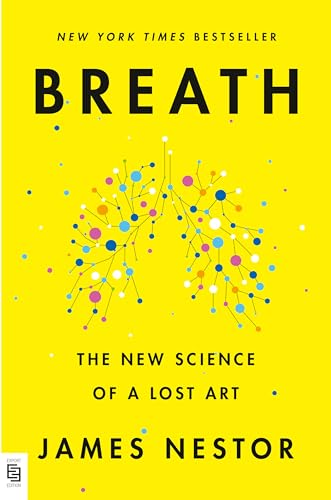
Inhaltsangabe
A New York Times Bestseller
A Washington Post Notable Nonfiction Book of 2020
Named a Best Book of 2020 by NPR
“A fascinating scientific, cultural, spiritual and evolutionary history of the way humans breathe—and how we’ve all been doing it wrong for a long, long time.” —Elizabeth Gilbert, author of Big Magic and Eat Pray Love
No matter what you eat, how much you exercise, how skinny or young or wise you are, none of it matters if you’re not breathing properly.
There is nothing more essential to our health and well-being than breathing: take air in, let it out, repeat twenty-five thousand times a day. Yet, as a species, humans have lost the ability to breathe correctly, with grave consequences.
Journalist James Nestor travels the world to figure out what went wrong and how to fix it. The answers aren’t found in pulmonology labs, as we might expect, but in the muddy digs of ancient burial sites, secret Soviet facilities, New Jersey choir schools, and the smoggy streets of São Paulo. Nestor tracks down men and women exploring the hidden science behind ancient breathing practices like Pranayama, Sudarshan Kriya, and Tummo and teams up with pulmonary tinkerers to scientifically test long-held beliefs about how we breathe.
Modern research is showing us that making even slight adjustments to the way we inhale and exhale can jump-start athletic performance; rejuvenate internal organs; halt snoring, asthma, and autoimmune disease; and even straighten scoliotic spines. None of this should be possible, and yet it is.
Drawing on thousands of years of medical texts and recent cutting-edge studies in pulmonology, psychology, biochemistry, and human physiology, Breath turns the conventional wisdom of what we thought we knew about our most basic biological function on its head. You will never breathe the same again.
Die Inhaltsangabe kann sich auf eine andere Ausgabe dieses Titels beziehen.
Über die Autorin bzw. den Autor
James Nestor is an author and journalist who has written for Scientific American, Outside, The New York Times, The Atlantic, and more. His latest book, Breath: The New Science of a Lost Art, was an instant New York Times and London Sunday Times bestseller and will be translated into more than 35 languages. Breath was awarded the Best General Nonfiction Book of 2020 by the American Society of Journalists and Authors and was a Finalist for Best Science Book of 2021 by the Royal Society. Nestor’s first book, Deep: Freediving, Renegade Science, and What the Ocean Tells Us About Ourselves, was a Finalist for the 2014 PEN/ESPN Award For Literary Sports Writing and an Amazon Best Science Book of 2014. Nestor has presented his work at Stanford Medical School, the United Nations, and on radio and television shows including Fresh Air with Terry Gross, ABC’s Nightline, CBS Morning News, and dozens of NPR programs. He lives and breathes in San Francisco.
Von der hinteren Coverseite
A New York Times Best Seller
A Washington Post Notable Nonfiction Book of 2020
Named a Best Book of 2020 by NPR
“A fascinating scientific, cultural, spiritual and evolutionary history of the way humans breathe - and how we’ve all been doing it wrong for a long, long time.” (Elizabeth Gilbert, author of Big Magic and Eat Pray Love)
No matter what you eat, how much you exercise, how skinny or young or wise you are, none of it matters if you’re not breathing properly.
There is nothing more essential to our health and well-being than breathing: Take air in, let it out, repeat 25,000 times a day. Yet, as a species, humans have lost the ability to breathe correctly, with grave consequences. Journalist James Nestor travels the world to figure out what went wrong and how to fix it. The answers aren’t found in pulmonology labs, as we might expect, but in the muddy digs of ancient burial sites, secret Soviet facilities, New Jersey choir schools, and the smoggy streets of São Paulo. Nestor tracks down men and women exploring the hidden science behind ancient breathing practices like Pranayama, Sudarshan Kriya, and Tummo and teams up with pulmonary tinkerers to scientifically test long-held beliefs about how we breathe.
Modern research is showing us that making even slight adjustments to the way we inhale and exhale can jump-start athletic performance; rejuvenate internal organs; halt snoring, asthma, and autoimmune disease; and even straighten scoliotic spines. None of this should be possible, and yet it is. Drawing on thousands of years of medical texts and recent cutting-edge studies in pulmonology, psychology, biochemistry, and human physiology, Breath turns the conventional wisdom of what we thought we knew about our most basic biological function on its head. You will never breathe the same again.
Auszug. © Genehmigter Nachdruck. Alle Rechte vorbehalten.
One
The Worst Breathers in the Animal Kingdom
The patient arrived, pale and torpid, at 9:32 a.m. Male, middle-aged, 175 pounds. Talkative and friendly but visibly anxious. Pain: none. Fatigue: a little. Level of anxiety: moderate. Fears about progression and future symptoms: high.
Patient reported that he was raised in a modern suburban environment, bottle-fed at six months, and weaned onto jarred commercial foods. The lack of chewing associated with this soft diet stunted bone development in his dental arches and sinus cavity, leading to chronic nasal congestion.
By age 15, patient was subsisting on even softer, highly processed foods consisting mostly of white bread, sweetened fruit juices, canned vegetables, Steak-umms, Velveeta sandwiches, microwave taquitos, Hostess Sno Balls, and Reggie! bars. His mouth had become so underdeveloped it could not accommodate 32 permanent teeth; incisors and canines grew in crooked, requiring extractions, braces, retainers, and headgear to straighten. Three years of orthodontics made his small mouth even smaller, so his tongue no longer properly fit between his teeth. When he stuck it out, which he did often, visible imprints laced its sides, a precursor to snoring.
At 17, four impacted wisdom teeth were removed, which further decreased the size of his mouth while increasing his chances of developing the chronic nocturnal choking known as sleep apnea. As he aged into his 20s and 30s, his breathing became more labored and dysfunctional and his airways became more obstructed. His face would continue a vertical growth pattern that led to sagging eyes, doughy cheeks, a sloping forehead, and a protruding nose.
This atrophied, underdeveloped mouth, throat, and skull, unfortunately, belongs to me.
I'm lying on the examination chair in the Stanford Department of Otolaryngology Head and Neck Surgery Center looking at myself, looking into myself. For the past several minutes, Dr. Jayakar Nayak, a nasal and sinus surgeon, has been gingerly coaxing an endoscope camera through my right nasal cavity. He's gone so deep into my head that it's come out the other side, into my throat.
"Say eeee," he says. Nayak has a halo of black hair, square glasses, cushioned running shoes, and a white coat. But I'm not looking at his clothes, or his face. I'm wearing a pair of video goggles that are streaming a live feed of the journey through the rolling dunes, swampy marshes, and stalactites inside my severely damaged sinuses. I'm trying not to cough or choke or gag as that endoscope squirms a little farther down.
"Say eeee," Nayak repeats. I say it and watch as the soft tissue around my larynx, pink and fleshy and coated in slime, opens and closes like a stop-motion Georgia O'Keeffe flower.
This isn't a pleasure cruise. Twenty-five sextillion molecules (that's 250 with 20 zeros after it) take this same voyage 18 times a minute, 25,000 times a day. I've come here to see, feel, and learn where all this air is supposed to enter our bodies. And I've come to say goodbye to my nose for the next ten days.
For the past century, the prevailing belief in Western medicine was that the nose was more or less an ancillary organ. We should breathe out of it if we can, the thinking went, but if not, no problem. That's what the mouth is for.
Many doctors, researchers, and scientists still support this position. Breathing tubes, mouthbreathing, and nasal breathing are all just means to the same end. There are 27 departments at the National Institute of Health devoted to lungs, eyes, skin disease, ears, and so on. The nose and sinuses aren't represented in any of them.
Nayak finds this absurd. He is the chief of rhinology research at Stanford. He heads an internationally renowned laboratory focused entirely on understanding the hidden power of the nose. He's found that those dunes, stalactites, and marshes inside the human head orchestrate a multitude of functions for the body. Vital functions. "Those structures are in there for a reason!" he told me earlier. Nayak has a special reverence for the nose, which he believes is greatly misunderstood and underappreciated. Which is why he's so interested to see what happens to a body that functions without one. Which is what brought me here.
Starting today, I'll spend the next quarter of a million breaths with silicone plugs blocking my nostrils and surgical tape over the plugs to stop even the faintest amount of air from entering or exiting my nose. I'll breathe only through my mouth, a heinous experiment that will be exhausting and miserable, but has a clear point.
Forty percent of today's population suffers from chronic nasal obstruction, and around half of us are habitual mouthbreathers, with females and children suffering the most. The causes are many: dry air to stress, inflammation to allergies, pollution to pharmaceuticals. But much of the blame, I'll soon learn, can be placed on the ever-shrinking real estate in the front of the human skull.
When mouths don't grow wide enough, the roof of the mouth tends to rise up instead of out, forming what's called a V-shape or high-arched palate. The upward growth impedes the development of the nasal cavity, shrinking it and disrupting the delicate structures in the nose. The reduced nasal space leads to obstruction and inhibits airflow. Overall, humans have the sad distinction of being the most plugged-up species on Earth.
I should know. Before probing my nasal cavities, Nayak took an X-ray of my head, which provided a deli-slicer view of every nook and cranny in my mouth, sinuses, and upper airways.
"You've got some . . . stuff," he said. Not only did I have a V-shape palate, I also had "severe" obstruction to the left nostril caused by a "severely" deviated septum. My sinuses were also riddled with a profusion of deformities called concha bullosa. "Super uncommon," said Nayak. It was a phrase nobody wants to hear from a doctor.
My airways were such a mess that Nayak was amazed I hadn't suffered from even more of the infections and respiration problems I'd known as a kid. But he was reasonably certain I could expect some degree of serious breathing problems in the future.
Over the next ten days of forced mouthbreathing, I'll be putting myself inside a kind of mucousy crystal ball, amplifying and hastening the deleterious effects on my breathing and my health, which will keep getting worse as I get older. I'll be lulling my body into a state it already knows, that half the population knows, only multiplying it many times.
"OK, hold steady," Nayak says. He grabs a steel needle with a wire brush at the end. It's the size of a mascara brush. I'm thinking, He's not going to put that thing up my nose. A few seconds later, he puts that up my nose.
I watch through the video goggles as Nayak maneuvers the brush deeper. He keeps sliding until the brush is no longer up my nose, no longer playing around my nose hair, but wiggling inside of my head a few inches deep. "Steady, steady," he says.
When the nasal cavity gets congested, airflow decreases and bacteria flourish. These bacteria replicate and can lead to infections and colds and more congestion. Congestion begets congestion, which gives us no other option but to habitually breathe from the mouth. Nobody knows how soon this damage occurs. Nobody knows how quickly bacteria accumulate in an obstructed nasal cavity. Nayak needs to grab a culture of my deep nasal tissue to find out.
I wince as I watch him twist the brush deeper still, then spin it, skimming off a...
„Über diesen Titel“ kann sich auf eine andere Ausgabe dieses Titels beziehen.
Suchergebnisse für Breath: The New Science of a Lost Art

Foto des Verkäufers
Breath: The New Science of a Lost Art
Anbieter: Goodwill Southern California, Los Angeles, CA, USA
Verkäuferbewertung 5 von 5 Sternen

Zustand: good. Paperback Book. Bestandsnummer des Verkäufers LACV.0593420217.G
Gebraucht kaufen
EUR 7,76
EUR 2,62 Versand
Versand innerhalb von USA
Versand innerhalb von USA
Anzahl: 1 verfügbar
Beispielbild für diese ISBN
Breath
Anbieter: World of Books (was SecondSale), Montgomery, IL, USA
Verkäuferbewertung 5 von 5 Sternen
Zustand: Good. Item in good condition. Textbooks may not include supplemental items i.e. CDs, access codes etc. Bestandsnummer des Verkäufers 00110557522
Gebraucht kaufen
EUR 10,61
Versand gratis
Versand innerhalb von USA
Versand innerhalb von USA
Anzahl: 1 verfügbar
Foto des Verkäufers
Breath: The New Science of a Lost Art
Anbieter: Goodwill, Brooklyn Park, MN, USA
Verkäuferbewertung 4 von 5 Sternen

Zustand: good. All pages and cover are intact including the dust cover, if applicable . Spine may show signs of wear. Pages may include limited notes and highlighting. May include "From the library of" labels. Shrink wrap, dust covers, or boxed set case may be missing. Item may be missing bundled media. Bestandsnummer des Verkäufers MINV.0593420217.G
Gebraucht kaufen
EUR 7,75
EUR 3,49 Versand
Versand innerhalb von USA
Versand innerhalb von USA
Anzahl: 1 verfügbar
Foto des Verkäufers
Breath: The New Science of a Lost Art
Anbieter: Blue Vase Books, Interlochen, MI, USA
Verkäuferbewertung 5 von 5 Sternen
Zustand: good. The item shows wear from consistent use, but it remains in good condition and works perfectly. All pages and cover are intact including the dust cover, if applicable . Spine may show signs of wear. Pages may include limited notes and highlighting. May NOT include discs, access code or other supplemental materials. Bestandsnummer des Verkäufers BVV.0593420217.G
Gebraucht kaufen
EUR 11,43
Versand gratis
Versand innerhalb von USA
Versand innerhalb von USA
Anzahl: 1 verfügbar
Beispielbild für diese ISBN
Breath
Anbieter: World of Books Inc, Montgomery, IL, USA
Verkäuferbewertung 4 von 5 Sternen
Paperback. Zustand: Good. Bestandsnummer des Verkäufers CIN0593420217G
Gebraucht kaufen
EUR 12,41
Versand gratis
Versand innerhalb von USA
Versand innerhalb von USA
Anzahl: 1 verfügbar
Foto des Verkäufers
Breath: The New Science of a Lost Art
Anbieter: Goodwill of Central and Coastal Virginia, Richmond, VA, USA
Verkäuferbewertung 4 von 5 Sternen
Zustand: acceptable. Bestandsnummer des Verkäufers CCVV.0593420217.A
Gebraucht kaufen
EUR 7,49
EUR 5,01 Versand
Versand innerhalb von USA
Versand innerhalb von USA
Anzahl: 3 verfügbar
Foto des Verkäufers
Breath: The New Science of a Lost Art
Anbieter: Goodwill of Central and Coastal Virginia, Richmond, VA, USA
Verkäuferbewertung 4 von 5 Sternen
Zustand: very_good. Bestandsnummer des Verkäufers CCVV.0593420217.VG
Gebraucht kaufen
EUR 7,49
EUR 5,01 Versand
Versand innerhalb von USA
Versand innerhalb von USA
Anzahl: 1 verfügbar
Beispielbild für diese ISBN
Breath
Anbieter: WorldofBooks, Goring-By-Sea, WS, Vereinigtes Königreich
Verkäuferbewertung 5 von 5 Sternen
Paperback. Zustand: Very Good. The book has been read, but is in excellent condition. Pages are intact and not marred by notes or highlighting. The spine remains undamaged. Bestandsnummer des Verkäufers GOR012018392
Gebraucht kaufen
EUR 24,40
EUR 6,53 Versand
Versand von Vereinigtes Königreich nach USA
Versand von Vereinigtes Königreich nach USA
Anzahl: 5 verfügbar
Beispielbild für diese ISBN
Breath
Anbieter: WorldofBooks, Goring-By-Sea, WS, Vereinigtes Königreich
Verkäuferbewertung 5 von 5 Sternen
Paperback. Zustand: Fine. Bestandsnummer des Verkäufers GOR011802814
Gebraucht kaufen
EUR 24,40
EUR 6,53 Versand
Versand von Vereinigtes Königreich nach USA
Versand von Vereinigtes Königreich nach USA
Anzahl: 1 verfügbar
Beispielbild für diese ISBN
Breath The New Science of a Lost Art
Anbieter: Solibri, Epone, Frankreich
Verkäuferbewertung 4 von 5 Sternen
Zustand: very good. bon état. Optez pour nos livres d'occasion en bon état avec quelques traces d'usure, et soutenez l'insertion sociale et l'écologie.,Couverture abîmée. 355622-4 - Breath The New Science of a Lost Art, Nestor, James, Riverhead Books, 2021. Bestandsnummer des Verkäufers 355622-4
Gebraucht kaufen
EUR 10,96
EUR 56,50 Versand
Versand von Frankreich nach USA
Versand von Frankreich nach USA
Anzahl: 1 verfügbar