
Verwandte Artikel zu Harlem Shuffle: A Novel (The Harlem Trilogy)
Inhaltsangabe
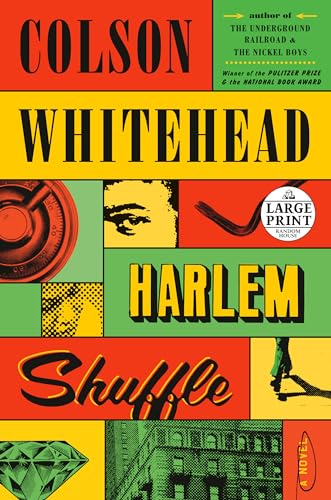
NEW YORK TIMES BESTSELLER • From the two-time Pulitzer Prize-winning author of The Underground Railroad and The Nickel Boys, this gloriously entertaining novel is “fast-paced, keen-eyed and very funny ... about race, power and the history of Harlem all disguised as a thrill-ride crime novel" (San Francisco Chronicle).
"Ray Carney was only slightly bent when it came to being crooked..." To his customers and neighbors on 125th street, Carney is an upstanding salesman of reasonably priced furniture, making a decent life for himself and his family. He and his wife Elizabeth are expecting their second child, and if her parents on Striver's Row don't approve of him or their cramped apartment across from the subway tracks, it's still home.
Few people know he descends from a line of uptown hoods and crooks, and that his façade of normalcy has more than a few cracks in it. Cracks that are getting bigger all the time.
Cash is tight, especially with all those installment-plan sofas, so if his cousin Freddie occasionally drops off the odd ring or necklace, Ray doesn't ask where it comes from. He knows a discreet jeweler downtown who doesn't ask questions, either.
Then Freddie falls in with a crew who plan to rob the Hotel Theresa—the "Waldorf of Harlem"—and volunteers Ray's services as the fence. The heist doesn't go as planned; they rarely do. Now Ray has a new clientele, one made up of shady cops, vicious local gangsters, two-bit pornographers, and other assorted Harlem lowlifes.
Thus begins the internal tussle between Ray the striver and Ray the crook. As Ray navigates this double life, he begins to see who actually pulls the strings in Harlem. Can Ray avoid getting killed, save his cousin, and grab his share of the big score, all while maintaining his reputation as the go-to source for all your quality home furniture needs?
Harlem Shuffle's ingenious story plays out in a beautifully recreated New York City of the early 1960s. It's a family saga masquerading as a crime novel, a hilarious morality play, a social novel about race and power, and ultimately a love letter to Harlem.
But mostly, it's a joy to read, another dazzling novel from the Pulitzer Prize and National Book Award-winning Colson Whitehead.
Look for Colson Whitehead’s new novel, Crook Manifesto!
Die Inhaltsangabe kann sich auf eine andere Ausgabe dieses Titels beziehen.
Über die Autorin bzw. den Autor
Colson Whitehead is the #1 New York Times bestselling author of The Underground Railroad, which in 2016 won the Pulitzer Prize in Fiction and the National Book Award and was named one of the Ten Best Books of the Year by The New York Times Book Review, as well as The Noble Hustle, Zone One, Sag Harbor, The Intuitionist, John Henry Days, Apex Hides the Hurt, and The Colossus of New York. He is also a Pulitzer Prize finalist and a recipient of the MacArthur and Guggenheim Fellowships. He lives in New York City.
Colson Whitehead is available for select speaking engagements. To inquire about a possible appearance, please contact Penguin Random House Speakers Bureau at speakers@ penguinrandomhouse.com or visitwww.prhspeakers.com.
Auszug. © Genehmigter Nachdruck. Alle Rechte vorbehalten.
CHAPTER ONE
His cousin Freddie brought him on the heist one hot night in early June. Ray Carney was having one of his run-around days—uptown, downtown, zipping across the city. Keeping the machine humming. First up was Radio Row, to unload the final three consoles, two RCAs and a Magnavox, and pick up the TV he left. He’d given up on the radios, hadn’t sold one in a year and a half no matter how much he marked them down and begged. Now they took up space in the basement that he needed for the new recliners coming in from Argent next week and whatever he picked up from the dead lady’s apartment that afternoon. The radios were top-of-the-line three years ago; now padded blankets hid their slick mahogany cabinets, fastened by leather straps to the truck bed. The pickup bounced in the unholy rut of the West Side Highway.
Just that morning there was another article in the Tribune about the city tearing down the elevated highway. Narrow and indifferently cobblestoned, the road was a botch from the start. On the best days it was bumper-to-bumper, a bitter argument of honks and curses, and on rainy days the potholes were treacherous lagoons, one grim slosh. Last week a customer wandered into the store with his head wrapped like a mummy—beaned by a chunk of falling balustrade while walking under the damn thing. Said he was going to sue. Carney said, “You’re in your rights.” Around Twenty-Third Street the pickup’s wheels bit into a crater and he thought one of the RCAs was going to launch from the bed into the Hudson River. He was relieved when he was able to sneak off at Duane Street without incident.
Carney’s man on Radio Row was halfway down Cortlandt, off Greenwich, right in the thick. He got a space outside Samuel’s Amazing Radio—repair all makes—and went to check that Aronowitz was in. Twice in the last year he’d come all the way down to find the shop shut in the middle of the day.
A few years ago, walking past the crammed storefronts was like twirling a radio dial—this store blared jazz into the street out of horn loudspeakers, the next store German symphonies, then ragtime, and so on. S & S Electronics, Landy’s Top Notch, Steinway the Radio King. Now he was more likely to hear rock and roll, in a desperate lure of the teenage scene, and to find the windows crammed with television sets, the latest wonders from DuMont and Motorola and the rest. Consoles in blond hardwood, the sleek new portable lines, and three-in-one hi-fi combos with picture tube, tuner, and turntable in the same cabinet, smart. What hadn’t changed was Carney’s meandering sidewalk route around the massive bins and buckets of vacuum tubes, audio transformers, and condensers that drew in tinkerers from all over the tri-state. Any part you need, all makes, all models, reasonable prices.
There was a hole in the air where the Ninth Avenue el used to run. That disappeared thing. His father had taken him here once or twice on one of his mysterious errands, when he was little. Carney still thought he heard the train sometimes, rumbling behind the music and haggling of the street.
Aronowitz hunched over the glass counter, with a loupe screwed into his eye socket, poking one of his gizmos. “Mr. Carney.” He coughed.
There weren’t many white men who called him mister. Downtown, anyway. The first time Carney came to the Row on business, the white clerks pretended not to see him, attending to hobbyists who came in after him. He cleared his throat, he gestured, and remained a black ghost, store after store, accumulating the standard humiliations, until he climbed the black iron steps to Aronowitz & Sons and the proprietor asked, “Can I help you, sir?” Can I help you as in Can I help you? As opposed to What are you doing here? Ray Carney, in his years, had a handle on the variations.
That first day, Carney told him he had a radio in need of repair; he had just picked up his sideline in gently used appliances. Aronowitz cut him off when he tried to explain the problem and got to work unscrewing the case. Carney didn’t waste his breath on subsequent visits, merely set the radios before the maestro and let him have his way with it. The routine went: weary sighs and grunts as he surveyed the problem, with a jab and flash of silver implements. His Diagnometer tested fuses, resistors; he calibrated voltage, rummaged through unlabeled trays in the steel filing cabinets along the walls of the gloomy shop. If something big was afoot, Aronowitz twirled in his chair and scurried into the workshop in the back, to more grunts. He reminded Carney of a squirrel in the park, darting helter-skelter after lost nuts. Maybe the other squirrels of Radio Row understood this behavior, but it was animal madness to this civilian.
Often Carney went down the street for a ham and cheese to let the man work in peace.
Aronowitz never failed to make the fix, find the part. The new technology vexed the old man, however, and he usually had Carney return the next day for TV sets, or the next week once the new picture tube or valve arrived. Refusing to shame himself by walking down the block to hit up a competitor. That’s how Carney ended up there that morning. He’d dropped off the twenty-one-inch Philco last week. If he was lucky, the old man would take the radios off his hands.
Carney carried one of the big RCAs into the shop and went back for the next. “I’d have the boy help you,” Aronowitz said, “but I had to cut back on his hours.”
The boy Jacob, a surly, pockmarked teenager from a Ludlow Street rookery, hadn’t worked there for more than a year as far as Carney could tell. The “& Sons” on the sign had ever been aspirational—Aronowitz’s wife had moved back to Jersey to live with her sister long ago—but bluster and bravado were a motif for Radio Row establishments. Top of the City, House of Values, Cannot Be Beaten. Decades before, the electronics boom made the neighborhood into a theater for immigrant ambition. Hang a shingle, deliver your pitch, and climb out of the tenement stew. If things go well, you open a second location, expand into the failed shop next door. Pass the business on to your sons and retire to one of the new Long Island suburbs. If things go well.
Carney thought Aronowitz should drop the Sons thing and go for something more hip: Atomic TV & Radio, Jet Age Electronics. But that’d be a reversal of their relationship, as it was Aronowitz who delivered the advice at this address, one entrepreneur to another, generally of the “physician, heal thyself” variety. Carney didn’t need the old man’s tips on accounting practices and merchandise placement. His business degree from Queens College hung in his office next to a signed photograph of Lena Horne.
Carney got the three radios inside. Sidewalk traffic on the Row wasn’t what it used to be.
“No, they’re not broken,” Carney said as Aronowitz unfurled his roll of instruments. The roll was green felt, with slots. “I thought you’d want them, maybe.”
“Nothing wrong with them?” Like something that worked okay was an alien proposition.
“I figured I was coming down to pick up the TV, I’d see if you were interested.” On the one hand, why would a radio man need a radio, but on the other, every businessman had a sideline. He knew this to be true of Aronowitz. “Strip them for parts or something?”
Aronowitz’s shoulders dropped. “Parts. I sure don’t have customers, Mr. Carney, but I have parts.”
“You have me, Aronowitz.”
“I have you, Mr. Carney. And you...
„Über diesen Titel“ kann sich auf eine andere Ausgabe dieses Titels beziehen.
Suchergebnisse für Harlem Shuffle: A Novel (The Harlem Trilogy)

Beispielbild für diese ISBN
Harlem Shuffle: A Novel
Anbieter: World of Books (was SecondSale), Montgomery, IL, USA
Verkäuferbewertung 5 von 5 Sternen

Paperback. Zustand: Fair. NEW YORK TIMES BESTSELLER * From the two-time Pulitzer Prize-winning author of The Underground Railroad and The Nickel Boys, this gloriously entertaining novel is "fast-paced, keen-eyed and very funny . about race, power and the history of Harlem all disguised as a thrill-ride crime novel" (San Francisco Chronicle). "Ray Carney was only slightly bent when it came to being crooked." To his customers and neighbors on 125th street, Carney is an upstanding salesman of reasonably priced furniture, making a decent life for himself and his family. He and his wife Elizabeth are expecting their second child, and if her parents on Striver's Row don't approve of him or their cramped apartment across from the subway tracks, it's still home. Few people know he descends from a line of uptown hoods and crooks, and that his façade of normalcy has more than a few cracks in it. Cracks that are getting bigger all the time. Cash is tight, especially with all those installment-plan sofas, so if his cousin Freddie occasionally drops off the odd ring or necklace, Ray doesn't ask where it comes from. He knows a discreet jeweler downtown who doesn't ask questions, either. Then Freddie falls in with a crew who plan to rob the Hotel Theresa--the "Waldorf of Harlem"--and volunteers Ray's services as the fence. The heist doesn't go as planned; they rarely do. Now Ray has a new clientele, one made up of shady cops, vicious local gangsters, two-bit pornographers, and other assorted Harlem lowlifes. Thus begins the internal tussle between Ray the striver and Ray the crook. As Ray navigates this double life, he begins to see who actually pulls the strings in Harlem. Can Ray avoid getting killed, save his cousin, and grab his share of the big score, all while maintaining his reputation as the go-to source for all your quality home furniture needs? Harlem Shuffle's ingenious story plays out in a beautifully recreated New York City of the early 1960s. It's a family saga masquerading as a crime novel, a hilarious morality play, a social novel about race and power, and ultimately a love letter to Harlem. But mostly, it's a joy to read, another dazzling novel from the Pulitzer Prize and National Book Award-winning Colson Whitehead. Bestandsnummer des Verkäufers CIN0593460189A
Gebraucht kaufen
EUR 10,17
Versand gratis
Versand innerhalb von USA
Versand innerhalb von USA
Anzahl: 1 verfügbar
Foto des Verkäufers
Harlem Shuffle: A Novel (The Harlem Trilogy)
Anbieter: Zoom Books East, Glendale Heights, IL, USA
Verkäuferbewertung 5 von 5 Sternen
Zustand: very_good. Book is in very good condition and may include minimal underlining highlighting. The book can also include "From the library of" labels. May not contain miscellaneous items toys, dvds, etc. . We offer 100% money back guarantee and 24 7 customer service. Bestandsnummer des Verkäufers ZEV.0593460189.VG
Gebraucht kaufen
EUR 11,97
Versand gratis
Versand innerhalb von USA
Versand innerhalb von USA
Anzahl: 1 verfügbar
Beispielbild für diese ISBN
Harlem Shuffle: A Novel
Anbieter: World of Books Inc, Montgomery, IL, USA
Verkäuferbewertung 4 von 5 Sternen

Paperback. Zustand: Fair. NEW YORK TIMES BESTSELLER * From the two-time Pulitzer Prize-winning author of The Underground Railroad and The Nickel Boys, this gloriously entertaining novel is "fast-paced, keen-eyed and very funny . about race, power and the history of Harlem all disguised as a thrill-ride crime novel" (San Francisco Chronicle). "Ray Carney was only slightly bent when it came to being crooked." To his customers and neighbors on 125th street, Carney is an upstanding salesman of reasonably priced furniture, making a decent life for himself and his family. He and his wife Elizabeth are expecting their second child, and if her parents on Striver's Row don't approve of him or their cramped apartment across from the subway tracks, it's still home. Few people know he descends from a line of uptown hoods and crooks, and that his façade of normalcy has more than a few cracks in it. Cracks that are getting bigger all the time. Cash is tight, especially with all those installment-plan sofas, so if his cousin Freddie occasionally drops off the odd ring or necklace, Ray doesn't ask where it comes from. He knows a discreet jeweler downtown who doesn't ask questions, either. Then Freddie falls in with a crew who plan to rob the Hotel Theresa--the "Waldorf of Harlem"--and volunteers Ray's services as the fence. The heist doesn't go as planned; they rarely do. Now Ray has a new clientele, one made up of shady cops, vicious local gangsters, two-bit pornographers, and other assorted Harlem lowlifes. Thus begins the internal tussle between Ray the striver and Ray the crook. As Ray navigates this double life, he begins to see who actually pulls the strings in Harlem. Can Ray avoid getting killed, save his cousin, and grab his share of the big score, all while maintaining his reputation as the go-to source for all your quality home furniture needs? Harlem Shuffle's ingenious story plays out in a beautifully recreated New York City of the early 1960s. It's a family saga masquerading as a crime novel, a hilarious morality play, a social novel about race and power, and ultimately a love letter to Harlem. But mostly, it's a joy to read, another dazzling novel from the Pulitzer Prize and National Book Award-winning Colson Whitehead. Bestandsnummer des Verkäufers CIN0593460189A
Gebraucht kaufen
EUR 12,00
Versand gratis
Versand innerhalb von USA
Versand innerhalb von USA
Anzahl: 1 verfügbar
Foto des Verkäufers
Harlem Shuffle: A Novel (The Harlem Trilogy)
Anbieter: Zoom Books East, Glendale Heights, IL, USA
Verkäuferbewertung 5 von 5 Sternen
Zustand: good. Book is in good condition and may include underlining highlighting and minimal wear. The book can also include "From the library of" labels. May not contain miscellaneous items toys, dvds, etc. . We offer 100% money back guarantee and 24 7 customer service. Bestandsnummer des Verkäufers ZEV.0593460189.G
Gebraucht kaufen
EUR 12,07
Versand gratis
Versand innerhalb von USA
Versand innerhalb von USA
Anzahl: 1 verfügbar
Foto des Verkäufers
Harlem Shuffle: A Novel (The Harlem Trilogy)
Anbieter: Greenworld Books, Arlington, TX, USA
Verkäuferbewertung 5 von 5 Sternen
Zustand: very_good. Fast Free Shipping â" Very Good condition book with a firm cover and clean pages. Shows normal use and some light wear or limited notes markings. A solid, nice copy to enjoy. Bestandsnummer des Verkäufers GWV.0593460189.VG
Gebraucht kaufen
EUR 13,25
Versand gratis
Versand innerhalb von USA
Versand innerhalb von USA
Anzahl: 1 verfügbar
Beispielbild für diese ISBN
Harlem Shuffle
Anbieter: ThriftBooks-Atlanta, AUSTELL, GA, USA
Verkäuferbewertung 5 von 5 Sternen
Paperback. Zustand: Fair. No Jacket. Former library book; Readable copy. Pages may have considerable notes/highlighting. ~ ThriftBooks: Read More, Spend Less. Bestandsnummer des Verkäufers G0593460189I5N10
Gebraucht kaufen
EUR 13,84
Versand gratis
Versand innerhalb von USA
Versand innerhalb von USA
Anzahl: 1 verfügbar
Beispielbild für diese ISBN
Harlem Shuffle
Anbieter: ThriftBooks-Atlanta, AUSTELL, GA, USA
Verkäuferbewertung 5 von 5 Sternen
Paperback. Zustand: Good. No Jacket. Pages can have notes/highlighting. Spine may show signs of wear. ~ ThriftBooks: Read More, Spend Less. Bestandsnummer des Verkäufers G0593460189I3N00
Gebraucht kaufen
EUR 13,84
Versand gratis
Versand innerhalb von USA
Versand innerhalb von USA
Anzahl: 1 verfügbar
Beispielbild für diese ISBN
Harlem Shuffle: A Novel (Random House Large Print)
Verlag:
Random House Large Print, 2021
ISBN 10: 0593460189
ISBN 13: 9780593460184
Gebraucht
Paperback
Anbieter: HPB-Diamond, Dallas, TX, USA
Verkäuferbewertung 5 von 5 Sternen
Paperback. Zustand: Very Good. Connecting readers with great books since 1972! Used books may not include companion materials, and may have some shelf wear or limited writing. We ship orders daily and Customer Service is our top priority! Bestandsnummer des Verkäufers S_487974708
Gebraucht kaufen
EUR 10,53
EUR 3,34 Versand
Versand innerhalb von USA
Versand innerhalb von USA
Anzahl: 1 verfügbar
Beispielbild für diese ISBN
Harlem Shuffle: A Novel (Random House Large Print)
Verlag:
Random House Large Print, New York, New York, U.S.A., 2021
ISBN 10: 0593460189
ISBN 13: 9780593460184
Gebraucht
Soft cover
Erstausgabe
Anbieter: P.F. Mullins Books, Carlsbad, CA, USA
Verkäuferbewertung 4 von 5 Sternen
Soft cover. Zustand: Very Good. 1st Edition. Large Print Edition. Bestandsnummer des Verkäufers 006235
Gebraucht kaufen
EUR 9,63
EUR 5,31 Versand
Versand innerhalb von USA
Versand innerhalb von USA
Anzahl: 1 verfügbar
Beispielbild für diese ISBN
Harlem Shuffle : A Novel
Anbieter: Better World Books, Mishawaka, IN, USA
Verkäuferbewertung 5 von 5 Sternen
Zustand: Good. 39. Pages intact with minimal writing/highlighting. The binding may be loose and creased. Dust jackets/supplements are not included. Stock photo provided. Product includes identifying sticker. Better World Books: Buy Books. Do Good. Bestandsnummer des Verkäufers 41427426-6
Gebraucht kaufen
EUR 17,29
Versand gratis
Versand innerhalb von USA
Versand innerhalb von USA
Anzahl: 1 verfügbar