
Verwandte Artikel zu Mockingbird
Inhaltsangabe
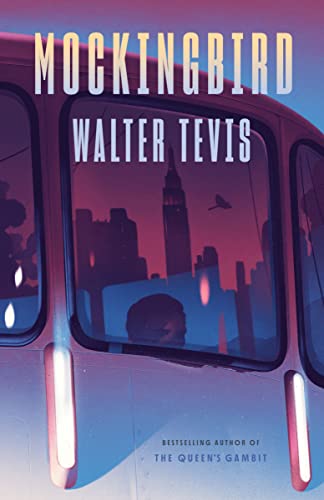
"Set in a far future in which robots run a world with a small and declining human population" (San Francisco Chronicle), a haunting, dystopian vision of humanity and its last hope for survival from the bestselling author of The Queen's Gambit
In the future, the human race has ceased to progress. Granted endless leisure by widespread automation, the masses devote themselves solely to the pleasures of the here and now, to drugs that dull their senses and electronic bliss that disconnects them from reality. Theirs is a world that is without meaning or purpose, without art, children, or reading, and overseeing the bleak persistence of humanity is an intelligent machine whose only wish is to extinguish its own existence.
But when two ordinary people begin to fight the system, hope for the human race glimmers in their journey as they attempt to realize the full potential of humanity.
Die Inhaltsangabe kann sich auf eine andere Ausgabe dieses Titels beziehen.
Über die Autorin bzw. den Autor
WALTER TEVIS is the author of The Hustler, The Man Who Fell to Earth, Mockingbird, The Steps of the Sun, The Queen’s Gambit, The Color of Money, and the short story collection Far from Home. The Man Who Fell to Earth was the basis for a major motion picture starring David Bowie. The Hustler and The Color of Money were also adapted for film, The Queen’s Gambit was the basis of the Emmy Award–winning Netflix series and The Man Who Fell to Earth is the basis of the Showtime series. Tevis died in 1984.
Auszug. © Genehmigter Nachdruck. Alle Rechte vorbehalten.
Chapter 1
Spofforth
Walking up Fifth Avenue at midnight, Spofforth begins to whistle. He does not know the name of the tune nor does he care to know; it is a complicated tune, one he whistles often when alone. He is naked to the waist and barefoot, dressed only in khaki trousers; he can feel the worn old paving beneath his feet. Although he walks up the middle of the broad avenue he can see patches of grass and tall weeds on either side of him where the sidewalk has long before been cracked and broken away, awaiting repairs that will never be made. From these patches Spofforth hears a chorus of diverse clickings and wing rubbings of insects. The sounds make him uneasy, as they always do this time of year, in spring. He puts his big hands into his trouser pockets. Then, uncomfortable, he takes them out again and begins to jog, huge and light-footed, athletic, up toward the massive form of the Empire State Building.
The doorway to the building had eyes and a voice; its brain was the brain of a moron—single-minded and insensitive. “Closed for repairs,” the voice said to Spofforth as he approached.
“Shut up and open,” Spofforth said. And then, “I am Robert Spofforth. Make Nine.”
“Sorry, sir,” the door said. “Couldn’t see . . .”
“Yes. Open up. And tell the express elevator to be down for me.”
The door was silent for a moment. Then it said, “Elevator’s not working, sir.”
“Shit,” Spofforth said. And then, “I’ll walk up.”
The door opened and Spofforth walked in and headed across the dark lobby toward the stairway. He muted the pain circuits in his legs and lungs, and began to climb. He was no longer whistling; his elaborate mind had become fixed narrowly now upon his annual intent.
When he reached the edge of the platform, as high above the city as one could stand, Spofforth sent the command to the nerves in his legs and the pain surged into them. He wobbled slightly from it, high and alone in the black night, with no moon above him and the stars dim. The surface underfoot was smooth, polished; once years before Spofforth had almost slipped. Immediately he had thought, in disappointment, If only that would happen again, at the edge. But it did not.
He walked to within two feet of the platform’s limit, and with no mental signal, no volition, no wish for it to happen, his legs stopped moving and he found himself, as always, immobilized, facing Fifth Avenue uptown, over a thousand dark feet above its hard and welcome surface. Then he urged his body forward in sad and grim desperation, focusing his will upon the desire to fall forward, merely to lean his strong and heavy body, his factory-made body, out, away from the building, away from life. Inwardly he began to scream for movement, picturing himself tumbling in slow motion, gracefully and surely, to the street below. Yearning for that.
But his body was not—as he knew it would not be—his own. He had been designed by human beings; only a human being could make him die. Then he screamed aloud, throwing his arms out at his sides, bellowing in fury over the silent city. But he could not move forward.
Spofforth stood there, alone on top of the tallest building in the world, immobilized, for the rest of the June night. Occasionally the lights of a thought bus would be visible, slightly larger than stars, below him, moving slowly up and down the avenues of an empty city. There were no lights on in the buildings.
And then, as the sun began to illuminate the sky over the East River to his right and over Brooklyn, to which no bridges ran, his frustration began to ebb. Had he been given tear ducts he would, then, have found the release of tears; but he could not cry. The light became brighter; he could see the outlines of the empty buses below him. He could see a tiny Detection car moving up Third Avenue. And then the sun, pale in the June sky, burst up over an empty Brooklyn and sparkled on the water of the river as fresh as at the dawn of time. Spofforth took a step backward, away from the death he sought and had been seeking all his long life, and the anger that had possessed him began to ebb with the rising sun. He would go on living, and he could bear it.
He climbed down the dusty staircase slowly at first. But by the time he reached the lobby his footsteps were brisk, self-assured, full of artificial life.
As he left the building he told the speaker on the doorway, “Don’t let the elevator be repaired. I prefer the climb.”
“Yes, sir,” the door said.
Outside, the sun was shining brightly and there were a few humans on the street. An old black woman in a faded blue dress happened to brush Spofforth’s elbow, looked up dreamily at his face. When she saw his marking as a Make Nine robot she immediately averted her eyes and mumbled, “I’m sorry. I’m sorry, sir.” She stood near him, at a loss. She had probably never seen a Make Nine before and only knew about them from her early training.
“Go on,” he said gently. “It’s all right.”
“Yes, sir,” she said. She fumbled in her dress pocket and pulled out a sopor and took it. Then she turned and shuffled off.
Spofforth walked briskly, in sunshine, back down toward Washington Square, toward New York University, where he worked. His body never tired. Only his mind—his elaborate, labyrinthine, and lucid mind—understood the meaning of fatigue. His mind was always, always tired.
Spofforth’s metal brain had been constructed and his body grown from living tissue at a time, long before, when engineering was in decline but the making of robots was a high art. That art too would soon decline and wither; Spofforth himself had been its highest achievement. He was the last of a series of a hundred robots designated Make Nine, the strongest and most intelligent creatures ever made by man. He was also the only one programmed to stay alive despite his own wishes.
A technique existed for making a recording of every neural pathway, every learning pattern of an adult human brain and transferring that recording to the metal brain of a robot. This technique had been used only for the Make Nine series; all of the robots in that series had been equipped with altered copies of the living brain of a single man. That man was a brilliant and melancholy engineer named Paisley—although Spofforth was never to know that. The network of information bits and interconnections that made up Paisley’s brain had been recorded on magnetic tapes and stored in a vault in Cleveland. What happened to Paisley after his mind was copied no one ever knew. His personality, his imagination, and his learning had all been recorded on tapes when he was forty-three, and afterward the man was forgotten.
The tapes were edited. The personality was removed from them as much as was possible without harming the “useful” functions. Just what was “useful” about a mind had been determined by engineers less imaginative than Paisley himself. The memory of the life was erased, and with it much of the learning, although the syntax and vocabulary of English remained on the tapes. They contained, even after editing, a near-perfect copy of an evolutionary miracle: a human brain. Some unwanted things from Paisley remained. The ability to play the piano was in the tapes, but needed a body with arms and hands to be manifest. But when the body was made there would be no piano for it to play.
Unwanted by the engineers who had made the recording, but unavoidable, were fragments of old dreams, yearnings, anxieties. There was no way to rid the tapes of these without damaging...
„Über diesen Titel“ kann sich auf eine andere Ausgabe dieses Titels beziehen.
Suchergebnisse für Mockingbird

Beispielbild für diese ISBN
Mockingbird
Anbieter: World of Books (was SecondSale), Montgomery, IL, USA
Verkäuferbewertung 5 von 5 Sternen

Zustand: Good. Item in good condition. Textbooks may not include supplemental items i.e. CDs, access codes etc. Bestandsnummer des Verkäufers 00110169845
Gebraucht kaufen
EUR 7,86
Versand gratis
Versand innerhalb von USA
Versand innerhalb von USA
Anzahl: 2 verfügbar
Foto des Verkäufers
Mockingbird
Anbieter: Gate City Books, GREENSBORO, NC, USA
Verkäuferbewertung 5 von 5 Sternen
Zustand: acceptable. USED book in ACCEPTABLE condition. Cover and pages are in tact but may show creases, tears, water damage, handwriting, underlining, or highlighting. May be missing dust jacket. Supplemental items such as access codes and CDs not guaranteed. Bestandsnummer des Verkäufers GCM.3HKX
Gebraucht kaufen
EUR 9,48
Versand gratis
Versand innerhalb von USA
Versand innerhalb von USA
Anzahl: 1 verfügbar
Beispielbild für diese ISBN
Mockingbird
Anbieter: World of Books Inc, Montgomery, IL, USA
Verkäuferbewertung 4 von 5 Sternen

Paperback. Zustand: Good. As Robert Spofforth ascends to the top of the crumbling Empire State Building, his only wish is to be able to step off the ledge. But as one of the last androids tasked with overseeing the bleak persistence of mankind, his programing prevents him from ending his long and tired life. In this world where reading has been forgotten, physical contact is forbidden, and the vestiges of humanity idle away their days in a narcotic haze, the future is decidedly grim. But when Paul Bentley, an unremarkable man who makes a remarkable discovery, shares his new knowledge--called reading--with an unusual woman named Mary Lou, the order of their desolate world is challenged and a new hope for humanity glimmers amid the ruins. Bestandsnummer des Verkäufers CIN0593467485G
Gebraucht kaufen
EUR 9,67
Versand gratis
Versand innerhalb von USA
Versand innerhalb von USA
Anzahl: 2 verfügbar
Beispielbild für diese ISBN
Mockingbird
Anbieter: Half Price Books Inc., Dallas, TX, USA
Verkäuferbewertung 5 von 5 Sternen
paperback. Zustand: Very Good. Connecting readers with great books since 1972! Used books may not include companion materials, and may have some shelf wear or limited writing. We ship orders daily and Customer Service is our top priority! Bestandsnummer des Verkäufers S_486234190
Gebraucht kaufen
EUR 7,86
EUR 3,30 Versand
Versand innerhalb von USA
Versand innerhalb von USA
Anzahl: 1 verfügbar
Beispielbild für diese ISBN
Mockingbird
Anbieter: Deadstock Gear, Fort Oglethorpe, GA, USA
Verkäuferbewertung 5 von 5 Sternen
paperback. Zustand: Very Good. Item may have minor cosmetic defects (such as marks, wears, cuts, bends, or crushes) on the cover, spine, pages, or dust cover. Shrink wrap, dust covers, or boxed set case may be missing. Item may contain remainder marks on outside edges. Item may be missing bundled media. Satisfaction guaranteed. Thank you! Bestandsnummer des Verkäufers 09-07-2026-Bulk-Shelf 47/B097
Gebraucht kaufen
EUR 11,48
EUR 2,64 Versand
Versand innerhalb von USA
Versand innerhalb von USA
Anzahl: 1 verfügbar
Beispielbild für diese ISBN
Mockingbird
Anbieter: GreatBookPrices, Columbia, MD, USA
Verkäuferbewertung 5 von 5 Sternen
Zustand: New. Bestandsnummer des Verkäufers 43498921-n
Neu kaufen
EUR 12,59
EUR 2,32 Versand
Versand innerhalb von USA
Versand innerhalb von USA
Anzahl: 3 verfügbar
Beispielbild für diese ISBN
Mockingbird Format: Paperback
Anbieter: INDOO, Avenel, NJ, USA
Verkäuferbewertung 5 von 5 Sternen
Zustand: New. Bestandsnummer des Verkäufers 9780593467480
Neu kaufen
EUR 14,99
Versand gratis
Versand innerhalb von USA
Versand innerhalb von USA
Anzahl: Mehr als 20 verfügbar
Foto des Verkäufers
Mockingbird (Paperback)
Verlag:
Random House USA Inc, New York, 2022
ISBN 10: 0593467485
ISBN 13: 9780593467480
Neu
Paperback
Anbieter: Grand Eagle Retail, Bensenville, IL, USA
Verkäuferbewertung 5 von 5 Sternen
Paperback. Zustand: new. Paperback. "Set in a far future in which robots run a world with a small and declining human population" (San Francisco Chronicle), a haunting, dystopian vision of humanity and its last hope for survival from the bestselling author of The Queen's GambitIn the future, the human race has ceased to progress. Granted endless leisure by widespread automation, the masses devote themselves solely to the pleasures of the here and now, to drugs that dull their senses and electronic bliss that disconnects them from reality. Theirs is a world that is without meaning or purpose, without art, children, or reading, and overseeing the bleak persistence of humanity is an intelligent machine whose only wish is to extinguish its own existence. But when two ordinary people begin to fight the system, hope for the human race glimmers in their journey as they attempt to realize the full potential of humanity. Shipping may be from multiple locations in the US or from the UK, depending on stock availability. Bestandsnummer des Verkäufers 9780593467480
Foto des Verkäufers
Mockingbird
Anbieter: Rarewaves USA, HEBRON, KY, USA
Verkäuferbewertung 5 von 5 Sternen
Paperback. Zustand: New. Bestandsnummer des Verkäufers LU-9780593467480
Beispielbild für diese ISBN
Mockingbird
Anbieter: GreatBookPrices, Columbia, MD, USA
Verkäuferbewertung 5 von 5 Sternen
Zustand: As New. Unread book in perfect condition. Bestandsnummer des Verkäufers 43498921
Gebraucht kaufen
EUR 13,14
EUR 2,32 Versand
Versand innerhalb von USA
Versand innerhalb von USA
Anzahl: 3 verfügbar