
Verwandte Artikel zu The Architect of Flowers: Short Story Anthology Where...
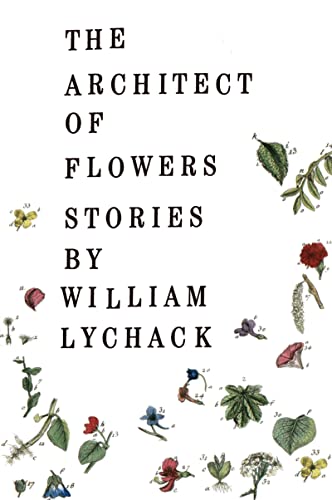
The Architect of Flowers: Short Story Anthology Where Beauty Becomes Antidote to Life's Grief and Loss - Softcover
Inhaltsangabe
The stories in William Lychack’s dazzling new collection, The Architect of Flowers, explore the dear and inevitable distance between people in loving relationships and find hope in dark situations. With tiny, precise details, Lychack observes the overlooked moments of everyday life—the small failings between parents and children, the long-held secrets in married life.
A small-town policeman brings himself to shoot a family’s injured dog; an old woman secretly trains a crow to steal for her; a hybridizer’s wife discovers the perfect lie to bring her family magically together again. Lychack’s characters yearn to re-enchant the world, to turn the ordinary and profane into the sacred and beautiful again, to make beauty serve as an antidote to grief. From ghostwriter to ghost runners to ghosts in a chapel, these stories are extraordinary portraits of life’s tender humiliations as well as its sharp, rude jolts.
Die Inhaltsangabe kann sich auf eine andere Ausgabe dieses Titels beziehen.
Über die Autorin bzw. den Autor
WILLIAM LYCHACK is the author of the novel The Wasp Eater. His work has appeared in The Best American Short Stories and The Pushcart Prize, and on public radio’s This American Life.
Von der hinteren Coverseite
"In heart-rending, gorgeous prose, each story mines the grace and brutality of everyday life and leaves the reader slightly rearranged, and better for it. Lychack is a truly original writer." — Kate Walbert, author of A Short History of Women
The stories in William Lychack’s dazzling new collection explore the dear and inevitable distance between people in loving relationships, and find hope in dark situations. With tiny, perfect details, Lychack observes the overlooked moments of everyday life — the small failings between parents and children, the long-held secrets in a marriage. From ghostwriter to ghost runners to ghosts in a chapel, his characters yearn to reenchant the world and to turn the ordinary and profane into the sacred and beautiful again. "The prose rises to a level of intense lyricism that distinguishes this lovely, artful collection." — Stuart Dybek, author of I Sailed with Magellan "It is a poetry of narrative rarely ever found in fiction." — Mary McGarry Morris, author of The Last Secret WILLIAM LYCHACK is the author of the novel The Wasp Eater. His work has appeared in The Best American Short Stories, The Pushcart Prize, and on public radio’s This American Life.Auszug. © Genehmigter Nachdruck. Alle Rechte vorbehalten.
STOLPESTAD
Was toward the end of your shift, a Saturday, another one of those long slow lazy afternoons of summer — sun never burning through the clouds, clouds never breaking into rain — odometer like a clock ticking all those bored little pent-up streets and mills and tenements away. The coffee shops, the liquor stores, the laundromats, the police and fire and gas stations to pass — this is your life, Stolpestad — all the turns you could make in your sleep, the brickwork and shop fronts and river with its stink of carp and chokeweed, the hills swinging up free from town, all momentum and mood, roads smooth and empty, this big blue hum of cruiser past houses and lawns and long screens of trees, trees cutting open to farms and fields all contoured and high with corn, air thick and silvery, as if something was on fire somewhere — still with us?
That sandy turnaround — and it’s always a question, isn’t it?
Gonna pull over and ride back down or not?
End of your shift — or nearly so — and in comes the call. It’s Phyllis, dispatcher for the weekend, that radio crackle of her voice, and she’s sorry for doing this to you, but a boy’s just phoned for help with a dog. And what’s she think you look like now, you ask, town dogcatcher? Oh, you should be so lucky, she says, and gives the address and away we go.
No siren, no speeding, just a calm quiet spin around to this kid and his dog, back to all the turns you were born to, your whole life spent along these same sad streets. Has nothing to do with this story, but there are days you idle past these houses as if to glimpse someone or something — yourself as a boy, perhaps — the apartments stacked with porches, the phone poles and wires and sidewalks all close and cluttered, this woman at the curb as you pull up and step out of the car.
Everything gets a little worse from here, boy running out of the brush in back before you so much as say hello. He’s what — eight or nine years old — skinny kid cutting straight to his mother. Presses himself to her side, catches his breath, his eyes going from your face to your uniform, your duty belt, his mother trying to explain what happened and where she is now, the dog, the tall grass, behind the garage, woman pointing. And the boy — he’s already edging away from his mother — little stutter steps and the kid’s halfway around the house to take you to the animal, his mother staying by the side porch as you follow toward the garage and garbage barrels out back, you and the boy wading out into the grass and scrub weeds. Sumac, old car tires, empty bottles, refrigerator door. Few more steps and there — a small fox-colored dog — beagle mix lying in the grass, as good as sleeping at the feet of the boy, that vertigo buzz of insects rising and falling in the heat, air thick as a towel over your mouth.
And you stand there and wait — just wait — and keep waiting, the boy not saying a word, not looking away from the dog, not doing anything except kneeling next to the animal, her legs twisted awkward behind her, grass tamped into a kind of nest where he must have squatted next to her, where this boy must have talked to her, tried to soothe her, tell her everything was all right. There’s a steel cooking pot to one side — water he must have carried from the kitchen — and in the quiet the boy pulls a long stem of grass and begins to tap at the dog. The length of her muzzle, the outline of her chin, her nose, her ear — it’s like he’s drawing her with the brush of grass — and as you stand there, he pushes that feather top of grass into the corner of her eye. It’s a streak of cruel he must have learned from someone, the boy pushing the stem, pressing it on her until, finally, the dog’s eye opens as black and shining as glass. She bares her teeth at him, the boy painting her tongue with the tip of grass, his fingers catching the tags at her throat, the sound like ice in a drink.
And it’s work to stay quiet, isn’t it? Real job to let nothing happen, to just look away at the sky, to see the trees, the garage, the dog again, the nest of grass, this kid brushing the grain of her face, dog’s mouth pulled back, quick breaths in her belly. Hours you stand there — days — standing there still now, aren’t you?
And when he glances up to you, his chin’s about to crumble, this boy about to disappear at the slightest touch, his face pale and raw and ashy. Down to one knee next to him — and you’re going to have to shoot this dog — you both must realize this by now, the way she can’t seem to move, her legs like rags, that sausage link of intestine under her. The boy leans forward and sweeps an ant off the dog’s shoulder.
God knows you don’t mean to chatter this kid into feeling better, but when he turns, you press your lips into a line and smile and ask him what her name is. He turns to the dog again — and again you wait — wait and watch this kid squatting hunch-curved next to the dog, your legs going needles and nails under you, the kid’s head a strange whorl of hair as you hover above him, far above this boy, this dog, this nest, this field. And when he glances to you, it’s a spell he’s breaking, all of this about to become real with her name. Goliath, he says, but we call her Gully for short.
And you ask if she’s his dog.
And the boy nods. Mine and my father’s.
And you touch your hand to the grass for balance and ask the boy how old he is.
And he says, Nine.
And what grade is nine again?
Third.
The dog’s eyes are closed when you look — bits of straw on her nose, her teeth yellow, strands of snot on her tongue — nothing moving until you stand and kick the blood back into your legs, afternoon turning to evening, everything going grainy in the light. The boy dips his hand in the cooking pot and tries to give water to the dog with his fingers, sprinkling her mouth, her face, her eyes wincing.
A moment passes — and then another — and soon you’re brushing the dust from your knee and saying, C’mon, let’s get back to your mother, before she starts to worry.
She appears out of the house as you approach — out of the side door on the steps as you and the boy cross the lawn — the boy straight to her once again, kid’s mother drawing him close, asking was everything okay out there. And neither of you say anything — everyone must see what’s coming — if you’re standing anywhere near this yard you have to know that sooner or later she’s going to ask if you can put this dog down for them. She’ll ask if you’d like some water or lemonade, if you’d like to sit a minute, and you’ll thank her and say no and shift your weight from one leg to the other, the woman asking what you think they should do.
Maybe you’ll take that glass of water after all, you tell her — boy sent into the house — woman asking if you won’t just help them.
Doesn’t she want to try calling a vet?
No, she tells you — the boy out of the house with a glass of water for you — you thanking him and taking a good long drink, the taste cool and metallic, the woman with the boy at her side, her hand on the boy’s shoulder, both of them stiff as you hand the glass back and say thank you again.
A deep breath and you ask if she has a shovel. To help bury the dog, you tell her.
She unstiffens slightly, says she’d rather the boy and his father do that when he...
„Über diesen Titel“ kann sich auf eine andere Ausgabe dieses Titels beziehen.
Suchergebnisse für The Architect of Flowers: Short Story Anthology Where...

Beispielbild für diese ISBN
The Architect Of Flowers: Short Story Anthology Where Beauty Becomes Antidote to Life's Grief and Loss
Anbieter: World of Books (was SecondSale), Montgomery, IL, USA
Verkäuferbewertung 5 von 5 Sternen

Zustand: Very Good. Item in very good condition! Textbooks may not include supplemental items i.e. CDs, access codes etc. Bestandsnummer des Verkäufers 00089818636
Gebraucht kaufen
EUR 3,11
Versand gratis
Versand innerhalb von USA
Versand innerhalb von USA
Anzahl: 1 verfügbar
Beispielbild für diese ISBN
The Architect Of Flowers: Short Story Anthology Where Beauty Becomes Antidote to Life's Grief and Loss
Anbieter: World of Books (was SecondSale), Montgomery, IL, USA
Verkäuferbewertung 5 von 5 Sternen
Zustand: Good. Item in good condition. Textbooks may not include supplemental items i.e. CDs, access codes etc. Bestandsnummer des Verkäufers 00089529354
Gebraucht kaufen
EUR 3,11
Versand gratis
Versand innerhalb von USA
Versand innerhalb von USA
Anzahl: 1 verfügbar
Beispielbild für diese ISBN
The Architect Of Flowers: Short Story Anthology Where Beauty Becomes Antidote to Life's Grief and Loss
Verlag:
Harper Perennial (edition First Edition), 2011
ISBN 10: 0618302433
ISBN 13: 9780618302437
Gebraucht
Paperback
Erstausgabe
Anbieter: BooksRun, Philadelphia, PA, USA
Verkäuferbewertung 5 von 5 Sternen
Paperback. Zustand: Very Good. First Edition. It's a well-cared-for item that has seen limited use. The item may show minor signs of wear. All the text is legible, with all pages included. It may have slight markings and/or highlighting. Bestandsnummer des Verkäufers 0618302433-11-1
Gebraucht kaufen
EUR 4,36
Versand gratis
Versand innerhalb von USA
Versand innerhalb von USA
Anzahl: 1 verfügbar
Beispielbild für diese ISBN
The Architect Of Flowers: Short Story Anthology Where Beauty Becomes Antidote to Life's Grief and Loss
Anbieter: Greenworld Books, Arlington, TX, USA
Verkäuferbewertung 5 von 5 Sternen
Zustand: very_good. Fast Free Shipping â" Very Good condition book with a firm cover and clean pages. Shows normal use and some light wear or limited notes markings. A solid, nice copy to enjoy. Bestandsnummer des Verkäufers GWV.0618302433.VG
Gebraucht kaufen
EUR 4,37
Versand gratis
Versand innerhalb von USA
Versand innerhalb von USA
Anzahl: 1 verfügbar
Beispielbild für diese ISBN
The Architect of Flowers
Anbieter: World of Books Inc, Montgomery, IL, USA
Verkäuferbewertung 2 von 5 Sternen

Paperback. Zustand: Very Good. The stories in William Lychack's dazzling new collection, The Architect of Flowers, explore the dear and inevitable distance between people in loving relationships and find hope in dark situations. With tiny, precise details, Lychack observes the overlooked moments of everyday life--the small failings between parents and children, the long-held secrets in married life. A small-town policeman brings himself to shoot a family's injured dog; an old woman secretly trains a crow to steal for her; a hybridizer's wife discovers the perfect lie to bring her family magically together again. Lychack's characters yearn to re-enchant the world, to turn the ordinary and profane into the sacred and beautiful again, to make beauty serve as an antidote to grief. From ghostwriter to ghost runners to ghosts in a chapel, these stories are extraordinary portraits of life's tender humiliations as well as its sharp, rude jolts. Bestandsnummer des Verkäufers CIN0618302433VG
Gebraucht kaufen
EUR 4,89
Versand gratis
Versand innerhalb von USA
Versand innerhalb von USA
Anzahl: 1 verfügbar
Beispielbild für diese ISBN
The Architect of Flowers
Anbieter: World of Books Inc, Montgomery, IL, USA
Verkäuferbewertung 2 von 5 Sternen
Paperback. Zustand: Good. The stories in William Lychack's dazzling new collection, The Architect of Flowers, explore the dear and inevitable distance between people in loving relationships and find hope in dark situations. With tiny, precise details, Lychack observes the overlooked moments of everyday life--the small failings between parents and children, the long-held secrets in married life. A small-town policeman brings himself to shoot a family's injured dog; an old woman secretly trains a crow to steal for her; a hybridizer's wife discovers the perfect lie to bring her family magically together again. Lychack's characters yearn to re-enchant the world, to turn the ordinary and profane into the sacred and beautiful again, to make beauty serve as an antidote to grief. From ghostwriter to ghost runners to ghosts in a chapel, these stories are extraordinary portraits of life's tender humiliations as well as its sharp, rude jolts. Bestandsnummer des Verkäufers CIN0618302433G
Gebraucht kaufen
EUR 4,89
Versand gratis
Versand innerhalb von USA
Versand innerhalb von USA
Anzahl: 1 verfügbar
Beispielbild für diese ISBN
The Architect of Flowers
Anbieter: ThriftBooks-Atlanta, AUSTELL, GA, USA
Verkäuferbewertung 5 von 5 Sternen
Paperback. Zustand: Very Good. No Jacket. May have limited writing in cover pages. Pages are unmarked. ~ ThriftBooks: Read More, Spend Less. Bestandsnummer des Verkäufers G0618302433I4N00
Gebraucht kaufen
EUR 6,28
Versand gratis
Versand innerhalb von USA
Versand innerhalb von USA
Anzahl: 1 verfügbar
Beispielbild für diese ISBN
The Architect Of Flowers
Anbieter: HPB Inc., Dallas, TX, USA
Verkäuferbewertung 5 von 5 Sternen
paperback. Zustand: Very Good. Connecting readers with great books since 1972! Used books may not include companion materials, and may have some shelf wear or limited writing. We ship orders daily and Customer Service is our top priority! Bestandsnummer des Verkäufers S_448835500
Gebraucht kaufen
EUR 3,55
EUR 3,23 Versand
Versand innerhalb von USA
Versand innerhalb von USA
Anzahl: 1 verfügbar
Beispielbild für diese ISBN
The Architect of Flowers
Verlag:
HarperCollins Publishers, 2011
ISBN 10: 0618302433
ISBN 13: 9780618302437
Gebraucht
Softcover
Erstausgabe
Anbieter: Better World Books, Mishawaka, IN, USA
Verkäuferbewertung 5 von 5 Sternen
Zustand: Very Good. 1st Edition. Former library copy. Pages intact with possible writing/highlighting. Binding strong with minor wear. Dust jackets/supplements may not be included. Includes library markings. Stock photo provided. Product includes identifying sticker. Better World Books: Buy Books. Do Good. Bestandsnummer des Verkäufers 5493418-75
Gebraucht kaufen
EUR 6,97
Versand gratis
Versand innerhalb von USA
Versand innerhalb von USA
Anzahl: 1 verfügbar
Beispielbild für diese ISBN
The Architect of Flowers
Verlag:
HarperCollins Publishers, 2011
ISBN 10: 0618302433
ISBN 13: 9780618302437
Gebraucht
Softcover
Erstausgabe
Anbieter: Better World Books, Mishawaka, IN, USA
Verkäuferbewertung 5 von 5 Sternen
Zustand: Very Good. 1st Edition. Pages intact with possible writing/highlighting. Binding strong with minor wear. Dust jackets/supplements may not be included. Stock photo provided. Product includes identifying sticker. Better World Books: Buy Books. Do Good. Bestandsnummer des Verkäufers 9005229-6
Gebraucht kaufen
EUR 6,97
Versand gratis
Versand innerhalb von USA
Versand innerhalb von USA
Anzahl: 1 verfügbar