
Verwandte Artikel zu The Search for the Perfect Language (Making of Europe)
Inhaltsangabe
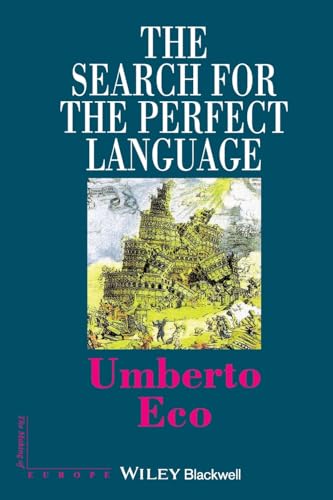
The idea that there once existed a language which perfectly and unambiguously expressed the essence of all possible things and concepts has occupied the minds of philosophers, theologians, mystics and others for at least two millennia. This is an investigation into the history of that idea and of its profound influence on European thought, culture and history. From the early Dark Ages to the Renaissance it was widely believed that the language spoken in the Garden of Eden was just such a language, and that all current languages were its decadent descendants from the catastrophe of the Fall and at Babel. The recovery of that language would, for theologians, express the nature of divinity, for cabbalists allow access to hidden knowledge and power, and for philosophers reveal the nature of truth. Versions of these ideas remained current in the Enlightenment, and have recently received fresh impetus in attempts to create a natural language for artificial intelligence. The story that Umberto Eco tells ranges widely from the writings of Augustine, Dante, Descartes and Rousseau, arcane treatises on cabbalism and magic, to the history of the study of language and its origins. He demonstrates the initimate relation between language and identity and describes, for example, how and why the Irish, English, Germans and Swedes - one of whom presented God talking in Swedish to Adam, who replied in Danish, while the serpent tempted Eve in French - have variously claimed their language as closest to the original. He also shows how the late eighteenth-century discovery of a proto-language (Indo-European) for the Aryan peoples was perverted to support notions of racial superiority. To this subtle exposition of a history of extraordinary complexity, Umberto Eco links the associated history of the manner in which the sounds of language and concepts have been written and symbolized. Lucidly and wittily written, the book is, in sum, a tour
Die Inhaltsangabe kann sich auf eine andere Ausgabe dieses Titels beziehen.
Über die Autorin bzw. den Autor
Umberto Eco was born in Alessandria in 1932 and has been Professor of Semiotics at the University of Bologna since 1975 and the President of the International Center for Semiotic and Cognitive Studies at the Universityu of San Marino since 1988. His books include The Name of the Rose (1980), Foucault's Pendulum (1988) and the more recent works include Semiotics and Philosophy of Lanaguage (1984) and The Limits of Interpretation (1990).
Von der hinteren Coverseite
The idea that there once existed a language which perfectly and unambiguously expressed the essence of all possible things and concepts has occupied the minds of philosophers, theologians, mystics and others for at least two millennia. This is an investigation into the history of that idea and of its profound influence on European thought, culture and history.
From the early Dark Ages to the Renaissance it was widely believed that the language spoken in the Garden of Eden was just such a language, and that all current languages were its decadent descendants from the catastrophe of the Fall and at Babel. The recovery of that language would, for theologians, express the nature of divinity, for cabbalists allow access to hidden knowledge and power, and for philosophers reveal the nature of truth. Versions of these ideas remained current in the Enlightenment, and have recently received fresh impetus in attempts to create a natural language for artificial intelligence.
The story that Umberto Eco tells ranges widely from the writings of Augustine, Dante, Descartes and Rousseau, arcane treatises on cabbalism and magic, to the history of the study of language and its origins. He demonstrates the initimate relation between language and identity and describes, for example, how and why the Irish, English, Germans and Swedes - one of whom presented God talking in Swedish to Adam, who replied in Danish, while the serpent tempted Eve in French - have variously claimed their language as closest to the original. He also shows how the late eighteenth-century discovery of a proto-language (Indo-European) for the Aryan peoples was perverted to support notions of racial superiority.
To this subtle exposition of a history of extraordinary complexity, Umberto Eco links the associated history of the manner in which the sounds of language and concepts have been written and symbolized. Lucidly and wittily written, the book is, in sum, a tour de force of scholarly detection and cultural interpretation, providing a series of original perspectives on two thousand years of European History.
The paperback edition of this book is not available through Blackwell outside of North America.
Aus dem Klappentext
The idea that there once existed a language which perfectly and unambiguously expressed the essence of all possible things and concepts has occupied the minds of philosophers, theologians, mystics and others for at least two millennia. This is an investigation into the history of that idea and of its profound influence on European thought, culture and history.
From the early Dark Ages to the Renaissance it was widely believed that the language spoken in the Garden of Eden was just such a language, and that all current languages were its decadent descendants from the catastrophe of the Fall and at Babel. The recovery of that language would, for theologians, express the nature of divinity, for cabbalists allow access to hidden knowledge and power, and for philosophers reveal the nature of truth. Versions of these ideas remained current in the Enlightenment, and have recently received fresh impetus in attempts to create a natural language for artificial intelligence.
The story that Umberto Eco tells ranges widely from the writings of Augustine, Dante, Descartes and Rousseau, arcane treatises on cabbalism and magic, to the history of the study of language and its origins. He demonstrates the initimate relation between language and identity and describes, for example, how and why the Irish, English, Germans and Swedes - one of whom presented God talking in Swedish to Adam, who replied in Danish, while the serpent tempted Eve in French - have variously claimed their language as closest to the original. He also shows how the late eighteenth-century discovery of a proto-language (Indo-European) for the Aryan peoples was perverted to support notions of racial superiority.
To this subtle exposition of a history of extraordinary complexity, Umberto Eco links the associated history of the manner in which the sounds of language and concepts have been written and symbolized. Lucidly and wittily written, the book is, in sum, a tour de force of scholarly detection and cultural interpretation, providing a series of original perspectives on two thousand years of European History.
The paperback edition of this book is not available through Blackwell outside of North America.
„Über diesen Titel“ kann sich auf eine andere Ausgabe dieses Titels beziehen.
Suchergebnisse für The Search for the Perfect Language (Making of Europe)

Beispielbild für diese ISBN
The Search for the Perfect Language
Verlag:
Wiley-Blackwell (edition ), 1997
ISBN 10: 0631205101
ISBN 13: 9780631205104
Gebraucht
Paperback
Anbieter: BooksRun, Philadelphia, PA, USA
Verkäuferbewertung 5 von 5 Sternen

Paperback. Zustand: Fair. The item might be beaten up but readable. May contain markings or highlighting, as well as stains, bent corners, or any other major defect, but the text is not obscured in any way. Bestandsnummer des Verkäufers 0631205101-7-1
Gebraucht kaufen
EUR 13,39
Versand gratis
Versand innerhalb von USA
Versand innerhalb von USA
Anzahl: 1 verfügbar
Foto des Verkäufers
The Search for the Perfect Language
Anbieter: Dream Books Co., Denver, CO, USA
Verkäuferbewertung 5 von 5 Sternen
Zustand: acceptable. This copy has clearly been enjoyedâ"expect noticeable shelf wear and some minor creases to the cover. Binding is strong, and all pages are legible. May contain previous library markings or stamps. Bestandsnummer des Verkäufers DBV.0631205101.A
Gebraucht kaufen
EUR 14,16
Versand gratis
Versand innerhalb von USA
Versand innerhalb von USA
Anzahl: 1 verfügbar
Foto des Verkäufers
The Search for the Perfect Language
Anbieter: Goodwill Books, Hillsboro, OR, USA
Verkäuferbewertung 5 von 5 Sternen
Zustand: acceptable. Fairly worn, but readable and intact. If applicable: Dust jacket, disc or access code may not be included. Bestandsnummer des Verkäufers GICWV.0631205101.A
Gebraucht kaufen
EUR 11,80
EUR 3,52 Versand
Versand innerhalb von USA
Versand innerhalb von USA
Anzahl: 2 verfügbar
Beispielbild für diese ISBN
The Search for the Perfect Language
Anbieter: ThriftBooks-Atlanta, AUSTELL, GA, USA
Verkäuferbewertung 5 von 5 Sternen
Paperback. Zustand: Very Good. No Jacket. May have limited writing in cover pages. Pages are unmarked. ~ ThriftBooks: Read More, Spend Less. Bestandsnummer des Verkäufers G0631205101I4N00
Gebraucht kaufen
EUR 15,43
Versand gratis
Versand innerhalb von USA
Versand innerhalb von USA
Anzahl: 1 verfügbar
Beispielbild für diese ISBN
The Search for the Perfect Language
Verlag:
Wiley & Sons, Incorporated, John, 1997
ISBN 10: 0631205101
ISBN 13: 9780631205104
Gebraucht
Softcover
Anbieter: Better World Books, Mishawaka, IN, USA
Verkäuferbewertung 5 von 5 Sternen
Zustand: Good. Pages intact with minimal writing/highlighting. The binding may be loose and creased. Dust jackets/supplements are not included. Stock photo provided. Product includes identifying sticker. Better World Books: Buy Books. Do Good. Bestandsnummer des Verkäufers 4275463-6
Gebraucht kaufen
EUR 15,86
Versand gratis
Versand innerhalb von USA
Versand innerhalb von USA
Anzahl: 1 verfügbar
Foto des Verkäufers
The Search for the Perfect Language
Anbieter: Goodwill of Silicon Valley, SAN JOSE, CA, USA
Verkäuferbewertung 4 von 5 Sternen

Zustand: good. Supports Goodwill of Silicon Valley job training programs. The cover and pages are in Good condition! Any other included accessories are also in Good condition showing use. Use can include some highlighting and writing, page and cover creases as well as other types visible wear. Bestandsnummer des Verkäufers GWSVV.0631205101.G
Gebraucht kaufen
EUR 15,43
EUR 3,52 Versand
Versand innerhalb von USA
Versand innerhalb von USA
Anzahl: 1 verfügbar
Beispielbild für diese ISBN
The Search for the Perfect Language
Anbieter: Budget Books, Pasadena, CA, USA
Verkäuferbewertung 5 von 5 Sternen
Soft cover. Zustand: Very Good. Only flaw in this book is owner's name inside cover and underlining in pencil on the last pages of the book. Otherwise new. Ships from California. Bestandsnummer des Verkäufers 7796
Gebraucht kaufen
EUR 20,01
EUR 4,41 Versand
Versand innerhalb von USA
Versand innerhalb von USA
Anzahl: 1 verfügbar
Beispielbild für diese ISBN
The Search for the Perfect Language
Anbieter: Textbooks_Source, Columbia, MO, USA
Verkäuferbewertung 5 von 5 Sternen
paperback. Zustand: Good. Ships in a BOX from Central Missouri! May not include working access code. Will not include dust jacket. Has used sticker(s) and some writing or highlighting. UPS shipping for most packages, (Priority Mail for AK/HI/APO/PO Boxes). Bestandsnummer des Verkäufers 000378762U
Gebraucht kaufen
EUR 23,47
EUR 3,52 Versand
Versand innerhalb von USA
Versand innerhalb von USA
Anzahl: 1 verfügbar
Beispielbild für diese ISBN
The Search for the Perfect Language (The Making of Europe)
Anbieter: thebookforest.com, San Rafael, CA, USA
Verkäuferbewertung 4 von 5 Sternen
Zustand: New. Supporting Bay Area Friends of the Library since 2010. Well packaged and promptly shipped. Bestandsnummer des Verkäufers BAY_00_SH_062922
Neu kaufen
EUR 23,07
EUR 4,41 Versand
Versand innerhalb von USA
Versand innerhalb von USA
Anzahl: 1 verfügbar
Beispielbild für diese ISBN
The Search for the Perfect Language
Anbieter: Anybook.com, Lincoln, Vereinigtes Königreich
Verkäuferbewertung 5 von 5 Sternen
Zustand: Good. This is an ex-library book and may have the usual library/used-book markings inside.This book has soft covers. In good all round condition. Please note the Image in this listing is a stock photo and may not match the covers of the actual item,650grams, ISBN:9780631205104. Bestandsnummer des Verkäufers 3998716
Gebraucht kaufen
EUR 24,06
EUR 15,27 Versand
Versand von Vereinigtes Königreich nach USA
Versand von Vereinigtes Königreich nach USA
Anzahl: 1 verfügbar