
Verwandte Artikel zu Backyard Bird-Watcher (Classic Guide to Enjoying Wild...
Inhaltsangabe
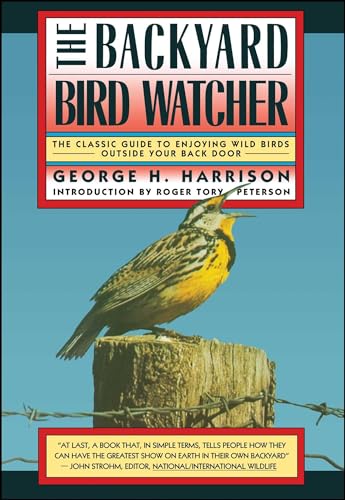
The Backyard Bird Watcher is the ultimate guide for all who enjoy watching wild birds at their back doors.
Richly anecdotal, The Backyard Bird Watcher provides a wealth of practical information and step-by-step, surefire ways to convert any backyard into a first-rate bird sanctuary. Learn how to:
* set up feeding stations, bird houses, water areas
* solve pest problems
* treat sick and injured birds
* photograph wild birds.
The Backyard Bird Watcher offers a month-by-month planning and preparation calendar to ensure bird-watching enjoyment, as well as lists of organizations, manufacturers, books, and other items of interest to the backyard bird watcher.
Beautifully illustrated with dozens of detailed drawings and more than 200 black-and-white and color photographs, The Backyard Bird Watcher is a must for anyone who wants splendid wild birds to be a rewarding part of his or her everyday life.
Die Inhaltsangabe kann sich auf eine andere Ausgabe dieses Titels beziehen.
Über die Autorin bzw. den Autor
George Harrison and his wife, Kit, live in Hubertus, Wisconsin.
Von der hinteren Coverseite
The Backyard Bird Watcher is the ultimate guide for all who enjoy watching wild birds at their back doors. Richly anecdotal, The Backyard Bird Watcher provides a wealth of practical information and step-by-step, surefire ways to convert any backyard into a first-rate bird sanctuary. Learn how to: * set up feeding stations, bird houses, water areas * solve pest problems * treat sick and injured birds * photograph wild birds. The Backyard Bird Watcher offers a month-by-month planning and preparation calendar to ensure bird-watching enjoyment, as well as lists of organizations, manufacturers, books, and other items of interest to the backyard bird watcher. Beautifully illustrated with dozens of detailed drawings and more than 200 black-and-white and color photographs, The Backyard Bird Watcher is a must for anyone who wants splendid wild birds to be a rewarding part of his or her everyday life.
Auszug. © Genehmigter Nachdruck. Alle Rechte vorbehalten.
Chapter 1
The Sport of Backyard Bird Watching
What is a bird watcher? A person who watches birds? I suspect that most people watch birds, and yet many do not consider themselves bird watchers.
The definition of a bird watcher is changing. Thirty years ago, the "typical" bird watcher was exemplified by magazine cartoons as a nattily dressed, elderly person who, from all outward appearances, was eccentric, if not downright odd. That early image of "the little old lady in tennis shoes" gave the sport a stigma which, to this day, makes some people uneasy about admitting that they enjoy watching birds.
Today, the typical bird watcher, or "birder" as we call ourselves, is male, white, married, above average in education and income, and is either retired or a young professional according to one recent study. This may be the average bird watcher, but the sport attracts all kinds of people from all walks of life, and their numbers are growing at a dramatic rate.
During a recent telephone conversation with Roger Tory Peterson, the dean of bird watching the world over, I asked him to estimate the number of bird watchers in the United States today. "What is your definition of a bird watcher?" he responded. Before I could answer his first question, he went on, "Do you include duck hunters as bird watchers?" We finally settled on the figure of at least twenty million Americans who spend money on bird seed or equipment, or on travel just to see birds.
I believe this is a conservative estimate. A recent study conducted by Richard M. DeGraaf and Brian R. Payne of the U.S. Forest Service Research Unit at the University of Massachusetts in Amherst showed that Americans spend at least $500 million a year to enjoy birds. Of this total, $170 million was spent for bird seed; $187 million for photographic equipment and processing; $115 million for binoculars; $15 million for birdhouses and feeders; and $4 million for bird guides and other books. These figures do not include travel expenditures. Another survey showed that bird watchers and photographers alone accounted for 9,900,600 use-days on National Forest lands in a single year.
So, bird watching may have been the sport of "little old ladies in tennis shoes" at one time, but "you've come a long way, baby" since those days. Bird watching is probably a billion-dollar-a-year industry and may be the fastest growing family sport in America.
Why is it so popular and why is it growing so fast? The answer is simple: The sport of bird watching is easy to get into, inexpensive to maintain, requires little prior knowledge and almost no equipment. Actually, all you need to attract birds to your backyard is a little seed thrown on the ground...then wait for the birds in your neighborhood to find it. But if you really want to attract a variety of interesting and colorful birds on a permanent or at least seasonal basis, there are proven ways of doing it, and that's what this book is all about.
LEARN TO IDENTIFY THE BIRDS
Wild birds are everywhere during all seasons, in all habitats. Bird watchers start out by observing the birds they see in their backyards, on their way to work, around their camping areas, etc. Though you certainly don't have to be an expert to enjoy birding, it helps to be able to identify what you see. By being able to recognize the species, you are more likely to learn something about its characteristics and habits.
We identify birds by spotting certain key field marks, behavior, song, size or shape. Thanks to Roger Tory Peterson, who in 1934 wrote and illustrated his first A Field Guide to the Birds, we know that every species has its own particular identification signs or marks. Before the Peterson Field Guide, bird watching wasn't as much fun. The descriptions of birds were made by scientists who worked largely from study skins in museums. Instead of saying that a robin was a gray-backed bird with a rusty breast, they described it in the minutest detail, including the "white spots around the eye and the streaked throat." Peterson's new system changed the whole concept of bird watching by giving us a simple and exact method of quick field identifications.
During my courtship with my wife, Kit, I taught her how to identify birds. Her experience should give encouragement to anyone starting from zero. Within one year, Kit learned to identify over 100 species from sight and sound. The way she did it was to look at each bird she encountered, often through binoculars, listen to it sing or chip, and then check the illustration of that bird in a field guide and read the description of it. I pointed out to her the salient field marks...white wing bars, red cap, white outer tail feathers, smaller than a robin, larger than a crow. I would impress upon her the habitat in which it was found, how it was acting, the song or alarm note it gave, and the season of the year in which we found it. She is a quick learner, and within three years she was able to identify 300 to 400 birds and was sometimes correcting my errors in identification. Her pinnacle came two years ago when she and Roger Tory Peterson had a serious discussion comparing the differences between a newly hatched coot chick and a newly hatched chick of the European moorhen.
More recently, Kit and I were amazed to find a birder making accurate field identifications without binoculars. We were in Cuba, birding with that country's foremost ornithologist, Orlando Garrido. While most of us were looking for the field marks through binoculars, Garrido was watching for characteristic movements such as tail bobbing, wing flitting, nervousness, head movement, stance, movement in flights. I tried to catch him in error, but he was always correct and more rapid than I in identifying the bird. He is the most extraordinary field ornithologist I have known.
THE GAMES BACKYARD BIRD WATCHERS PLAY
No matter how you look at it, bird watching is a sport. It is a personal challenge to identify the birds you see, learn their habits and how they differ from other species.
The most common game that bird watchers play is the "listing game." Almost all birders, particularly backyard birders, keep records of the species they see in their neighborhood. Kit and I have recorded 142 species in five years seen through our windows and from our property. Using the official checklist published by the Wisconsin Society for Ornithology, we record, each year, the date on which we see the first bird of each species. This gives us a running record of when the first red-winged blackbird appears each spring, the first junco each fall. The dates vary year to year by as much as two weeks, depending on weather conditions. We also note the date each spring when the ice goes out of our lake, which has a direct effect on the waterfowl we see. We mark the date that the lake freezes over each winter as well.
One of the highlights of our listing game is the appearance of our loon each spring. I theorize that any lake that can support a loon, even if for only a few days, is a wild lake. Our lake is located only twenty-six miles northwest of a major metropolitan area. Each spring, our loon spends at least a week with us soon after the ice disappears, and by his appearance declares that our little lake is "wild" for another year. I suspect that there are probably several loons that visit our lake, but we can't differentiate because they all look alike. We did have two at one time several springs ago. Last fall we had a loon headed south in its winter plumage, which was decidedly different from its spring garb. Notes like these are all part of our list.
There are several other kinds of lists, such as the one-day list, which is a record of all the birds seen or heard on a specific day. Some like to keep a trip list or a list of birds seen...
„Über diesen Titel“ kann sich auf eine andere Ausgabe dieses Titels beziehen.
Suchergebnisse für Backyard Bird-Watcher (Classic Guide to Enjoying Wild...

Beispielbild für diese ISBN
The Backyard Bird Watcher
Anbieter: World of Books (was SecondSale), Montgomery, IL, USA
Verkäuferbewertung 5 von 5 Sternen

Zustand: Good. Item in good condition. Textbooks may not include supplemental items i.e. CDs, access codes etc. Bestandsnummer des Verkäufers 00090042912
Gebraucht kaufen
EUR 4,58
Versand gratis
Versand innerhalb von USA
Versand innerhalb von USA
Anzahl: 10 verfügbar
Beispielbild für diese ISBN
The Backyard Bird Watcher
Anbieter: World of Books (was SecondSale), Montgomery, IL, USA
Verkäuferbewertung 5 von 5 Sternen
Zustand: Acceptable. Item in acceptable condition! Textbooks may not include supplemental items i.e. CDs, access codes etc. Bestandsnummer des Verkäufers 00090752167
Gebraucht kaufen
EUR 4,58
Versand gratis
Versand innerhalb von USA
Versand innerhalb von USA
Anzahl: 1 verfügbar
Foto des Verkäufers
The Backyard Bird Watcher
Anbieter: Greenworld Books, Arlington, TX, USA
Verkäuferbewertung 5 von 5 Sternen
Zustand: good. Fast Free Shipping â" Good condition. It may show normal signs of use, such as light writing, highlighting, or library markings, but all pages are intact and the book is fully readable. A solid, complete copy that's ready to enjoy. Bestandsnummer des Verkäufers GWV.0671663747.G
Gebraucht kaufen
EUR 4,59
Versand gratis
Versand innerhalb von USA
Versand innerhalb von USA
Anzahl: 1 verfügbar
Beispielbild für diese ISBN
The Backyard Bird Watcher
Anbieter: Once Upon A Time Books, Siloam Springs, AR, USA
Verkäuferbewertung 4 von 5 Sternen

Paperback. Zustand: Good. This is a used book in good condition and may show some signs of use or wear . This is a used book in good condition and may show some signs of use or wear . Bestandsnummer des Verkäufers mon0000888175
Gebraucht kaufen
EUR 2,02
EUR 3,45 Versand
Versand innerhalb von USA
Versand innerhalb von USA
Anzahl: 1 verfügbar
Beispielbild für diese ISBN
The Backyard Bird Watcher
Anbieter: HPB-Ruby, Dallas, TX, USA
Verkäuferbewertung 5 von 5 Sternen
paperback. Zustand: Very Good. Connecting readers with great books since 1972! Used books may not include companion materials, and may have some shelf wear or limited writing. We ship orders daily and Customer Service is our top priority! Bestandsnummer des Verkäufers S_471095212
Gebraucht kaufen
EUR 2,25
EUR 3,27 Versand
Versand innerhalb von USA
Versand innerhalb von USA
Anzahl: 1 verfügbar
Beispielbild für diese ISBN
The Backyard Bird Watcher
Anbieter: HPB-Emerald, Dallas, TX, USA
Verkäuferbewertung 5 von 5 Sternen
Paperback. Zustand: Very Good. Connecting readers with great books since 1972! Used books may not include companion materials, and may have some shelf wear or limited writing. We ship orders daily and Customer Service is our top priority! Bestandsnummer des Verkäufers S_468107992
Gebraucht kaufen
EUR 2,46
EUR 3,27 Versand
Versand innerhalb von USA
Versand innerhalb von USA
Anzahl: 1 verfügbar
Beispielbild für diese ISBN
The Backyard Bird Watcher
Anbieter: BooksRun, Philadelphia, PA, USA
Verkäuferbewertung 5 von 5 Sternen
Paperback. Zustand: Very Good. It's a well-cared-for item that has seen limited use. The item may show minor signs of wear. All the text is legible, with all pages included. It may have slight markings and/or highlighting. Bestandsnummer des Verkäufers 0671663747-11-1
Gebraucht kaufen
EUR 5,93
Versand gratis
Versand innerhalb von USA
Versand innerhalb von USA
Anzahl: 1 verfügbar
Beispielbild für diese ISBN
The Backyard Bird Watcher
Anbieter: HPB Inc., Dallas, TX, USA
Verkäuferbewertung 5 von 5 Sternen
Paperback. Zustand: Very Good. Connecting readers with great books since 1972! Used books may not include companion materials, and may have some shelf wear or limited writing. We ship orders daily and Customer Service is our top priority! Bestandsnummer des Verkäufers S_443610633
Gebraucht kaufen
EUR 2,70
EUR 3,27 Versand
Versand innerhalb von USA
Versand innerhalb von USA
Anzahl: 1 verfügbar
Beispielbild für diese ISBN
Backyard Bird-Watcher
Anbieter: Better World Books, Mishawaka, IN, USA
Verkäuferbewertung 5 von 5 Sternen
Zustand: Very Good. 14th printing. Pages intact with possible writing/highlighting. Binding strong with minor wear. Dust jackets/supplements may not be included. Stock photo provided. Product includes identifying sticker. Better World Books: Buy Books. Do Good. Bestandsnummer des Verkäufers 5086677-6
Gebraucht kaufen
EUR 6,05
Versand gratis
Versand innerhalb von USA
Versand innerhalb von USA
Anzahl: 1 verfügbar
Beispielbild für diese ISBN
Backyard Bird-Watcher
Anbieter: Better World Books, Mishawaka, IN, USA
Verkäuferbewertung 5 von 5 Sternen
Zustand: Good. 14th printing. Pages intact with minimal writing/highlighting. The binding may be loose and creased. Dust jackets/supplements are not included. Stock photo provided. Product includes identifying sticker. Better World Books: Buy Books. Do Good. Bestandsnummer des Verkäufers GRP94367198
Gebraucht kaufen
EUR 6,05
Versand gratis
Versand innerhalb von USA
Versand innerhalb von USA
Anzahl: 4 verfügbar