
Verwandte Artikel zu To Forgive Design: Understanding Failure
Inhaltsangabe
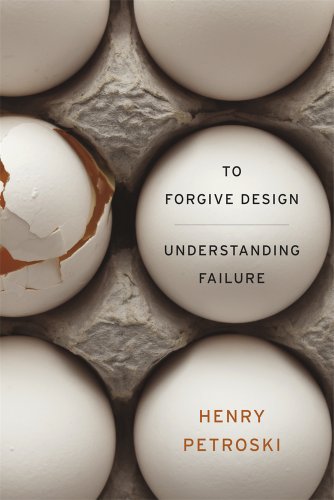
<p>When planes crash, bridges collapse, and automobile gas tanks explode, we are quick to blame poor design. But Henry Petroski says we must look beyond design for causes and corrections. Known for his masterly explanations of engineering successes and failures, Petroski here takes his analysis a step further, to consider the larger context in which accidents occur. <br><br>In <i>To Forgive Design</i> he surveys some of the most infamous failures of our time, from the 2007 Minneapolis bridge collapse and the toppling of a massive Shanghai apartment building in 2009 to Boston's prolonged Big Dig and the 2010 Gulf oil spill. These avoidable disasters reveal the interdependency of people and machines within systems whose complex behavior was undreamt of by their designers, until it was too late. Petroski shows that even the simplest technology is embedded in cultural and socioeconomic constraints, complications, and contradictions.<br><br>Failure to imagine the possibility of failure is the most profound mistake engineers can make. Software developers realized this early on and looked outside their young field, to structural engineering, as they sought a historical perspective to help them identify their own potential mistakes. By explaining the interconnectedness of technology and culture and the dangers that can emerge from complexity, Petroski demonstrates that we would all do well to follow their lead.</p>
Die Inhaltsangabe kann sich auf eine andere Ausgabe dieses Titels beziehen.
Über die Autorin bzw. den Autor
Henry Petroski was the Aleksandar S. Vesic Distinguished Professor Emeritus of Civil and Environmental Engineering at Duke University.
„Über diesen Titel“ kann sich auf eine andere Ausgabe dieses Titels beziehen.
Suchergebnisse für To Forgive Design: Understanding Failure

Beispielbild für diese ISBN
To Forgive Design: Understanding Failure
Verlag:
Belknap Press: An Imprint of Har, 2014
ISBN 10: 0674416821
ISBN 13: 9780674416826
Gebraucht
Paperback
Anbieter: HPB-Diamond, Dallas, TX, USA
Verkäuferbewertung 5 von 5 Sternen

Paperback. Zustand: Very Good. Connecting readers with great books since 1972! Used books may not include companion materials, and may have some shelf wear or limited writing. We ship orders daily and Customer Service is our top priority! Bestandsnummer des Verkäufers S_477670989
Gebraucht kaufen
EUR 11,21
EUR 3,35 Versand
Versand innerhalb von USA
Versand innerhalb von USA
Anzahl: 1 verfügbar
Beispielbild für diese ISBN
To Forgive Design: Understanding Failure
Anbieter: ThriftBooks-Dallas, Dallas, TX, USA
Verkäuferbewertung 5 von 5 Sternen
Paperback. Zustand: Fair. No Jacket. Readable copy. Pages may have considerable notes/highlighting. ~ ThriftBooks: Read More, Spend Less. Bestandsnummer des Verkäufers G0674416821I5N00
Gebraucht kaufen
EUR 14,88
Versand gratis
Versand innerhalb von USA
Versand innerhalb von USA
Anzahl: 1 verfügbar
Beispielbild für diese ISBN
To Forgive Design: Understanding Failure
Verlag:
Belknap Press: An Imprint of Har, 2014
ISBN 10: 0674416821
ISBN 13: 9780674416826
Gebraucht
paperback
Anbieter: Books From California, Simi Valley, CA, USA
Verkäuferbewertung 4 von 5 Sternen

paperback. Zustand: Very Good. Bestandsnummer des Verkäufers mon0003765866
Gebraucht kaufen
EUR 11,71
EUR 4,45 Versand
Versand innerhalb von USA
Versand innerhalb von USA
Anzahl: 1 verfügbar
Beispielbild für diese ISBN
To Forgive Design: Understanding Failure
Verlag:
Belknap Press: An Imprint of Harvard University Press, 2014
ISBN 10: 0674416821
ISBN 13: 9780674416826
Neu
paperback
Anbieter: Carolina Book Trader, Clayton, NC, USA
Verkäuferbewertung 5 von 5 Sternen
paperback. Zustand: New. New. Bestandsnummer des Verkäufers S2BC260126003
Neu kaufen
EUR 17,46
EUR 3,56 Versand
Versand innerhalb von USA
Versand innerhalb von USA
Anzahl: 17 verfügbar
Foto des Verkäufers
To Forgive Design : Understanding Failure
Verlag:
Belknap Press: An Imprint of Harvard University Press, 2014
ISBN 10: 0674416821
ISBN 13: 9780674416826
Neu
Softcover
Anbieter: GreatBookPrices, Columbia, MD, USA
Verkäuferbewertung 5 von 5 Sternen
Zustand: New. Bestandsnummer des Verkäufers 21177232-n
Neu kaufen
EUR 22,02
EUR 2,36 Versand
Versand innerhalb von USA
Versand innerhalb von USA
Anzahl: Mehr als 20 verfügbar
Foto des Verkäufers
To Forgive Design: Understanding Failure (Paperback or Softback)
Verlag:
Belknap Press: An Imprint of Harvard Universi 11/24/2014, 2014
ISBN 10: 0674416821
ISBN 13: 9780674416826
Neu
Paperback or Softback
Anbieter: BargainBookStores, Grand Rapids, MI, USA
Verkäuferbewertung 5 von 5 Sternen
Paperback or Softback. Zustand: New. To Forgive Design: Understanding Failure. Book. Bestandsnummer des Verkäufers BBS-9780674416826
Beispielbild für diese ISBN
To Forgive Design: Understanding Failure
Verlag:
Belknap Press: An Imprint of Harvard University Press, 2014
ISBN 10: 0674416821
ISBN 13: 9780674416826
Gebraucht
Paperback
Anbieter: WorldofBooks, Goring-By-Sea, WS, Vereinigtes Königreich
Verkäuferbewertung 5 von 5 Sternen
Paperback. Zustand: Very Good. The book has been read, but is in excellent condition. Pages are intact and not marred by notes or highlighting. The spine remains undamaged. Bestandsnummer des Verkäufers GOR009534492
Gebraucht kaufen
EUR 18,19
EUR 6,63 Versand
Versand von Vereinigtes Königreich nach USA
Versand von Vereinigtes Königreich nach USA
Anzahl: 1 verfügbar
Foto des Verkäufers
To Forgive Design
Anbieter: Rarewaves.com USA, London, LONDO, Vereinigtes Königreich
Verkäuferbewertung 5 von 5 Sternen
Paperback. Zustand: New. When planes crash, bridges collapse, and automobile gas tanks explode, we are quick to blame poor design. But Henry Petroski says we must look beyond design for causes and corrections. Known for his masterly explanations of engineering successes and failures, Petroski here takes his analysis a step further, to consider the larger context in which accidents occur. In To Forgive Design he surveys some of the most infamous failures of our time, from the 2007 Minneapolis bridge collapse and the toppling of a massive Shanghai apartment building in 2009 to Boston's prolonged Big Dig and the 2010 Gulf oil spill. These avoidable disasters reveal the interdependency of people and machines within systems whose complex behavior was undreamt of by their designers, until it was too late. Petroski shows that even the simplest technology is embedded in cultural and socioeconomic constraints, complications, and contradictions.Failure to imagine the possibility of failure is the most profound mistake engineers can make. Software developers realized this early on and looked outside their young field, to structural engineering, as they sought a historical perspective to help them identify their own potential mistakes. By explaining the interconnectedness of technology and culture and the dangers that can emerge from complexity, Petroski demonstrates that we would all do well to follow their lead. Bestandsnummer des Verkäufers LU-9780674416826
Neu kaufen
EUR 24,93
Versand gratis
Versand von Vereinigtes Königreich nach USA
Versand von Vereinigtes Königreich nach USA
Anzahl: Mehr als 20 verfügbar
Foto des Verkäufers
To Forgive Design : Understanding Failure
Verlag:
Belknap Press: An Imprint of Harvard University Press, 2014
ISBN 10: 0674416821
ISBN 13: 9780674416826
Gebraucht
Softcover
Anbieter: GreatBookPrices, Columbia, MD, USA
Verkäuferbewertung 5 von 5 Sternen
Zustand: As New. Unread book in perfect condition. Bestandsnummer des Verkäufers 21177232
Gebraucht kaufen
EUR 23,16
EUR 2,36 Versand
Versand innerhalb von USA
Versand innerhalb von USA
Anzahl: Mehr als 20 verfügbar
Beispielbild für diese ISBN
To Forgive Design: Understanding Failure
Verlag:
Belknap Press: An Imprint of Harvard University Press, 2014
ISBN 10: 0674416821
ISBN 13: 9780674416826
Neu
Softcover
Anbieter: California Books, Miami, FL, USA
Verkäuferbewertung 5 von 5 Sternen
Zustand: New. Bestandsnummer des Verkäufers I-9780674416826
Neu kaufen
EUR 25,75
Versand gratis
Versand innerhalb von USA
Versand innerhalb von USA
Anzahl: Mehr als 20 verfügbar