
Verwandte Artikel zu Chimpanzees and Human Evolution
Inhaltsangabe
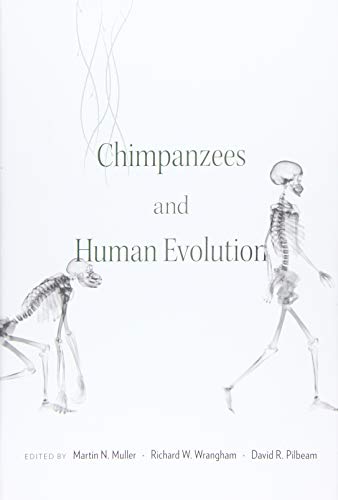
<p>Knowledge of chimpanzees in the wild has expanded dramatically in recent years. This comprehensive volume, edited by Martin Muller, Richard Wrangham, and David Pilbeam, brings together scientists who are leading a revolution to discover and explain what is unique about humans, by studying their closest living relatives. Their observations and conclusions have the potential to transform our understanding of human evolution.<br><br>Chimpanzees offer scientists an unmatched view of what distinguishes humanity from its apelike ancestors. Based on evidence from the hominin fossil record and extensive morphological, developmental, and genetic data, <i>Chimpanzees and Human Evolution</i> makes the case that the last common ancestor of chimpanzees and humans was chimpanzee-like. It most likely lived in African rainforests around eight million years ago, eating fruit and walking on its knuckles. Readers will learn why chimpanzees are a better model for the last common ancestor than bonobos, gorillas, or orangutans. A thorough chapter-by-chapter analysis reveals which key traits we share with chimpanzees and which appear to be distinctive to <i>Homo sapiens, </i>and shows how understanding chimpanzees helps us account for the evolution of human uniqueness. Traits surveyed include social behaviors and structures, mating systems, diet, hunting practices, tool use, culture, cognition, and communication.<br><br>Edited by three of primatology’s most renowned experts, with contributions from 32 scholars drawing on decades of field research, <i>Chimpanzees and Human Evolution </i>provides readers with detailed up-to-date information on what we can infer about our chimpanzee-like ancestors and points the way forward for the next generation of discoveries.</p>
Die Inhaltsangabe kann sich auf eine andere Ausgabe dieses Titels beziehen.
Über die Autorinnen und Autoren
Martin N. Muller is Associate Professor in the Department of Anthropology at the University of New Mexico.
Richard W. Wrangham is Ruth B. Moore Professor of Biological Anthropology in the Department of Human Evolutionary Biology at Harvard University.
David R. Pilbeam is Henry Ford II Professor of Human Evolution in the Department of Human Evolutionary Biology at Harvard University.
„Über diesen Titel“ kann sich auf eine andere Ausgabe dieses Titels beziehen.
Suchergebnisse für Chimpanzees and Human Evolution

Beispielbild für diese ISBN
Chimpanzees and Human Evolution
ISBN 10: 067496795X
ISBN 13: 9780674967953
Gebraucht
Hardcover
Anbieter: Fahrenheit's Books, Denver, CO, USA
Verkäuferbewertung 5 von 5 Sternen

Hardcover. Zustand: Very Good. Zustand des Schutzumschlags: Very Good. Second printing, hardcover, has a slight lean to the binding, bumps to the spine ends and cover corners, a touch of toned offsetting to the head of the spine, and minor smudging to the edges of the text block. Overall, a Very Good copy in a like, unclipped dust jacket, which has bumps with light creasing to the spine ends and cover corners, and rubbing to the covers. The jacket is wrapped in Mylar. Bestandsnummer des Verkäufers 217103
Gebraucht kaufen
EUR 35,90
EUR 6,10 Versand
Versand innerhalb von USA
Versand innerhalb von USA
Anzahl: 1 verfügbar
Beispielbild für diese ISBN
Chimpanzees and Human Evolution
Verlag:
Belknap Press: An Imprint of Har, 2017
ISBN 10: 067496795X
ISBN 13: 9780674967953
Gebraucht
Hardcover
Anbieter: agoodealofbooks, Ypsilanti, MI, USA
Verkäuferbewertung 4 von 5 Sternen

Hardcover. Zustand: Very Good. very clean hardcover no jacket . no marks. clean text. solid binding. very light wear,.dj has tear and tape repair inside dj at top edge of front cover. ISBN matches listing Fast service with confirmation, no international or priority orders over 4lbs. Bestandsnummer des Verkäufers mon0000163029
Gebraucht kaufen
EUR 38,13
EUR 4,35 Versand
Versand innerhalb von USA
Versand innerhalb von USA
Anzahl: 1 verfügbar
Foto des Verkäufers
Chimpanzees and Human Evolution
Verlag:
Belknap Press: An Imprint of Harvard University Press, 2017
ISBN 10: 067496795X
ISBN 13: 9780674967953
Gebraucht
Hardcover
Anbieter: Squeaky Trees Books, Greenfield TWP, ME, USA
Verkäuferbewertung 4 von 5 Sternen
Hardcover. Zustand: Very Good+. Zustand des Schutzumschlags: Very Good+. Second. Very light wear to both hardboards and dustcover, very clean, tight, no markings, solid and straight vg+/VG+; 161.925 X 49.53 X 234.95 millimeters; 848 pages. Bestandsnummer des Verkäufers 27262
Gebraucht kaufen
EUR 42,19
EUR 4,79 Versand
Versand innerhalb von USA
Versand innerhalb von USA
Anzahl: 1 verfügbar
Beispielbild für diese ISBN
Chimpanzees and Human Evolution
Verlag:
Belknap Press: An Imprint of Harvard University Press, 2017
ISBN 10: 067496795X
ISBN 13: 9780674967953
Neu
Hardcover
Anbieter: GoldBooks, Denver, CO, USA
Verkäuferbewertung 5 von 5 Sternen
Hardcover. Zustand: new. New Copy. Customer Service Guaranteed. Bestandsnummer des Verkäufers 70J49_36_067496795X
Neu kaufen
EUR 53,29
EUR 4,79 Versand
Versand innerhalb von USA
Versand innerhalb von USA
Anzahl: 1 verfügbar
Foto des Verkäufers
Chimpanzees and Human Evolution
Verlag:
Belknap Press: An Imprint of Harvard University Press, 2017
ISBN 10: 067496795X
ISBN 13: 9780674967953
Neu
Hardcover
Anbieter: GreatBookPrices, Columbia, MD, USA
Verkäuferbewertung 5 von 5 Sternen
Zustand: New. Bestandsnummer des Verkäufers 29314567-n
Neu kaufen
EUR 68,09
EUR 2,30 Versand
Versand innerhalb von USA
Versand innerhalb von USA
Anzahl: 3 verfügbar
Foto des Verkäufers
Chimpanzees and Human Evolution
Anbieter: Rarewaves.com USA, London, LONDO, Vereinigtes Königreich
Verkäuferbewertung 5 von 5 Sternen
Hardback. Zustand: New. Knowledge of chimpanzees in the wild has expanded dramatically in recent years. This comprehensive volume, edited by Martin Muller, Richard Wrangham, and David Pilbeam, brings together scientists who are leading a revolution to discover and explain what is unique about humans, by studying their closest living relatives. Their observations and conclusions have the potential to transform our understanding of human evolution.Chimpanzees offer scientists an unmatched view of what distinguishes humanity from its apelike ancestors. Based on evidence from the hominin fossil record and extensive morphological, developmental, and genetic data, Chimpanzees and Human Evolution makes the case that the last common ancestor of chimpanzees and humans was chimpanzee-like. It most likely lived in African rainforests around eight million years ago, eating fruit and walking on its knuckles. Readers will learn why chimpanzees are a better model for the last common ancestor than bonobos, gorillas, or orangutans. A thorough chapter-by-chapter analysis reveals which key traits we share with chimpanzees and which appear to be distinctive to Homo sapiens, and shows how understanding chimpanzees helps us account for the evolution of human uniqueness. Traits surveyed include social behaviors and structures, mating systems, diet, hunting practices, tool use, culture, cognition, and communication.Edited by three of primatology's most renowned experts, with contributions from 32 scholars drawing on decades of field research, Chimpanzees and Human Evolution provides readers with detailed up-to-date information on what we can infer about our chimpanzee-like ancestors and points the way forward for the next generation of discoveries. Bestandsnummer des Verkäufers LU-9780674967953
Neu kaufen
EUR 70,47
Versand gratis
Versand von Vereinigtes Königreich nach USA
Versand von Vereinigtes Königreich nach USA
Anzahl: 2 verfügbar
Foto des Verkäufers
Chimpanzees and Human Evolution
Verlag:
Belknap Press: An Imprint of Harvard University Press, 2017
ISBN 10: 067496795X
ISBN 13: 9780674967953
Gebraucht
Hardcover
Anbieter: GreatBookPrices, Columbia, MD, USA
Verkäuferbewertung 5 von 5 Sternen
Zustand: As New. Unread book in perfect condition. Bestandsnummer des Verkäufers 29314567
Gebraucht kaufen
EUR 70,55
EUR 2,30 Versand
Versand innerhalb von USA
Versand innerhalb von USA
Anzahl: 3 verfügbar
Beispielbild für diese ISBN
Chimpanzees and Human Evolution (eng)
Verlag:
Belknap Press: An Imprint of Harvard University Press, 2017
ISBN 10: 067496795X
ISBN 13: 9780674967953
Neu
Hardcover
Anbieter: Brook Bookstore On Demand, Napoli, NA, Italien
Verkäuferbewertung 5 von 5 Sternen
Zustand: new. Bestandsnummer des Verkäufers 2fbeed8fd39fc4e434d08b3c96565312
Neu kaufen
EUR 63,73
EUR 11,00 Versand
Versand von Italien nach USA
Versand von Italien nach USA
Anzahl: 3 verfügbar
Beispielbild für diese ISBN
Chimpanzees and Human Evolution
Verlag:
Harvard University Press, 2017
ISBN 10: 067496795X
ISBN 13: 9780674967953
Neu
Hardcover
Erstausgabe
Anbieter: Kennys Bookshop and Art Galleries Ltd., Galway, GY, Irland
Verkäuferbewertung 5 von 5 Sternen
Zustand: New. 2017. 1st Edition. Hardcover. . . . . . Bestandsnummer des Verkäufers V9780674967953
Neu kaufen
EUR 67,97
EUR 9,50 Versand
Versand von Irland nach USA
Versand von Irland nach USA
Anzahl: 1 verfügbar
Beispielbild für diese ISBN
Chimpanzees and Human Evolution
Anbieter: PBShop.store US, Wood Dale, IL, USA
Verkäuferbewertung 5 von 5 Sternen
HRD. Zustand: New. New Book. Shipped from UK. Established seller since 2000. Bestandsnummer des Verkäufers WH-9780674967953