
Verwandte Artikel zu Meditations: Introduction by D. A. Rees (Everyman's...
Inhaltsangabe
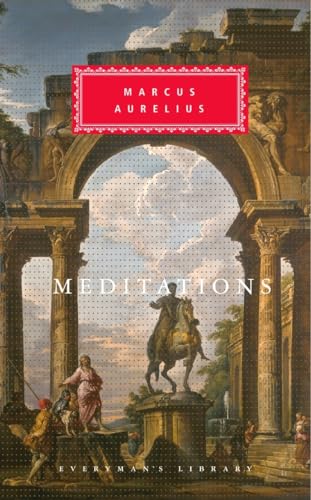
A beautiful, deluxe hardcover edition of Marcus Aurelius's timeless classic Meditations, a book that has inspired and influenced people for nearly two millennia.
The Meditations of Marcus Aurelius are not only one of the most important expressions of stoic philosophy but also an enduringly inspiring guide to living a good and just life.
The Roman emperor Marcus Aurelius Antoninus (A.D. 121—180) embodied in his person that deeply cherished, ideal figure of antiquity, the philosopher-king. Written in moments snatched from military campaigns and the rigors of politics, these ethical and spiritual reflections reveal a mind of exceptional clarity and originality, and a spirit attuned to both the particulars of human destiny and the vast patterns that underlie it.
A.S.L. Farquharson (1871-1942) spent a lifetime on his edition of the Meditations, which is one of the outstanding twentieth-century achievements of classical scholarship. All the notes to the Farquharson translation, amplifying the twelve books of the Meditations, are included in this volume.
Everyman's Library pursues the highest production standards, printing on acid-free cream-colored paper, with full-cloth cases with two-color foil stamping, decorative endpapers, silk ribbon markers, European-style half-round spines, and a full-color illustrated jacket. Everyman’s Library Classics include an introduction, a select bibliography, and a chronology of the author's life and times.
Die Inhaltsangabe kann sich auf eine andere Ausgabe dieses Titels beziehen.
Über die Autorin bzw. den Autor
MARCUS AURELIUS ANTONINUS was born to an upper-class Roman family in A.D. 121 and was later adopted by the future emperor Antoninus Pius, whom he succeeded in 161. His reign was marked by a successful campaign against Parthia, but was overshadowed in later years by plague, an abortive revolt in the eastern provinces, and the deaths of friends and family, including his co-emperor Lucius Verus. A student of philosophy from his earliest youth, he was especially influenced by the first-century Stoic thinker Epictetus. His later reputation rests on his Meditations, written during his later years and never meant for formal publication. He died in 180, while campaigning against the barbarian tribes on Rome’s northern frontier.
A. S. L. FARQUHARSON (1871–1942) spent a lifetime on his edition of the Meditations, which is one of the outstanding twentieth-century achievements of classical scholarship. All the notes to the Farquharson translation, amplifying the twelve books of the Meditations, are included in this volume.
Von der hinteren Coverseite
The Roman emperor Marcus Aurelius Antoninus embodied in his person that deeply cherished, ideal figure of antiquity, the philosopher-king. His Meditations, written in moments snatched from military campaigns and the rigors of politics, reveal a mind of exceptional clarity and originality, and a spirit attuned to both the particulars of human destiny and the vast patterns which underlie it.
Aus dem Klappentext
Introduction by D. A. Rees; Translation by A. S. L. Farquarson
Auszug. © Genehmigter Nachdruck. Alle Rechte vorbehalten.
Book 1
Debts and Lessons
1. My grandfather Verus
Character and self-control.
2. My father (from my own memories and his reputation)
Integrity and manliness.
3. My mother
Her reverence for the divine, her generosity, her inability not only to do wrong but even to conceive of doing it. And the simple way she lived-not in the least like the rich.
4. My great-grandfather
To avoid the public schools, to hire good private teachers, and to accept the resulting costs as money well-spent.
5. My first teacher
Not to support this side or that in chariot-racing, this fighter or that in the games. To put up with discomfort and not make demands. To do my own work, mind my own business, and have no time for slanderers.
6. Diognetus
Not to waste time on nonsense. Not to be taken in by conjurors and hoodoo artists with their talk about incantations and exorcism and all the rest of it. Not to be obsessed with quail-fighting or other crazes like that. To hear unwelcome truths. To practice philosophy, and to study with Baccheius, and then with Tandasis and Marcianus. To write dialogues as a student. To choose the Greek lifestyle-the camp-bed and the cloak.
7. Rusticus
The recognition that I needed to train and discipline my character.
Not to be sidetracked by my interest in rhetoric. Not to write treatises on abstract questions, or deliver moralizing little sermons, or compose imaginary descriptions of The Simple Life or The Man Who Lives Only for Others. To steer clear of oratory, poetry and belles lettres.
Not to dress up just to stroll around the house, or things like that. To write straightforward letters (like the one he sent my mother from Sinuessa). And to behave in a conciliatory way when people who have angered or annoyed us want to make up.
To read attentively-not to be satisfied with "just getting the gist of it." And not to fall for every smooth talker.
And for introducing me to Epictetus's lectures-and loaning me his own copy.
8. Apollonius
Independence and unvarying reliability, and to pay attention to nothing, no matter how fleetingly, except the logos. And to be the same in all circumstances-intense pain, the loss of a child, chronic illness. And to see clearly, from his example, that a man can show both strength and flexibility.
His patience in teaching. And to have seen someone who clearly viewed his expertise and ability as a teacher as the humblest of virtues.
And to have learned how to accept favors from friends without losing your self-respect or appearing ungrateful.
9. Sextus
Kindness.
An example of fatherly authority in the home. What it means to live as nature requires.
Gravity without airs.
To show intuitive sympathy for friends, tolerance to amateurs and sloppy thinkers. His ability to get along with everyone: sharing his company was the highest of compliments, and the opportunity an honor for those around him.
To investigate and analyze, with understanding and logic, the principles we ought to live by.
Not to display anger or other emotions. To be free of passion and yet full of love.
To praise without bombast; to display expertise without pretension.
10. The literary critic Alexander
Not to be constantly correcting people, and in particular not to jump on them whenever they make an error of usage or a grammatical mistake or mispronounce something, but just answer their question or add another example, or debate the issue itself (not their phrasing), or make some other contribution to the discussion-and casually insert the correct expression.
11. Fronto
To recognize the malice, cunning and hypocrisy that power produces, and the peculiar ruthlessness often shown by people from "good families."
12. Alexander the Platonist
Not to be constantly telling people (or writing them) that I'm too busy, unless I really am. Similarly, not to be always ducking my responsibilities to the people around me because of "pressing business."
13. Catulus
Not to shrug off a friend's resentment-even unjustified resentment-but try to put things right.
To show your teachers ungrudging respect (the Domitius and Athenodotus story), and your children unfeigned love.
14. [My brother] Severus
To love my family, truth and justice. It was through him that I encountered Thrasea, Helvidius, Cato, Dion and Brutus, and conceived of a society of equal laws, governed by equality of status and of speech, and of rulers who respect the liberty of their subjects above all else.
And from him as well, to be steady and consistent in valuing philosophy.
And to help others and be eager to share, not to be a pessimist, and never to doubt your friends' affection for you. And that when people incurred his disapproval, they always knew it. And that his friends never had to speculate about his attitude to anything: it was always clear.
15. Maximus
Self-control and resistance to distractions.
Optimism in adversity-especially illness.
A personality in balance: dignity and grace together.
Doing your job without whining.
Other people's certainty that what he said was what he thought, and what he did was done without malice.
Never taken aback or apprehensive. Neither rash nor hesitant-or bewildered, or at a loss. Not obsequious-but not aggressive or paranoid either.
Generosity, charity, honesty.
The sense he gave of staying on the path rather than being kept on it.
That no one could ever have felt patronized by him-or in a position to patronize him.
A sense of humor.
16. My adopted father
Compassion. Unwavering adherence to decisions, once he'd reached them. Indifference to superficial honors. Hard work. Persistence.
Listening to anyone who could contribute to the public good.
His dogged determination to treat people as they deserved.
A sense of when to push and when to back off.
Putting a stop to the pursuit of boys.
His altruism. Not expecting his friends to keep him entertained at dinner or to travel with him (unless they wanted to). And anyone who had to stay behind to take care of something always found him the same when he returned.
His searching questions at meetings. A kind of single-mindedness, almost, never content with first impressions, or breaking off the discussion prematurely.
His constancy to friends-never getting fed up with them, or playing favorites.
Self-reliance, always. And cheerfulness.
And his advance planning (well in advance) and his discreet attention to even minor things.
His restrictions on acclamations-and all attempts to flatter him.
His constant devotion to the empire's needs. His stewardship of the treasury. His willingness to take responsibility-and blame-for both.
His attitude to the gods: no superstitiousness. And his attitude to men: no demagoguery, no currying favor, no pandering. Always sober, always steady, and never vulgar or a prey to fads.
The way he handled the material comforts that fortune had supplied him in such abundance-without arrogance and without apology. If they were there, he took advantage of them. If not, he didn't miss them.
No one ever called him glib, or shameless, or pedantic. They saw him for what he was: a man tested by life, accomplished, unswayed by flattery, qualified to govern both himself and them.
His respect for people who practiced philosophy-at least, those who were sincere about it. But without denigrating the others-or listening...
„Über diesen Titel“ kann sich auf eine andere Ausgabe dieses Titels beziehen.
Suchergebnisse für Meditations: Introduction by D. A. Rees (Everyman's...

Beispielbild für diese ISBN
Meditations (Everyman's Library Classics Series)
Anbieter: HPB-Emerald, Dallas, TX, USA
Verkäuferbewertung 5 von 5 Sternen

Hardcover. Zustand: Very Good. Connecting readers with great books since 1972! Used books may not include companion materials, and may have some shelf wear or limited writing. We ship orders daily and Customer Service is our top priority! Bestandsnummer des Verkäufers S_485940349
Gebraucht kaufen
EUR 11,43
EUR 3,33 Versand
Versand innerhalb von USA
Versand innerhalb von USA
Anzahl: 1 verfügbar
Foto des Verkäufers
Meditations
Anbieter: GreatBookPrices, Columbia, MD, USA
Verkäuferbewertung 5 von 5 Sternen
Zustand: good. May show signs of wear, highlighting, writing, and previous use. This item may be a former library book with typical markings. No guarantee on products that contain supplements Your satisfaction is 100% guaranteed. Twenty-five year bookseller with shipments to over fifty million happy customers. Bestandsnummer des Verkäufers 413993-5
Gebraucht kaufen
EUR 13,55
EUR 2,35 Versand
Versand innerhalb von USA
Versand innerhalb von USA
Anzahl: 9 verfügbar
Beispielbild für diese ISBN
Meditations: Introduction by D. A. Rees
Anbieter: ThriftBooks-Atlanta, AUSTELL, GA, USA
Verkäuferbewertung 5 von 5 Sternen
Hardcover. Zustand: Good. No Jacket. Missing dust jacket; Pages can have notes/highlighting. Spine may show signs of wear. ~ ThriftBooks: Read More, Spend Less. Bestandsnummer des Verkäufers G0679412719I3N01
Gebraucht kaufen
EUR 15,98
Versand gratis
Versand innerhalb von USA
Versand innerhalb von USA
Anzahl: 1 verfügbar
Beispielbild für diese ISBN
Meditations: Introduction by D. A. Rees (Everyman's Library Classics Series)
Anbieter: Textbooks_Source, Columbia, MO, USA
Verkäuferbewertung 5 von 5 Sternen
hardcover. Zustand: Good. Reprint. Ships in a BOX from Central Missouri! May not include working access code. Will not include dust jacket. Has used sticker(s) and some writing or highlighting. UPS shipping for most packages, (Priority Mail for AK/HI/APO/PO Boxes). Bestandsnummer des Verkäufers 000271138U
Gebraucht kaufen
EUR 17,11
EUR 3,55 Versand
Versand innerhalb von USA
Versand innerhalb von USA
Anzahl: 19 verfügbar
Foto des Verkäufers
Meditations
Anbieter: GreatBookPrices, Columbia, MD, USA
Verkäuferbewertung 5 von 5 Sternen
Zustand: New. Bestandsnummer des Verkäufers 413993-n
Neu kaufen
EUR 21,70
EUR 2,35 Versand
Versand innerhalb von USA
Versand innerhalb von USA
Anzahl: 3 verfügbar
Beispielbild für diese ISBN
Meditations: Introduction by D. A. Rees (Everyman's Library Classics Series)
Anbieter: INDOO, Avenel, NJ, USA
Verkäuferbewertung 5 von 5 Sternen
Zustand: New. Bestandsnummer des Verkäufers 9780679412717
Foto des Verkäufers
Meditations (Hardcover)
Verlag:
Random House USA Inc, New York, 1992
ISBN 10: 0679412719
ISBN 13: 9780679412717
Neu
Hardcover
Anbieter: Grand Eagle Retail, Bensenville, IL, USA
Verkäuferbewertung 5 von 5 Sternen
Hardcover. Zustand: new. Hardcover. A beautiful, deluxe hardcover edition of Marcus Aurelius's timeless classic Meditations, a book that has inspired and influenced people for nearly two millennia.The Meditations of Marcus Aurelius are not only one of the most important expressions of stoic philosophy but also an enduringly inspiring guide to living a good and just life.The Roman emperor Marcus Aurelius Antoninus (A.D. 121180) embodied in his person that deeply cherished, ideal figure of antiquity, the philosopher-king. Written in moments snatched from military campaigns and the rigors of politics, these ethical and spiritual reflections reveal a mind of exceptional clarity and originality, and a spirit attuned to both the particulars of human destiny and the vast patterns that underlie it.A.S.L. Farquharson (18711942) spent a lifetime on his edition of the Meditations, which is one of the outstanding twentieth-century achievements of classical scholarship. All the notes to the Farquharson translation, amplifying the twelve books of the Meditations, are included in this volume.Everyman's Library pursues the highest production standards, printing on acid-free cream-colored paper, with full-cloth cases with two-color foil stamping, decorative endpapers, silk ribbon markers, European-style half-round spines, and a full-color illustrated jacket. Everymans Library Classics include an introduction, a select bibliography, and a chronology of the author's life and times. The Roman emperor Marcus Aurelius Antoninus embodied in his person that deeply cherished, ideal figure of antiquity, the philosopher-king. His Meditations, written in moments snatched from military campaigns and the rigors of politics, reveal a mind of exceptional clarity and originality, and a spirit attuned to both the particulars of human destiny and the vast patterns which underlie it. Shipping may be from multiple locations in the US or from the UK, depending on stock availability. Bestandsnummer des Verkäufers 9780679412717
Foto des Verkäufers
Meditations
Anbieter: GreatBookPrices, Columbia, MD, USA
Verkäuferbewertung 5 von 5 Sternen
Zustand: As New. Unread book in perfect condition. Bestandsnummer des Verkäufers 413993
Gebraucht kaufen
EUR 22,28
EUR 2,35 Versand
Versand innerhalb von USA
Versand innerhalb von USA
Anzahl: 3 verfügbar
Foto des Verkäufers
Meditations
Anbieter: Rarewaves USA, HEBRON, KY, USA
Verkäuferbewertung 5 von 5 Sternen
Hardback. Zustand: New. Bestandsnummer des Verkäufers LU-9780679412717
Beispielbild für diese ISBN
Meditations
Verlag:
Everyman's Library 1992-06-02, 1992
ISBN 10: 0679412719
ISBN 13: 9780679412717
Gebraucht
Hardcover
Anbieter: LittleBookNook, Gillette, WY, USA
Verkäuferbewertung 3 von 5 Sternen

Hardcover/Hardback. Zustand: Fine. A beautiful deluxe hardcover edition of Marcus Aurelius's timeless classic Meditations a book that has inspired and influenced people for nearly two millennia. The Meditations of Marcus Aurelius are not only one of the most important expressions of stoic philosophy but also an enduringly inspiring guide to living a good and just life. The Roman emperor Marcus Aurelius Antoninus A.D. 121?180 embodied in his person that deeply cherished ideal figure of antiquity the philosopher-king. Written in moments snatched from military campaigns and the rigors of politics these ethical and spiritual reflections reveal a mind of exceptional clarity and originality and a spirit attuned to both the particulars of human destiny and the vast patterns that underlie it. A.S.L. Farquharson 1871-1942 spent a lifetime on his edition of the Meditations which is one of the outstanding twentieth-century achievements of classical scholarship. All the notes to the Farquharson translation amplifying the twelve books of the Meditations are included in this volume. Everyman's Library pursues the highest production standards printing on acid-free cream-colored paper with full-cloth cases with two-color foil stamping decorative endpapers silk ribbon markers European-style half-round spines and a full-color illustrated jacket. Everyman?s Library Classics include an introduction a select bibliography and a chronology of the author's life and times. | Pages: 281. Bestandsnummer des Verkäufers BK-42LAVG
Gebraucht kaufen
EUR 23,01
EUR 3,78 Versand
Versand innerhalb von USA
Versand innerhalb von USA
Anzahl: 1 verfügbar