
Verwandte Artikel zu The 40s: The Story of a Decade: By The New Yorker Magazine....
The 40s: The Story of a Decade: By The New Yorker Magazine. Introduction by David Remnick (New Yorker: The Story of a Decade) - Hardcover
Buch 1 von 3: New Yorker: The Story of a Decade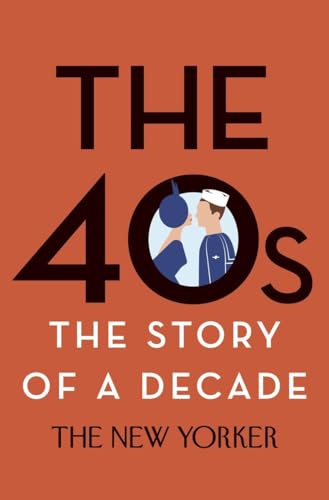
Inhaltsangabe
This captivating anthology gathers historic New Yorker pieces from a decade of trauma and upheaval—as well as the years when The New Yorker came of age, with pieces by Elizabeth Bishop, Langston Hughes, Joseph Mitchell, Vladimir Nabokov, and George Orwell, alongside original reflections on the 1940s by some of today’s finest writers.
In this enthralling book, contributions from the great writers who graced The New Yorker’s pages are placed in historical context by the magazine’s current writers. Included in this volume are seminal profiles of the decade’s most fascinating figures: Albert Einstein, Walt Disney, and Eleanor Roosevelt. Here are classics in reporting: John Hersey’s account of the heroism of a young naval lieutenant named John F. Kennedy; Rebecca West’s harrowing visit to a lynching trial in South Carolina; and Joseph Mitchell’s imperishable portrait of New York’s foremost dive bar, McSorley’s. This volume also provides vital, seldom-reprinted criticism, as well as an extraordinary selection of short stories by such writers as Shirley Jackson and John Cheever. Represented too are the great poets of the decade, from William Carlos Williams to Langston Hughes. To complete the panorama, today’s New Yorker staff look back on the decade through contemporary eyes. The 40s: The Story of a Decade is a rich and surprising cultural portrait that evokes the past while keeping it vibrantly present.
Including contributions by W. H. Auden • Elizabeth Bishop • John Cheever • Janet Flanner • John Hersey • Langston Hughes • Shirley Jackson • A. J. Liebling • William Maxwell • Carson McCullers • Joseph Mitchell • Vladimir Nabokov • Ogden Nash • John O’Hara • George Orwell • V. S. Pritchett • Lillian Ross • Stephen Spender • Lionel Trilling • Rebecca West • E. B. White • Williams Carlos Williams • Edmund Wilson
And featuring new perspectives by Joan Acocella • Hilton Als • Dan Chiasson • David Denby • Jill Lepore • Louis Menand • Susan Orlean • George Packer • David Remnick • Alex Ross • Peter Schjeldahl • Zadie Smith • Judith Thurman
Die Inhaltsangabe kann sich auf eine andere Ausgabe dieses Titels beziehen.
Über die Autorin bzw. den Autor
The New Yorker began publishing in 1925.
Auszug. © Genehmigter Nachdruck. Alle Rechte vorbehalten.
A Note by George Packer
In late May 1940, the writer A. J. Liebling awaited the Second World War in “a little Marseillais restaurant on the Rue Monmartre,” dining on “Mediterranean rouget burned in brandy over twigs of fennel.” He had returned as a correspondent for The New Yorker to the city of his youthful adventures in food and other passions soon after the German invasion of Poland, in the fall of 1939, and he had spent the months of the Phony War in a state of suspended disbelief. Drawing comfort from the “gastronomic normality” of Parisian life, he convinced himself that the Nazis were overrated and the French would put up a tough fight—that this was a replay of the First World War. Even after the Wehrmacht’s Blitzkrieg cut through Holland and Belgium “as through butter” and prepared to devour France, Liebling couldn’t believe in the coming catastrophe. “The rouget tasted too much as good rouget always had,” he wrote; “the black-browed proprietor was too normally solicitous; even in the full bosom and strong legs of the waitress there was the assurance that this life in Paris would never end.”
In some ways it was still 1925, the year of The New Yorker’s birth. Even after a decade of worldwide depression and rising Fascist power, the magazine remained dedicated to the sophisticated tastes of what its founding editor, Harold Ross, in a letter to prospective investors and subscribers, called “metropolitan life.” The main stage was New York, the tone ironic and detached, never passionately engaged, immune to shock. Ross prescribed that the weekly commentary be written “in a manner not too serious”; the magazine prided itself on never taking a political stand. Hitler made a few scattered appearances in its pages during the thirties, as tyrant or buffoon—notably in Janet Flanner’s three-part Profile in 1936, based on interviews with the Führer, whose anti-Semitism and race fanaticism received slightly less space than his vegetarianism and celibacy. In 1933, when few people outside Germany understood what Nazism portended, E. B. White, the anonymous voice of the magazine’s Comment, wrote, “Thus in a single day’s developments in Germany we go back a thousand years into the dark.” But two years later, he fell back into characteristic lightheartedness: “We predict that there will be no war in 1936, 1937, 1938, 1939, and 1940. There will be a small war in 1941 between Cambodia and Alberta over a little matter of some Irish Sweepstake tickets, and then there will be no war in 1942, 1943, 1944, 1945, and 1946. Our prophecy is no mere wish-fulfillment—it packs a heap of personal good feelings toward nations.” It was as if the magazine knew that the world of witty table talk, society portraits, and Broadway lowlifes was doomed, but, like a character in a Thurber sketch, it couldn’t bring itself to wake up from an entertaining dream that had begun to quiver with sinister undertones.
At the end of the summer of 1939, with war apparently imminent, White’s Comment finally showed The New Yorker to be capable of shock. It sounded the note of a highly civilized sensibility forced to engage with something alien, ugly, and inescapable: “Today is Sunday, August 27th. Perhaps you don’t remember that far back, you who presumably now dwell in a world which is either at peace or at war. . . . If war comes, it will be war, and no one wants that. If peace is restored, it will be another arrangement enlarging not simply the German boundary but the Hitler dream. The world knows it can’t win.”
The war opened The New Yorker to the wider world. Without changing beyond recognition, it became a more serious magazine; without sounding like Time or The New Republic, it became political. It rediscovered places it already knew, perhaps a little too well (London, Paris, Hell’s Kitchen), and it discovered places that it had never imagined (Tunisia, the Marianas Islands). The Second World War was total war, involving cities, villages, and much of the world’s population, with battlefields in a hotel lobby or an uninhabited island. Partly for this reason, the coverage in The New Yorker benefitted from the fact that it was a literary magazine, matching writers to subjects in ways that produced some of the greatest and most original journalism of the war.
Ross deployed much of his available talent to cover the conflict. The New Yorker’s war correspondents included the magazine’s former managing editor, a movie critic, a sportswriter, humorists, and short-story writers, as well as some of its leading reporters. By happenstance, Mollie Panter-Downes, an English novelist living on a pig farm in Surrey, became the magazine’s London correspondent in time for Dunkirk and the Blitz, and her understated style perfectly captures the British talent for survival through disengagement that Americans learned to admire during the war: “Incidentally, the announcements of the first air-raid deaths are beginning to appear in the obituary columns of the morning papers. No mention is made of the cause of death, but the conventional phrase ‘very suddenly’ is always used. Thousands of men, women, and children are scheduled to die very suddenly, without any particular notice being taken of them in the obituary columns.”
The focus of The New Yorker’s war reporting is rarely the big picture. Grand strategy is almost never discussed; the Eastern Front, inaccessible to the magazine’s reporters, hardly exists; the names Roosevelt, Churchill, Hitler, and Stalin appear less often than those of ordinary soldiers. The largest event in human history is witnessed in small stories, through details and characters, in what the writer is able to see and hear—an elegant third-floor London drawing room exposed by bombing; a tearful conversation between a major and the sergeant he’s casually but deeply offended. The neutrality and omniscience of modern newspaper reporting are not the guiding principle here. The writer’s personal relation to the subject is often what gives a piece its insight and power. When the playwright S. N. Behrman visits London for the first time since the start of the war, he finds the nightly blackout terrifyingly total and eerily beautiful. Who would have known that London’s Underground shelters blasted American pop tunes all night long, if Behrman hadn’t made a point of going down into one?
Liebling—corpulent, witty, and pleasure-loving—becomes an unlikely correspondent with the U.S. Army in North Africa, and later goes on to cover the landings at Normandy and the liberation of Paris. While the memory of his French pleasures occasionally intrudes, like hunger pangs, Liebling’s exuberance is restrained, his comic impulses sobered up, his baroque prose style rendered more straightforward and exact by the vast, death-haunted experience in which he plays a small part.
The war consumed The New Yorker, along with the rest of the country. Ross begged the War Department for more draft deferments, complaining that he had lost half his editorial staff to military service, and making a case for the magazine’s importance to the war effort. In the journalism of the Second World War, the difference between civilian and military dissolved in ways that later became impossible with an all-volunteer army. New Yorker correspondents describe the soldiers they meet by their prewar identity (“He was a yacht broker in civilian life and often wrote articles about boats”; “All Riley wanted to do was finish the war and go back to the University of Texas”). A few contributed work to the magazine...
„Über diesen Titel“ kann sich auf eine andere Ausgabe dieses Titels beziehen.
Suchergebnisse für The 40s: The Story of a Decade: By The New Yorker Magazine....

Beispielbild für diese ISBN
The 40s: The Story of a Decade
Anbieter: World of Books (was SecondSale), Montgomery, IL, USA
Verkäuferbewertung 5 von 5 Sternen

Hardback. Zustand: Fair. This captivating anthology gathers historic New Yorker pieces from a decade of trauma and upheaval--as well as the years when The New Yorker came of age, with pieces by Elizabeth Bishop, Langston Hughes, Joseph Mitchell, Vladimir Nabokov, and George Orwell, alongside original reflections on the 1940s by some of today's finest writers. In this enthralling book, contributions from the great writers who graced The New Yorker's pages are placed in historical context by the magazine's current writers. Included in this volume are seminal profiles of the decade's most fascinating figures: Albert Einstein, Walt Disney, and Eleanor Roosevelt. Here are classics in reporting: John Hersey's account of the heroism of a young naval lieutenant named John F. Kennedy; Rebecca West's harrowing visit to a lynching trial in South Carolina; and Joseph Mitchell's imperishable portrait of New York's foremost dive bar, McSorley's. This volume also provides vital, seldom-reprinted criticism, as well as an extraordinary selection of short stories by such writers as Shirley Jackson and John Cheever. Represented too are the great poets of the decade, from William Carlos Williams to Langston Hughes. To complete the panorama, today's New Yorker staff look back on the decade through contemporary eyes. The 40s: The Story of a Decade is a rich and surprising cultural portrait that evokes the past while keeping it vibrantly present. Including contributions by W. H. Auden * Elizabeth Bishop * John Cheever * Janet Flanner * John Hersey * Langston Hughes * Shirley Jackson * A. J. Liebling * William Maxwell * Carson McCullers * Joseph Mitchell * Vladimir Nabokov * Ogden Nash * John O'Hara * George Orwell * V. S. Pritchett * Lillian Ross * Stephen Spender * Lionel Trilling * Rebecca West * E. B. White * Williams Carlos Williams * Edmund Wilson And featuring new perspectives by Joan Acocella * Hilton Als * Dan Chiasson * David Denby * Jill Lepore * Louis Menand * Susan Orlean * George Packer * David Remnick * Alex Ross * Peter Schjeldahl * Zadie Smith * Judith Thurman. Bestandsnummer des Verkäufers 00105475365
Gebraucht kaufen
EUR 5,27
Versand gratis
Versand innerhalb von USA
Versand innerhalb von USA
Anzahl: 1 verfügbar
Beispielbild für diese ISBN
The 40s: The Story of a Decade
Anbieter: World of Books (was SecondSale), Montgomery, IL, USA
Verkäuferbewertung 5 von 5 Sternen
Hardback. Zustand: Very Good. This captivating anthology gathers historic New Yorker pieces from a decade of trauma and upheaval--as well as the years when The New Yorker came of age, with pieces by Elizabeth Bishop, Langston Hughes, Joseph Mitchell, Vladimir Nabokov, and George Orwell, alongside original reflections on the 1940s by some of today's finest writers. In this enthralling book, contributions from the great writers who graced The New Yorker's pages are placed in historical context by the magazine's current writers. Included in this volume are seminal profiles of the decade's most fascinating figures: Albert Einstein, Walt Disney, and Eleanor Roosevelt. Here are classics in reporting: John Hersey's account of the heroism of a young naval lieutenant named John F. Kennedy; Rebecca West's harrowing visit to a lynching trial in South Carolina; and Joseph Mitchell's imperishable portrait of New York's foremost dive bar, McSorley's. This volume also provides vital, seldom-reprinted criticism, as well as an extraordinary selection of short stories by such writers as Shirley Jackson and John Cheever. Represented too are the great poets of the decade, from William Carlos Williams to Langston Hughes. To complete the panorama, today's New Yorker staff look back on the decade through contemporary eyes. The 40s: The Story of a Decade is a rich and surprising cultural portrait that evokes the past while keeping it vibrantly present. Including contributions by W. H. Auden * Elizabeth Bishop * John Cheever * Janet Flanner * John Hersey * Langston Hughes * Shirley Jackson * A. J. Liebling * William Maxwell * Carson McCullers * Joseph Mitchell * Vladimir Nabokov * Ogden Nash * John O'Hara * George Orwell * V. S. Pritchett * Lillian Ross * Stephen Spender * Lionel Trilling * Rebecca West * E. B. White * Williams Carlos Williams * Edmund Wilson And featuring new perspectives by Joan Acocella * Hilton Als * Dan Chiasson * David Denby * Jill Lepore * Louis Menand * Susan Orlean * George Packer * David Remnick * Alex Ross * Peter Schjeldahl * Zadie Smith * Judith Thurman. Bestandsnummer des Verkäufers 00102781967
Gebraucht kaufen
EUR 5,27
Versand gratis
Versand innerhalb von USA
Versand innerhalb von USA
Anzahl: 2 verfügbar
Beispielbild für diese ISBN
The 40s: The Story of a Decade
Anbieter: World of Books (was SecondSale), Montgomery, IL, USA
Verkäuferbewertung 5 von 5 Sternen
Hardback. Zustand: Good. This captivating anthology gathers historic New Yorker pieces from a decade of trauma and upheaval--as well as the years when The New Yorker came of age, with pieces by Elizabeth Bishop, Langston Hughes, Joseph Mitchell, Vladimir Nabokov, and George Orwell, alongside original reflections on the 1940s by some of today's finest writers. In this enthralling book, contributions from the great writers who graced The New Yorker's pages are placed in historical context by the magazine's current writers. Included in this volume are seminal profiles of the decade's most fascinating figures: Albert Einstein, Walt Disney, and Eleanor Roosevelt. Here are classics in reporting: John Hersey's account of the heroism of a young naval lieutenant named John F. Kennedy; Rebecca West's harrowing visit to a lynching trial in South Carolina; and Joseph Mitchell's imperishable portrait of New York's foremost dive bar, McSorley's. This volume also provides vital, seldom-reprinted criticism, as well as an extraordinary selection of short stories by such writers as Shirley Jackson and John Cheever. Represented too are the great poets of the decade, from William Carlos Williams to Langston Hughes. To complete the panorama, today's New Yorker staff look back on the decade through contemporary eyes. The 40s: The Story of a Decade is a rich and surprising cultural portrait that evokes the past while keeping it vibrantly present. Including contributions by W. H. Auden * Elizabeth Bishop * John Cheever * Janet Flanner * John Hersey * Langston Hughes * Shirley Jackson * A. J. Liebling * William Maxwell * Carson McCullers * Joseph Mitchell * Vladimir Nabokov * Ogden Nash * John O'Hara * George Orwell * V. S. Pritchett * Lillian Ross * Stephen Spender * Lionel Trilling * Rebecca West * E. B. White * Williams Carlos Williams * Edmund Wilson And featuring new perspectives by Joan Acocella * Hilton Als * Dan Chiasson * David Denby * Jill Lepore * Louis Menand * Susan Orlean * George Packer * David Remnick * Alex Ross * Peter Schjeldahl * Zadie Smith * Judith Thurman. Bestandsnummer des Verkäufers 00103145178
Gebraucht kaufen
EUR 5,27
Versand gratis
Versand innerhalb von USA
Versand innerhalb von USA
Anzahl: 7 verfügbar
Foto des Verkäufers
The 40s: The Story of a Decade (New Yorker: The Story of a Decade)
Anbieter: ZBK Books, Carlstadt, NJ, USA
Verkäuferbewertung 5 von 5 Sternen
Zustand: very_good. Fast & Free Shipping â" Very Good condition book with a firm cover and clean pages. Shows normal use and some light wear or limited notes markings. A solid, nice copy to enjoy. Bestandsnummer des Verkäufers ZWV.0679644792.VG
Gebraucht kaufen
EUR 5,28
Versand gratis
Versand innerhalb von USA
Versand innerhalb von USA
Anzahl: 1 verfügbar
Beispielbild für diese ISBN
The 40s: The Story of a Decade
Anbieter: ThriftBooks-Phoenix, Phoenix, AZ, USA
Verkäuferbewertung 5 von 5 Sternen
Hardcover. Zustand: Good. No Jacket. Pages can have notes/highlighting. Spine may show signs of wear. ~ ThriftBooks: Read More, Spend Less. Bestandsnummer des Verkäufers G0679644792I3N00
Gebraucht kaufen
EUR 5,97
Versand gratis
Versand innerhalb von USA
Versand innerhalb von USA
Anzahl: 1 verfügbar
Beispielbild für diese ISBN
The 40s: The Story of a Decade
Anbieter: ThriftBooks-Dallas, Dallas, TX, USA
Verkäuferbewertung 5 von 5 Sternen
Hardcover. Zustand: Good. No Jacket. Pages can have notes/highlighting. Spine may show signs of wear. ~ ThriftBooks: Read More, Spend Less. Bestandsnummer des Verkäufers G0679644792I3N00
Gebraucht kaufen
EUR 5,97
Versand gratis
Versand innerhalb von USA
Versand innerhalb von USA
Anzahl: 2 verfügbar
Beispielbild für diese ISBN
The 40s: The Story of a Decade
Anbieter: ThriftBooks-Atlanta, AUSTELL, GA, USA
Verkäuferbewertung 5 von 5 Sternen
Hardcover. Zustand: Very Good. No Jacket. Former library book; May have limited writing in cover pages. Pages are unmarked. ~ ThriftBooks: Read More, Spend Less. Bestandsnummer des Verkäufers G0679644792I4N10
Gebraucht kaufen
EUR 5,97
Versand gratis
Versand innerhalb von USA
Versand innerhalb von USA
Anzahl: 1 verfügbar
Beispielbild für diese ISBN
The 40s: The Story of a Decade
Anbieter: ThriftBooks-Atlanta, AUSTELL, GA, USA
Verkäuferbewertung 5 von 5 Sternen
Hardcover. Zustand: Good. No Jacket. Pages can have notes/highlighting. Spine may show signs of wear. ~ ThriftBooks: Read More, Spend Less. Bestandsnummer des Verkäufers G0679644792I3N00
Gebraucht kaufen
EUR 5,97
Versand gratis
Versand innerhalb von USA
Versand innerhalb von USA
Anzahl: 2 verfügbar
Beispielbild für diese ISBN
The 40s: The Story of a Decade
Anbieter: ThriftBooks-Dallas, Dallas, TX, USA
Verkäuferbewertung 5 von 5 Sternen
Hardcover. Zustand: Good. No Jacket. Former library book; Pages can have notes/highlighting. Spine may show signs of wear. ~ ThriftBooks: Read More, Spend Less. Bestandsnummer des Verkäufers G0679644792I3N10
Gebraucht kaufen
EUR 5,97
Versand gratis
Versand innerhalb von USA
Versand innerhalb von USA
Anzahl: 1 verfügbar
Beispielbild für diese ISBN
The 40s: The Story of a Decade
Anbieter: ThriftBooks-Reno, Reno, NV, USA
Verkäuferbewertung 5 von 5 Sternen
Hardcover. Zustand: Good. No Jacket. Pages can have notes/highlighting. Spine may show signs of wear. ~ ThriftBooks: Read More, Spend Less. Bestandsnummer des Verkäufers G0679644792I3N00
Gebraucht kaufen
EUR 5,97
Versand gratis
Versand innerhalb von USA
Versand innerhalb von USA
Anzahl: 1 verfügbar