
Verwandte Artikel zu My Early Life: 1874-1904: With a new introduction by...
Inhaltsangabe
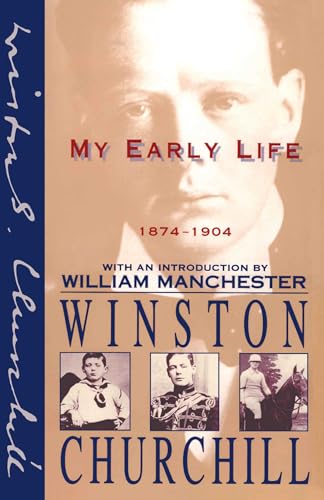
Here, in his own words, are the fascinating first thirty years in the life of one of the most provocative and compelling leaders of the twentieth century
Winston Churchill
As a visionary, statesman, and historian, and the most eloquent spokesman against Nazi Germany, Winston Churchill was one of the greatest figures of the twentieth century. In this autobiography, Churchill recalls his childhood, his schooling, his years as a war correspondent in South Africa during the Boer War, and his first forays into politics as a member of Parliament. My Early Life not only gives readers insights into the shaping of a great leader but, as Churchill himself wrote, "a picture of a vanished age."
If you want to fully understand Winston Churchill, My Early Life is essential reading.
Die Inhaltsangabe kann sich auf eine andere Ausgabe dieses Titels beziehen.
Über die Autorin bzw. den Autor
Winston Churchill (1874-1965) was prime minister of Great Britain from 1940-1945 and 1951-1955. A prolific writer, whose works include The Second World War and A History of the English Speaking Peoples, Churchill was awarded the Nobel Prize for Literature in 1953.
Von der hinteren Coverseite
Here, in his own words, are the fascinating first thirty years in the life of one of the most provocative and compelling leaders of the twentieth century - Winston Churchill. As a visionary, statesman, and historian, and the most eloquent spokesman against the Nazi Germany, Winston Churchill was one of the greatest figures of the twentieth century. In this autobiography, Churchill recalls his childhood, his schooling, his years as a war correspondent in South Africa during the Boer War, and his first forays into politics as a member of Parliament. My Early Life not only gives readers insights into the shaping of a great leader but, as Churchill himself wrote, "a picture of a vanished age".
Auszug. © Genehmigter Nachdruck. Alle Rechte vorbehalten.
CHAPTER I
CHILDHOOD
When does one first begin to remember? When do the waving lights and shadows of dawning consciousness cast their print upon the mind of a child? My earliest memories are Ireland. I can recall scenes and events in Ireland quite well, and sometimes dimly even, people. Yet I was born on November 30, 1874, and I left Ireland early in the year 1879. My father had gone to Ireland as secretary to his father, the Duke of Marlborough, appointed Lord-Lieutenant by Mr. Disraeli in 1876. We lived in a house called 'The Little Lodge,' about a stone's throw from the Viceregal. Here I spent nearly three years of childhood. I have clear and vivid impressions of some events. I remember my grandfather, the Viceroy, unveiling the Lord Gough statue in 1878. A great black crowd, scarlet soldiers on horseback, strings pulling away a brown shiny sheet, the old Duke, the formidable grandpapa, talking loudly to the crowd. I recall even a phrase he used: 'and with a withering volley he shattered the enemy's line.' I quite understood that he was speaking about war and fighting and that a 'volley' meant what the black-coated soldiers (Riflemen) used to do with loud bangs so often in the Phoenix Park where I was taken for my morning walks. This, I think, is my first coherent memory.
Other events stand out more distinctly. We were to go to a pantomime. There was great excitement about it. The long-looked-for afternoon arrived. We started from the Viceregal and drove to the Castle where other children were no doubt to be picked up. Inside the Castle was a great square space paved with small oblong stones. It rained. It nearly always rained -- just as it does now. People came out of the doors of the Castle, and there seemed to be much stir. Then we were told we could not go to the pantomime because the theatre had been burned down. All that was found of the manager was the keys that had been in his pocket. We were promised as a consolation for not going to the pantomime to go next day and see the ruins of the building. I wanted very much to see the keys, but this request does not seem to have been well received.
In one of these years we paid a visit to Emo Park, the seat of Lord Portarlington, who was explained to me as a sort of uncle. Of this place I can give very clear descriptions, though I have never been there since I was four or four and a half. The central point in my memory is a tall white stone tower which we reached after a considerable drive. I was told it had been blown up by Oliver Cromwell. I understood definitely that he had blown up all sorts of things and was therefore a very great man.
My nurse, Mrs. Everest, was nervous about the Fenians. I gathered these were wicked people and there was no end to what they would do if they had their way. On one occasion when I was out riding on my donkey, we thought we saw a long dark procession of Fenians approaching. I am sure now it must have been the Rifle Brigade out for a route march. But we were all very much alarmed, particularly the donkey, who expressed his anxiety by kicking. I was thrown off and had concussion of the brain. This was my first introduction to Irish politics!
In the Phoenix Park there was a great round clump of trees, with a house inside it. In this house there lived a personage styled the Chief Secretary or the Under Secretary, I am not clear which. But at any rate from this house there came a man called Mr. Burke. He gave me a drum. I cannot remember what he looked like, but I remember the drum. Two years afterwards when we were back in England, they told me he had been murdered by the Fenians in this same Phoenix Park we used to walk about in every day. Everyone round me seemed much upset about it, and I thought how lucky it was the Fenians had not got me when I fell off the donkey.
It was at 'The Little Lodge' I was first menaced with Education. The approach of a sinister figure described as 'the Governess' was announced. Her arrival was fixed for a certain day. In order to prepare for this day Mrs. Everest produced a book called Reading without Tears. It certainly did not justify its title in my case. I was made aware that before the Governess arrived I must be able to read without tears. We toiled each day. My nurse pointed with a pen at the different letters. I thought it all very tiresome. Our preparations were by no means completed when the fateful hour struck and the Governess was due to arrive. I did what so many oppressed peoples have done in similar circumstances: I took to the woods. I hid in the extensive shrubberies -- forests they seemed -- which surrounded 'The Little Lodge.' Hours passed before I was retrieved and handed over to 'the Governess.' We continued to toil every day, not only at letters but at words, and also at what was much worse, figures. Letters after all had only got to be known, and when they stood together in a certain way one recognised their formation and that it meant a certain sound or wore which one uttered when pressed sufficiently. But the figures were tied into all sorts of tangles and did things to one another which it was extremely difficult to forecast with complete accuracy. You had to say what they did each time they were tied up together, and the Governess apparently attached enormous importance to the answer being exact. If it was not right, it was wrong. It was not any use being 'nearly right.' In some cases these figures got into debt with one another: you had to borrow one or carry one, and afterwards you had to pay back the one you had borrowed. These complications cast a steadily gathering shadow over my daily life. They took one away from all the interesting things one wanted to do in the nursery or in the garden. They made increasing inroads upon one's leisure. One could hardly get time to do any of the things one wanted to do. They became a general worry and preoccupation. More especially was this true when we descended into a dismal bog called 'sums.' There appeared to be no limit to these. When one sum was done, there was always another. Just as soon as I managed to tackle a particular class of these afflictions, some other much more variegated type was thrust upon me.
My mother took no part in these impositions, but she gave me to understand that she approved of them and she sided with the Governess almost always. My picture of her in Ireland is in a riding habit, fitting like a skin and often beautifully spotted with mud. She and my father hunted continually on their large horses; and sometimes there were great scares because one or the other did not come back for many hours after they were expected.
My mother always seemed to me a fairy princess: a radiant being possessed of limitless riches and power. Lord D'Abernon has described her as she was in these Irish days in words for which I am grateful.
...'I have the clearest recollection of seeing her for the first time. It was at the Vice-Regal Lodge at Dublin. She stood on one side to the left of the entrance. The Viceroy was on a dais at the farther end of the room surrounded by a brilliant staff, but eyes were not turned on him or on his consort, but on a dark, lithe figure, standing somewhat apart and appearing to be of another texture to those...
„Über diesen Titel“ kann sich auf eine andere Ausgabe dieses Titels beziehen.
Weitere beliebte Ausgaben desselben Titels

Suchergebnisse für My Early Life: 1874-1904: With a new introduction by...

Foto des Verkäufers
My Early Life: 1874-1904
Anbieter: Dream Books Co., Denver, CO, USA
Verkäuferbewertung 5 von 5 Sternen

Zustand: acceptable. This copy has clearly been enjoyedâ"expect noticeable shelf wear and some minor creases to the cover. Binding is strong, and all pages are legible. May contain previous library markings or stamps. Bestandsnummer des Verkäufers DBV.0684823454.A
Gebraucht kaufen
EUR 3,88
Versand gratis
Versand innerhalb von USA
Versand innerhalb von USA
Anzahl: 1 verfügbar
Beispielbild für diese ISBN
My Early Life A Roving Commiss
Anbieter: World of Books (was SecondSale), Montgomery, IL, USA
Verkäuferbewertung 5 von 5 Sternen
Zustand: Acceptable. Item in acceptable condition! Textbooks may not include supplemental items i.e. CDs, access codes etc. Bestandsnummer des Verkäufers 00104526751
Gebraucht kaufen
EUR 4,77
Versand gratis
Versand innerhalb von USA
Versand innerhalb von USA
Anzahl: 2 verfügbar
Beispielbild für diese ISBN
My Early Life A Roving Commiss
Anbieter: World of Books (was SecondSale), Montgomery, IL, USA
Verkäuferbewertung 5 von 5 Sternen
Zustand: Very Good. Item in very good condition! Textbooks may not include supplemental items i.e. CDs, access codes etc. Bestandsnummer des Verkäufers 00106877090
Gebraucht kaufen
EUR 4,77
Versand gratis
Versand innerhalb von USA
Versand innerhalb von USA
Anzahl: 2 verfügbar
Beispielbild für diese ISBN
My Early Life A Roving Commiss
Anbieter: World of Books (was SecondSale), Montgomery, IL, USA
Verkäuferbewertung 5 von 5 Sternen
Zustand: Good. Item in good condition. Textbooks may not include supplemental items i.e. CDs, access codes etc. Bestandsnummer des Verkäufers 00106330454
Gebraucht kaufen
EUR 4,77
Versand gratis
Versand innerhalb von USA
Versand innerhalb von USA
Anzahl: 2 verfügbar
Foto des Verkäufers
My Early Life: 1874-1904
Anbieter: Greenworld Books, Arlington, TX, USA
Verkäuferbewertung 5 von 5 Sternen
Zustand: very_good. Fast Free Shipping â" Very Good condition book with a firm cover and clean pages. Shows normal use and some light wear or limited notes markings. A solid, nice copy to enjoy. Bestandsnummer des Verkäufers GWV.0684823454.VG
Gebraucht kaufen
EUR 5,20
Versand gratis
Versand innerhalb von USA
Versand innerhalb von USA
Anzahl: 1 verfügbar
Foto des Verkäufers
My Early Life: 1874-1904
Anbieter: MERS Goodwill-Kansas City, Blue Springs, MO, USA
Verkäuferbewertung 5 von 5 Sternen
Zustand: good. The book has been read but is in good condition. It has very minimal damage to the cover, including scuff marks, but no holes or tears. The dust jacket for hard covers may not be included. The binding has minimal wear. The majority of pages are undamaged with minimal creasing or tearing, minimal pencil underlining of text, no highlighting of text, and no writing in the margins. There are no missing pages. See the seller's listing for full details and a description of any imperfections. Bestandsnummer des Verkäufers WMEKV.0684823454.G
Gebraucht kaufen
EUR 2,21
EUR 3,47 Versand
Versand innerhalb von USA
Versand innerhalb von USA
Anzahl: 1 verfügbar
Beispielbild für diese ISBN
My Early Life: 1874-1904
Verlag:
Scribner (edition Illustrated), 1996
ISBN 10: 0684823454
ISBN 13: 9780684823454
Gebraucht
Paperback
Anbieter: BooksRun, Philadelphia, PA, USA
Verkäuferbewertung 5 von 5 Sternen
Paperback. Zustand: Fair. Illustrated. The item might be beaten up but readable. May contain markings or highlighting, as well as stains, bent corners, or any other major defect, but the text is not obscured in any way. Bestandsnummer des Verkäufers 0684823454-7-1-13
Gebraucht kaufen
EUR 5,75
Versand gratis
Versand innerhalb von USA
Versand innerhalb von USA
Anzahl: 1 verfügbar
Beispielbild für diese ISBN
My Early Life: 1874-1904
Anbieter: ThriftBooks-Phoenix, Phoenix, AZ, USA
Verkäuferbewertung 5 von 5 Sternen
Paperback. Zustand: Good. No Jacket. Pages can have notes/highlighting. Spine may show signs of wear. ~ ThriftBooks: Read More, Spend Less. Bestandsnummer des Verkäufers G0684823454I3N00
Gebraucht kaufen
EUR 5,79
Versand gratis
Versand innerhalb von USA
Versand innerhalb von USA
Anzahl: 2 verfügbar
Beispielbild für diese ISBN
My Early Life: 1874-1904
Anbieter: ThriftBooks-Atlanta, AUSTELL, GA, USA
Verkäuferbewertung 5 von 5 Sternen
Paperback. Zustand: Fair. No Jacket. Readable copy. Pages may have considerable notes/highlighting. ~ ThriftBooks: Read More, Spend Less. Bestandsnummer des Verkäufers G0684823454I5N00
Gebraucht kaufen
EUR 5,79
Versand gratis
Versand innerhalb von USA
Versand innerhalb von USA
Anzahl: 1 verfügbar
Beispielbild für diese ISBN
My Early Life: 1874-1904
Anbieter: ThriftBooks-Dallas, Dallas, TX, USA
Verkäuferbewertung 5 von 5 Sternen
Paperback. Zustand: Good. No Jacket. Pages can have notes/highlighting. Spine may show signs of wear. ~ ThriftBooks: Read More, Spend Less. Bestandsnummer des Verkäufers G0684823454I3N00
Gebraucht kaufen
EUR 5,79
Versand gratis
Versand innerhalb von USA
Versand innerhalb von USA
Anzahl: 3 verfügbar