
Inhaltsangabe
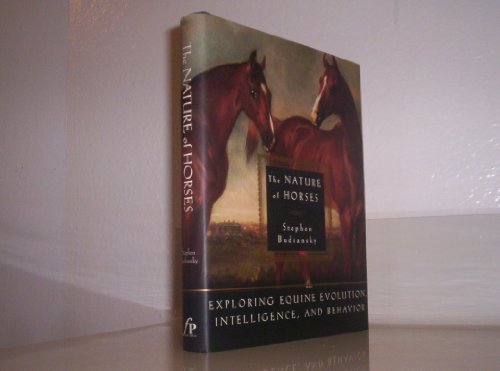
Horses have a shared history with man going back millennia to their domestication around 4000 B.C. Yet only in very recent years have scientists begun to turn the tools of modem science on this remarkable animal that has been so wrapped up in human dreams and legends. Now modern scientific research is beginning to explain long-standing mysteries about the true nature of the horse. How well can horses really see? What causes breakdowns in racehorses? How intelligent are they compared to other animals, and are some breeds smarter than others? Does nature or nurture matter more in creating a great sport horse? What causes cribbing and other vices? In this beautifully illustrated, compelling narrative, Budiansky tells the story of the origins, behavior, intelligence and language of the horse.
For the first time, horse lovers will have access to cutting-edge research on topics of interest including new information on horse vision, horse biology and movement. Introducing the latest archeological findings, Budiansky presents a fascinating discussion of how the horse evolved as well as a dramatic and provocative history of man's use and abuse of the horse from prehistoric times to today. In a revealing chapter on horse intelligence, he debunks the commonly held belief that horses are stupid and also presents compelling new scientific information on horse language which will greatly benefit the horse rider and trainer. Finally, drawing together the latest research on horse physiology, genetics and biomechanics, Budiansky asks the million dollar question -- what makes for a winning racehorse? Anyone who loves horses will find this an invaluable resource as well as a fascinating read.
Die Inhaltsangabe kann sich auf eine andere Ausgabe dieses Titels beziehen.
Über die Autorin bzw. den Autor
Stephen Budiansky, formerly U.S. Editor of Nature, is currently Senior Writer at U.S. News & World Report. He is the author of Covenant of the Wild and Nature's Keepers: The New Science of Nature Management. He lives in Leesburg, Virginia.
Auszug. © Genehmigter Nachdruck. Alle Rechte vorbehalten.
Chapter 1
THE IMPROBABILITY OF THE HORSE
Of the more than 4,000 species of mammals that have occupied the earth during the last 10,000 years, the horse is one of fewer than a dozen that have achieved widespread success as domesticated animals.
That low success rate was certainly not for want of trying on our part. The ancient Egyptians attempted to domesticate hyenas, antelope, ibex, and gazelles (figure 1.1). The American Indians kept pet raccoons, bears, and even moose. The Australian aborigines even kept wallabies and kangaroos. Yet none survive as domesticated animals today.
If it were simply a matter of human will, it would be hard to explain why we should have domestic dogs, sheep, goats, cows, pigs, horses, asses, camels, rabbits, and cats -- but not deer, squirrels, foxes, antelope, or even hippos and zebras.
The answer is that it was not a matter of human will. The successful domesticated species were largely "preadapted" to their role through quirks of adaptation and evolution that had nothing whatever to do with human intentions or needs, but that turned out to be vital to their future success in our homes and fields. The horse was no exception. Among the myriad ways of making a living that evolution has cast up, a few -- a very few -- turned out to be compatible with human ways.
The horse, like the other animals that were to enter into domestication, was a generalist, able to survive on a variety of widely available foods. (An animal such as the giant panda, which eats nothing but bamboo leaves, would surely have been a nonstarter.) These generalists were able to exploit their new domesticated niche with a high potential reproduction rate. They had relatively simple courtship patterns, typically harems in which one male readily mates with multiple females. They were social animals, instinctively given to understanding signals of dominance and submission. They were relatively nonterritorial, not given to disruptive intraspecies combat over fixed bits of ground. In other words, the first step toward domestication was one that nature took millions of years before we even arrived on the scene.
The second step also seems to have been more the doing of the animals than of us. It was animals who discovered the mutual compatibility of our species, and it was they who chose to act upon this discovery. Recent archaeological and animal behavior studies strongly support the idea that domestication was not the human invention it was long supposed to have been, but rather a long, slow process of mutual adaptation, of "coevolution," in which those animals that began to hang around the first permanent human settlements gained more than they lost. Some were killed and eaten, but for every cow or sheep or horse killed, many more flourished on the crops they robbed from our fields and the incidental protection they gained from other predators in the proximity of human habitations. Like the starlings, mice and rats, and chimney swifts that invade our homes today for the food and shelter that are a by-product of our domestic habits, those forebears of our domestic stock took the initiative. We followed.
In the process, these semidomesticated but still free-living animals acquired still more of the characteristics that would make full domestication possible. Those individuals that were more curious, less territorial, less aggressive, more dependent, better able to deflect human aggression through submission, were the individuals that had the edge in this new niche.
It was only in the third stage of domestication, when humans began breeding animals in captivity, that human "invention" began to play a predominant role. But in consciously selecting and emphasizing those traits that appealed to our fancy or our needs, we could still only draw upon what nature provided. If the horse had not existed, we most definitely could not have invented it. The species upon which agriculture and indeed civilization have been built were a remarkable gift of evolutionary chance and opportunism.
The Disadvantage of Being a Horse
A number of species that expanded their range throughout the world during the respites that punctuated the Ice Age glaciations of the Pleistocene epoch (15,000 to 2 million years ago) may have acquired "domesticated" traits as a package deal. The twin pressures of climatic upheaval and massive hunting by humans placed specialist feeders at a decided disadvantage; it was the generalists, which could adapt to a wide variety of climates and circumstances, that flourished. Moreover, it was those species that were migratory, curious, adaptable -- as opposed to territorial, suspicious, and conservative -- that thrived on upheaval. Sheep, wolves, cattle, goats, camels, and horses all fit this bill. Thus in at least one sense the coincidence of domestication seems a bit more comprehensible: there were sound evolutionary reasons that made horses ripe for domestication. Even tameability may have been part of this package. The pressures that placed a premium on adaptability favored the retention into adulthood of juvenile characteristics, an evolutionary process known as neoteny. Juveniles are curious and adaptable, traits that were in demand in the Pleistocene; they are also playful, submissive, and dependent, traits that proved valuable to man in domestication.
Yet horses possessed a number of other remarkably convenient characteristics -- convenient from our point of view -- that make the existence of the modern horse seem all the more astonishing. To begin with, its very survival to modern times was practically a fluke. Many things worked against the horse ever making it. The speed, size, and weight-bearing capacity of the modern horse, all vital to its utility to humans, are extraordinarily unusual among mammals. An animal the size of the horse is in fact a prime candidate for extinction, a fact borne out repeatedly in the fossil record of life on earth. Large animals are long-lived as a rule, but they are also slow to reach sexual maturity, require long gestation periods, and rarely bear more than one young at a time. A drought, an insect outbreak that strips vegetation bare, or any other climatic or ecological disturbance can deliver a blow to a population of large-bodied animals that it takes years to recover from -- if it recovers at all. A population of small animals that reproduce quickly and in large litters, on the other hand, can bounce back from repeated calamities.
Large animals face other evolutionary risks, not least of all gravity. Thomas McMahon, a biomechanician at Harvard University who has made an extensive study of the biology of size, notes that when an animal falls the damage it does to itself is directly proportional to its height, or length. (McMahon's argument in a nutshell: The strength of bones is proportional to their cross-sectional area. An animal twice as tall or twice as long as another will have bones that are twice as thick in all of their dimensions; their cross-sectional area will thus be 2 x 2 = 4 times as great [see figure 1.2]. If an animal's body length is proportional to L, the cross-sectional area of its bones will be proportional to length squared, L2. On the other hand, the energy of a falling body is proportional to its mass, and mass typically increases with the cube of an animal's length, or L3, because an animal twice as long as another will, roughly speaking, also be twice as wide and twice as tall, so its total volume will be eight times as great: 2 x 2 x 2 = 8. So if the energy of an impact is proportional to length cubed, and the ability to resist damage is proportional to length squared, the ratio of the two is [L3/L2], which equals just plain L. The old adage is true: the bigger they are, the harder they fall.) As the renowned British zoologist...
„Über diesen Titel“ kann sich auf eine andere Ausgabe dieses Titels beziehen.
Suchergebnisse für The Nature of Horses

Beispielbild für diese ISBN
The Nature of Horses
Anbieter: World of Books (was SecondSale), Montgomery, IL, USA
Verkäuferbewertung 5 von 5 Sternen

Zustand: Good. Item in good condition and has highlighting/writing on text. Used texts may not contain supplemental items such as CDs, info-trac etc. Bestandsnummer des Verkäufers 00103886721
Gebraucht kaufen
EUR 4,70
Versand gratis
Versand innerhalb von USA
Versand innerhalb von USA
Anzahl: 1 verfügbar
Beispielbild für diese ISBN
The Nature of Horses
Anbieter: World of Books (was SecondSale), Montgomery, IL, USA
Verkäuferbewertung 5 von 5 Sternen
Zustand: Good. Item in good condition. Textbooks may not include supplemental items i.e. CDs, access codes etc. Bestandsnummer des Verkäufers 00089380251
Gebraucht kaufen
EUR 5,14
Versand gratis
Versand innerhalb von USA
Versand innerhalb von USA
Anzahl: 3 verfügbar
Foto des Verkäufers
The Nature of Horses: Exploring Equine Evolution, Intelligence, and Behavior
Anbieter: Bay State Book Company, North Smithfield, RI, USA
Verkäuferbewertung 5 von 5 Sternen
Zustand: good. The book is in good condition with all pages and cover intact, including the dust jacket if originally issued. The spine may show light wear. Pages may contain some notes or highlighting, and there might be a "From the library of" label. Boxed set packaging, shrink wrap, or included media like CDs may be missing. Bestandsnummer des Verkäufers BSM.14JMN
Gebraucht kaufen
EUR 5,14
Versand gratis
Versand innerhalb von USA
Versand innerhalb von USA
Anzahl: 1 verfügbar
Foto des Verkäufers
The Nature of Horses: Exploring Equine Evolution, Intelligence, and Behavior
Anbieter: ZBK Books, Carlstadt, NJ, USA
Verkäuferbewertung 5 von 5 Sternen
Zustand: good. Fast & Free Shipping â" Good condition. It may show normal signs of use, such as light writing, highlighting, or library markings, but all pages are intact and the book is fully readable. A solid, complete copy that's ready to enjoy. Bestandsnummer des Verkäufers ZWV.0684827689.G
Gebraucht kaufen
EUR 6,09
Versand gratis
Versand innerhalb von USA
Versand innerhalb von USA
Anzahl: 1 verfügbar
Beispielbild für diese ISBN
The Nature of Horses : Exploring Equine Evolution, Intelligence, and Behavior
Anbieter: Better World Books, Mishawaka, IN, USA
Verkäuferbewertung 5 von 5 Sternen
Zustand: Good. Former library copy. Pages intact with minimal writing/highlighting. The binding may be loose and creased. Dust jackets/supplements are not included. Includes library markings. Stock photo provided. Product includes identifying sticker. Better World Books: Buy Books. Do Good. Bestandsnummer des Verkäufers GRP85889669
Gebraucht kaufen
EUR 6,24
Versand gratis
Versand innerhalb von USA
Versand innerhalb von USA
Anzahl: 2 verfügbar
Beispielbild für diese ISBN
The Nature of Horses : Exploring Equine Evolution, Intelligence, and Behavior
Anbieter: Better World Books: West, Reno, NV, USA
Verkäuferbewertung 5 von 5 Sternen
Zustand: Very Good. Pages intact with possible writing/highlighting. Binding strong with minor wear. Dust jackets/supplements may not be included. Stock photo provided. Product includes identifying sticker. Better World Books: Buy Books. Do Good. Bestandsnummer des Verkäufers 4121560-6
Gebraucht kaufen
EUR 6,24
Versand gratis
Versand innerhalb von USA
Versand innerhalb von USA
Anzahl: 2 verfügbar
Beispielbild für diese ISBN
The Nature of Horses : Exploring Equine Evolution, Intelligence, and Behavior
Anbieter: Better World Books, Mishawaka, IN, USA
Verkäuferbewertung 5 von 5 Sternen
Zustand: Good. Pages intact with minimal writing/highlighting. The binding may be loose and creased. Dust jackets/supplements are not included. Stock photo provided. Product includes identifying sticker. Better World Books: Buy Books. Do Good. Bestandsnummer des Verkäufers 4121559-6
Gebraucht kaufen
EUR 6,24
Versand gratis
Versand innerhalb von USA
Versand innerhalb von USA
Anzahl: 1 verfügbar
Beispielbild für diese ISBN
The Nature of Horses: Exploring Equine Evolution, Intelligence, and Behavior
Anbieter: HPB Inc., Dallas, TX, USA
Verkäuferbewertung 5 von 5 Sternen
Hardcover. Zustand: Very Good. Connecting readers with great books since 1972! Used books may not include companion materials, and may have some shelf wear or limited writing. We ship orders daily and Customer Service is our top priority! Bestandsnummer des Verkäufers S_449246794
Gebraucht kaufen
EUR 3,17
EUR 3,29 Versand
Versand innerhalb von USA
Versand innerhalb von USA
Anzahl: 1 verfügbar
Foto des Verkäufers
The Nature of Horses: Exploring Equine Evolution, Intelligence, and Behavior
Anbieter: Goodwill Books, Hillsboro, OR, USA
Verkäuferbewertung 5 von 5 Sternen
Zustand: acceptable. Fairly worn, but readable and intact. If applicable: Dust jacket, disc or access code may not be included. Bestandsnummer des Verkäufers GICWV.0684827689.A
Gebraucht kaufen
EUR 3,17
EUR 3,50 Versand
Versand innerhalb von USA
Versand innerhalb von USA
Anzahl: 1 verfügbar
Beispielbild für diese ISBN
The Nature of Horses: Exploring Equine Evolution, Intelligence, and Behavior
Anbieter: ThriftBooks-Dallas, Dallas, TX, USA
Verkäuferbewertung 5 von 5 Sternen
Hardcover. Zustand: Very Good. No Jacket. May have limited writing in cover pages. Pages are unmarked. ~ ThriftBooks: Read More, Spend Less. Bestandsnummer des Verkäufers G0684827689I4N00
Gebraucht kaufen
EUR 6,77
Versand gratis
Versand innerhalb von USA
Versand innerhalb von USA
Anzahl: 1 verfügbar