
Verwandte Artikel zu Flowers in the Dustbin: The Rise of Rock and Roll,...
Inhaltsangabe
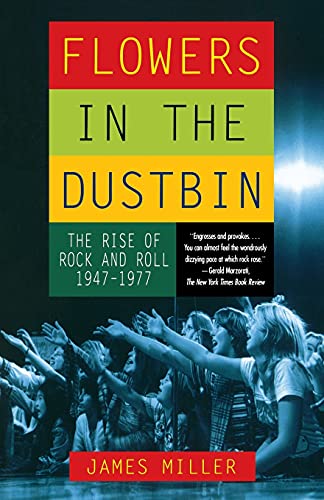
A prizewinning historian and journalist who has covered the pop music scene for more than three decades, James Miller brings a powerful and challenging intellectual perspective to his recounting of some key turning points in the history of rock. Arguing that the music underwent its full creative evolution in little more than twenty-five years, he traces its roots from the jump blues of the forties to the disc jockeys who broadcast the music in the early fifties. He shows how impresarios such as Alan Freed and movie directors such as Richard Brooks (of Blackboard Jungle) joined black music to white fantasies of romance and rebellion, and then mass-marketed the product to teenagers. He describes how rock matured as a form of music, from Chuck Berry and Elvis Presley to the Beatles, Bob Dylan, and Marvin Gaye, defining a decade of rebellious ferment. At the same time, he candidly recounts how trendsetting rock acts from Jim Morrison and the Doors in the late sixties to the Sex Pistols in the late seventies became ever more crude, outrageous, and ugly -- "as if to mark," writes Miller, "the triumph of the psychopathic adolescent."
Richly anecdotal and always provocative, Flowers in the Dustbin tells the story of rock and roll as it has never been told before.
Die Inhaltsangabe kann sich auf eine andere Ausgabe dieses Titels beziehen.
Über die Autorin bzw. den Autor
James Miller has been wood carving since he was 11. He has won numerous awards for his work. James is currently attending the Vesterheim's Folk Art School apprentice for instructor training.
Auszug. © Genehmigter Nachdruck. Alle Rechte vorbehalten.
Preface
A Rock and Roll Chronicle
The history of rock and roll now spans half a century -- a chastening thought for anyone ever excited by the novelty of this once freshest of popular forms. As innovative artists have continued to come and go, from Little Richard to the Sex Pistols, from Frank Zappa and the Mothers of Invention in 1966 to Radiohead some thirty years later, my own interest in rock has waxed and waned, but never quite disappeared. Still, if I'm honest, the most thrilling moments all came early, in the Fifties and Sixties, when the music was a primary focus of my energy, shaping my desires, coloring my memory, and producing the wild fantasy, widely shared, that my generation was, in some inchoate way, through the simple pleasure we all took in rock and roll, part of a new world dawning.
It was a world that I had first discovered in 1956. I was sleeping over at the house of an older cousin -- he was eighteen, I was nine. It was Christmastime. Every night he fell asleep with his radio on. And every night, as I lay in the upper deck of his bunk bed, I would hear the beat and blare of a late-night disc jockey's theme song, "Night Train," a honking saxophone playing a lazy blues to a striptease beat. As the music faded, the disc jockey started up his patter, a manic rush, words tumbling, pure jive, mainly nonsense to me. Then came the records. I had grown up on the decorum and consonance of symphonies and Broadway musicals, so I was unprepared for the offhand directness of a song like "Green Door" with its chintzy ragtime feel, or "Don't Be Cruel," with its sultry vocal, bounding electric guitar line, and a slap-happy drum sound unlike anything I'd ever heard.
These records touched me in ways that I'd never been touched before. Enthralled by this noise, I began to seek it out, to the consternation of my parents. I became a fan -- short for "fanatic." I began to collect records. I looked forward to seeing my favorite artists when they made a television appearance -- a relatively rare event in the beginning. I bought an electric guitar and learned enough licks to form my own band, write a few songs, and make some money by playing at dances in high school and college. When I wasn't listening to records or practicing the guitar, I was reading Dig, 16, or Hit Parader, all full of stories about the latest teen hairdos and dance steps and up-and-coming rock idols.
And so it went for much of the next thirty years of my life: I could not hear enough, or know enough, about the sounds that had first moved me during that winter of 1956.
Time passed. What had once seemed exotic grew familiar. Inspired by the Beatles, a new generation of performers, from Bob Dylan to Jim Morrison and the Doors, helped choreograph a cultural revolution that turned rock and roll from a disparaged music for kids into a widely watched, frequently praised mode of serious cultural expression. By the end of the Sixties, rock had turned into a multibillion-dollar global industry. And my passion had turned into a job.
I became a professional critic, publishing my first record review in Rolling Stone in 1967 -- it appeared in the third issue. For the next quarter century, I covered the pop music scene for a variety of publications, from The New Republic to Newsweek, giving my readers tangible evidence of rock's mainstream respectability.
As a young fan in the Sixties, I had seen the Beach Boys in Hawaii, the Zombies and Searchers and Rolling Stones in a Chicago amphitheater, the Byrds on Sunset Strip, Janis Joplin in Berkeley, the Grateful Dead at a Love-In, and Eric Clapton's band Cream at the Savile Theatre in London. I had also made frequent pilgrimages to the old Regal Theater on the South Side of Chicago to see James Brown and Jackie Wilson and the Four Tops and Bobby "Blue" Bland in their prime.
As a professional journalist in the Seventies and Eighties, I got the chance to see a great many more artists in even more intimate settings: Bob Marley and the Wailers in their first North American appearance (with only thirty other people in the club); Bruce Springsteen and the E Street Band on the brink of fame; the artist formerly known as Prince on his first important American tour. I also got the chance to meet and talk with a great many of my musical heroes, old and new, from Sam Phillips and Paul McCartney to David Bowie and Elvis Costello and Bono of U2.
In many ways, it was an exhilarating time to be listening to popular music, and to be writing about rock and roll. Yet despite a steady stream of new artists and a relentless flood of publicity for every passing fad -- and despite the fact that for many years I made my living by contributing to the flood of publicity -- the rock world as I came to know it professionally seemed to me ever more stale, ever more predictable, ever more boring.
What had seemed mysterious to a nine-year-old boy, and what augured a revolutionary youth culture in the mind of an impressionable nineteen-year-old, became, to the adult critic, a routinized package of theatrical gestures, generally expressed in a blaze of musical clichés.
Not that rock and roll was diminishing in popularity; on the contrary, more people than ever bought records and flocked to hear the latest bands. The best-selling album of the twentieth century, Michael Jackson's Thriller, was released in 1982. And the scale of rock's biggest theatrical events has grown ever more gargantuan. Once upon a time, the music had been performed live in clubs and small halls, the kind of venues where I first saw Jimi Hendrix and the Who in the 1960s. Thirty years later, to see a major rock act like U2 or Pearl Jam, one usually had to journey to an arena or stadium where the artists were dwarfed by their surroundings, never mind the size of the crowd assembled to witness the event.
Disenchanted yet still intrigued, not least by my own disenchantment, I sensed that it was time to step back, take stock, and try to untangle and think through a series of events, a great many of which I had either undergone with impassioned abandon or been asked to write about with factitious enthusiasm (a constant temptation for cultural critics who are expected to celebrate the new).
Since leaving Newsweek in 1991, in part because I no longer felt able to feign enthusiasm, I have worked primarily as a teacher, currently at the New School. By academic training, I am an intellectual and cultural historian: and like a good historian, I resolved to understand, to my own satisfaction, where rock and roll had come from -- and what it had come to.
Hence this book: a reflective look back at selected episodes in the history of the world's most popular form of music.
My narrative combines research into contemporary sources with an analysis of what I take to be the essential issues, informed by a quarter century of experience working inside the music business. I have eschewed any effort to be comprehensive, or to indulge my own continuing affection for the music of various artists, such as Bo Diddley, Sam Cooke, the "5" Royales, the Moonglows, Jerry Lee Lewis, Buddy Holly, the Everly Brothers, the Flamingos, James Brown, Phil Spector, the Beach Boys, the Searchers, Bobby Bland, Curtis Mayfield and the Impressions, the Kinks, Otis Redding, the Byrds, Led Zeppelin, Kenny Gamble and Leon Huff, Captain Beefheart, Al Green, Donna Summer, Elvis Costello, and the Pretenders -- to name only a few of the musical figures scanted in the survey that follows. I have also resisted the temptation to cover up the sometimes embarrassing centrality of "bad" white boys in the cultural history of rock and roll after the advent of Elvis. Among artists popular in the Sixties, for example, it seems to me obvious that Aretha Franklin and Dionne Warwick and Dusty Springfield all are greater...
„Über diesen Titel“ kann sich auf eine andere Ausgabe dieses Titels beziehen.
Suchergebnisse für Flowers in the Dustbin: The Rise of Rock and Roll,...

Beispielbild für diese ISBN
Flowers in the Dustbin: The Risk of Rock and Roll, 1947-1977
Anbieter: World of Books (was SecondSale), Montgomery, IL, USA
Verkäuferbewertung 5 von 5 Sternen

Paperback. Zustand: Fair. A prizewinning historian and journalist who has covered the pop music scene for more than three decades, James Miller brings a powerful and challenging intellectual perspective to his recounting of some key turning points in the history of rock. Arguing that the music underwent its full creative evolution in little more than twenty-five years, he traces its roots from the jump blues of the forties to the disc jockeys who broadcast the music in the early fifties. He shows how impresarios such as Alan Freed and movie directors such as Richard Brooks (of Blackboard Jungle) joined black music to white fantasies of romance and rebellion, and then mass-marketed the product to teenagers. He describes how rock matured as a form of music, from Chuck Berry and Elvis Presley to the Beatles, Bob Dylan, and Marvin Gaye, defining a decade of rebellious ferment. At the same time, he candidly recounts how trendsetting rock acts from Jim Morrison and the Doors in the late sixties to the Sex Pistols in the late seventies became ever more crude, outrageous, and ugly -- "as if to mark," writes Miller, "the triumph of the psychopathic adolescent." Richly anecdotal and always provocative, Flowers in the Dustbin tells the story of rock and roll as it has never been told before. Bestandsnummer des Verkäufers 00096903003
Gebraucht kaufen
EUR 4,34
Versand gratis
Versand innerhalb von USA
Versand innerhalb von USA
Anzahl: 1 verfügbar
Beispielbild für diese ISBN
Flowers in the Dustbin: The Risk of Rock and Roll, 1947-1977
Anbieter: World of Books (was SecondSale), Montgomery, IL, USA
Verkäuferbewertung 5 von 5 Sternen
Paperback. Zustand: Good. A prizewinning historian and journalist who has covered the pop music scene for more than three decades, James Miller brings a powerful and challenging intellectual perspective to his recounting of some key turning points in the history of rock. Arguing that the music underwent its full creative evolution in little more than twenty-five years, he traces its roots from the jump blues of the forties to the disc jockeys who broadcast the music in the early fifties. He shows how impresarios such as Alan Freed and movie directors such as Richard Brooks (of Blackboard Jungle) joined black music to white fantasies of romance and rebellion, and then mass-marketed the product to teenagers. He describes how rock matured as a form of music, from Chuck Berry and Elvis Presley to the Beatles, Bob Dylan, and Marvin Gaye, defining a decade of rebellious ferment. At the same time, he candidly recounts how trendsetting rock acts from Jim Morrison and the Doors in the late sixties to the Sex Pistols in the late seventies became ever more crude, outrageous, and ugly -- "as if to mark," writes Miller, "the triumph of the psychopathic adolescent." Richly anecdotal and always provocative, Flowers in the Dustbin tells the story of rock and roll as it has never been told before. Bestandsnummer des Verkäufers 00090607474
Gebraucht kaufen
EUR 4,34
Versand gratis
Versand innerhalb von USA
Versand innerhalb von USA
Anzahl: 7 verfügbar
Foto des Verkäufers
Flowers in the Dustbin: The Rise of Rock and Roll, 1947-1977
Anbieter: Zoom Books Company, Lynden, WA, USA
Verkäuferbewertung 5 von 5 Sternen
Zustand: very_good. Book is in very good condition and may include minimal underlining highlighting. The book can also include "From the library of" labels. May not contain miscellaneous items toys, dvds, etc. . We offer 100% money back guarantee and 24 7 customer service. Bestandsnummer des Verkäufers ZBV.0684865602.VG
Gebraucht kaufen
EUR 4,35
Versand gratis
Versand innerhalb von USA
Versand innerhalb von USA
Anzahl: 1 verfügbar
Foto des Verkäufers
Flowers in the Dustbin: The Rise of Rock and Roll, 1947-1977
Anbieter: Greenworld Books, Arlington, TX, USA
Verkäuferbewertung 5 von 5 Sternen
Zustand: like_new. Fast Free Shipping â" Excellent condition book with clean cover and pages. Barely handled, with minimal wear. An outstanding copy, close to enjoy! Bestandsnummer des Verkäufers GWV.0684865602.LN
Gebraucht kaufen
EUR 4,51
Versand gratis
Versand innerhalb von USA
Versand innerhalb von USA
Anzahl: 1 verfügbar
Beispielbild für diese ISBN
Flowers in the Dustbin: The Rise of Rock and Roll, 1947-1977
Verlag:
Touchstone (edition Illustrated), 2000
ISBN 10: 0684865602
ISBN 13: 9780684865607
Gebraucht
Paperback
Anbieter: BooksRun, Philadelphia, PA, USA
Verkäuferbewertung 5 von 5 Sternen
Paperback. Zustand: Fair. Illustrated. The item might be beaten up but readable. May contain markings or highlighting, as well as stains, bent corners, or any other major defect, but the text is not obscured in any way. Bestandsnummer des Verkäufers 0684865602-7-1
Gebraucht kaufen
EUR 5,42
Versand gratis
Versand innerhalb von USA
Versand innerhalb von USA
Anzahl: 1 verfügbar
Beispielbild für diese ISBN
Flowers in the Dustbin: The Rise of Rock and Roll, 1947-1977
Anbieter: Half Price Books Inc., Dallas, TX, USA
Verkäuferbewertung 5 von 5 Sternen
paperback. Zustand: Very Good. Connecting readers with great books since 1972! Used books may not include companion materials, and may have some shelf wear or limited writing. We ship orders daily and Customer Service is our top priority! Bestandsnummer des Verkäufers S_467853034
Gebraucht kaufen
EUR 2,37
EUR 3,33 Versand
Versand innerhalb von USA
Versand innerhalb von USA
Anzahl: 1 verfügbar
Beispielbild für diese ISBN
Flowers in the Dustbin: The Rise of Rock and Roll, 1947-1977
Anbieter: ThriftBooks-Atlanta, AUSTELL, GA, USA
Verkäuferbewertung 5 von 5 Sternen
Paperback. Zustand: As New. No Jacket. Pages are clean and are not marred by notes or folds of any kind. ~ ThriftBooks: Read More, Spend Less. Bestandsnummer des Verkäufers G0684865602I2N00
Gebraucht kaufen
EUR 5,94
Versand gratis
Versand innerhalb von USA
Versand innerhalb von USA
Anzahl: 1 verfügbar
Beispielbild für diese ISBN
Flowers in the Dustbin: The Rise of Rock and Roll, 1947-1977
Anbieter: ThriftBooks-Atlanta, AUSTELL, GA, USA
Verkäuferbewertung 5 von 5 Sternen
Paperback. Zustand: Very Good. No Jacket. May have limited writing in cover pages. Pages are unmarked. ~ ThriftBooks: Read More, Spend Less. Bestandsnummer des Verkäufers G0684865602I4N00
Gebraucht kaufen
EUR 5,94
Versand gratis
Versand innerhalb von USA
Versand innerhalb von USA
Anzahl: 1 verfügbar
Beispielbild für diese ISBN
Flowers in the Dustbin: The Rise of Rock and Roll, 1947-1977
Anbieter: ThriftBooks-Dallas, Dallas, TX, USA
Verkäuferbewertung 5 von 5 Sternen
Paperback. Zustand: Very Good. No Jacket. May have limited writing in cover pages. Pages are unmarked. ~ ThriftBooks: Read More, Spend Less. Bestandsnummer des Verkäufers G0684865602I4N00
Gebraucht kaufen
EUR 5,94
Versand gratis
Versand innerhalb von USA
Versand innerhalb von USA
Anzahl: 1 verfügbar
Beispielbild für diese ISBN
Flowers in the Dustbin : The Rise of Rock and Roll, 1947-1977
Anbieter: Better World Books, Mishawaka, IN, USA
Verkäuferbewertung 5 von 5 Sternen
Zustand: Good. Pages intact with minimal writing/highlighting. The binding may be loose and creased. Dust jackets/supplements are not included. Stock photo provided. Product includes identifying sticker. Better World Books: Buy Books. Do Good. Bestandsnummer des Verkäufers 8566279-6
Gebraucht kaufen
EUR 6,16
Versand gratis
Versand innerhalb von USA
Versand innerhalb von USA
Anzahl: 3 verfügbar