
Verwandte Artikel zu I Was A Stranger: A Christian Theology of Hospitality
Inhaltsangabe
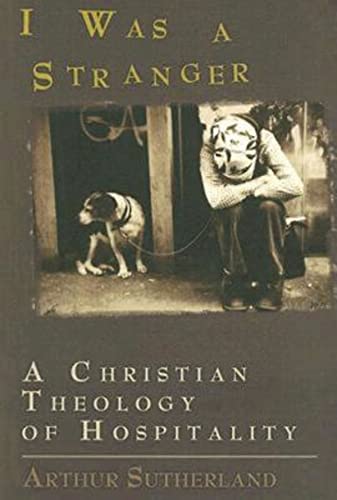
Arthur Sutherland places before us our fear of meeting the “other” and the “stranger” in an increasingly global, and frequently dangerous, village. Various social, political, and historical factors have conspired to leave us in a veritable crisis: the decline of hospitality. Why is this a crisis? Why should we practice hospitality? What is it about Christian theology that compels us to think about hospitality in the first place? Sutherland offers a passionate plea to recover and rediscover hospitality, and to respond to the divine appeal to welcome the stranger. Therein lies the central concern of the book: that hospitality is not simply the practice of a virtue but is integral to the very nature of Christianity’s position toward God, self, and the world—it is at the very center of what it means to be a Christian and to think theologically. He offers a challenging definition of hospitality and calls us to a practice that is the virtue by which the church stands or falls. Drawing on modern theologians (including Howard Thurman, Dietrich Bonhoeffer, Karl Barth, Martin Luther King Jr., and Letty Russell) and considering American slavery, the Holocaust, feminism, and prisons, Sutherland eloquently presents a Christian theology of hospitality.
Die Inhaltsangabe kann sich auf eine andere Ausgabe dieses Titels beziehen.
Über die Autorin bzw. den Autor
Arthur Sutherland is Assistant Professor of Theology at Loyola College in Maryland. He has a B.A. from Harding University, an M.Div. and S.T.M. from Yale University Divinity School and a Ph.D. from Princeton Theological Seminary. His interests are in systematic theology, the history of Christian doctrine, and African-American religious thought.
Auszug. © Genehmigter Nachdruck. Alle Rechte vorbehalten.
I Was A Stranger
A Christian Theology of HospitalityBy Arthur SutherlandAbingdon Press
Copyright © 2006 The United Methodist Publishing HouseAll right reserved.
ISBN: 978-0-687-06324-6
Chapter One
"Poor, Wayfaring Stranger"
CHRIST, THURMAN, DU BOIS, AND THE SPIRITUALS
In April of 1947, Howard Thurman became the first African American to deliver the Ingersoll Lectures at Harvard Divinity School. His lecture put him in the company of William James, Josiah Royce, Edgar Sheffield Brightman, William Ernest Hocking, and Alfred North Whitehead. Thurman had much in common with his predecessors, particularly his affinity for the philosophy of pragmatism. It was Thurman's belief that there had bloomed on American soil a view of life, of the human condition, and of truth that was centered in just the type of raw approach to human experience that those other fellows had advocated. He said, "The human spirit is so involved in the endless cycle of birth, of living and dying, that in some sense each man is an authority, a key interpreter of the meaning of the totality of the experience." This could have been said by any of the American pragmatists. Where Thurman parted company with them, however, was in his decision to reach back to the Negro spiritual as a resource for understanding these matters. He announces that he has chosen the Negro spirituals as his subject because in many ways they are "the voice, sometimes strident, sometimes muted and weary, of a people for whom the cup of suffering overflowed in haunting tones of majesty, beauty and power!" The intellectual challenge of the songs was not their unusual meter, "the real significance of the songs ... is revealed at a deeper level of experience, in the ebb and flow of the tides that feed the rivers of man's thinking and aspiring." In speaking this way Thurman was asserting like W. E. B. Du Bois that Negro sacred songs about Jesus and Christianity were fundamental in understanding the Negro's experience in America. The spirituals' repeated focus on an individual's wilderness, wandering, and welcome is done in the light of an interpretation of Christ as a poor, wayfaring stranger who took on the totality of human existence.
We should be reminded of this if we are interested in seeing how the songs are helpful in constructing a theology of hospitality and a Christology of hospitality in particular. Thurman helps us remember that we ought to start with the assertion that Jesus himself appeared to folk in the towns and villages of Palestine as a homeless stranger. As charismatic, challenging, and convincing as he was in preaching his vision of the reign of God, at the end of the day the saying still applied: "Foxes have holes and birds of the air have nests, but the Son of Man has no place to lay his head" (Matthew 8:20 NIV). Our presumption of familiarity with the Gospel narratives makes the full significance of this difficult to remember. Too often insight into the humanity of Jesus is either underweighted or overlooked. Reminders and explications of how Jesus lived (his person; that is, his divine and human natures) are important because they are the foundation for understanding what Jesus does (his work of redemption). Any attempt to construct a Christology must keep in mind that once Jesus began his mission, there is no indication that he ever stayed under his own roof again. When this is done, it underscores the importance of hospitality for those who would be his disciples.
The Gospel writers ask the reader to develop not just a remembrance of the facts of his homelessness but also to develop empathy for Jesus' plight. By feeling for Jesus, the reader gains insight into Jesus' own empathy with the distressed of this world and his gifts of hospitality toward them. His empathy for the homeless shows in his healing of the demon-possessed man from Gerasene (Mark 5:1-20). His empathy for the homeless explains his detestation of those who exploit the widow and leave her without shelter (Matthew 23:14). His generosity welcomes the despised to eat bread with him (Luke 19:1-10).
The Gospels show Jesus' empathy for the imprisoned by stressing how his own actions consistently put him on the edge of arrest. He speaks of prison as a matter of course, as a capricious fact of daily life (Matthew 5:21-26; 18:29-31). Indeed, life in occupied Palestine meant living with harassment from civil authorities and adjusting to those who could confront, compel, and convict (Matthew 5:39-41). The threat of imprisonment was so much on his mind that he uses it to illustrate the justice and mercy of God toward the forgiven and the unforgiving (Matthew 18:21-35).
As for clothing, the evangelists draw upon a series of sayings by Jesus that stress the peril of nakedness and show that Jesus knew of the anxiety it brought. "And why do you worry about clothing? Consider the lilies of the field, how they grow; they neither toil nor spin, yet I tell you, even Solomon in all his glory was not clothed like one of these. But if God so clothes the grass of the field, which is alive today and tomorrow is thrown into the oven, will he not much more clothe you—you of little faith?" (Matthew 6:28-31). Indeed, the risk of being without clothing is transformed into a mark of discipleship (Matthew 5:40) and Gospel writers emphasize the loss of Jesus' clothes during his arrest, trial, and crucifixion: "they stripped him" (Matthew 27:28) and "divided his clothes among them" (Mark 15:24).
Similarly, the hunger of Jesus is a prominent feature of the Gospels. Although the temptation narrative is the most often recalled scene in this regard, Jesus knows the hunger of the weary crowd and has compassion upon them in Matthew 15:32. When he is hungry he looks for figs and is short with anger when nothing is found (Matthew 21:18-19). He justifies his actions in gleaning grain from another's field by appealing to the action of David's men (Matthew 12:3). His thirst on the cross in Jerusalem, perhaps the penultimate mark of his humanity (John 19:28), is foreshadowed by his thirst on the road through Samaria (John 4:7).
These experiences are important because they make clear that Jesus is depicted not as just saying the words "I was hungry and you gave me something to eat, I was thirsty and you gave me something to drink, I was a stranger and you invited me in, I needed clothes and you clothed me, I was sick and you looked after me, I was in prison and you came to visit me" (Matthew 25:34-36 NIV), but of having actually lived them. The Gospels want to ensure that Jesus' humanity is seen as whole, complete, and total. It is what allows us to understand hospitality as an aspect of Christology. To the degree that we understand Jesus as a homeless stranger we will understand the parameters of the problem, What does it mean to welcome those who wander among us?
African American Sacred Songs: Their Origin, Development, and Christology
Although it is common to call all of the African American religious songs that emerged from the era of slavery up to the arrival of "gospel" music in the 1930s "spirituals," the early catalogers of the spirituals made distinctions between types of spirituals, calling a portion of them "the sorrow songs." John Wesley Work Jr., for example, in his 1915 book Folk Song of the American Negro, makes this division and noted that "there are two extremes of emotion,—joy and sorrow—expressed in this music. There is practically no middle ground."
The...
„Über diesen Titel“ kann sich auf eine andere Ausgabe dieses Titels beziehen.
Suchergebnisse für I Was A Stranger: A Christian Theology of Hospitality

Beispielbild für diese ISBN
I Was A Stranger: A Christian Theology of Hospitality
Verlag:
Abingdon Press (edition ), 2006
ISBN 10: 0687063248
ISBN 13: 9780687063246
Gebraucht
Paperback
Anbieter: BooksRun, Philadelphia, PA, USA
Verkäuferbewertung 5 von 5 Sternen

Paperback. Zustand: Fair. The item might be beaten up but readable. May contain markings or highlighting, as well as stains, bent corners, or any other major defect, but the text is not obscured in any way. Bestandsnummer des Verkäufers 0687063248-7-1
Gebraucht kaufen
EUR 4,46
Versand gratis
Versand innerhalb von USA
Versand innerhalb von USA
Anzahl: 1 verfügbar
Beispielbild für diese ISBN
I Was A Stranger: A Christian Theology of Hospitality
Anbieter: World of Books (was SecondSale), Montgomery, IL, USA
Verkäuferbewertung 5 von 5 Sternen
Zustand: Very Good. Item in very good condition! Textbooks may not include supplemental items i.e. CDs, access codes etc. Bestandsnummer des Verkäufers 00104659594
Gebraucht kaufen
EUR 4,76
Versand gratis
Versand innerhalb von USA
Versand innerhalb von USA
Anzahl: 1 verfügbar
Beispielbild für diese ISBN
I Was a Stranger: A Christian Theology of Hospitality
Anbieter: ThriftBooks-Phoenix, Phoenix, AZ, USA
Verkäuferbewertung 5 von 5 Sternen
Paperback. Zustand: Very Good. No Jacket. May have limited writing in cover pages. Pages are unmarked. ~ ThriftBooks: Read More, Spend Less. Bestandsnummer des Verkäufers G0687063248I4N00
Gebraucht kaufen
EUR 5,73
Versand gratis
Versand innerhalb von USA
Versand innerhalb von USA
Anzahl: 1 verfügbar
Beispielbild für diese ISBN
I Was a Stranger: A Christian Theology of Hospitality
Anbieter: ThriftBooks-Phoenix, Phoenix, AZ, USA
Verkäuferbewertung 5 von 5 Sternen
Paperback. Zustand: Good. No Jacket. Pages can have notes/highlighting. Spine may show signs of wear. ~ ThriftBooks: Read More, Spend Less. Bestandsnummer des Verkäufers G0687063248I3N00
Gebraucht kaufen
EUR 5,73
Versand gratis
Versand innerhalb von USA
Versand innerhalb von USA
Anzahl: 1 verfügbar
Beispielbild für diese ISBN
I Was a Stranger: A Christian Theology of Hospitality
Anbieter: ThriftBooks-Atlanta, AUSTELL, GA, USA
Verkäuferbewertung 5 von 5 Sternen
Paperback. Zustand: Good. No Jacket. Pages can have notes/highlighting. Spine may show signs of wear. ~ ThriftBooks: Read More, Spend Less. Bestandsnummer des Verkäufers G0687063248I3N00
Gebraucht kaufen
EUR 5,73
Versand gratis
Versand innerhalb von USA
Versand innerhalb von USA
Anzahl: 1 verfügbar
Beispielbild für diese ISBN
I Was a Stranger: A Christian Theology of Hospitality
Anbieter: ThriftBooks-Atlanta, AUSTELL, GA, USA
Verkäuferbewertung 5 von 5 Sternen
Paperback. Zustand: Very Good. No Jacket. May have limited writing in cover pages. Pages are unmarked. ~ ThriftBooks: Read More, Spend Less. Bestandsnummer des Verkäufers G0687063248I4N00
Gebraucht kaufen
EUR 5,73
Versand gratis
Versand innerhalb von USA
Versand innerhalb von USA
Anzahl: 1 verfügbar
Beispielbild für diese ISBN
I Was a Stranger: A Christian Theology of Hospitality
Anbieter: ThriftBooks-Dallas, Dallas, TX, USA
Verkäuferbewertung 5 von 5 Sternen
Paperback. Zustand: Very Good. No Jacket. May have limited writing in cover pages. Pages are unmarked. ~ ThriftBooks: Read More, Spend Less. Bestandsnummer des Verkäufers G0687063248I4N00
Gebraucht kaufen
EUR 5,73
Versand gratis
Versand innerhalb von USA
Versand innerhalb von USA
Anzahl: 1 verfügbar
Beispielbild für diese ISBN
I Was a Stranger: A Christian Theology of Hospitality
Anbieter: ThriftBooks-Reno, Reno, NV, USA
Verkäuferbewertung 5 von 5 Sternen
Paperback. Zustand: Very Good. No Jacket. May have limited writing in cover pages. Pages are unmarked. ~ ThriftBooks: Read More, Spend Less. Bestandsnummer des Verkäufers G0687063248I4N00
Gebraucht kaufen
EUR 5,73
Versand gratis
Versand innerhalb von USA
Versand innerhalb von USA
Anzahl: 1 verfügbar
Beispielbild für diese ISBN
I Was A Stranger: A Christian Theology of Hospitality
Anbieter: The Maryland Book Bank, Baltimore, MD, USA
Verkäuferbewertung 5 von 5 Sternen
paperback. Zustand: Very Good. Used - Very Good. Bestandsnummer des Verkäufers 5-C-1-0417
Gebraucht kaufen
EUR 2,19
EUR 4,02 Versand
Versand innerhalb von USA
Versand innerhalb von USA
Anzahl: 1 verfügbar
Beispielbild für diese ISBN
I Was a Stranger : A Christian Theology of Hospitality
Anbieter: Better World Books: West, Reno, NV, USA
Verkäuferbewertung 5 von 5 Sternen
Zustand: Good. Former library copy. Pages intact with minimal writing/highlighting. The binding may be loose and creased. Dust jackets/supplements are not included. Includes library markings. Stock photo provided. Product includes identifying sticker. Better World Books: Buy Books. Do Good. Bestandsnummer des Verkäufers 53961751-75
Gebraucht kaufen
EUR 6,74
Versand gratis
Versand innerhalb von USA
Versand innerhalb von USA
Anzahl: 1 verfügbar