
Verwandte Artikel zu 50 Years Down a Country Road
Inhaltsangabe
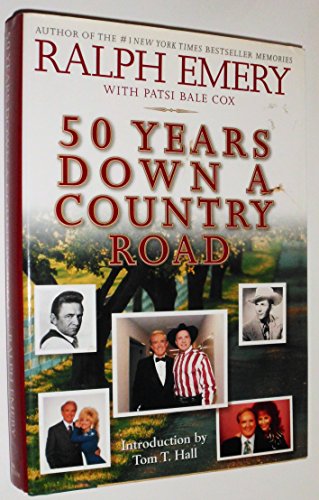
In his three previous bestselling books, Ralph Emerynamed country radio's Greatest Personality of the Century by Radio and Records-regaled readers with fascinating tales of the business. Now, in 50 Years Down a Country Road, stellar figures, including Willie Nelson, Kris Kristofferson, Johnny Cash, Patsy Cline, Tammy Wynette, Tom T Hall, Ronnie Milsap, Reba McEntire, Garth Brooks, Trisha Yearwood, Shania Twain, Faith Hill, and many others, recount the good, bad, and great times of country music during the past five decades.
Ralph Emery begins by delving deep into the roots of country through the reminiscences of such luminaries as Eddy Arnold, Tex Ritter, and Tennessee Ernie Ford. He enters the 1950s by examining how the life and death of Hank Williams forever changed Nashville. This decade also launched such stars as Hank Snow, Marty Robbins, Hank Thompson, Carl Smith, Jim Reeves, and Kitty Wells.
Emery brings back the 1960s -when writerartists such as Willie Nelson, Don Gibson, Roger Miller, and Johnny Cash proved that Nashville was truly Music City USA. He examines the colorful and contradictory Patsy Cline, the most influential woman in country's history. He talks with Bobby Bare, who set the stage for the '70s outlaws by taking control of his recording in the '60s. In the 1970s, Kris Kristofferson came to Nashville and revolutionized songwriting. Tom T Hall's compositions became the standard to which all "three-minute movie" songs would be held. Mel Tillis, Charley Pride, and Ronnie Milsap succeeded despite incredible odds. America fell in love with George Jones and Tammy Wynette and were brokenhearted when they became yet another divorce statistic.
In the 1980s, the pop-country sound rocketed stars such as Anne Murray, Kenny Rogers, and Alabama to the top of the charts. Emery discusses three Of country's biggest female superstars, Dolly Parton, Barbara Mandrell, and Reba McEntire, as well as the traditionalist revival led by George Strait, Ricky Skaggs, and Randy Travis. Finally, he looks back at the past ten years, when phenomenal artists including Garth Brooks, Trisha Year-wood, Shania Twain, and Faith Hill helped sell more records than the country music industry ever dreamed possible.
50 Years Down a Country Road is a must for all country music fans.
Die Inhaltsangabe kann sich auf eine andere Ausgabe dieses Titels beziehen.
Über die Autorinnen und Autoren
Ralph Emery began interviewing country music stars at Nashville's powerhouse radio station WSM, winning Country Disc Jockey of the Year six times. He was the host and producer of The Ralph Emery Show and hosted Nashville Now for ten years. He is the author of the number one New York Times bestseller Memories, as well as More Memories and The View from Nashville. He lives in Nashville, Tennessee.
A former magazine editor, Patsi Bale Cox collaborated on Nickel Dreams, the autobiography of Tanya Tucker, and The View from Nashvilled with Ralph Emery, among other publications. She serves on the Grammy nominating committee in the liner note category. She lives in Nashville, Tennessee.
Von der hinteren Coverseite
In his three previous bestselling books, Ralph Emerynamed country radio's Greatest Personality of the Century by Radio and Records-regaled readers with fascinating tales of the business. Now, in 50 Years Down a Country Road, stellar figures, including Willie Nelson, Kris Kristofferson, Johnny Cash, Patsy Cline, Tammy Wynette, Tom T Hall, Ronnie Milsap, Reba McEntire, Garth Brooks, Trisha Yearwood, Shania Twain, Faith Hill, and many others, recount the good, bad, and great times of country music during the past five decades.
Ralph Emery begins by delving deep into the roots of country through the reminiscences of such luminaries as Eddy Arnold, Tex Ritter, and Tennessee Ernie Ford. He enters the 1950s by examining how the life and death of Hank Williams forever changed Nashville. This decade also launched such stars as Hank Snow, Marty Robbins, Hank Thompson, Carl Smith, Jim Reeves, and Kitty Wells.
Emery brings back the 1960s -when writerartists such as Willie Nelson, Don Gibson, Roger Miller, and Johnny Cash proved that Nashville was truly Music City USA. He examines the colorful and contradictory Patsy Cline, the most influential woman in country's history. He talks with Bobby Bare, who set the stage for the '70s outlaws by taking control of his recording in the '60s. In the 1970s, Kris Kristofferson came to Nashville and revolutionized songwriting. Tom T Hall's compositions became the standard to which all "three-minute movie" songs would be held. Mel Tillis, Charley Pride, and Ronnie Milsap succeeded despite incredible odds. America fell in love with George Jones and Tammy Wynette and were brokenhearted when they became yet another divorce statistic.
In the 1980s, the pop-country sound rocketed stars such as Anne Murray, Kenny Rogers, and Alabama to the top of the charts. Emery discusses three Of country's biggest female superstars, Dolly Parton, Barbara Mandrell, and Reba McEntire, as well as the traditionalist revival led by George Strait, Ricky Skaggs, and Randy Travis. Finally, he looks back at the past ten years, when phenomenal artists including Garth Brooks, Trisha Year-wood, Shania Twain, and Faith Hill helped sell more records than the country music industry ever dreamed possible.
50 Years Down a Country Road is a must for all country music fans.
Auszug. © Genehmigter Nachdruck. Alle Rechte vorbehalten.
50 Years Down a Country Road
By Ralph EmeryWilliam Morrow & Company
Copyright © 2000 Ralph EmeryAll right reserved.
ISBN: 9780688177584
Chapter One
Setting the Stage
I've always wondered if maybe I passed Hank Williams on the street without knowing it. I worked down at Loews Theatre at the intersection of Church Street and Capitol Boulevard when Hank was at the Opry and when Hank and Audrey had a clothing store downtown. During the three years I worked there, I met hundreds of people, thousands of people. I rode the bus back then since I didn't have a car. If you came downtown, you'd probably cross that intersection of Church and Capitol Boulevard, and there in the heart of the city, not far from the Ryman Auditorium, you might pass anyone. Tex Ritter, Ernest Tubb, Red Foley -- and, just maybe, Hank Williams. I did recognize Bashful Brother Oswald downtown one day down around Fifth and Church.
I might not have known who Hank was because I wasn't a big Opry follower in the late 1940s. I wasn't really a fan of anything except boogie-woogie. My grandparents loved the Opry, so I was grounded in it, but I thought there was a sameness to it. You tuned in and heard the same people singing the same songs. It took me a while to really start to love it. But I did.
I started listening to country music and the Grand Ole Opry because of my friend Jim Ralston, who was a big fan of Lazy Jim Day and the Singing News. I lived at 812 Russell Street in East Nashville and I'd go across the street to Jim's house at 817 Russell. Jim had a bedroom down in the basement, and that's where we'd go to play records and sometimes listen to the radio. Every Saturday night we'd listen to the Opry, then tune in to WLAC's late-night boogie and blues show. Gene Nobles would play gut-bucket blues and boogie-woogie. Gene's trademark was when he supposedly poured beer into the microphone. He was sponsored by a beer company, and he'd say, "I'm gonna pour a beer through the mike -- get ya a sponge and mop it up!" Then you'd hear a sound just like liquid being poured into the mike, a kind of fizzing sound. I got to know him after I started in radio and Gene told me he created the sound effect by dropping a seltzer tablet into a glass of water. But I never guessed it when I was listening to him as a kid.
Jim Ralston loved to hear Lazy Jim make up his funny little off-meter songs based on the news. Here's a bit of what a Lazy Jim sketch was like:
"Listen, everybody, here comes the singin' news with a little music to chase away the blues. This news is the truth, every line says I, and I'll betcha thirty cents you can't catch me in a lie. The longest line of the season -- a boy down in Florida went to the woods with his father to help drag up some poles but onecrawled away from the other. He saw a twelve-foot snake, but I couldn't a guessed how long 'cause I wouldn't a even stayed there till the other end come along. But I don't think that'll happen again in months and months and months. No, I don't think that'll happen again in months and months and months and months."
(I think it's safe to say that Lazy Jim never heard of iambic pentameter, but we didn't care. He was funny.)
If I ever heard Hank Williams on the Opry, it would have been because of Lazy Jim. I remember one night while I was working at Loews Theatre, a bunch of us high school boys all got off work around 10:00 P.M. and decided to head over to the Opry. Since we'd come late, it didn't cost anything to get in, and that was probably an inducement for us to stop by. We sat up in the balcony. I don't remember Hank Williams being on the show that night. The person who stood out in my mind was George Morgan, who was wearing a bright checkerboard shirt. Now I treasure memories and stories from those early times.
One of my favorite stories from country music's old days comes from Uncle Art Satherley, the executive who almost single-handedly built Columbia Records into a country powerhouse. It's a story about how one of the biggest records in the industry's history almost didn't get cut. The tale begins at the Adolphus Hotel in Dallas, where Uncle Art was on one of his music-finding jaunts. Into the hotel walked Albert Poindexter, a housepainter from Troup, Texas, who wore chaps, boots, and a ten-gallon hat and thought he could speak in tongues. Art knew Poindexter and had already made a few records with him, none of which caught on. But among Poindexter's new tunes was a lovely song titled "Rosalita," which Art thought had potential. They picked eleven more songs and began recording in Art's hotel room, using Poindexter's band.
One of the compositions was about a woman who walks into a bar and finds her husband in the arms of another woman. Clearly not amused, she pulls a gun and shoots him. Art thought the lyrics were bizarre, but he liked the steady rhythm enough for the tune to make the cut. And it was enough of a contrast to "Rosalita" that Art put it on the B side of the single and sent it to radio in March 1943. Almost no one ever heard "Rosalita" because the minute the deejays listened to "Pistol Packin' Mama," they played it instead, By June it was one of country music's biggest-selling records and the darling of the jukebox crowd. By December it...
Continues...
Excerpted from 50 Years Down a Country Roadby Ralph Emery Copyright © 2000 by Ralph Emery. Excerpted by permission.
All rights reserved. No part of this excerpt may be reproduced or reprinted without permission in writing from the publisher.
Excerpts are provided by Dial-A-Book Inc. solely for the personal use of visitors to this web site.
„Über diesen Titel“ kann sich auf eine andere Ausgabe dieses Titels beziehen.
Suchergebnisse für 50 Years Down a Country Road

Beispielbild für diese ISBN
50 Years Down a Country Road
Verlag:
HarperCollins Publishers, 2000
ISBN 10: 0688177581
ISBN 13: 9780688177584
Gebraucht
Hardcover
Anbieter: World of Books (was SecondSale), Montgomery, IL, USA
Verkäuferbewertung 5 von 5 Sternen

Hardback. Zustand: Fair. In his three previous bestselling books, Ralph Emerynamed country radio's Greatest Personality of the Century by Radio and Records-regaled readers with fascinating tales of the business. Now, in 50 Years Down a Country Road, stellar figures, including Willie Nelson, Kris Kristofferson, Johnny Cash, Patsy Cline, Tammy Wynette, Tom T Hall, Ronnie Milsap, Reba McEntire, Garth Brooks, Trisha Yearwood, Shania Twain, Faith Hill, and many others, recount the good, bad, and great times of country music during the past five decades. Ralph Emery begins by delving deep into the roots of country through the reminiscences of such luminaries as Eddy Arnold, Tex Ritter, and Tennessee Ernie Ford. He enters the 1950s by examining how the life and death of Hank Williams forever changed Nashville. This decade also launched such stars as Hank Snow, Marty Robbins, Hank Thompson, Carl Smith, Jim Reeves, and Kitty Wells. Emery brings back the 1960s -when writerartists such as Willie Nelson, Don Gibson, Roger Miller, and Johnny Cash proved that Nashville was truly Music City USA. He examines the colorful and contradictory Patsy Cline, the most influential woman in country's history. He talks with Bobby Bare, who set the stage for the '70s outlaws by taking control of his recording in the '60s. In the 1970s, Kris Kristofferson came to Nashville and revolutionized songwriting. Tom T Hall's compositions became the standard to which all "three-minute movie" songs would be held. Mel Tillis, Charley Pride, and Ronnie Milsap succeeded despite incredible odds. America fell in love with George Jones and Tammy Wynette and were brokenhearted when they became yet another divorce statistic. In the 1980s, the pop-country sound rocketed stars such as Anne Murray, Kenny Rogers, and Alabama to the top of the charts. Emery discusses three Of country's biggest female superstars, Dolly Parton, Barbara Mandrell, and Reba McEntire, as well as the traditionalist revival led by George Strait, Ricky Skaggs, and Randy Travis. Finally, he looks back at the past ten years, when phenomenal artists including Garth Brooks, Trisha Year-wood, Shania Twain, and Faith Hill helped sell more records than the country music industry ever dreamed possible. 50 Years Down a Country Road is a must for all country music fans. Bestandsnummer des Verkäufers 00110058244
Gebraucht kaufen
EUR 3,81
Versand gratis
Versand innerhalb von USA
Versand innerhalb von USA
Anzahl: 1 verfügbar
Beispielbild für diese ISBN
50 Years Down a Country Road
Verlag:
HarperCollins Publishers, 2000
ISBN 10: 0688177581
ISBN 13: 9780688177584
Gebraucht
Hardcover
Anbieter: World of Books (was SecondSale), Montgomery, IL, USA
Verkäuferbewertung 5 von 5 Sternen
Hardback. Zustand: Good. In his three previous bestselling books, Ralph Emerynamed country radio's Greatest Personality of the Century by Radio and Records-regaled readers with fascinating tales of the business. Now, in 50 Years Down a Country Road, stellar figures, including Willie Nelson, Kris Kristofferson, Johnny Cash, Patsy Cline, Tammy Wynette, Tom T Hall, Ronnie Milsap, Reba McEntire, Garth Brooks, Trisha Yearwood, Shania Twain, Faith Hill, and many others, recount the good, bad, and great times of country music during the past five decades. Ralph Emery begins by delving deep into the roots of country through the reminiscences of such luminaries as Eddy Arnold, Tex Ritter, and Tennessee Ernie Ford. He enters the 1950s by examining how the life and death of Hank Williams forever changed Nashville. This decade also launched such stars as Hank Snow, Marty Robbins, Hank Thompson, Carl Smith, Jim Reeves, and Kitty Wells. Emery brings back the 1960s -when writerartists such as Willie Nelson, Don Gibson, Roger Miller, and Johnny Cash proved that Nashville was truly Music City USA. He examines the colorful and contradictory Patsy Cline, the most influential woman in country's history. He talks with Bobby Bare, who set the stage for the '70s outlaws by taking control of his recording in the '60s. In the 1970s, Kris Kristofferson came to Nashville and revolutionized songwriting. Tom T Hall's compositions became the standard to which all "three-minute movie" songs would be held. Mel Tillis, Charley Pride, and Ronnie Milsap succeeded despite incredible odds. America fell in love with George Jones and Tammy Wynette and were brokenhearted when they became yet another divorce statistic. In the 1980s, the pop-country sound rocketed stars such as Anne Murray, Kenny Rogers, and Alabama to the top of the charts. Emery discusses three Of country's biggest female superstars, Dolly Parton, Barbara Mandrell, and Reba McEntire, as well as the traditionalist revival led by George Strait, Ricky Skaggs, and Randy Travis. Finally, he looks back at the past ten years, when phenomenal artists including Garth Brooks, Trisha Year-wood, Shania Twain, and Faith Hill helped sell more records than the country music industry ever dreamed possible. 50 Years Down a Country Road is a must for all country music fans. Bestandsnummer des Verkäufers 00101061349
Gebraucht kaufen
EUR 3,81
Versand gratis
Versand innerhalb von USA
Versand innerhalb von USA
Anzahl: 4 verfügbar
Beispielbild für diese ISBN
50 Years Down a Country Road
Verlag:
William Morrow (edition ), 2000
ISBN 10: 0688177581
ISBN 13: 9780688177584
Gebraucht
Hardcover
Anbieter: BooksRun, Philadelphia, PA, USA
Verkäuferbewertung 5 von 5 Sternen
Hardcover. Zustand: Very Good. It's a well-cared-for item that has seen limited use. The item may show minor signs of wear. All the text is legible, with all pages included. It may have slight markings and/or highlighting. Bestandsnummer des Verkäufers 0688177581-11-1
Gebraucht kaufen
EUR 3,82
Versand gratis
Versand innerhalb von USA
Versand innerhalb von USA
Anzahl: 2 verfügbar
Foto des Verkäufers
50 Years Down a Country Road
Anbieter: Greenworld Books, Arlington, TX, USA
Verkäuferbewertung 5 von 5 Sternen
Zustand: good. Fast Free Shipping â" Good condition. It may show normal signs of use, such as light writing, highlighting, or library markings, but all pages are intact and the book is fully readable. A solid, complete copy that's ready to enjoy. Bestandsnummer des Verkäufers GWV.0688177581.G
Gebraucht kaufen
EUR 4,90
Versand gratis
Versand innerhalb von USA
Versand innerhalb von USA
Anzahl: 2 verfügbar
Foto des Verkäufers
50 Years Down a Country Road
Anbieter: Greenworld Books, Arlington, TX, USA
Verkäuferbewertung 5 von 5 Sternen
Zustand: very_good. Fast Free Shipping â" Very Good condition book with a firm cover and clean pages. Shows normal use and some light wear or limited notes markings. A solid, nice copy to enjoy. Bestandsnummer des Verkäufers GWV.0688177581.VG
Gebraucht kaufen
EUR 4,90
Versand gratis
Versand innerhalb von USA
Versand innerhalb von USA
Anzahl: 1 verfügbar
Beispielbild für diese ISBN
50 Years Down a Country Road
Anbieter: Once Upon A Time Books, Siloam Springs, AR, USA
Verkäuferbewertung 4 von 5 Sternen

Hardcover. Zustand: Very Good. Bestandsnummer des Verkäufers mon0003541826
Gebraucht kaufen
EUR 1,95
EUR 3,54 Versand
Versand innerhalb von USA
Versand innerhalb von USA
Anzahl: 1 verfügbar
Beispielbild für diese ISBN
50 Years Down a Country Road
Verlag:
HarperCollins Publishers, 2000
ISBN 10: 0688177581
ISBN 13: 9780688177584
Gebraucht
Hardcover
Anbieter: World of Books Inc, Montgomery, IL, USA
Verkäuferbewertung 4 von 5 Sternen
Hardback. Zustand: Good. In his three previous bestselling books, Ralph Emerynamed country radio's Greatest Personality of the Century by Radio and Records-regaled readers with fascinating tales of the business. Now, in 50 Years Down a Country Road, stellar figures, including Willie Nelson, Kris Kristofferson, Johnny Cash, Patsy Cline, Tammy Wynette, Tom T Hall, Ronnie Milsap, Reba McEntire, Garth Brooks, Trisha Yearwood, Shania Twain, Faith Hill, and many others, recount the good, bad, and great times of country music during the past five decades. Ralph Emery begins by delving deep into the roots of country through the reminiscences of such luminaries as Eddy Arnold, Tex Ritter, and Tennessee Ernie Ford. He enters the 1950s by examining how the life and death of Hank Williams forever changed Nashville. This decade also launched such stars as Hank Snow, Marty Robbins, Hank Thompson, Carl Smith, Jim Reeves, and Kitty Wells. Emery brings back the 1960s -when writerartists such as Willie Nelson, Don Gibson, Roger Miller, and Johnny Cash proved that Nashville was truly Music City USA. He examines the colorful and contradictory Patsy Cline, the most influential woman in country's history. He talks with Bobby Bare, who set the stage for the '70s outlaws by taking control of his recording in the '60s. In the 1970s, Kris Kristofferson came to Nashville and revolutionized songwriting. Tom T Hall's compositions became the standard to which all "three-minute movie" songs would be held. Mel Tillis, Charley Pride, and Ronnie Milsap succeeded despite incredible odds. America fell in love with George Jones and Tammy Wynette and were brokenhearted when they became yet another divorce statistic. In the 1980s, the pop-country sound rocketed stars such as Anne Murray, Kenny Rogers, and Alabama to the top of the charts. Emery discusses three Of country's biggest female superstars, Dolly Parton, Barbara Mandrell, and Reba McEntire, as well as the traditionalist revival led by George Strait, Ricky Skaggs, and Randy Travis. Finally, he looks back at the past ten years, when phenomenal artists including Garth Brooks, Trisha Year-wood, Shania Twain, and Faith Hill helped sell more records than the country music industry ever dreamed possible. 50 Years Down a Country Road is a must for all country music fans. Bestandsnummer des Verkäufers CIN0688177581G
Gebraucht kaufen
EUR 5,66
Versand gratis
Versand innerhalb von USA
Versand innerhalb von USA
Anzahl: 4 verfügbar
Beispielbild für diese ISBN
50 Years Down a Country Road
Verlag:
HarperCollins Publishers, 2000
ISBN 10: 0688177581
ISBN 13: 9780688177584
Gebraucht
Hardcover
Anbieter: World of Books Inc, Montgomery, IL, USA
Verkäuferbewertung 4 von 5 Sternen
Hardback. Zustand: Fair. In his three previous bestselling books, Ralph Emerynamed country radio's Greatest Personality of the Century by Radio and Records-regaled readers with fascinating tales of the business. Now, in 50 Years Down a Country Road, stellar figures, including Willie Nelson, Kris Kristofferson, Johnny Cash, Patsy Cline, Tammy Wynette, Tom T Hall, Ronnie Milsap, Reba McEntire, Garth Brooks, Trisha Yearwood, Shania Twain, Faith Hill, and many others, recount the good, bad, and great times of country music during the past five decades. Ralph Emery begins by delving deep into the roots of country through the reminiscences of such luminaries as Eddy Arnold, Tex Ritter, and Tennessee Ernie Ford. He enters the 1950s by examining how the life and death of Hank Williams forever changed Nashville. This decade also launched such stars as Hank Snow, Marty Robbins, Hank Thompson, Carl Smith, Jim Reeves, and Kitty Wells. Emery brings back the 1960s -when writerartists such as Willie Nelson, Don Gibson, Roger Miller, and Johnny Cash proved that Nashville was truly Music City USA. He examines the colorful and contradictory Patsy Cline, the most influential woman in country's history. He talks with Bobby Bare, who set the stage for the '70s outlaws by taking control of his recording in the '60s. In the 1970s, Kris Kristofferson came to Nashville and revolutionized songwriting. Tom T Hall's compositions became the standard to which all "three-minute movie" songs would be held. Mel Tillis, Charley Pride, and Ronnie Milsap succeeded despite incredible odds. America fell in love with George Jones and Tammy Wynette and were brokenhearted when they became yet another divorce statistic. In the 1980s, the pop-country sound rocketed stars such as Anne Murray, Kenny Rogers, and Alabama to the top of the charts. Emery discusses three Of country's biggest female superstars, Dolly Parton, Barbara Mandrell, and Reba McEntire, as well as the traditionalist revival led by George Strait, Ricky Skaggs, and Randy Travis. Finally, he looks back at the past ten years, when phenomenal artists including Garth Brooks, Trisha Year-wood, Shania Twain, and Faith Hill helped sell more records than the country music industry ever dreamed possible. 50 Years Down a Country Road is a must for all country music fans. Bestandsnummer des Verkäufers CIN0688177581A
Gebraucht kaufen
EUR 5,66
Versand gratis
Versand innerhalb von USA
Versand innerhalb von USA
Anzahl: 1 verfügbar
Beispielbild für diese ISBN
50 Years Down a Country Road
Anbieter: Book Gurus, Tallahassee, FL, USA
Verkäuferbewertung 5 von 5 Sternen
hardcover. Zustand: Good. Bestandsnummer des Verkäufers 01KY3JJR73Z84N6
Gebraucht kaufen
EUR 3,25
EUR 2,68 Versand
Versand innerhalb von USA
Versand innerhalb von USA
Anzahl: 1 verfügbar
Beispielbild für diese ISBN
50 Years Down a Country Road
Anbieter: Duru Media, Tallahassee, FL, USA
Verkäuferbewertung 5 von 5 Sternen
hardcover. Zustand: Very Good. Bestandsnummer des Verkäufers 01KX47YCF804T5B
Gebraucht kaufen
EUR 3,25
EUR 2,68 Versand
Versand innerhalb von USA
Versand innerhalb von USA
Anzahl: 1 verfügbar