
Verwandte Artikel zu Poverty Knowledge: Social Science, Social Policy, and...
Poverty Knowledge: Social Science, Social Policy, and the Poor in Twentieth-Century U.S. History (Politics and Society in Twentieth-Century America) - Hardcover
Buch 56 von 64: Politics and Society in Modern America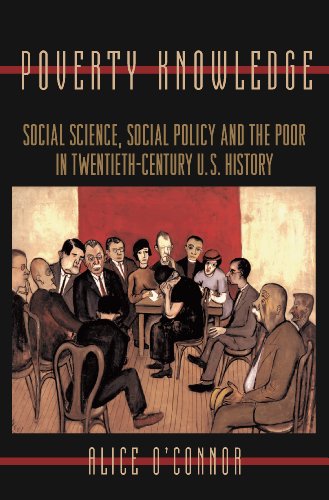
Inhaltsangabe
Progressive-era "poverty warriors" cast poverty in America as a problem of unemployment, low wages, labor exploitation, and political disfranchisement. In the 1990s, policy specialists made "dependency" the issue and crafted incentives to get people off welfare. Poverty Knowledge gives the first comprehensive historical account of the thinking behind these very different views of "the poverty problem," in a century-spanning inquiry into the politics, institutions, ideologies, and social science that shaped poverty research and policy.
Alice O'Connor chronicles a transformation in the study of poverty, from a reform-minded inquiry into the political economy of industrial capitalism to a detached, highly technical analysis of the demographic and behavioral characteristics of the poor. Along the way, she uncovers the origins of several controversial concepts, including the "culture of poverty" and the "underclass." She shows how such notions emerged not only from trends within the social sciences, but from the central preoccupations of twentieth-century American liberalism: economic growth, the Cold War against communism, the changing fortunes of the welfare state, and the enduring racial divide.
The book details important changes in the politics and organization as well as the substance of poverty knowledge. Tracing the genesis of a still-thriving poverty research industry from its roots in the War on Poverty, it demonstrates how research agendas were subsequently influenced by an emerging obsession with welfare reform. Over the course of the twentieth century, O'Connor shows, the study of poverty became more about altering individual behavior and less about addressing structural inequality. The consequences of this steady narrowing of focus came to the fore in the 1990s, when the nation's leading poverty experts helped to end "welfare as we know it." O'Connor shows just how far they had traveled from their field's original aims.
Die Inhaltsangabe kann sich auf eine andere Ausgabe dieses Titels beziehen.
Über die Autorin bzw. den Autor
Alice O'Connor was formerly the Assistant Director of the Project on Social Welfare and the American Future at the Ford Foundation, the Director for the Programs on Persistent Urban Poverty and International Migration at the Social Science Research Council, a National Science Foundation Postdoctoral Fellow at the University of Chicago, and a Visiting Scholar at the Russell Sage Foundation. She is currently Associate Professor of History at the University of California, Santa Barbara.
Von der hinteren Coverseite
"Poverty Knowledge is the most important analysis of the evolution of poverty knowledge ever published. Alice O'Connor's book is must reading for those who seek a comprehensive understanding of past and current social science writings on American poverty. Moreover, it provides a new vision that inextricably links the study of poverty to the broader study of political economy. This book will be discussed and debated for many years."--William Julius Wilson, Harvard University
"In this strongly argued, deeply researched, and very well-written book, Alice O'Connor lays bare the narrowness of social 'science' concerning poverty in American life since the progressive era. Neither liberals nor conservatives escape her informed, tough-minded critique."--James T. Patterson, Brown University
"There is nothing like this superb history and assessment of systematic social science concerned with poverty. Written by a historian with uncommon vantages on policy ideas, the book powerfully situates what, and how, we know within the dynamics of ideology, power, and interest that have characterized twentieth-century American liberalism. Richly researched and arrestingly composed, it informs policy history as well as options for the future."--Ira Katznelson, Columbia Univeristy
"Poverty Knowledge is an insightful and incisive account of poverty research since the nineteenth century. Alice O'Connor's disgust with the use of research to stigmatize the poor comes through powerfully and clearly. Critical history at its best, the book should also be read by sociologists, anthropologists, political scientists, economists, and welfare and antipoverty researchers--as well as teachers in these fields."--Herbert J. Gans, Columbia University
"Alice O'Connor knows more about the social science literature on poverty than any other historian in America. No one has put the whole story together as she has. Her conclusions emerge as nuanced, sophisticated, and sound. Her book is also written with exceptional clarity and grace. It will supercede all other histories of poverty knowledge in the United States that deal with the twentieth century."--Michael Katz, University of Pennsylvania
Aus dem Klappentext
"Poverty Knowledge is the most important analysis of the evolution of poverty knowledge ever published. Alice O'Connor's book is must reading for those who seek a comprehensive understanding of past and current social science writings on American poverty. Moreover, it provides a new vision that inextricably links the study of poverty to the broader study of political economy. This book will be discussed and debated for many years."--William Julius Wilson, Harvard University
"In this strongly argued, deeply researched, and very well-written book, Alice O'Connor lays bare the narrowness of social 'science' concerning poverty in American life since the progressive era. Neither liberals nor conservatives escape her informed, tough-minded critique."--James T. Patterson, Brown University
"There is nothing like this superb history and assessment of systematic social science concerned with poverty. Written by a historian with uncommon vantages on policy ideas, the book powerfully situates what, and how, we know within the dynamics of ideology, power, and interest that have characterized twentieth-century American liberalism. Richly researched and arrestingly composed, it informs policy history as well as options for the future."--Ira Katznelson, Columbia Univeristy
"Poverty Knowledge is an insightful and incisive account of poverty research since the nineteenth century. Alice O'Connor's disgust with the use of research to stigmatize the poor comes through powerfully and clearly. Critical history at its best, the book should also be read by sociologists, anthropologists, political scientists, economists, and welfare and antipoverty researchers--as well as teachers in these fields."--Herbert J. Gans, Columbia University
"Alice O'Connor knows more about the social science literature on poverty than any other historian in America. No one has put the whole story together as she has. Her conclusions emerge as nuanced, sophisticated, and sound. Her book is also written with exceptional clarity and grace. It will supercede all other histories of poverty knowledge in the United States that deal with the twentieth century."--Michael Katz, University of Pennsylvania
„Über diesen Titel“ kann sich auf eine andere Ausgabe dieses Titels beziehen.
Suchergebnisse für Poverty Knowledge: Social Science, Social Policy, and...

Beispielbild für diese ISBN
Poverty Knowledge: Social Science, Social Policy, and the Poor in Twentieth-Century U.S. History (Politics and Society in Modern America, 59)
Verlag:
Princeton University Press, 2001
ISBN 10: 0691009171
ISBN 13: 9780691009179
Gebraucht
Hardcover
Anbieter: More Than Words, Waltham, MA, USA
Verkäuferbewertung 5 von 5 Sternen

Zustand: Good. . . All orders guaranteed and ship within 24 hours. Before placing your order for please contact us for confirmation on the book's binding. Check out our other listings to add to your order for discounted shipping. Bestandsnummer des Verkäufers WAL-O-1d-02275
Gebraucht kaufen
EUR 3,44
EUR 3,56 Versand
Versand innerhalb von USA
Versand innerhalb von USA
Anzahl: 1 verfügbar
Foto des Verkäufers
Poverty Knowledge: Social Science, Social Policy, and the Poor in Twentieth-Century U.S. History (Politics and Society in Modern America)
Verlag:
Princeton University Press, 2001
ISBN 10: 0691009171
ISBN 13: 9780691009179
Gebraucht
Hardcover
Anbieter: Greenworld Books, Arlington, TX, USA
Verkäuferbewertung 5 von 5 Sternen
Zustand: like_new. Fast Free Shipping â" Excellent condition book with clean cover and pages. Barely handled, with minimal wear. An outstanding copy, close to enjoy! Bestandsnummer des Verkäufers GWV.0691009171.LN
Gebraucht kaufen
EUR 7,78
Versand gratis
Versand innerhalb von USA
Versand innerhalb von USA
Anzahl: 1 verfügbar
Beispielbild für diese ISBN
Poverty Knowledge : Social Science, Social Policy, and the Poor in Twentieth-Century U. S. History
Verlag:
Princeton University Press, 2001
ISBN 10: 0691009171
ISBN 13: 9780691009179
Gebraucht
Hardcover
Anbieter: Better World Books, Mishawaka, IN, USA
Verkäuferbewertung 5 von 5 Sternen
Zustand: Good. Former library copy. Pages intact with minimal writing/highlighting. The binding may be loose and creased. Dust jackets/supplements are not included. Includes library markings. Stock photo provided. Product includes identifying sticker. Better World Books: Buy Books. Do Good. Bestandsnummer des Verkäufers 8385088-6
Gebraucht kaufen
EUR 10,66
Versand gratis
Versand innerhalb von USA
Versand innerhalb von USA
Anzahl: 2 verfügbar
Beispielbild für diese ISBN
Poverty Knowledge: Social Science, Social Policy, and the Poor in Twentieth-Century U.S. History (Politics and Society in Modern America)
Anbieter: GoldBooks, Denver, CO, USA
Verkäuferbewertung 5 von 5 Sternen
Hardcover. Zustand: new. New Copy. Customer Service Guaranteed. Bestandsnummer des Verkäufers 3Y34_35_0691009171
Neu kaufen
EUR 67,27
EUR 4,91 Versand
Versand innerhalb von USA
Versand innerhalb von USA
Anzahl: 1 verfügbar
Beispielbild für diese ISBN
Poverty Knowledge: Social Science, Social Policy, and the Poor in Twentieth-Century U.S. History (Politics and Society in Modern America (59))
Verlag:
Princeton University Press, 2001
ISBN 10: 0691009171
ISBN 13: 9780691009179
Gebraucht
Hardcover
Anbieter: Mispah books, Redhill, SURRE, Vereinigtes Königreich
Verkäuferbewertung 4 von 5 Sternen

Hardcover. Zustand: Very Good. Very Good .Ships From Multiple Locations. book. Bestandsnummer des Verkäufers ERICA79106910091713
Gebraucht kaufen
EUR 185,02
EUR 29,54 Versand
Versand von Vereinigtes Königreich nach USA
Versand von Vereinigtes Königreich nach USA
Anzahl: 1 verfügbar