
Verwandte Artikel zu The International Human Rights Movement: A History...
The International Human Rights Movement: A History (Human Rights and Crimes Against Humanity) - Hardcover
Buch 10 von 17: Human Rights and Crimes against Humanity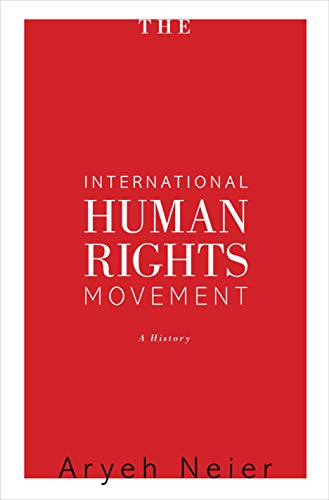
Inhaltsangabe
During the past several decades, the international human rights movement has had a crucial hand in the struggle against totalitarian regimes, cruelties in wars, and crimes against humanity. Today, it grapples with the war against terror and subsequent abuses of government power. In The International Human Rights Movement, Aryeh Neier--a leading figure and a founder of the contemporary movement--offers a comprehensive and authoritative account of this global force, from its beginnings in the seventeenth and eighteenth centuries to its essential place in world affairs today. Neier combines analysis with personal experience, and gives a unique insider's perspective on the movement's goals, the disputes about its mission, and its rise to international importance.
Die Inhaltsangabe kann sich auf eine andere Ausgabe dieses Titels beziehen.
Über die Autorin bzw. den Autor
<b>Aryeh Neier</b> is president emeritus of the Open Society Foundations and distinguished visiting professor at the Paris School of International Affairs of Sciences Po. Previously he was executive director of Human Rights Watch and executive director of the American Civil Liberties Union. A contributor to many major publications, he is the author of <i>Taking Liberties and War Crimes</i>, among other books.
Von der hinteren Coverseite
"Aryeh Neier's insightful account of the human rights movement underlines the crucial role played by individuals and human rights defenders in speaking out against abuses. This book describes many of the human rights challenges that remain and is essential reading for all those wishing to understand the political challenges of our times."--Kofi Annan, former secretary-general of the United Nations (1997--2006)
"Human rights has become a global movement. Aryeh Neier was present at the creation of it, so nobody is better qualified to tell the story of its ongoing and epochal fight against brutality and injustice. We can all be grateful for Neier's life of activism and we can be thankful he has reflected on it with such insight."--Michael Ignatieff, University of Toronto and former leader of the Liberal Party of Canada
"Aryeh Neier has done more than anyone else to shape the values and practices of the modern human rights movement. His decades of experience give him a unique perspective to describe the key events and decisions that shaped the movement, to detail its major successes, and to outline the steps that must now be taken to meet the challenges ahead."--Kenneth Roth, executive director, Human Rights Watch
"With the intimate knowledge--and authority--of one who has been at the center of the international human rights movement for more than three decades, Aryeh Neier captures the movement's uneven but steady rise to the top of the agenda of the world community. The significant transformations chronicled here, and the struggles of the brave men and women around the world that made these changes possible, form a road map for the enormous challenges that still lie ahead."--Juan E. Mendez, UN special rapporteur on torture and coauthor of Taking a Stand: The Evolution of Human Rights
"This is a valuable, lucid, and timely account of the international human rights movement. Neier has the unique authority to guide the public's understanding of this complex landscape, and his book is full of information, vision, and wisdom."--Andrew J. Nathan, Columbia University
Auszug. © Genehmigter Nachdruck. Alle Rechte vorbehalten.
THE INTERNATIONAL HUMAN RIGHTS MOVEMENT
A HistoryBy Aryeh NeierPRINCETON UNIVERSITY PRESS
Copyright © 2012 Princeton University PressAll right reserved.
ISBN: 978-0-691-13515-1
Contents
Acknowledgments.......................................................vii1 The Movement........................................................12 Putting Natural Law Principles into Practice........................263 What Are Rights?....................................................574 International human Rights Law......................................935 International humanitarian Law......................................1176 Defying Communism...................................................1387 Rights on the Other Side of the Cold War Divide.....................1618 Amnesty International...............................................1869 human Rights Watch..................................................20410 The Worldwide Movement.............................................23311 Accountability.....................................................25812 Rights after 9/11..................................................28513 Going Forward......................................................318Notes.................................................................335Index.................................................................359
Chapter One
The MovementAS OF SEPTEMBER 29, 2011
On the morning of July 15, 2009, Natalya Estemirova, a 50-year-old researcher for the Russian human rights organization memorial and former history teacher who had systematically reported on torture, disappearances, and murders in her native Chechnya for nearly two decades, was abducted as she left her home in Grozny and forced into a car. Her bullet-riddled body was found later by the side of a road. She had become a victim of just the kind of crime that she had so often documented.
For a brief period, the murder of Estemirova was an important news item worldwide. Few outside Russia had even known her name, but a great many now recognized that her death would have serious consequences. Chechnya has a well-earned reputation as a very dangerous place. An unusually large number of journalists, humanitarian workers, and human rights researchers have lost their lives there in the past two decades. members of professions used to working in some of the world's most dangerous places have learned to avoid Chechnya. Memorial's researchers, led by Estemirova, were virtually alone by the time of her murder in keeping the world informed about the ongoing violent abuses of human rights in the territory. Would even memorial be able to sustain that reporting after her death? "A question hangs over her execution, the most recent in a series of killings of those still willing to chronicle Chechnya's horrors," wrote a New York Times reporter, who described her as "both a trusted source and friend." Is the accounting of the human toll now over? "Without her, will Chechnya become, like Uzbekistan and Turkmenistan, a place where no one risks asking hard questions openly?"
Though the murder of Natalya Estemirova soon disappeared from news accounts, overtaken by other outrages, among those who paid particular attention to her death and remembered it were thousands of men and women in all parts of the world who do similar work in their own communities. Though only a relatively small number investigate human rights abuses in places as dangerous as Chechnya, a significant number take the risk that they may suffer some form of reprisal: a threat, harassment by officials, a libel suit, an arrest, an assault, or perhaps an attack on a parent or a child. murder is unusual—though there are a number of cases every year—because it focuses more attention on those intent on silencing their critics. Yet everyone taking on responsibilities like those of Estemirova is aware that it is a possibility.
The international human right movement is made up of men and women who gather information on rights abuses, lawyers and others who advocate for the protection of rights, medical personnel who specialize in the treatment and care of victims, and the much larger number of persons who support these efforts financially and, often, by such means as circulating human rights information, writing letters, taking part in demonstrations, and forming, joining, and managing rights organizations. They are united by their commitment to promote fundamental human rights for all, everywhere. In the period since the end of World War II those rights have been recognized in such international agreements as the Charter of the United Nations, the Universal Declaration of Human rights, and in a host of global and regional treaties. There is widespread agreement among those who identify themselves with the international human rights movement that the fundamental rights to which they are committed include a prohibition on the arbitrary or invidious deprivation of life or liberty; a prohibition on state interference with the right of all to express themselves freely and peaceably by speech, publication, assembly, or worship; the right of all to equal treatment and equal opportunity regardless of race, ethnicity, nationality, religion, or gender; and a prohibition on such cruelties as torture.
Though identifying with the international human rights movement, many of its adherents may know little or nothing about those promoting the same cause in distant places or even in parts of the world that are relatively close at hand. Even so, a large number recognize that they are part of a struggle that is underway in many places and draw strength from their awareness that they are participants in a movement that does not have boundaries, that is likely to endure, and that values their contributions.
The foremost means of advancing the cause of the international human rights movement that has emerged in the last few decades is the gathering and dissemination of detailed and reliable information on violations of human rights wherever they may occur, including in such places as Chechnya. Information is the lifeblood of the movement. Without knowing her, others in the human rights movement in places remote from Chechnya counted on Estemirova. In turn, she counted on them. Despite the danger, she did what she did every day out of a sense of responsibility to the victims of the crimes she documented; to others in Chechnya, who were the families, friends, and fellow citizens of the victims; to her colleagues in memorial, who looked to her for information on one of the most dangerous places in Russia; and to her counterparts in the human rights movement worldwide, whose strength as a movement depends on the courage of those like Natalya Estemirova who risk their lives carrying out their self-imposed duties.
The emergence of the international human rights movement as a force in world affairs starting in the late 1970s is not attributable to a single cause. A confluence of unrelated events in different parts of the world that took on added significance because of the Cold War helped to inspire many people to commit themselves to organized efforts to advance the cause. Among those events were the military coup in Chile on September 11, 1973, led by General Augusto Pinochet, and subsequent international outrage at the cruelties committed by the Chilean armed forces under his leadership and at the role of president Richard Nixon and his secretary of state, Henry Kissinger, in supporting the Pinochet coup; the forced resignation of president Nixon from the most powerful post in the world in...
„Über diesen Titel“ kann sich auf eine andere Ausgabe dieses Titels beziehen.
Suchergebnisse für The International Human Rights Movement: A History...

Beispielbild für diese ISBN
The International Human Rights Movement: A History
Verlag:
Princeton University Press, 2012
ISBN 10: 0691135150
ISBN 13: 9780691135151
Gebraucht
Hardcover
Anbieter: World of Books (was SecondSale), Montgomery, IL, USA
Verkäuferbewertung 5 von 5 Sternen

Hardback. Zustand: Good. During the past several decades, the international human rights movement has had a crucial hand in the struggle against totalitarian regimes, cruelties in wars, and crimes against humanity. Today, it grapples with the war against terror and subsequent abuses of government power. In The International Human Rights Movement, Aryeh Neier--a leading figure and a founder of the contemporary movement--offers a comprehensive and authoritative account of this global force, from its beginnings in the seventeenth and eighteenth centuries to its essential place in world affairs today. Neier combines analysis with personal experience, and gives a unique insider's perspective on the movement's goals, the disputes about its mission, and its rise to international importance.Discussing the movement's origins, Neier looks at the dissenters who fought for religious freedoms in seventeenth-century England and the abolitionists who opposed slavery before the Civil War era. He pays special attention to the period from the 1970s onward, and he describes the growth of the human rights movement after the Helsinki Accords, the roles played by American presidential administrations, and the astonishing Arab revolutions of 2011. Neier argues that the contemporary human rights movement was, to a large extent, an outgrowth of the Cold War, and he demonstrates how it became the driving influence in international law, institutions, and rights. Throughout, Neier highlights key figures, controversies, and organizations, including Amnesty International and Human Rights Watch, and he considers the challenges to come.Illuminating and insightful, The International Human Rights Movement is a remarkable account of a significant world movement, told by a key figure in its evolution. Bestandsnummer des Verkäufers 00110346455
Gebraucht kaufen
EUR 8,11
Versand gratis
Versand innerhalb von USA
Versand innerhalb von USA
Anzahl: 1 verfügbar
Beispielbild für diese ISBN
The International Human Rights Movement : A History
Verlag:
Oxford University Press, Incorporated, 2012
ISBN 10: 0691135150
ISBN 13: 9780691135151
Gebraucht
Hardcover
Anbieter: Better World Books, Mishawaka, IN, USA
Verkäuferbewertung 5 von 5 Sternen
Zustand: Good. Former library copy. Pages intact with minimal writing/highlighting. The binding may be loose and creased. Dust jackets/supplements are not included. Includes library markings. Stock photo provided. Product includes identifying sticker. Better World Books: Buy Books. Do Good. Bestandsnummer des Verkäufers 6072593-6
Gebraucht kaufen
EUR 8,11
Versand gratis
Versand innerhalb von USA
Versand innerhalb von USA
Anzahl: 1 verfügbar
Beispielbild für diese ISBN
The International Human Rights Movement : A History
Verlag:
Oxford University Press, Incorporated, 2012
ISBN 10: 0691135150
ISBN 13: 9780691135151
Gebraucht
Hardcover
Anbieter: Better World Books, Mishawaka, IN, USA
Verkäuferbewertung 5 von 5 Sternen
Zustand: Very Good. Former library copy. Pages intact with possible writing/highlighting. Binding strong with minor wear. Dust jackets/supplements may not be included. Includes library markings. Stock photo provided. Product includes identifying sticker. Better World Books: Buy Books. Do Good. Bestandsnummer des Verkäufers 8513013-6
Gebraucht kaufen
EUR 8,11
Versand gratis
Versand innerhalb von USA
Versand innerhalb von USA
Anzahl: 1 verfügbar
Foto des Verkäufers
The International Human Rights Movement: A History (Human Rights and Crimes against Humanity)
Verlag:
Oxford University Press, 2012
ISBN 10: 0691135150
ISBN 13: 9780691135151
Gebraucht
Hardcover
Anbieter: Blue Vase Books, Interlochen, MI, USA
Verkäuferbewertung 5 von 5 Sternen
Zustand: acceptable. The item is very worn but is perfectly usable. Signs of wear can include aesthetic issues such as scratches, dents, worn and creased covers, folded page corners and minor liquid stains. All pages and the cover are intact, but the dust cover may be missing. Pages may include moderate to heavy amount of notes and highlighting, but the text is not obscured or unreadable. Page edges may have foxing age related spots and browning . May NOT include discs, access code or other supplemental materials. Bestandsnummer des Verkäufers BVV.0691135150.A
Gebraucht kaufen
EUR 11,73
Versand gratis
Versand innerhalb von USA
Versand innerhalb von USA
Anzahl: 1 verfügbar
Beispielbild für diese ISBN
The International Human Rights Movement: A History (Human Rights and Crimes against Humanity)
Verlag:
Oxford University Press, 2012
ISBN 10: 0691135150
ISBN 13: 9780691135151
Gebraucht
Hardcover
Anbieter: HPB-Movies, Dallas, TX, USA
Verkäuferbewertung 4 von 5 Sternen

hardcover. Zustand: Very Good. Connecting readers with great books since 1972! Used books may not include companion materials, and may have some shelf wear or limited writing. We ship orders daily and Customer Service is our top priority! Bestandsnummer des Verkäufers S_475659015
Gebraucht kaufen
EUR 10,29
EUR 3,33 Versand
Versand innerhalb von USA
Versand innerhalb von USA
Anzahl: 1 verfügbar
Beispielbild für diese ISBN
The International Human Rights Movement A History
Verlag:
Princeton University Press, 2012
ISBN 10: 0691135150
ISBN 13: 9780691135151
Gebraucht
Hardcover
Signiert
Anbieter: True Oak Books, Highland, NY, USA
Verkäuferbewertung 5 von 5 Sternen
Hardcover. Zustand: Very Good. Zustand des Schutzumschlags: Very Good. Human Rights And Crimes Against Humanity; Signed by Author; - Brief dedication on first page. Signed by author! - Great overall condition. Minor cosmetic wear. No major blemishes. No writing.; - We offer free returns for any reason and respond promptly to all inquiries. Your order will be packaged with care and ship on the same or next business day. Buy with confidence. Bestandsnummer des Verkäufers TOB196-21715-A-1.52
Gebraucht kaufen
EUR 18,30
Versand gratis
Versand innerhalb von USA
Versand innerhalb von USA
Anzahl: 1 verfügbar
Foto des Verkäufers
The International Human Rights Movement: A History (Human Rights and Crimes Against Humanity)
Verlag:
Princeton University Press, 2012
ISBN 10: 0691135150
ISBN 13: 9780691135151
Gebraucht
Hardcover
Anbieter: WeBuyBooks, Rossendale, LANCS, Vereinigtes Königreich
Verkäuferbewertung 5 von 5 Sternen
hardcover. Zustand: Like New. Most items will be dispatched the same or the next working day. An apparently unread copy in perfect condition. Dust cover is intact with no nicks or tears. Spine has no signs of creasing. Pages are clean and not marred by notes or folds of any kind. Bestandsnummer des Verkäufers rev6769036169
Gebraucht kaufen
EUR 19,86
EUR 9,21 Versand
Versand von Vereinigtes Königreich nach USA
Versand von Vereinigtes Königreich nach USA
Anzahl: 1 verfügbar
Beispielbild für diese ISBN
The International Human Rights Movement: A History
Verlag:
Princeton University Press, 2012
ISBN 10: 0691135150
ISBN 13: 9780691135151
Gebraucht
Hardcover
Anbieter: Anybook.com, Lincoln, Vereinigtes Königreich
Verkäuferbewertung 5 von 5 Sternen
Zustand: Good. This is an ex-library book and may have the usual library/used-book markings inside.This book has hardback covers. In good all round condition. Dust jacket in good condition. Library sticker on front cover. Please note the Image in this listing is a stock photo and may not match the covers of the actual item,800grams, ISBN:9780691135151. Bestandsnummer des Verkäufers 7863918
Gebraucht kaufen
EUR 14,52
EUR 15,34 Versand
Versand von Vereinigtes Königreich nach USA
Versand von Vereinigtes Königreich nach USA
Anzahl: 1 verfügbar
Beispielbild für diese ISBN
The International Human Rights Movement: A History
Verlag:
Oxford University Press, 2012
ISBN 10: 0691135150
ISBN 13: 9780691135151
Gebraucht
Hardcover
Anbieter: medimops, Berlin, Deutschland
Verkäuferbewertung 5 von 5 Sternen
Zustand: very good. Gut/Very good: Buch bzw. Schutzumschlag mit wenigen Gebrauchsspuren an Einband, Schutzumschlag oder Seiten. / Describes a book or dust jacket that does show some signs of wear on either the binding, dust jacket or pages. Bestandsnummer des Verkäufers M00691135150-V
Gebraucht kaufen
EUR 23,30
EUR 10,00 Versand
Versand von Deutschland nach USA
Versand von Deutschland nach USA
Anzahl: 1 verfügbar
Beispielbild für diese ISBN
The International Human Rights Movement: A History
Verlag:
Princeton University Press, 2012
ISBN 10: 0691135150
ISBN 13: 9780691135151
Gebraucht
Hardcover
Anbieter: Anybook.com, Lincoln, Vereinigtes Königreich
Verkäuferbewertung 5 von 5 Sternen
Zustand: Good. This is an ex-library book and may have the usual library/used-book markings inside.This book has hardback covers. In good all round condition. Dust jacket in good condition. Library sticker on front cover. Please note the Image in this listing is a stock photo and may not match the covers of the actual item,800grams, ISBN:9780691135151. Bestandsnummer des Verkäufers 5599492
Gebraucht kaufen
EUR 21,87
EUR 15,34 Versand
Versand von Vereinigtes Königreich nach USA
Versand von Vereinigtes Königreich nach USA
Anzahl: 1 verfügbar