
Verwandte Artikel zu The Bounds of Reason: Game Theory and the Unification...
Inhaltsangabe
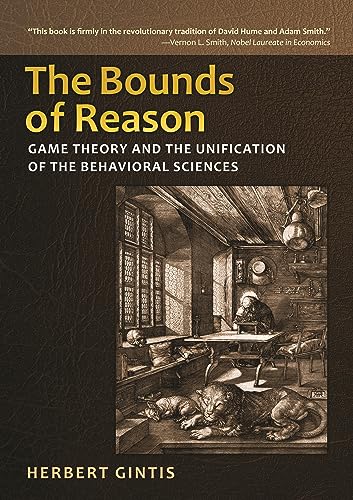
Game theory is central to understanding human behavior and relevant to all of the behavioral sciences--from biology and economics, to anthropology and political science. However, as The Bounds of Reason demonstrates, game theory alone cannot fully explain human behavior and should instead complement other key concepts championed by the behavioral disciplines. Herbert Gintis shows that just as game theory without broader social theory is merely technical bravado, so social theory without game theory is a handicapped enterprise.
Gintis illustrates, for instance, that game theory lacks explanations for when and how rational agents share beliefs. Rather than construct a social epistemology or reasoning process that reflects the real world, game theorists make unwarranted assumptions which imply that rational agents enjoy a commonality of beliefs. But, Gintis explains, humans possess unique forms of knowledge and understanding that move us beyond being merely rational creatures to being social creatures. For a better understanding of human behavior, Gintis champions a unified approach and in doing so shows that the dividing lines between the behavioral disciplines make no scientific sense. He asks, for example, why four separate fields--economics, sociology, anthropology, and social psychology--study social behavior and organization, yet their basic assumptions are wildly at variance. The author argues that we currently have the analytical tools to render the behavioral disciplines mutually coherent.
Combining the strengths of the classical, evolutionary, and behavioral fields, The Bounds of Reason reinvigorates the useful tools of game theory and offers innovative thinking for the behavioral sciences.
Die Inhaltsangabe kann sich auf eine andere Ausgabe dieses Titels beziehen.
Über die Autorin bzw. den Autor
Herbert Gintis holds faculty positions at the Santa Fe Institute, Central European University, and University of Siena. He is the author of Game Theory Evolving (Princeton) and the coeditor of numerous books, including Moral Sentiments and Material Interests, Unequal Chances (Princeton), and Foundations of Human Sociality.
Von der hinteren Coverseite
"Gintis contributes importantly to a new insight gaining ascendancy: economy is about the unintended consequences of human sociality. This book is firmly in the revolutionary tradition of David Hume (Convention) and Adam Smith (Sympathy)."--Vernon L. Smith, Nobel Prize-winning economist
"Herbert Gintis makes a strong case that game theory--by predicting social norms--provides an essential tool for understanding human social behavior. More provocatively, Gintis suggests that humans have a genetic tendency to follow social norms even when it is to their disadvantage. These claims will be controversial--but they make for fascinating reading."--Eric S. Maskin, Nobel Laureate in Economics
"Recent findings in experimental economics have highlighted the need for a rigorous analytical theory of choice and strategic interaction for the social sciences that captures the unexpectedly wide variety of observed behaviors. In this exciting book, Gintis convincingly argues that an empirically informed game-theoretic approach goes a long way toward achieving this attractive goal."--Ernst Fehr, University of Zurich
"This brave and sweeping book deserves to be widely and carefully read."--Adam Brandenburger, New York University
"The Bounds of Reason makes a compelling case for game theory but at the same time warns readers that there is life beyond game theory and that all social science cannot be understood by this method alone. This splendid book makes skillful use of figures and algebra, and reads like a charm."--Kaushik Basu, Cornell University
"Excellent and stimulating, The Bounds of Reason is broad enough to encompass the central concepts and results in game theory, but discerning enough to omit peripheral developments. The book illustrates deep theoretical results using simple and entertaining examples, makes extensive use of agent-based models and simulation methods, and discusses thorny methodological issues with unusual clarity."--Rajiv Sethi, Barnard College, Columbia University
Aus dem Klappentext
"Gintis contributes importantly to a new insight gaining ascendancy: economy is about the unintended consequences of human sociality. This book is firmly in the revolutionary tradition of David Hume (Convention) and Adam Smith (Sympathy)."--Vernon L. Smith, Nobel Prize-winning economist
"Herbert Gintis makes a strong case that game theory--by predicting social norms--provides an essential tool for understanding human social behavior. More provocatively, Gintis suggests that humans have a genetic tendency to follow social norms even when it is to their disadvantage. These claims will be controversial--but they make for fascinating reading."--Eric S. Maskin, Nobel Laureate in Economics
"Recent findings in experimental economics have highlighted the need for a rigorous analytical theory of choice and strategic interaction for the social sciences that captures the unexpectedly wide variety of observed behaviors. In this exciting book, Gintis convincingly argues that an empirically informed game-theoretic approach goes a long way toward achieving this attractive goal."--Ernst Fehr, University of Zurich
"This brave and sweeping book deserves to be widely and carefully read."--Adam Brandenburger, New York University
"The Bounds of Reason makes a compelling case for game theory but at the same time warns readers that there is life beyond game theory and that all social science cannot be understood by this method alone. This splendid book makes skillful use of figures and algebra, and reads like a charm."--Kaushik Basu, Cornell University
"Excellent and stimulating, The Bounds of Reason is broad enough to encompass the central concepts and results in game theory, but discerning enough to omit peripheral developments. The book illustrates deep theoretical results using simple and entertaining examples, makes extensive use of agent-based models and simulation methods, and discusses thorny methodological issues with unusual clarity."--Rajiv Sethi, Barnard College, Columbia University
Auszug. © Genehmigter Nachdruck. Alle Rechte vorbehalten.
The Bounds of Reason
Game Theory and the Unification of the Behavioral SciencesBy Herbert GintisPrinceton University Press
Copyright © 2009 Princeton University PressAll right reserved.
ISBN: 978-0-691-14052-0
Contents
Preface..........................................................................xiii1 Decision Theory and Human Behavior............................................11.1 Beliefs, Preferences, and Constraints......................................41.2 The Meaning of Rational Action.............................................61.3 Why Are Preferences Consistent?............................................71.4 Time Inconsistency.........................................................81.5 Bayesian Rationality and Subjective Priors.................................111.6 The Biological Basis for Expected Utility..................................161.7 The Allais and Ellsberg Paradoxes..........................................161.8 Risk and the Shape of the Utility Function.................................181.9 Prospect Theory............................................................211.10 Heuristics and Biases in Decision Making...................................262 Game Theory: Basic Concepts...................................................302.1 The Extensive Form.........................................................302.2 The Normal Form............................................................332.3 Mixed Strategies...........................................................342.4 Nash Equilibrium...........................................................352.5 The Fundamental Theorem of Game Theory.....................................362.6 Solving for Mixed-Strategy Nash Equilibria.................................372.7 Throwing Fingers...........................................................382.8 The Battle of the Sexes....................................................382.9 The Hawk-Dove Game.........................................................392.10 The Prisoner's Dilemma.....................................................402.11 Alice, Bob, and the Choreographer..........................................412.12 An Efficiency-Enhancing Choreographer......................................432.13 The Correlated Equilibrium Solution Concept................................443 Game Theory and Human Behavior................................................453.1 Self- and Other-Regarding Preferences......................................463.2 Methodological Issues in Behavioral Game Theory............................493.3 An Anonymous Market Exchange...............................................523.4 The Rationality of Altruistic Giving.......................................543.5 Conditional Altruistic Cooperation.........................................563.6 Altruistic Punishment......................................................573.7 Strong Reciprocity in the Labor Market.....................................593.8 Altruistic Third-Party Punishment..........................................613.9 Altruism and Cooperation in Groups.........................................643.10 Inequality Aversion........................................................683.11 The Trust Game.............................................................713.12 Character Virtues..........................................................733.13 The Situational Character of Preferences...................................753.14 The Dark Side of Altruistic Cooperation....................................773.15 Norms of Cooperation: Cross-Cultural Variation.............................784 Rationalizability and Common Knowledge of Rationality.........................834.1 Epistemic Games............................................................834.2 A Simple Epistemic Game....................................................864.3 An Epistemic Battle of the Sexes...........................................874.4 Dominated and Iteratedly Dominated Strategies..............................884.5 Eliminating Weakly Dominated Strategies....................................894.6 Rationalizable Strategies..................................................904.7 Eliminating Strongly Dominated Strategies..................................924.8 Common Knowledge of Rationality............................................934.9 Rationalizability and Common Knowledge of Rationality......................944.10 The Beauty Contest.........................................................944.11 The Traveler's Dilemma.....................................................954.12 The Modified Traveler's Dilemma............................................964.13 Global Games...............................................................984.14 CKR Is an Event, Not a Premise.............................................1005 Extensive Form Rationalizability..............................................1025.1 Backward Induction and Dominated Strategies................................1025.2 Subgame Perfection.........................................................1045.3 Subgame Perfection and Incredible Threats..................................1055.4 The Surprise Examination...................................................1055.5 The Common Knowledge of Logicality Paradox.................................1065.6 The Repeated Prisoner's Dilemma............................................1075.7 The Centipede Game.........................................................1085.8 CKR Fails Off the Backward Induction Path..................................1105.9 How to Play the Repeated Prisoner's Dilemma................................1125.10 The Modal Logic of Knowledge...............................................1145.11 Backward Induction and Extensive Form CKR..................................1155.12 Rationality and Extensive Form CKR.........................................1185.13 On the Nonexistence of CKR.................................................1196 The Mixing Problem: Purification and Conjectures..............................1216.1 Why Play Mixed Strategies?.................................................1216.2 Harsanyi's Purification Theorem............................................1236.3 A Reputational Model of Honesty and Corruption.............................1256.4 Purifying Honesty and Corruption...........................................1286.5 Epistemic Games: Mixed Strategies as Conjectures...........................1286.6 Resurrecting the Conjecture Approach to Purification.......................1297 Bayesian Rationality and Social Epistemology..................................1327.1 The Sexes: From Battle to Ballet...........................................1337.2 The Choreographer Trumps Backward Induction................................1347.3 Property Rights and Correlated Equilibrium.................................1357.4 Convention as Correlated Equilibrium.......................................1367.5 Correlated Strategies and Correlated Equilibria............................1367.6 Correlated Equilibrium and Bayesian Rationality............................1387.7 The Social Epistemology of Common Priors...................................1397.8 The Social Epistemology of Common Knowledge................................1417.9 Social Norms...............................................................1437.10 Game Theory and the Evolution of Norms.....................................1437.11 The Merchants'...
„Über diesen Titel“ kann sich auf eine andere Ausgabe dieses Titels beziehen.
Suchergebnisse für The Bounds of Reason: Game Theory and the Unification...

Beispielbild für diese ISBN
The Bounds of Reason: Game Theory and the Unification of the Behavioral Sciences
Verlag:
Princeton University Press, 2009
ISBN 10: 0691140529
ISBN 13: 9780691140520
Gebraucht
Hardcover
Anbieter: HPB-Red, Dallas, TX, USA
Verkäuferbewertung 5 von 5 Sternen

Hardcover. Zustand: Good. Connecting readers with great books since 1972! Used textbooks may not include companion materials such as access codes, etc. May have some wear or writing/highlighting. We ship orders daily and Customer Service is our top priority! Bestandsnummer des Verkäufers S_435958959
Gebraucht kaufen
EUR 26,21
EUR 3,33 Versand
Versand innerhalb von USA
Versand innerhalb von USA
Anzahl: 1 verfügbar
Beispielbild für diese ISBN
The Bounds of Reason: Game Theory and the Unification of the Behavioral Sciences
Verlag:
Princeton University Press, 2009
ISBN 10: 0691140529
ISBN 13: 9780691140520
Gebraucht
Hardcover
Anbieter: Wonder Book, Frederick, MD, USA
Verkäuferbewertung 5 von 5 Sternen
Zustand: Very Good. Very Good condition. Very Good dust jacket. A copy that may have a few cosmetic defects. May also contain light spine creasing or a few markings such as an owner's name, short gifter's inscription or light stamp. Bestandsnummer des Verkäufers O07O-00532
Gebraucht kaufen
EUR 29,58
Versand gratis
Versand innerhalb von USA
Versand innerhalb von USA
Anzahl: 1 verfügbar
Beispielbild für diese ISBN
The Bounds of Reason: Game Theory and the Unification of the Behavioral Sciences
Verlag:
Princeton University Press, 2009
ISBN 10: 0691140529
ISBN 13: 9780691140520
Gebraucht
Hardcover
Anbieter: ThriftBooks-Dallas, Dallas, TX, USA
Verkäuferbewertung 5 von 5 Sternen
Hardcover. Zustand: As New. No Jacket. Pages are clean and are not marred by notes or folds of any kind. ~ ThriftBooks: Read More, Spend Less. Bestandsnummer des Verkäufers G0691140529I2N00
Gebraucht kaufen
EUR 29,86
Versand gratis
Versand innerhalb von USA
Versand innerhalb von USA
Anzahl: 1 verfügbar
Beispielbild für diese ISBN
The Bounds of Reason: Game Theory and the Unification of the Behavioral Sciences
Verlag:
Princeton University Press, 2009
ISBN 10: 0691140529
ISBN 13: 9780691140520
Gebraucht
Hardcover
Anbieter: ThriftBooks-Dallas, Dallas, TX, USA
Verkäuferbewertung 5 von 5 Sternen
Hardcover. Zustand: Good. No Jacket. Missing dust jacket; Pages can have notes/highlighting. Spine may show signs of wear. ~ ThriftBooks: Read More, Spend Less. Bestandsnummer des Verkäufers G0691140529I3N01
Gebraucht kaufen
EUR 29,86
Versand gratis
Versand innerhalb von USA
Versand innerhalb von USA
Anzahl: 1 verfügbar
Foto des Verkäufers
The Bounds of Reason
Verlag:
Princeton University Press, 2009
ISBN 10: 0691140529
ISBN 13: 9780691140520
Gebraucht
Hardcover
Anbieter: R&R Better Books, Martinez, CA, USA
Verkäuferbewertung 5 von 5 Sternen
Hardcover. Zustand: Near Fine. * Book cover like new - pages clean, bright and unmarked spine like new. * Jacket like new - light shelf wear. * "Honest and reliable service - every book hand-packaged with care.". Bestandsnummer des Verkäufers RNR0093
Gebraucht kaufen
EUR 30,21
Versand gratis
Versand innerhalb von USA
Versand innerhalb von USA
Anzahl: 1 verfügbar
Beispielbild für diese ISBN
The Bounds of Reason : Game Theory and the Unification of the Behavioral Sciences
Verlag:
Princeton University Press, 2009
ISBN 10: 0691140529
ISBN 13: 9780691140520
Gebraucht
Hardcover
Anbieter: Better World Books Ltd, Dunfermline, Vereinigtes Königreich
Verkäuferbewertung 5 von 5 Sternen
Zustand: Good. Pages intact with minimal writing/highlighting. The binding may be loose and creased. Dust jackets/supplements are not included. Stock photo provided. Product includes identifying sticker. Better World Books: Buy Books. Do Good. Bestandsnummer des Verkäufers 68455092-20
Gebraucht kaufen
EUR 34,90
EUR 5,88 Versand
Versand von Vereinigtes Königreich nach USA
Versand von Vereinigtes Königreich nach USA
Anzahl: 1 verfügbar
Beispielbild für diese ISBN
The Bounds of Reason: Game Theory and the Unification of the Behavioral Sciences
Anbieter: Labyrinth Books, Princeton, NJ, USA
Verkäuferbewertung 5 von 5 Sternen
Zustand: New. Bestandsnummer des Verkäufers 128554
Neu kaufen
EUR 38,43
EUR 4,00 Versand
Versand innerhalb von USA
Versand innerhalb von USA
Anzahl: 3 verfügbar
Beispielbild für diese ISBN
The Bounds of Reason: Game Theory and the Unification of the Behavioral Sciences
Verlag:
Princeton University Press, 2009
ISBN 10: 0691140529
ISBN 13: 9780691140520
Gebraucht
Hardcover
Anbieter: Anybook.com, Lincoln, Vereinigtes Königreich
Verkäuferbewertung 5 von 5 Sternen
Zustand: Good. This is an ex-library book and may have the usual library/used-book markings inside.This book has hardback covers. In good all round condition. Dust jacket in good condition. Please note the Image in this listing is a stock photo and may not match the covers of the actual item,950grams, ISBN:9780691140520. Bestandsnummer des Verkäufers 9895177
Gebraucht kaufen
EUR 28,49
EUR 15,34 Versand
Versand von Vereinigtes Königreich nach USA
Versand von Vereinigtes Königreich nach USA
Anzahl: 1 verfügbar
Beispielbild für diese ISBN
The Bounds of Reason: Game Theory and the Unification of the Behavioral Sciences
Anbieter: DeckleEdge LLC, Albuquerque, NM, USA
Verkäuferbewertung 5 von 5 Sternen
Zustand: New. Bestandsnummer des Verkäufers CX5
Beispielbild für diese ISBN
The Bounds of Reason: Game Theory and the Unification of the Behavioral Sciences
Verlag:
Princeton University Press, 2009
ISBN 10: 0691140529
ISBN 13: 9780691140520
Gebraucht
Hardcover
Erstausgabe
Anbieter: Pulpfiction Books, Vancouver, BC, Kanada
Verkäuferbewertung 5 von 5 Sternen
Hardcover. Zustand: Fine. Zustand des Schutzumschlags: Fine. 1st Edition. First edition, first printing. Fine hardback in a Fine dust jacket, protected in a Brodart. A clean attractive copy. Bestandsnummer des Verkäufers 012244
Gebraucht kaufen
EUR 54,92
EUR 14,66 Versand
Versand von Kanada nach USA
Versand von Kanada nach USA
Anzahl: 1 verfügbar