
Verwandte Artikel zu Enhancing Evolution: The Ethical Case for Making Better...
Inhaltsangabe
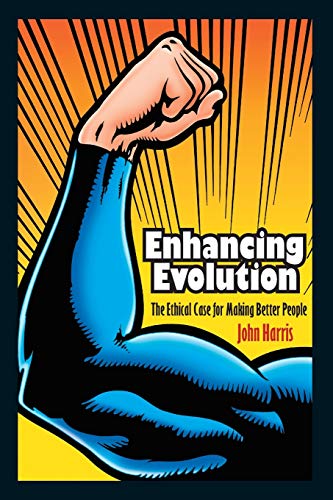
In Enhancing Evolution, leading bioethicist John Harris dismantles objections to genetic engineering, stem-cell research, designer babies, and cloning and makes an ethical case for biotechnology that is both forthright and rigorous. Human enhancement, Harris argues, is a good thing--good morally, good for individuals, good as social policy, and good for a genetic heritage that needs serious improvement. Enhancing Evolution defends biotechnological interventions that could allow us to live longer, healthier, and even happier lives by, for example, providing us with immunity from cancer and HIV/AIDS. Further, Harris champions the possibility of influencing the very course of evolution to give us increased mental and physical powers--from reasoning, concentration, and memory to strength, stamina, and reaction speed. Indeed, he says, it's not only morally defensible to enhance ourselves; in some cases, it's morally obligatory. In a new preface, Harris offers a glimpse at the new science and technology to come, equipping readers with the knowledge to assess the ethics and policy dimensions of future forms of human enhancement.
Die Inhaltsangabe kann sich auf eine andere Ausgabe dieses Titels beziehen.
Über die Autorin bzw. den Autor
John Harris is the Lord David Alliance Professor of Bioethics at the University of Manchester School of Law, joint editor-in-chief of the Journal of Medical Ethics, and a member of Britain's Human Genetics Commission. His many books include On Cloning and Clones, Genes, and Immortality.
Von der hinteren Coverseite
"John Harris has an enormous reputation in bioethics for his adroit, acerbic, dead-on argumentation, his ingenuity at undermining familiar but flaccid argument, his immense imaginative capacities, and his skewering wit. These are rare qualities in an often goody-goody field like bioethics, and his intellectual skills earn him real respect. His philosophical work is an exploration, as he puts it, of our shared responsibility to make the world a better place. Enhancing Evolution is an ample demonstration of this work at its best."--Margaret P. Battin, University of Utah
"John Harris can be depended on to sharply challenge conventional thinking in bioethics, especially when that thinking takes a conservative cast. He does not disappoint here. Harris shows how deep-seated a part of human history enhancement is and how weak most objections to it are; indeed, he makes a persuasive case that it is not only generally morally permissible, but often morally required."--Dan W. Brock, director of the Division of Medical Ethics, Harvard Medical School
"John Harris's writings are always provocative as well as superbly reasoned. In this latest book, he succeeds in demolishing the arguments of those who claim that enhancements are a threat to humankind."--Ruth Macklin, Albert Einstein College of Medicine
"Enhancing Evolution is a pleasure to read and an important contribution to bioethics. Against writers such as Leon Kass, Michael Sandel, and Jürgen Habermas, John Harris argues for using genetic and other technologies to improve and extend human life, and even to design and clone humans. Whether or not one shares his optimism that humans are wise, prudent, or moral enough to use technology to benefit humankind, his cogent and elegantly expressed arguments must be taken seriously."--Bonnie Steinbock, University of Albany
"Over his illustrious career, John Harris has explored the most challenging bioethical questions with insight, engaging wit, and eloquence. In Enhancing Evolution, Harris does it again. He argues that it is not just an option but an obligation for people to use available biomedical technologies to enhance their own--and their children's--physical and mental abilities. Harris rightly deserves his reputation for fearlessly following his ethical arguments wherever they lead."--Ezekiel J. Emanuel, M.D., Ph.D.
"Full of witty arguments, Enhancing Evolution is a powerful response to concerns about human enhancement and genetic selection. It is also a deep, enlightening, and delightful (often hilarious) philosophical read. Scholars studying these topics, as well as the status of embryos and research on human subjects, would be wise to give Harris's arguments serious consideration."--Nir Eyal, Harvard Medical School
"Enhancing Evolution is the most comprehensive, robust defense of human enhancement in the literature to date. Harris blends more than fifteen years of work on human enhancement into a single volume and mixes in new arguments that definitively make the pro case for enhancement. The bioconservatives are in retreat. Harris has now set the agenda for the future of humankind. This will be the locus classicus for the enhancement debate."--Julian Savulescu, University of Oxford
Auszug. © Genehmigter Nachdruck. Alle Rechte vorbehalten.
Enhancing Evolution
The Ethical Case for Making Better PeopleBy John HarrisPRINCETON UNIVERSITY PRESS
Copyright © 2007 Princeton University PressAll right reserved.
ISBN: 978-0-691-14816-8
Contents
Preface to the Paperback edition............................................ixForeword bySteveRayner......................................................xixAcknowledgments.............................................................xxvIntroduction................................................................11 Has Humankind a Future?...................................................82 Enhancement Is a Moral Duty...............................................193 What Enhancements Are and Why They Matter.................................364 Immortality...............................................................595 Reproductive Choice and the Democratic Presumption........................726 Disability and Super-Ability..............................................867 Perfection and the Blue Guitar............................................1098 Good and Bad Uses of Technology...........................................1239 Designer Children.........................................................14310 The Irredeemable Paradox of the Embryo...................................16011 The Obligation to Pursue and Participate in Research.....................184Notes.......................................................................207Bibliography................................................................227Index.......................................................................239
Chapter One
Has Humankind a Future?
"Se vogliamo che tutto rimanga come è, bisogna che tutto cambi." "If we want things to stay as they are, things will have to change." —Tomasi de Lampedusa, The Leopard
Wouldn't it be wonderful if we humans could live longer healthier lives with immunity to many of the diseases like cancer and HIV/AIDS that currently beset us? Even more wonderful might be the possibility of increased mental powers, powers of memory, reasoning, and concentration, or the possibility of increased physical powers, strength, stamina, endurance, speed of reaction, and the like. Wouldn't it be wonderful?
Many people think not. The idea of improving on human nature has been widely rejected. Decisive interventions in the natural lottery of life, to enhance human performance, improve life, and perhaps thereby irrevocably to change our genetic constitution, have met with extreme hostility. This hostility is, as we shall see, misplaced. In this book I hope to convince you that human enhancement is a good thing and that our genetic heritage is much in need of improvement.
Whatever people say, no one, I believe, actually thinks that there is anything in principle wrong with the enhancement of human beings. This seeming contradiction, paradoxical as it may appear, is resolved when we reflect on the familiarity and acceptability of existing enhancement technologies and on their history. Many of us are already enhanced (do you wear glasses, for example?) and all of us without exception have benefited from enhancing technologies. (For example, have you ever been immunized? And even if you haven't, you will have benefited from the so-called "herd immunity" created by the fact that others have.)
Not only do we all approve of enhancement, we approve for good reasons—we approve because we are decent moral people who want to protect each other from harm and who want to benefit ourselves, and others.
In terms of human functioning, an enhancement is by definition an improvement on what went before. If it wasn't good for you, it wouldn't be enhancement. There is a continuum between harms and benefits and the reasons we have to avoid harming others or creating others who will be born in a harmed state are continuous with the reasons we have for conferring benefits on others if we can.
We have reasons for declining to create or confer even trivial harms and we have reasons to confer and not withhold even small benefits. The opportunity to create healthier, longer-lived, and altogether "better" individuals is one that there are moral reasons to take.
As with all opportunities, we have also to consider the risks that they may entail and there is of course a relation between the magnitude and probability of the benefit and the degree and size of risk we are prepared to run to get it.
I will argue that enhancement is also an opportunity that it is in the interests of society and government to take. On this view, parents would act ethically if they were to attempt to achieve such an objective for their children, and those of us who are autonomous enough to consider such questions have good reasons to confer such benefits on ourselves. I will further show that governments have prudential as well as moral reasons to support parental and individual choice in such matters. Indeed, although this chapter is partially intended to introduce the themes of this book, it also initiates the argument and attempts to place the argument in a tradition of thinking about attempts to shape human nature and to rethink the destiny of humankind.
The freedom of citizens to do what's right ethically and what's personally prudent is not only self-evidently sensible, it is, as we shall see, enshrined in our moral and political theory. Now, and in the chapters that follow, I will show why and how human enhancement is in the interests of all of us personally and in the interests of society. The principal objections to human enhancement will be examined in detail and I will argue strongly not only for the freedom, but also for the obligation to pursue human enhancement.
Threats to human life and dramatic policies and practices to meet them are all too frequent in human history. My own interests in this process began in the early sixties of the last century.
In 1961 the philosopher Bertrand Russell published a book (a pamphlet really) asking a pertinent and agonizing question. That question had arisen because of threats posed by scientific advance and humankind's apparent inability to deal sensibly with the consequences. In 1961 the perceived threat was to all human life and it came from the policies of "mutually assured destruction" which were at the heart of strategies on both sides in the cold war concerning the use of nuclear weapons. Thinking about a rational response to what he perceived as the real possibility of the extinction of all human life, Russell's book asked the question and took the title: Has Man a Future? This book asks effectively the same question, and seeks to examine whether the answer might not lie in humankind's ability to realize its potentialities. We should be clear that, while the question "has humankind a future?" seems to be empirical, this is not the case. The question invites reflection on the nature of humankind and on the desirability of humankind's continued existence or further evolution.
Russell imagines a conversation with God:
If I were the pleader to Osiris for the continuation of the human race, I should say: "O just and inexorable judge, the indictment of my species is all too well deserved, and never more so than in the present day. But we are not all guilty and few of us are without better potentialities than those that our circumstances have developed.... It is not only what to avoid that great men have shown us. They have shown us also that it is within human power to create a...
„Über diesen Titel“ kann sich auf eine andere Ausgabe dieses Titels beziehen.
Suchergebnisse für Enhancing Evolution: The Ethical Case for Making Better...

Beispielbild für diese ISBN
Enhancing Evolution: The Ethical Case for Making Better People
Verlag:
Princeton University Press, 2010
ISBN 10: 0691148163
ISBN 13: 9780691148168
Gebraucht
Softcover
Anbieter: More Than Words, Waltham, MA, USA
Verkäuferbewertung 5 von 5 Sternen

Zustand: Very Good. . . All orders guaranteed and ship within 24 hours. Before placing your order for please contact us for confirmation on the book's binding. Check out our other listings to add to your order for discounted shipping. Bestandsnummer des Verkäufers WAL-T-2g-01915
Gebraucht kaufen
EUR 0,93
EUR 3,55 Versand
Versand innerhalb von USA
Versand innerhalb von USA
Anzahl: 1 verfügbar
Foto des Verkäufers
Enhancing Evolution: The Ethical Case for Making Better People
Verlag:
Princeton University Press, 2010
ISBN 10: 0691148163
ISBN 13: 9780691148168
Gebraucht
Softcover
Anbieter: ZBK Books, Carlstadt, NJ, USA
Verkäuferbewertung 5 von 5 Sternen
Zustand: very_good. Fast & Free Shipping â" Very Good condition book with a firm cover and clean pages. Shows normal use and some light wear or limited notes markings. A solid, nice copy to enjoy. Bestandsnummer des Verkäufers ZWV.0691148163.VG
Gebraucht kaufen
EUR 4,51
Versand gratis
Versand innerhalb von USA
Versand innerhalb von USA
Anzahl: 1 verfügbar
Foto des Verkäufers
Enhancing Evolution: The Ethical Case for Making Better People
Verlag:
Princeton University Press, 2010
ISBN 10: 0691148163
ISBN 13: 9780691148168
Gebraucht
Softcover
Anbieter: -OnTimeBooks-, Phoenix, AZ, USA
Verkäuferbewertung 5 von 5 Sternen
Zustand: good. A copy that has been read, remains in good condition. All pages are intact, and the cover is intact. The spine and cover show signs of wear. Pages can include notes and highlighting and show signs of wear, and the copy can include "From the library of" labels or previous owner inscriptions. 100% GUARANTEE! Shipped with delivery confirmation, if you're not satisfied with purchase please return item! Ships via media mail. Bestandsnummer des Verkäufers OTV.0691148163.G
Gebraucht kaufen
EUR 6,41
Versand gratis
Versand innerhalb von USA
Versand innerhalb von USA
Anzahl: 1 verfügbar
Beispielbild für diese ISBN
Enhancing Evolution : The Ethical Case for Making Better People
Verlag:
Princeton University Press, 2010
ISBN 10: 0691148163
ISBN 13: 9780691148168
Gebraucht
Softcover
Anbieter: Better World Books, Mishawaka, IN, USA
Verkäuferbewertung 5 von 5 Sternen
Zustand: Good. Former library copy. Pages intact with minimal writing/highlighting. The binding may be loose and creased. Dust jackets/supplements are not included. Includes library markings. Stock photo provided. Product includes identifying sticker. Better World Books: Buy Books. Do Good. Bestandsnummer des Verkäufers 4495433-20
Gebraucht kaufen
EUR 6,55
Versand gratis
Versand innerhalb von USA
Versand innerhalb von USA
Anzahl: 1 verfügbar
Beispielbild für diese ISBN
Enhancing Evolution : The Ethical Case for Making Better People
Verlag:
Princeton University Press, 2010
ISBN 10: 0691148163
ISBN 13: 9780691148168
Gebraucht
Softcover
Anbieter: Better World Books: West, Reno, NV, USA
Verkäuferbewertung 5 von 5 Sternen
Zustand: Good. Former library copy. Pages intact with minimal writing/highlighting. The binding may be loose and creased. Dust jackets/supplements are not included. Includes library markings. Stock photo provided. Product includes identifying sticker. Better World Books: Buy Books. Do Good. Bestandsnummer des Verkäufers 4495433-20
Gebraucht kaufen
EUR 6,55
Versand gratis
Versand innerhalb von USA
Versand innerhalb von USA
Anzahl: 1 verfügbar
Beispielbild für diese ISBN
Enhancing Evolution : The Ethical Case for Making Better People
Verlag:
Princeton University Press, 2010
ISBN 10: 0691148163
ISBN 13: 9780691148168
Gebraucht
Softcover
Anbieter: Better World Books, Mishawaka, IN, USA
Verkäuferbewertung 5 von 5 Sternen
Zustand: Very Good. Pages intact with possible writing/highlighting. Binding strong with minor wear. Dust jackets/supplements may not be included. Stock photo provided. Product includes identifying sticker. Better World Books: Buy Books. Do Good. Bestandsnummer des Verkäufers 4328707-6
Gebraucht kaufen
EUR 6,55
Versand gratis
Versand innerhalb von USA
Versand innerhalb von USA
Anzahl: 1 verfügbar
Beispielbild für diese ISBN
Enhancing Evolution: The Ethical Case for Making Better People
Verlag:
Princeton University Press, 2010
ISBN 10: 0691148163
ISBN 13: 9780691148168
Gebraucht
Paperback
Anbieter: World of Books (was SecondSale), Montgomery, IL, USA
Verkäuferbewertung 5 von 5 Sternen
Paperback. Zustand: Very Good. Intends to dismantle objections to genetic engineering, stem-cell research, designer babies, and cloning and makes an ethical case for biotechnology that is both forthright and rigorous. Bestandsnummer des Verkäufers 00110703841
Gebraucht kaufen
EUR 7,31
Versand gratis
Versand innerhalb von USA
Versand innerhalb von USA
Anzahl: 1 verfügbar
Beispielbild für diese ISBN
Enhancing Evolution: The Ethical Case for Making Better People
Verlag:
Princeton University Press, 2010
ISBN 10: 0691148163
ISBN 13: 9780691148168
Gebraucht
Paperback
Anbieter: World of Books Inc, Montgomery, IL, USA
Verkäuferbewertung 4 von 5 Sternen

Paperback. Zustand: Very Good. Intends to dismantle objections to genetic engineering, stem-cell research, designer babies, and cloning and makes an ethical case for biotechnology that is both forthright and rigorous. Bestandsnummer des Verkäufers CIN0691148163VG
Gebraucht kaufen
EUR 9,15
Versand gratis
Versand innerhalb von USA
Versand innerhalb von USA
Anzahl: 1 verfügbar
Beispielbild für diese ISBN
Enhancing Evolution: The Ethical Case for Making Better People
Verlag:
Princeton University Press, 2010
ISBN 10: 0691148163
ISBN 13: 9780691148168
Gebraucht
Paperback
Anbieter: Half Price Books Inc., Dallas, TX, USA
Verkäuferbewertung 5 von 5 Sternen
Paperback. Zustand: Very Good. Connecting readers with great books since 1972! Used books may not include companion materials, and may have some shelf wear or limited writing. We ship orders daily and Customer Service is our top priority! Bestandsnummer des Verkäufers S_454238026
Gebraucht kaufen
EUR 5,96
EUR 3,34 Versand
Versand innerhalb von USA
Versand innerhalb von USA
Anzahl: 1 verfügbar
Beispielbild für diese ISBN
Enhancing Evolution: The Ethical Case for Making Better People
Verlag:
Princeton University Press, 2010
ISBN 10: 0691148163
ISBN 13: 9780691148168
Gebraucht
paperback
Anbieter: One Planet Books, Columbia, MO, USA
Verkäuferbewertung 4 von 5 Sternen
paperback. Zustand: Good. Ships in a BOX from Central Missouri! May not include working access code. Will not include dust jacket. Has used sticker(s) and some writing and/or highlighting. UPS shipping for most packages, (Priority Mail for AK/HI/APO/PO Boxes). Bestandsnummer des Verkäufers 001055564U
Gebraucht kaufen
EUR 7,32
EUR 3,55 Versand
Versand innerhalb von USA
Versand innerhalb von USA
Anzahl: 7 verfügbar