
Verwandte Artikel zu An Introduction to the Global Circulation of the Atmosphere
Inhaltsangabe
The most comprehensive advanced graduate-level textbook on the subject
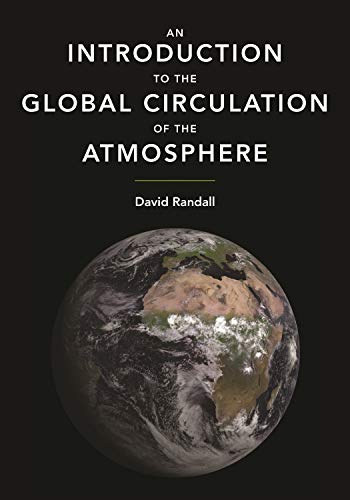
This is a graduate-level textbook on the global circulation of the Earth's atmosphere—the large-scale system of winds by which energy is transported around the planet, from the tropical latitudes to the poles. Written by David Randall, one of the world’s foremost experts on the subject, it is the most comprehensive textbook on the topic. Intended for Earth science students who have completed some graduate-level coursework in atmospheric dynamics, the book will help students build on that foundation, preparing them for research in the field.
The book describes the many phenomena of the circulation and explains them in terms of current ideas from fluid dynamics and thermodynamics, with frequent use of isentropic coordinates and using the methods of vector calculus. It emphasizes the key roles of water vapor and clouds, includes detailed coverage of energy flows and transformations, and pays close attention to scale interactions. The book also describes the major historical contributions of key scientists, giving a human dimension to the narrative, and it closes with a discussion of how the global circulation is evolving as the Earth’s climate changes.
- The most comprehensive graduate-level textbook on the subject
- Written by one of the world’s leading experts
- Connects global circulation and climate phenomena
- Addresses energy, moisture, and angular-momentum balance; the hydrologic cycle; and atmospheric turbulence and convection
- Emphasizes the energy cycle of the atmosphere; the role of moist processes; and circulation as an unpredictable, chaotic process
- Helps prepare students for research
- An online illustration package is available to professors
Die Inhaltsangabe kann sich auf eine andere Ausgabe dieses Titels beziehen.
Über die Autorin bzw. den Autor
David A. Randall is University Distinguished Professor in the Department of Atmospheric Science at Colorado State University, and the author of Atmosphere, Clouds, and Climate (Princeton). He is the chief editor of the Journal of Advances in Modeling Earth Systems, and the former chief editor of the Journal of Climate. He has twice served as a coordinating lead author for the Intergovernmental Panel on Climate Change.
Von der hinteren Coverseite
"No other textbook on the global circulation of the atmosphere covers the breadth of the subject as well as this one does. And no other book makes the essential connection between atmospheric circulation dynamics and climate phenomena. There is no question to me that students will be very grateful to have it—there is nothing else like it, and we need it. David Randall is one of the most respected leaders in the field, and he is one of a few people capable of writing a book with a reach as broad as this."--Tapio Schneider, Swiss Federal Institute of Technology Zurich and California Institute of Technology
Aus dem Klappentext
"No other textbook on the global circulation of the atmosphere covers the breadth of the subject as well as this one does. And no other book makes the essential connection between atmospheric circulation dynamics and climate phenomena. There is no question to me that students will be very grateful to have it there is nothing else like it, and we need it. David Randall is one of the most respected leaders in the field, and he is one of a few people capable of writing a book with a reach as broad as this."--Tapio Schneider, Swiss Federal Institute of Technology Zurich and California Institute of Technology
Auszug. © Genehmigter Nachdruck. Alle Rechte vorbehalten.
An Introduction to the Global Circulation of the Atmosphere
By David RandallPRINCETON UNIVERSITY PRESS
Copyright © 2015 Princeton University Press
All rights reserved.
ISBN: 978-0-691-14896-0All rights reserved.
Contents
Preface, vii,
Handy Numbers, ix,
Chapter 1 Perpetual Motion, 1,
Chapter 2 What Makes It Go?, 12,
Chapter 3 First Impressions, 33,
Chapter 4 The Rules of the Game, 67,
Chapter 5 Go with the Flow, 106,
Chapter 6 Up Moist, Down Dry, 145,
Chapter 7 Heat Where It's Hot, and Cool Where It's Cold, 182,
Chapter 8 A Taxonomy of Eddies, 211,
Chapter 9 What the Eddies Do, 280,
Chapter 10 A Fluid Dynamical Commotion, 310,
Chapter 11 The Future of the Circulation, 352,
Appendix A Vectors, Vector Calculus, and Coordinate Systems, 357,
Appendix B Dimensional Analysis, Scale Analysis, and Similarity Theories, 365,
Appendix C Why Is the Dissipation Rate Positive?, 375,
Appendix D Vertical Coordinate Transformations, 378,
Appendix E The Moist Adiabatic Lapse Rate, 380,
Appendix F Eddy Kinetic Energy and Zonal Kinetic Energy, 383,
Appendix G Spherical Harmonics, 389,
Appendix H Hermite Polynomials, 396,
Bibliography, 399,
Index, 437,
CHAPTER 1
Perpetual Motion
The atmosphere circulates. The circulation is global in extent (see fig. 1.1). The circulating mass consists of "dry air" and three phases of water. Energy and momentum are carried with the air but evolve in response to various processes along the way. Many of those same processes add or remove moisture.
The circulation is sustained by thermal forcing, which ultimately comes from the Sun. On the average, the Earth absorbs about 240 W m-2 of incoming or "incident" solar energy, of which roughly 2% is converted to maintain the kinetic energy of the global circulation against frictional dissipation. Additional, "primordial" energy leaks out of the Earth's interior but at the relatively tiny rate of 0.1 W m-2 (Sclater et al., 1980; Bukowinski, 1999). The thermal forcing of the global circulation is strongly influenced by the circulation itself—for example, as clouds form and disappear. The interactions between the circulation and the heating are fascinating but complicated.
Averaged over time, the global circulation has to satisfy various balance requirements: for example, the infrared radiation emitted at the top of the atmosphere must balance the solar radiation absorbed, precipitation must balance evaporation, and angular momentum exchanges between the atmosphere and the ocean–solid Earth system must sum to zero. We will discuss the global circulation from this classical perspective. We will also supplement this discussion with descriptions and analyses of the many and varied but interrelated phenomena of the circulation, such as the Hadley and Walker circulations, monsoons, stratospheric sudden warmings, the Southern Oscillation, subtropical highs, and extratropical storm tracks. In addition, we will discuss the diabatic and frictional processes that maintain the circulation, and the ways in which these processes are affected by the circulation itself.
The circulations of energy and water are closely linked. It takes about 2.5 × 10⁶ J of energy to evaporate 1 kg of water from the oceans, and the same amount of energy is released when the water vapor condenses to form a cloud. The energy released through condensation drives thunderstorm updrafts that in one hour or less can penetrate a layer of the atmosphere 10 or even 20 km thick. The cloudy outflows from such storms reflect sunlight to space and block infrared radiation from the warm surface below. Shallower clouds cast shadows over vast expanses of the oceans. One of the aims of this book is to give appropriate emphasis to the role of moisture in the global circulation of the atmosphere.
It is conventional and useful, although somewhat arbitrary, to divide the atmosphere into parts. For purposes of this quick sketch, we will divide the atmosphere vertically and meridionally, only briefly mentioning the longitudinal variations. Let's start at the bottom.
Most of the solar radiation that the Earth absorbs is captured by the surface rather than within the relatively transparent atmosphere. Several processes act to transfer the absorbed energy upward from the ocean and land surface into the lower portion of the atmosphere.
The layer of air that is closely coupled with the Earth's surface is, by definition, the planetary boundary layer, or PBL. The top of the PBL is often very sharp and well defined (see fig. 1.2). The depth of the PBL varies considerably in space and time, but a ballpark value to remember is 1 km. The air in the PBL is turbulent, and the turbulence is associated with rapid exchanges or "fluxes" of sensible heat (essentially temperature), moisture, and momentum between the atmosphere and the surface. These exchanges are produced by the turbulence, and also promote the turbulence, through mechanisms that will briefly be discussed later. The most important exchanges are of moisture, upward into the atmosphere via evaporation from the surface, and of momentum, via friction. The latent heat associated with the surface moisture flux is a key source of energy for the global circulation, and surface friction strongly influences the ocean currents.
Above the PBL is the free troposphere. Because the troposphere includes the PBL, we add the adjective "free" to distinguish the part of the troposphere that lies above the PBL. The free troposphere is characterized by positive static stability, which means that buoyancy forces resist vertical motion. The depth of the troposphere varies strongly with latitude and season.
A turbulent process called entrainment gradually incorporates free-tropospheric air into the PBL. Over the oceans, entrainment is, with a few exceptions, relatively slow but steady. Over land, entrainment is promoted by strong daytime heating of the surface, which helps generate turbulence. As a result, the turbulent PBL rapidly deepens during the day. When the Sun goes down, the processes that promote turbulence and entrainment are abruptly weakened, and the PBL reorganizes itself into a much shallower nocturnal configuration, leaving behind a layer of air that was part of the PBL during the afternoon. This diurnal deepening and shallowing of the PBL acts as a kind of "pump" that captures air from the free troposphere and adds it to the PBL starting shortly after sunrise, modifies the properties of that air during the day through strong turbulent exchanges with the surface, and then releases the modified air back into the free troposphere at sunset. This diurnal pumping is one way that the PBL exerts an influence on the free troposphere.
In addition, moisture and energy are carried upward from the PBL into the free troposphere by several mechanisms. Throughout the tropics and the summer-hemisphere middle latitudes the most important of these mechanisms is cumulus convection. Cumulus clouds typically grow upward from the PBL. The updrafts inside the clouds carry PBL air into the free troposphere, where it is left behind when the clouds decay (see fig. 1.3). One of the effects of this process is to remove air from the PBL and add it to the free troposphere.
Frontal circulations also can carry air from the PBL into the free atmosphere, essentially by "peeling" the PBL from the Earth's surface, like the rind from an orange, and lofting the detached air toward the tropopause. This...
„Über diesen Titel“ kann sich auf eine andere Ausgabe dieses Titels beziehen.
Suchergebnisse für An Introduction to the Global Circulation of the Atmosphere

Beispielbild für diese ISBN
An Introduction to the Global Circulation of the Atmosphere
Anbieter: Labyrinth Books, Princeton, NJ, USA
Verkäuferbewertung 5 von 5 Sternen

Zustand: New. Bestandsnummer des Verkäufers 181074
Neu kaufen
EUR 54,23
EUR 4,02 Versand
Versand innerhalb von USA
Versand innerhalb von USA
Anzahl: 1 verfügbar
Foto des Verkäufers
Introduction to the Global Circulation of the Atmosphere
Anbieter: GreatBookPrices, Columbia, MD, USA
Verkäuferbewertung 5 von 5 Sternen
Zustand: New. Bestandsnummer des Verkäufers 9032039-n
Neu kaufen
EUR 88,21
EUR 2,36 Versand
Versand innerhalb von USA
Versand innerhalb von USA
Anzahl: 1 verfügbar
Beispielbild für diese ISBN
An Introduction to the Global Circulation of the Atmosphere
Anbieter: PBShop.store US, Wood Dale, IL, USA
Verkäuferbewertung 5 von 5 Sternen
HRD. Zustand: New. New Book. Shipped from UK. Established seller since 2000. Bestandsnummer des Verkäufers WP-9780691148960
Beispielbild für diese ISBN
Introduction to the Global Circulation of the Atmosphere
Verlag:
Princeton University Press, 2015
ISBN 10: 0691148961
ISBN 13: 9780691148960
Gebraucht
Hardcover
Anbieter: GreatBookPrices, Columbia, MD, USA
Verkäuferbewertung 5 von 5 Sternen
Zustand: As New. Unread book in perfect condition. Bestandsnummer des Verkäufers 9032039
Gebraucht kaufen
EUR 96,73
EUR 2,36 Versand
Versand innerhalb von USA
Versand innerhalb von USA
Anzahl: 1 verfügbar
Beispielbild für diese ISBN
Introduction to the Global Circulation of the Atmosphere An Introduction to the Global Circulation of the Atmosphere Format: Hardcover
Verlag:
Princeton University Press, 2015
ISBN 10: 0691148961
ISBN 13: 9780691148960
Gebraucht
Hardcover
Anbieter: INDOO, Avenel, NJ, USA
Verkäuferbewertung 5 von 5 Sternen
Zustand: As New. Unread copy in mint condition. Bestandsnummer des Verkäufers PG9780691148960
Gebraucht kaufen
EUR 99,17
Versand gratis
Versand innerhalb von USA
Versand innerhalb von USA
Anzahl: Mehr als 20 verfügbar
Beispielbild für diese ISBN
Introduction to the Global Circulation of the Atmosphere An Introduction to the Global Circulation of the Atmosphere Format: Hardcover
Anbieter: INDOO, Avenel, NJ, USA
Verkäuferbewertung 5 von 5 Sternen
Zustand: New. Brand New. Bestandsnummer des Verkäufers 9780691148960
Neu kaufen
EUR 99,26
Versand gratis
Versand innerhalb von USA
Versand innerhalb von USA
Anzahl: Mehr als 20 verfügbar
Beispielbild für diese ISBN
An Introduction to the Global Circulation of the Atmosphere
Anbieter: PBShop.store UK, Fairford, GLOS, Vereinigtes Königreich
Verkäuferbewertung 5 von 5 Sternen
HRD. Zustand: New. New Book. Shipped from UK. Established seller since 2000. Bestandsnummer des Verkäufers WP-9780691148960
Neu kaufen
EUR 91,32
EUR 7,99 Versand
Versand von Vereinigtes Königreich nach USA
Versand von Vereinigtes Königreich nach USA
Anzahl: 11 verfügbar
Beispielbild für diese ISBN
An Introduction to the Global Circulation of the Atmosphere
Anbieter: Kennys Bookshop and Art Galleries Ltd., Galway, GY, Irland
Verkäuferbewertung 5 von 5 Sternen
Zustand: New. Num Pages: 456 pages, 16 halftones. 194 line illus. 14 tables. BIC Classification: RBP. Category: (P) Professional & Vocational; (U) Tertiary Education (US: College). Dimension: 187 x 261 x 33. Weight in Grams: 1126. . 2015. Hardcover. . . . . Bestandsnummer des Verkäufers V9780691148960
Neu kaufen
EUR 91,06
EUR 9,50 Versand
Versand von Irland nach USA
Versand von Irland nach USA
Anzahl: 11 verfügbar
Beispielbild für diese ISBN
Introduction to the General Circulation of the Atmosphere (eng)
Anbieter: Brook Bookstore On Demand, Napoli, NA, Italien
Verkäuferbewertung 5 von 5 Sternen
Zustand: new. Bestandsnummer des Verkäufers 47d2fbaccd80255117e0c518bf833746
Neu kaufen
EUR 91,97
EUR 11,00 Versand
Versand von Italien nach USA
Versand von Italien nach USA
Anzahl: 11 verfügbar
Foto des Verkäufers
Introduction to the Global Circulation of the Atmosphere
Anbieter: GreatBookPricesUK, Woodford Green, Vereinigtes Königreich
Verkäuferbewertung 5 von 5 Sternen
Zustand: New. Bestandsnummer des Verkäufers 9032039-n
Neu kaufen
EUR 91,31
EUR 17,72 Versand
Versand von Vereinigtes Königreich nach USA
Versand von Vereinigtes Königreich nach USA
Anzahl: 11 verfügbar