
Verwandte Artikel zu The Origin Then and Now: An Interpretive Guide to the...
Inhaltsangabe
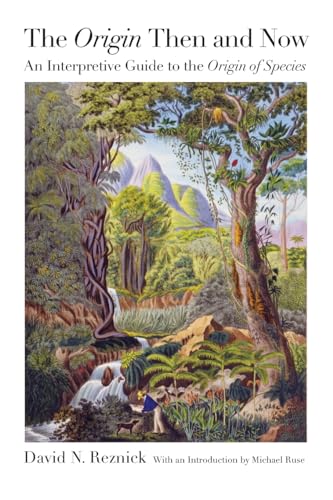
An accessible modern guide to Darwin's masterwork Charles Darwin's Origin of Species is one of the most widely cited books in modern science. Yet tackling this classic can be daunting for students and general readers alike because of Darwin's Victorian prose and the complexity and scope of his ideas. The "Origin" Then and Now is a unique guide to Darwin's masterwork, making it accessible to a much wider audience by deconstructing and reorganizing the Origin in a way that allows for a clear explanation of its key concepts. The Origin is examined within the historical context in which it was written, and modern examples are used to reveal how this work remains a relevant and living document for today. In this eye-opening and accessible guide, David Reznick shows how many peculiarities of the Origin can be explained by the state of science in 1859, helping readers to grasp the true scope of Darwin's departure from the mainstream thinking of his day. He reconciles Darwin's concept of species with our current concept, which has advanced in important ways since Darwin first wrote the Origin, and he demonstrates why Darwin's theory unifies the biological sciences under a single conceptual framework much as Newton did for physics. Drawing liberally from the facsimile of the first edition of the Origin, Reznick enables readers to follow along as Darwin develops his ideas. The "Origin" Then and Now is an indispensable primer for anyone seeking to understand Darwin's Origin of Species and the ways it has shaped the modern study of evolution.
Die Inhaltsangabe kann sich auf eine andere Ausgabe dieses Titels beziehen.
Über die Autorin bzw. den Autor
David N. Reznick is professor of biology at the University of California, Riverside.
Von der hinteren Coverseite
"For those about to read the Origin of Species for the first time, or for those about to read it yet again, David Reznick has provided a marvelous guide. He looks to the past so that readers can understand the history of Darwin's great book, but he also looks to the future, showing how, chapter by chapter, the Origin set the ground rules for modern biology."--Carl Zimmer, author of The Tangled Bank: An Introduction to Evolution and A Planet of Viruses
"This is a beautiful book--the best book I have ever read dealing with the Origin. It will move many people, experts and lay readers alike."--Lee Alan Dugatkin, author of Principles of Animal Behavior
"The "Origin" Then and Now has made the wealth of information held within Darwin's opus many times more accessible. This book is unquestionably essential reading for students and others approaching the Origin for the first time. It should be terrifically useful to anyone with an interest in understanding one of the most important books in intellectual history."--Kurt Schwenk, University of Connecticut
"David Reznick's elegantly written introduction to evolution is magnificent. It should be highly recommended reading for any course on evolution or Darwin, and I will recommend it to scientists and nonscientists alike."--Francisco J. Ayala, University of California, Irvine, author of Darwin's Gift to Science and Religion
"While most treatments of the Origin of Species set the book in the context of its time, this elegant account sets the book in the context of its science. By explaining Victorian science and showing how modern scientific discoveries illuminate Darwin's ideas, Reznick demonstrates just how revolutionary and brilliant the Origin was. Engaging, scholarly, and insightful, this is the essential companion to the Origin."--Joseph Travis, Florida State University
"Reznick masterfully highlights one of the most important, but commonly overlooked, aspects of the Origin--its scholarly approach to the theory of evolution, encompassing expertise from geology and natural history to embryology. Exceptionally well-written and comprehensive, and full of fascinating historical and cultural accounts of major biological discoveries, Reznick's book is itself a perfect illustration of the timeless qualities of scientific rigor and scholarship that were so crucial to Darwin's theory."--Alexander V. Badyaev, University of Arizona
"Reznick cogently argues that Darwin's seminal book holds more than historical interest; it is as relevant today as it was in 1859. The 'Origin' Then and Now provides an accessible way to enjoy the totality of Darwin's thesis."--Kenneth Dial, University of Montana
Auszug. © Genehmigter Nachdruck. Alle Rechte vorbehalten.
The Origin Then and Now
An Interpretive Guide to the Origin of SpeciesBy David N. ReznickPRINCETON UNIVERSITY PRESS
Copyright © 2010 Princeton University PressAll right reserved.
ISBN: 978-0-691-15257-8
Contents
Preface................................................................................................ixCorrespondence between Chapters........................................................................xivAcknowledgments........................................................................................xvIntroduction: Charles Darwin and the Origin of Species MICHAEL RUSE...................................31 Preamble to Natural selection........................................................................292 Variation under Domestication........................................................................383 Variation under Nature I.............................................................................564 The struggle for existence...........................................................................665 Natural selection I..................................................................................776 Laws of Variation....................................................................................1027 evolution today: A Modern Perspective on Natural selection...........................................1198 Preamble to speciation...............................................................................1379 Variation under Nature II............................................................................15210 Natural selection II................................................................................16411 Hybridism...........................................................................................19012 evolution today: The Mosquitoes of the London Underground...........................................20513 Preamble: What Is a Theory?.........................................................................21914 Difficulties on Theory..............................................................................22715 Instinct............................................................................................25016 Geology I: Background...............................................................................26417 Geology II: on the Imperfection of the Geological Record............................................27518 Geology III: on the Geological succession of organic Beings.........................................28819 Geology IV: evolution today.........................................................................30120 Geographical Distribution...........................................................................31421 Geographical Distribution, Continued................................................................33122 Mutual Affinities of organic Beings: Morphology: embryology: Rudimentary organs.....................34623 Recapitulation and Conclusion.......................................................................38124 evolution today: The Witness Has Been Found, Again and Again........................................401Illustration Credits...................................................................................417Index..................................................................................................419
Chapter One
Preamble to Natural selection
In the opening chapters of the Origin, Darwin intertwined the processes of natural selection and speciation. You will see why he did so later. His not separating the two has been a source of confusion. Some readers concluded that the Origin of Species is all about natural selection and not really about the origin of species. Others concluded that speciation and evolution are equivalents, so that we only see evolution when we see the origin of new species. Neither of these inferences is true. As a first step in making the Origin accessible, I have separated Darwin's proposal of natural selection as the mechanism of evolutionary change from speciation, which is a possible consequence of natural selection. One virtue of separating natural selection from speciation is that natural selection, and the resulting evolution that it causes, does not necessarily cause speciation. Natural selection is a process that is constantly in action within all species and has important consequences in its own right. Today, many scientists study natural selection without any reference to speciation. In part 1, I describe Darwin's presentation of natural selection. I consider speciation separately in part 2. This presentation is consistent with Darwin's message, since he was explicit in addressing the importance of natural selection to evolution within a species and in stating that speciation is only an occasional outcome of evolution by natural selection.
Darwin was not the first to propose a theory of evolution. His distinction, shared by A. R. Wallace, is that he proposed natural selection as the cause of evolution. The full title for Darwin's theory is thus the "theory of evolution by natural selection." I will often abbreviate this title to just "Darwin's theory." It is important to realize that evolution and evolution by natural selection are separable. Darwin was very successful in convincing the world that evolution is a fact, but his success in promoting natural selection as the cause of evolution was delayed until the modern synthesis era (1920s–1950s). As biologists' appreciation for natural selection was rekindled, they also realized that there are other causes of evolution, to be described later. Since this book is about Darwin and the Origin, I will focus on natural selection.
Darwin presented the concept of natural selection over the first five chapters of the Origin. Because of the length and complexity of his argument, it is good to know the premises and some of the properties of evolution by natural selection at the outset. To present these, I begin in the Galapagos Islands, where Darwin gained some of his key insights about natural selection and speciation.
The Galapagos archipelago straddles the equator and lies 500–600 miles off the west coast of south America. These are "oceanic" islands, meaning that they have never had contact with other landmasses. They were formed by volcanoes that erupted under the ocean, then grew to the surface and emerged as lifeless, dry land. Prevailing winds and ocean currents control their climate. Trade winds blow persistently from east to west and drive the surface water of the ocean in their path. As the water on the surface is driven west, an upwelling of deep, cold, nutrient-rich water along the coast of south America replaces it. These wind-driven currents create the continuous stream of cold water that surrounds the islands. The water in turn cools the winds. Because the islands are on the equator, the sun continuously heats them. This combination of warm land and cool winds causes the islands to be dry. The cool sea winds warm up and absorb moisture as they pass over the land, just as the dew on a lawn dries as the sun rises and heats the air. When el Niño events occur, this flow of cold water ceases, and the waters and winds around the islands warm up. As they do, their drying effects wane, and rainfall can increase dramatically. El Niño events occur at irregular intervals, ranging from two to seven years. They are often interspersed with droughts, so, over time, the amount of rainfall fluctuates widely and irregularly.
The same...
„Über diesen Titel“ kann sich auf eine andere Ausgabe dieses Titels beziehen.
Suchergebnisse für The Origin Then and Now: An Interpretive Guide to the...

Foto des Verkäufers
The Origin Then and Now: An Interpretive Guide to the Origin of Species
Verlag:
Princeton University Press, 2011
ISBN 10: 0691152578
ISBN 13: 9780691152578
Gebraucht
Softcover
Anbieter: clickgoodwillbooks, Indianapolis, IN, USA
Verkäuferbewertung 4 von 5 Sternen

Zustand: acceptable. Used - Acceptable: All pages and the cover are intact, but shrink wrap, dust covers, or boxed set case may be missing. Pages may include limited notes, highlighting, or minor water damage but the text is readable. Item may be missing bundled media. Bestandsnummer des Verkäufers 3O6QYV001EYY_ns
Gebraucht kaufen
EUR 16,81
EUR 3,44 Versand
Versand innerhalb von USA
Versand innerhalb von USA
Anzahl: 1 verfügbar
Beispielbild für diese ISBN
The Origin Then and Now: An Interpretive Guide to the Origin of Species
Verlag:
Princeton University Press, 2011
ISBN 10: 0691152578
ISBN 13: 9780691152578
Gebraucht
paperback
Anbieter: Textbooks_Source, Columbia, MO, USA
Verkäuferbewertung 5 von 5 Sternen

paperback. Zustand: Good. Ships in a BOX from Central Missouri! May not include working access code. Will not include dust jacket. Has used sticker(s) and some writing or highlighting. UPS shipping for most packages, (Priority Mail for AK/HI/APO/PO Boxes). Bestandsnummer des Verkäufers 001173759U
Gebraucht kaufen
EUR 19,53
EUR 3,44 Versand
Versand innerhalb von USA
Versand innerhalb von USA
Anzahl: 9 verfügbar
Beispielbild für diese ISBN
The Origin Then and Now: An Interpretive Guide to the Origin of Species
Anbieter: Textbooks_Source, Columbia, MO, USA
Verkäuferbewertung 5 von 5 Sternen
paperback. Zustand: New. Ships in a BOX from Central Missouri! UPS shipping for most packages, (Priority Mail for AK/HI/APO/PO Boxes). Bestandsnummer des Verkäufers 001173759N
Neu kaufen
EUR 29,53
EUR 3,44 Versand
Versand innerhalb von USA
Versand innerhalb von USA
Anzahl: 2 verfügbar
Foto des Verkäufers
Origin Then and Now : An Interpretive Guide to the Origin of Species
Anbieter: GreatBookPrices, Columbia, MD, USA
Verkäuferbewertung 5 von 5 Sternen
Zustand: New. Bestandsnummer des Verkäufers 12330075-n
Neu kaufen
EUR 30,72
EUR 2,28 Versand
Versand innerhalb von USA
Versand innerhalb von USA
Anzahl: 2 verfügbar
Foto des Verkäufers
The Origin Then and Now
Verlag:
Princeton University Press, US, 2011
ISBN 10: 0691152578
ISBN 13: 9780691152578
Neu
Paperback
Anbieter: Rarewaves USA, HEBRON, KY, USA
Verkäuferbewertung 5 von 5 Sternen
Paperback. Zustand: New. Charles Darwin's Origin of Species is one of the most widely cited books in modern science. Yet tackling this classic can be daunting for students and general readers alike because of Darwin's Victorian prose and the complexity and scope of his ideas. The "Origin" Then and Now is a unique guide to Darwin's masterwork, making it accessible to a much wider audience by deconstructing and reorganizing the Origin in a way that allows for a clear explanation of its key concepts. The Origin is examined within the historical context in which it was written, and modern examples are used to reveal how this work remains a relevant and living document for today. In this eye-opening and accessible guide, David Reznick shows how many peculiarities of the Origin can be explained by the state of science in 1859, helping readers to grasp the true scope of Darwin's departure from the mainstream thinking of his day. He reconciles Darwin's concept of species with our current concept, which has advanced in important ways since Darwin first wrote the Origin, and he demonstrates why Darwin's theory unifies the biological sciences under a single conceptual framework much as Newton did for physics.Drawing liberally from the facsimile of the first edition of the Origin, Reznick enables readers to follow along as Darwin develops his ideas. The "Origin" Then and Now is an indispensable primer for anyone seeking to understand Darwin's Origin of Species and the ways it has shaped the modern study of evolution. Bestandsnummer des Verkäufers LU-9780691152578
Neu kaufen
EUR 34,13
Versand gratis
Versand innerhalb von USA
Versand innerhalb von USA
Anzahl: Mehr als 20 verfügbar
Foto des Verkäufers
Origin Then and Now : An Interpretive Guide to the Origin of Species
Verlag:
Princeton University Press, 2011
ISBN 10: 0691152578
ISBN 13: 9780691152578
Gebraucht
Softcover
Anbieter: GreatBookPrices, Columbia, MD, USA
Verkäuferbewertung 5 von 5 Sternen
Zustand: As New. Unread book in perfect condition. Bestandsnummer des Verkäufers 12330075
Gebraucht kaufen
EUR 33,16
EUR 2,28 Versand
Versand innerhalb von USA
Versand innerhalb von USA
Anzahl: 2 verfügbar
Foto des Verkäufers
The "Origin" Then and Now: An Interpretive Guide to the "Origin of Species" (Paperback or Softback)
Verlag:
Princeton University Press 11/6/2011, 2011
ISBN 10: 0691152578
ISBN 13: 9780691152578
Neu
Paperback or Softback
Anbieter: BargainBookStores, Grand Rapids, MI, USA
Verkäuferbewertung 5 von 5 Sternen
Paperback or Softback. Zustand: New. The "Origin" Then and Now: An Interpretive Guide to the "Origin of Species". Book. Bestandsnummer des Verkäufers BBS-9780691152578
Beispielbild für diese ISBN
The Origin Then and Now: An Interpretive Guide to the Origin of Species
Anbieter: California Books, Miami, FL, USA
Verkäuferbewertung 4 von 5 Sternen
Zustand: New. Bestandsnummer des Verkäufers I-9780691152578
Neu kaufen
EUR 36,41
Versand gratis
Versand innerhalb von USA
Versand innerhalb von USA
Anzahl: Mehr als 20 verfügbar
Beispielbild für diese ISBN
The Origin Then and Now
Anbieter: PBShop.store UK, Fairford, GLOS, Vereinigtes Königreich
Verkäuferbewertung 5 von 5 Sternen
PAP. Zustand: New. New Book. Shipped from UK. Established seller since 2000. Bestandsnummer des Verkäufers WP-9780691152578
Neu kaufen
EUR 33,27
EUR 5,85 Versand
Versand von Vereinigtes Königreich nach USA
Versand von Vereinigtes Königreich nach USA
Anzahl: 1 verfügbar
Foto des Verkäufers
Origin Then and Now : An Interpretive Guide to the Origin of Species
Verlag:
Princeton University Press, 2011
ISBN 10: 0691152578
ISBN 13: 9780691152578
Gebraucht
Softcover
Anbieter: GreatBookPricesUK, Woodford Green, Vereinigtes Königreich
Verkäuferbewertung 5 von 5 Sternen
Zustand: good. May show signs of wear, highlighting, writing, and previous use. This item may be a former library book with typical markings. No guarantee on products that contain supplements Your satisfaction is 100% guaranteed. Twenty-five year bookseller with shipments to over fifty million happy customers. Bestandsnummer des Verkäufers 12330075-5
Gebraucht kaufen
EUR 31,10
EUR 17,49 Versand
Versand von Vereinigtes Königreich nach USA
Versand von Vereinigtes Königreich nach USA
Anzahl: 5 verfügbar