
Verwandte Artikel zu After Civil Rights: Racial Realism in the New American...
Inhaltsangabe
A provocative new approach to race in the workplace
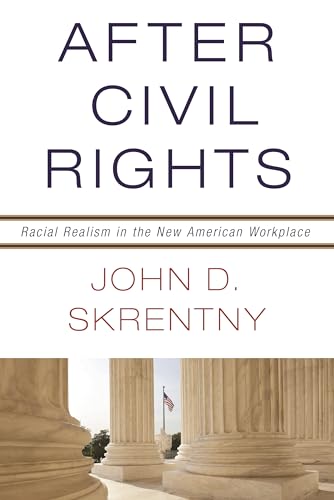
What role should racial difference play in the American workplace? As a nation, we rely on civil rights law to address this question, and the monumental Civil Rights Act of 1964 seemingly answered it: race must not be a factor in workplace decisions. In After Civil Rights, John Skrentny contends that after decades of mass immigration, many employers, Democratic and Republican political leaders, and advocates have adopted a new strategy to manage race and work. Race is now relevant not only in negative cases of discrimination, but in more positive ways as well. In today's workplace, employers routinely practice "racial realism," where they view race as real—as a job qualification. Many believe employee racial differences, and sometimes immigrant status, correspond to unique abilities or evoke desirable reactions from clients or citizens. They also see racial diversity as a way to increase workplace dynamism. The problem is that when employers see race as useful for organizational effectiveness, they are often in violation of civil rights law.
After Civil Rights examines this emerging strategy in a wide range of employment situations, including the low-skilled sector, professional and white-collar jobs, and entertainment and media. In this important book, Skrentny urges us to acknowledge the racial realism already occurring, and lays out a series of reforms that, if enacted, would bring the law and lived experience more in line, yet still remain respectful of the need to protect the civil rights of all workers.
Die Inhaltsangabe kann sich auf eine andere Ausgabe dieses Titels beziehen.
Über die Autorin bzw. den Autor
John D. Skrentny is professor of sociology and director of the Center for Comparative Immigration Studies at the University of California, San Diego. His books include The Minority Rights Revolution and The Ironies of Affirmative Action: Politics, Culture, and Justice in America.
Von der hinteren Coverseite
"John Skrentny's After Civil Rights will change the way we think and talk about the racial dynamics of the American workplace. It is a singular achievement, revealing in insightful ways the main strategies for managing race in employment over the past several decades. Skrentny maintains that these strategies, what he calls 'racial realism,' make American civil rights laws seem disturbingly outdated. Racial differences can be constructively managed with a focus that goes beyond the protection of rights. He addresses this disconnect head-on with compelling arguments on how the practices of racial realism can be harmonized with the American goals of justice and equal opportunity. This well-written and thoroughly researched book is a must-read."--William Julius Wilson, Harvard University
"John Skrentny's new realism about job discrimination makes a fundamental contribution to conventional understandings of the problem. The book will be a key resource for a new generation as it engages in an ongoing reassessment of the living legacy of the Civil Rights Act of 1964."--Bruce Ackerman, Yale University
"This profoundly important book, from one of our most sophisticated and influential scholars of race, paints a rich and variegated picture of contemporary American racial and ethnic relations at work. Skrentny shows that bias remains pervasive at the bottom of the occupational pyramid, even as it has moderated at the top. He makes innovative and provocative suggestions for reform that offer a ray of hope."--Frank Dobbin, author ofInventing Equal Opportunity
"After Civil Rights is a terrific book. Employers are increasingly using race-consciousness to improve their own bottom line, and they are doing so in ways that neither Congress nor the Supreme Court has expressly condoned. There is no one better suited to tell this story than Skrentny."--Deborah Malamud, New York University School of Law
Aus dem Klappentext
"John Skrentny's After Civil Rights will change the way we think and talk about the racial dynamics of the American workplace. It is a singular achievement, revealing in insightful ways the main strategies for managing race in employment over the past several decades. Skrentny maintains that these strategies, what he calls 'racial realism,' make American civil rights laws seem disturbingly outdated. Racial differences can be constructively managed with a focus that goes beyond the protection of rights. He addresses this disconnect head-on with compelling arguments on how the practices of racial realism can be harmonized with the American goals of justice and equal opportunity. This well-written and thoroughly researched book is a must-read."--William Julius Wilson, Harvard University
"John Skrentny's new realism about job discrimination makes a fundamental contribution to conventional understandings of the problem. The book will be a key resource for a new generation as it engages in an ongoing reassessment of the living legacy of the Civil Rights Act of 1964."--Bruce Ackerman, Yale University
"This profoundly important book, from one of our most sophisticated and influential scholars of race, paints a rich and variegated picture of contemporary American racial and ethnic relations at work. Skrentny shows that bias remains pervasive at the bottom of the occupational pyramid, even as it has moderated at the top. He makes innovative and provocative suggestions for reform that offer a ray of hope."--Frank Dobbin, author ofInventing Equal Opportunity
"After Civil Rights is a terrific book. Employers are increasingly using race-consciousness to improve their own bottom line, and they are doing so in ways that neither Congress nor the Supreme Court has expressly condoned. There is no one better suited to tell this story than Skrentny."--Deborah Malamud, New York University School of Law
Auszug. © Genehmigter Nachdruck. Alle Rechte vorbehalten.
AFTER CIVIL RIGHTS
Racial Realism in the New American Workplace
By JOHN D. SKRENTNYPRINCETON UNIVERSITY PRESS
Copyright © 2014 Princeton University Press
All rights reserved.
ISBN: 978-0-691-15996-6All rights reserved.
Contents
| List of Figures and Tables................................................. | ix |
| Preface.................................................................... | xi |
| CHAPTER 1 Managing Race in the American Workplace......................... | 1 |
| CHAPTER 2 Leverage Racial Realism in the Professions and Business........ | 38 |
| CHAPTER 3 We the People Racial Realism in Politics and Government........ | 89 |
| CHAPTER 4 Displaying Race for Dollars Racial Realism in Media and Entertainment.............................................................. | 153 |
| CHAPTER 5 The Jungle Revisited? Racial Realism in the Low-Skilled Sector..................................................................... | 216 |
| CHAPTER 6 Bringing Practice, Law, and Values Together..................... | 265 |
| Notes...................................................................... | 291 |
| Index...................................................................... | 383 |
CHAPTER 1
Managing Race inthe American Workplace
What role should racial differences play in American life? Americanshave debated this question for decades. In fact, if the question is understoodbroadly, they have been debating it for centuries. Yet the America ofthe 2000s is very different from the nation at its founding. It is quite differentalso from the America that existed, now a half-century in the past,when our civil rights laws first took shape. Civil rights law is, of course,the primary tool we use to authorize and enact our visions and plans forhow race should or should not matter. Can civil rights laws made a half-centuryago still adequately govern race relations in today's America? Dothey reflect our current practices and goals?
There are several civil rights laws, but my focus is on the venerable,celebrated Civil Rights Act of 1964. Could it be that this law—whichlegal scholars have called a "superstatute" or "landmark statute" becauseof its constitution-like importance in American law—is in someways out of sync or anachronistic in today's America? The point here isnot that the Civil Rights Act may out of sync because it has failed to stopdiscrimination, which studies show is still common. That only suggeststhat (as with almost all laws) the job of the Civil Rights Act is not yetdone. The point is, rather, that the assumptions and the world that createdthe Civil Rights Act may no longer be true or exist, and that it maywell be time to rethink the law and what we as Americans want it to do.Put another way, we may have entered a period after civil rights—a stagein American history when we can constructively and productively manageracial differences with a focus that goes beyond the protection of rights.
Consider that American racial demography has changed greatly fromthe period when our current civil rights laws were born. In place of thefocus on the black/white divide that dominated congressional debates in1964, controversies about immigration and the growing Latino populationhave taken center stage in American racial politics. Meanwhile, as I describebelow, the economy has been transformed by globalization andtechnological changes, remaking the workplaces that the Civil Rights Actwas intended to regulate.
The way Americans talk about race and what pragmatic and progressivevoices say that they want has changed as well. Never before hassuch a wide variety of employers, advocates, activists, and governmentleaders in American society discussed the benefits of racial diversity andthe utility of racial difference in such a broad range of contexts. Havingemployees of different races, we are told by these elites, is good for businesses,the government, schools, police departments, marketers, medicalpractitioners, and many other institutions. When managed properly, racialdifferences make organizations work better, or make Americans feelbetter, or both. In short, race can be a qualification for employment.It is less discussed, but we see an analogous dynamic at the low endof the job market as well, where employers of low-skilled workers alsoconsider the race, as well as immigrant status, of potential employees.
These employers, the most willing to talk, tell both journalists and socialscientists that they prefer Latinos and Asians as workers, and especiallyimmigrant Latinos and Asians, because they work harder, better, and longerthan others, including white and black Americans. These perceptionshave helped to fuel the great waves of migration that have transformedAmerica since the 1980s.
What we have not come to terms with, however, is that the lauding ofracial differences as beneficial for organizations suggests a new strategyfor thinking about and managing race in America. It does not fit (certainlynot in any obvious way), with traditional conceptions of equal rights andcitizenship. It is an issue quite apart from, and perhaps beyond, civilrights. And yet the country is mostly flying blind. We put into practice ournew conceptions of race in ever wider realms and contexts, while holdingon to more traditional ways of thinking about race and civil rights, andwe do this with little awareness of what is going on. Our laws and conversationsenact multiple strategies and multiple goals in an incoherentjumble. Significant opportunities and values are lost in the shuffle.
The purpose of this book is to provide a picture of the racial dynamicsof the American workplace. I aim to show how race matters, the perceptionsemployers and others openly express when they talk about race, andespecially how current practices fit with the Civil Rights Act. I argue thatsince 1964, there have been three main strategies for managing race inemployment. These vary greatly both in how they conceive of race, andalso in how much support they have in law. The most important point isthis: the strategy of using membership in a racial group as a qualification,what I will call racial realism, has prominent support in society butsurprisingly little in law.
Another purpose of this book is to call for debate. Legal scholar BruceAckerman has emphasized that the civil rights era, the "Second Reconstruction,"was a great constitutional moment and an elaborately deliberatedcreation of "We the People." But the current era is evolving withlittle awareness let alone debate in Congress, the courts, or the publicsphere. My point is not to criticize any particular strategy, but to arguethat we should be mindful of the gap between everyday practice and thelaw, and that we should consider reforming the law to bring the two intosync, so as to ensure that we act in accordance with our most fundamentalvalues. The task is complex: we must balance or manage employmentopportunities and restrictions to Americans of all racial affiliations, aswell as to immigrants. Given this country's violent history, we shouldkeep our eyes wide open when institutionalizing practices on mattersof race.
If we do not know what we are doing, we are likely to do it badly. If wetacitly allow racial meanings to figure in the workplace, without thinkingthrough how this should be done, we will—and already have, as I...
„Über diesen Titel“ kann sich auf eine andere Ausgabe dieses Titels beziehen.
Suchergebnisse für After Civil Rights: Racial Realism in the New American...

Beispielbild für diese ISBN
After Civil Rights: Racial Realism in the New American Workplace
Verlag:
Princeton University Press, 2013
ISBN 10: 0691159963
ISBN 13: 9780691159966
Gebraucht
Hardcover
Anbieter: World of Books (was SecondSale), Montgomery, IL, USA
Verkäuferbewertung 5 von 5 Sternen

Zustand: Very Good. Item in good condition. Textbooks may not include supplemental items i.e. CDs, access codes etc. Bestandsnummer des Verkäufers 00035612531
Gebraucht kaufen
EUR 3,72
Versand gratis
Versand innerhalb von USA
Versand innerhalb von USA
Anzahl: 1 verfügbar
Beispielbild für diese ISBN
After Civil Rights : Racial Realism in the New American Workplace
Verlag:
Oxford University Press, Incorporated, 2013
ISBN 10: 0691159963
ISBN 13: 9780691159966
Gebraucht
Hardcover
Anbieter: Better World Books, Mishawaka, IN, USA
Verkäuferbewertung 5 von 5 Sternen
Zustand: Very Good. Former library copy. Pages intact with possible writing/highlighting. Binding strong with minor wear. Dust jackets/supplements may not be included. Includes library markings. Stock photo provided. Product includes identifying sticker. Better World Books: Buy Books. Do Good. Bestandsnummer des Verkäufers GRP83972194
Gebraucht kaufen
EUR 6,69
Versand gratis
Versand innerhalb von USA
Versand innerhalb von USA
Anzahl: 2 verfügbar
Beispielbild für diese ISBN
After Civil Rights: Racial Realism in the New American Workplace
Verlag:
Princeton University Press, 2013
ISBN 10: 0691159963
ISBN 13: 9780691159966
Gebraucht
Hardcover
Anbieter: ThriftBooks-Atlanta, AUSTELL, GA, USA
Verkäuferbewertung 5 von 5 Sternen
Hardcover. Zustand: Very Good. No Jacket. Missing dust jacket; May have limited writing in cover pages. Pages are unmarked. ~ ThriftBooks: Read More, Spend Less. Bestandsnummer des Verkäufers G0691159963I4N01
Gebraucht kaufen
EUR 7,27
Versand gratis
Versand innerhalb von USA
Versand innerhalb von USA
Anzahl: 1 verfügbar
Beispielbild für diese ISBN
After Civil Rights
Verlag:
Princeton University Press, 2013
ISBN 10: 0691159963
ISBN 13: 9780691159966
Gebraucht
Hardcover
Anbieter: Devils in the Detail Ltd, Oxford, Vereinigtes Königreich
Verkäuferbewertung 5 von 5 Sternen
Zustand: Very Good. Picture shown is for Illustration purposes only, please see below for further details CONDITION ? LIKE NEW slight dent to edge, shipped from the UK. Bestandsnummer des Verkäufers 315/BT/713H 966
Gebraucht kaufen
EUR 6,01
EUR 18,65 Versand
Versand von Vereinigtes Königreich nach USA
Versand von Vereinigtes Königreich nach USA
Anzahl: 1 verfügbar
Beispielbild für diese ISBN
After Civil Rights: Racial Realism in the New American Workplace
Anbieter: Majestic Books, Hounslow, Vereinigtes Königreich
Verkäuferbewertung 4 von 5 Sternen

Zustand: New. pp. 448. Bestandsnummer des Verkäufers 56771851
Neu kaufen
EUR 35,13
EUR 7,58 Versand
Versand von Vereinigtes Königreich nach USA
Versand von Vereinigtes Königreich nach USA
Anzahl: 1 verfügbar
Foto des Verkäufers
After Civil Rights : Racial Realism in the New American Workplace
Anbieter: GreatBookPrices, Columbia, MD, USA
Verkäuferbewertung 5 von 5 Sternen
Zustand: New. Bestandsnummer des Verkäufers 19663024-n
Neu kaufen
EUR 40,58
EUR 2,28 Versand
Versand innerhalb von USA
Versand innerhalb von USA
Anzahl: 1 verfügbar
Beispielbild für diese ISBN
After Civil Rights: Racial Realism in the New American Workplace
Anbieter: Books Puddle, New York, NY, USA
Verkäuferbewertung 4 von 5 Sternen
Zustand: New. pp. 448 Edition. Bestandsnummer des Verkäufers 2651772116
Neu kaufen
EUR 39,72
EUR 3,44 Versand
Versand innerhalb von USA
Versand innerhalb von USA
Anzahl: 1 verfügbar
Beispielbild für diese ISBN
After Civil Rights Racial Realism in the New American Workplace
Anbieter: Basi6 International, Irving, TX, USA
Verkäuferbewertung 5 von 5 Sternen
Zustand: Brand New. New. US edition. Expediting shipping for all USA and Europe orders excluding PO Box. Excellent Customer Service. Bestandsnummer des Verkäufers ABEOCT25-107319
Beispielbild für diese ISBN
After Civil Rights; Racial Realism in the New American Workplace
Verlag:
Princeton University Press, Princeton, New Jersey, 2014
ISBN 10: 0691159963
ISBN 13: 9780691159966
Gebraucht
Hardcover
Erstausgabe
Anbieter: Ground Zero Books, Ltd., Silver Spring, MD, USA
Verkäuferbewertung 5 von 5 Sternen
Hardcover. Zustand: Very good. Zustand des Schutzumschlags: Very good. Presumed First Edition, First printing. xiv, 397, [3] pages. Princeton University Press Release laid in. Includes Illustrations. List of Figures and Tables, Preface, Notes, Index. "Review Copy not for Resale" stamped on bottom edge. John Skrentny received his Ph.D. in sociology from Harvard University. His primary areas of research and teaching interest are law, politics, and public policy, especially as the relate to equal opportunities, immigration, the science and engineering workforce, and job creation. After spending many years studying law and policy related to equal opportunity, his research and writing interests have expanded to include science and innovation policy - especially as these relate to STEM workforce development, the immigration of scientists and engineers, and their relationship to regional economic growth. The author shows that racial bias remains pervasive at the bottom of the occupational pyramid, even as it has moderated at the top. He makes innovative and provocative suggestions for reform that offer a ray of hope. What role should racial difference play in the American workplace? As a nation, we rely on civil rights law to address this question, and the monumental Civil Rights Act of 1964 seemingly answered it: race must not be a factor in workplace decisions. In After Civil Rights, John Skrentny contends that after decades of mass immigration, many employers, Democratic and Republican political leaders, and advocates have adopted a new strategy to manage race and work. Race is now relevant not only in negative cases of discrimination, but in more positive ways as well. In today's workplace, employers routinely practice "racial realism," where they view race as real-as a job qualification. Many believe employee racial differences, and sometimes immigrant status, correspond to unique abilities or evoke desirable reactions from clients or citizens. They also see racial diversity as a way to increase workplace dynamism. The problem is that when employers see race as useful for organizational effectiveness, they are often in violation of civil rights law. After Civil Rights examines this emerging strategy in a wide range of employment situations, including the low-skilled sector, professional and white-collar jobs, and entertainment and media. In this important book, Skrentny urges us to acknowledge the racial realism already occurring, and lays out a series of reforms that, if enacted, would bring the law and lived experience more in line, yet still remain respectful of the need to protect the civil rights of all workers. Bestandsnummer des Verkäufers 79021
Gebraucht kaufen
EUR 39,96
EUR 4,31 Versand
Versand innerhalb von USA
Versand innerhalb von USA
Anzahl: 1 verfügbar
Beispielbild für diese ISBN
After Civil Rights: Racial Realism in the New American Workplace
Anbieter: Biblios, Frankfurt am main, HESSE, Deutschland
Verkäuferbewertung 4 von 5 Sternen
Zustand: New. pp. 448. Bestandsnummer des Verkäufers 1851772126
Neu kaufen
EUR 34,65
EUR 9,95 Versand
Versand von Deutschland nach USA
Versand von Deutschland nach USA
Anzahl: 1 verfügbar