
Verwandte Artikel zu Two-Mile Time Machine: Ice Cores, Abrupt Climate Change,...
Two-Mile Time Machine: Ice Cores, Abrupt Climate Change, and Our Future (Princeton Science Library) - Softcover
Buch 18 von 61: Princeton Science Library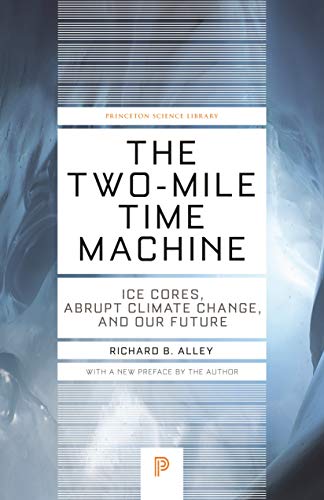
Inhaltsangabe
In the 1990s Richard B. Alley and his colleagues made headlines with the discovery that the last ice age came to an abrupt end over a period of only three years. In The Two-Mile Time Machine, Alley tells the fascinating history of global climate changes as revealed by reading the annual rings of ice from cores drilled in Greenland. He explains that humans have experienced an unusually temperate climate compared to the wild fluctuations that characterized most of prehistory. He warns that our comfortable environment could come to an end in a matter of years and tells us what we need to know in order to understand and perhaps overcome climate changes in the future. In a new preface, the author weighs in on whether our understanding of global climate change has altered in the years since the book was first published, what the latest research tells us, and what he is working on next.
Die Inhaltsangabe kann sich auf eine andere Ausgabe dieses Titels beziehen.
Über die Autorin bzw. den Autor
Richard B. Alley is the Evan Pugh Professor of Geosciences at Pennsylvania State University and a member of the National Academy of Sciences. The author of more than 240 scientific papers, he was also the host of the PBS miniseries Earth: The Operators' Manual.
Von der hinteren Coverseite
"The Two-Mile Time Machine takes a story that has been much discussed in the press and revitalizes it with the author's infectious enthusiasm and with background information on the history of ice core drilling. It provides an excellent survey for the general reader and those interested in the history of scientific exploration and issues related to science and society."--Thomas J. Crowley, Texas A & M University
"Richard Alley takes the reader from the rationale for the study of ice sheets to the story of how ice cores are recovered and how we read the climate and environment of the past recorded therein. He does a good job putting his message on the human time scale and makes his information accessible to the general reader."--Lonnie G. Thompson, The Ohio State University
„Über diesen Titel“ kann sich auf eine andere Ausgabe dieses Titels beziehen.
Suchergebnisse für Two-Mile Time Machine: Ice Cores, Abrupt Climate Change,...

Beispielbild für diese ISBN
The TwoMile Time Machine Ice
Verlag:
Princeton University Press, 2014
ISBN 10: 069116083X
ISBN 13: 9780691160832
Gebraucht
Softcover
Anbieter: World of Books (was SecondSale), Montgomery, IL, USA
Verkäuferbewertung 5 von 5 Sternen

Zustand: Acceptable. Item in acceptable condition! Textbooks may not include supplemental items i.e. CDs, access codes etc. Bestandsnummer des Verkäufers 00103724226
Gebraucht kaufen
EUR 4,46
Versand gratis
Versand innerhalb von USA
Versand innerhalb von USA
Anzahl: 1 verfügbar
Beispielbild für diese ISBN
The TwoMile Time Machine Ice
Verlag:
Princeton University Press, 2014
ISBN 10: 069116083X
ISBN 13: 9780691160832
Gebraucht
Softcover
Anbieter: World of Books (was SecondSale), Montgomery, IL, USA
Verkäuferbewertung 5 von 5 Sternen
Zustand: Good. Item in good condition. Textbooks may not include supplemental items i.e. CDs, access codes etc. Bestandsnummer des Verkäufers 00099306803
Gebraucht kaufen
EUR 4,46
Versand gratis
Versand innerhalb von USA
Versand innerhalb von USA
Anzahl: 1 verfügbar
Foto des Verkäufers
The Two-Mile Time Machine: Ice Cores, Abrupt Climate Change, and Our Future - Updated Edition (Princeton Science Library)
Verlag:
Princeton University Press, 2014
ISBN 10: 069116083X
ISBN 13: 9780691160832
Gebraucht
Softcover
Anbieter: Dream Books Co., Denver, CO, USA
Verkäuferbewertung 5 von 5 Sternen
Zustand: good. Gently used with minimal wear on the corners and cover. A few pages may contain light highlighting or writing, but the text remains fully legible. Dust jacket may be missing, and supplemental materials like CDs or codes may not be included. May be ex-library with library markings. Ships promptly! Bestandsnummer des Verkäufers DBV.069116083X.G
Gebraucht kaufen
EUR 4,47
Versand gratis
Versand innerhalb von USA
Versand innerhalb von USA
Anzahl: 2 verfügbar
Beispielbild für diese ISBN
The Two-Mile Time Machine: Ice Cores, Abrupt Climate Change, and Our Future - Updated Edition
Verlag:
Princeton University Press, 2014
ISBN 10: 069116083X
ISBN 13: 9780691160832
Gebraucht
Paperback
Anbieter: ThriftBooks-Atlanta, AUSTELL, GA, USA
Verkäuferbewertung 5 von 5 Sternen
Paperback. Zustand: As New. No Jacket. Pages are clean and are not marred by notes or folds of any kind. ~ ThriftBooks: Read More, Spend Less. Bestandsnummer des Verkäufers G069116083XI2N00
Gebraucht kaufen
EUR 6,19
Versand gratis
Versand innerhalb von USA
Versand innerhalb von USA
Anzahl: 1 verfügbar
Beispielbild für diese ISBN
The Two-Mile Time Machine: Ice Cores, Abrupt Climate Change, and Our Future - Updated Edition
Verlag:
Princeton University Press, 2014
ISBN 10: 069116083X
ISBN 13: 9780691160832
Gebraucht
Paperback
Anbieter: ThriftBooks-Atlanta, AUSTELL, GA, USA
Verkäuferbewertung 5 von 5 Sternen
Paperback. Zustand: Good. No Jacket. Pages can have notes/highlighting. Spine may show signs of wear. ~ ThriftBooks: Read More, Spend Less. Bestandsnummer des Verkäufers G069116083XI3N00
Gebraucht kaufen
EUR 6,19
Versand gratis
Versand innerhalb von USA
Versand innerhalb von USA
Anzahl: 1 verfügbar
Beispielbild für diese ISBN
The Two-Mile Time Machine: Ice Cores, Abrupt Climate Change, and Our Future - Updated Edition
Verlag:
Princeton University Press, 2014
ISBN 10: 069116083X
ISBN 13: 9780691160832
Gebraucht
Paperback
Anbieter: ThriftBooks-Dallas, Dallas, TX, USA
Verkäuferbewertung 5 von 5 Sternen
Paperback. Zustand: Good. No Jacket. Pages can have notes/highlighting. Spine may show signs of wear. ~ ThriftBooks: Read More, Spend Less. Bestandsnummer des Verkäufers G069116083XI3N00
Gebraucht kaufen
EUR 6,19
Versand gratis
Versand innerhalb von USA
Versand innerhalb von USA
Anzahl: 1 verfügbar
Foto des Verkäufers
The Two-Mile Time Machine: Ice Cores, Abrupt Climate Change, and Our Future - Updated Edition (Princeton Science Library)
Verlag:
Princeton University Press, 2014
ISBN 10: 069116083X
ISBN 13: 9780691160832
Gebraucht
Softcover
Anbieter: Blue Vase Books, Interlochen, MI, USA
Verkäuferbewertung 5 von 5 Sternen
Zustand: acceptable. The item is very worn but is perfectly usable. Signs of wear can include aesthetic issues such as scratches, dents, worn and creased covers, folded page corners and minor liquid stains. All pages and the cover are intact, but the dust cover may be missing. Pages may include moderate to heavy amount of notes and highlighting, but the text is not obscured or unreadable. Page edges may have foxing age related spots and browning . May NOT include discs, access code or other supplemental materials. Bestandsnummer des Verkäufers BVV.069116083X.A
Gebraucht kaufen
EUR 6,20
Versand gratis
Versand innerhalb von USA
Versand innerhalb von USA
Anzahl: 1 verfügbar
Beispielbild für diese ISBN
The Two-Mile Time Machine: Ice Cores, Abrupt Climate Change, and Our Future - Updated Edition
Verlag:
Princeton University Press, 2014
ISBN 10: 069116083X
ISBN 13: 9780691160832
Gebraucht
Paperback
Anbieter: World of Books Inc, Montgomery, IL, USA
Verkäuferbewertung 4 von 5 Sternen

Paperback. Zustand: Good. In the 1990s Richard B. Alley and his colleagues made headlines with the discovery that the last ice age came to an abrupt end over a period of only three years. In The Two-Mile Time Machine, Alley tells the fascinating history of global climate changes as revealed by reading the annual rings of ice from cores drilled in Greenland. He explains that humans have experienced an unusually temperate climate compared to the wild fluctuations that characterized most of prehistory. He warns that our comfortable environment could come to an end in a matter of years and tells us what we need to know in order to understand and perhaps overcome climate changes in the future. In a new preface, the author weighs in on whether our understanding of global climate change has altered in the years since the book was first published, what the latest research tells us, and what he is working on next. Bestandsnummer des Verkäufers CIN069116083XG
Gebraucht kaufen
EUR 6,27
Versand gratis
Versand innerhalb von USA
Versand innerhalb von USA
Anzahl: 1 verfügbar
Beispielbild für diese ISBN
The Two-Mile Time Machine: Ice Cores, Abrupt Climate Change, and Our Future - Updated Edition
Verlag:
Princeton University Press, 2014
ISBN 10: 069116083X
ISBN 13: 9780691160832
Gebraucht
Paperback
Anbieter: World of Books Inc, Montgomery, IL, USA
Verkäuferbewertung 4 von 5 Sternen
Paperback. Zustand: Fair. In the 1990s Richard B. Alley and his colleagues made headlines with the discovery that the last ice age came to an abrupt end over a period of only three years. In The Two-Mile Time Machine, Alley tells the fascinating history of global climate changes as revealed by reading the annual rings of ice from cores drilled in Greenland. He explains that humans have experienced an unusually temperate climate compared to the wild fluctuations that characterized most of prehistory. He warns that our comfortable environment could come to an end in a matter of years and tells us what we need to know in order to understand and perhaps overcome climate changes in the future. In a new preface, the author weighs in on whether our understanding of global climate change has altered in the years since the book was first published, what the latest research tells us, and what he is working on next. Bestandsnummer des Verkäufers CIN069116083XA
Gebraucht kaufen
EUR 6,27
Versand gratis
Versand innerhalb von USA
Versand innerhalb von USA
Anzahl: 1 verfügbar
Beispielbild für diese ISBN
The Two-Mile Time Machine : Ice Cores, Abrupt Climate Change, and Our Future - Updated Edition
Verlag:
Princeton University Press, 2014
ISBN 10: 069116083X
ISBN 13: 9780691160832
Gebraucht
Softcover
Anbieter: Better World Books: West, Reno, NV, USA
Verkäuferbewertung 5 von 5 Sternen
Zustand: Good. New Preface. Pages intact with minimal writing/highlighting. The binding may be loose and creased. Dust jackets/supplements are not included. Stock photo provided. Product includes identifying sticker. Better World Books: Buy Books. Do Good. Bestandsnummer des Verkäufers 17992385-75
Gebraucht kaufen
EUR 6,90
Versand gratis
Versand innerhalb von USA
Versand innerhalb von USA
Anzahl: 1 verfügbar