
Verwandte Artikel zu Cross and Scepter: The Rise of the Scandinavian Kingdoms...
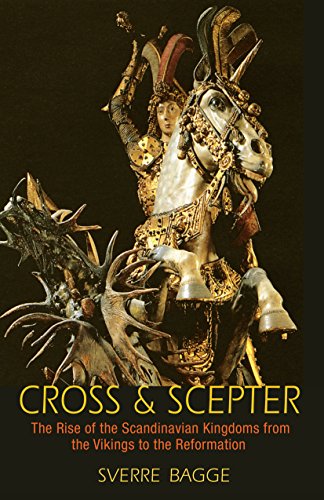
Cross and Scepter: The Rise of the Scandinavian Kingdoms from the Vikings to the Reformation - Hardcover
Inhaltsangabe
A concise history of medieval Scandinavia Christianity and European-style monarchy-the cross and the scepter-were introduced to Scandinavia in the tenth century, a development that was to have profound implications for all of Europe. Cross and Scepter is a concise history of the Scandinavian kingdoms from the age of the Vikings to the Reformation, written by Scandinavia's leading medieval historian. Sverre Bagge shows how the rise of the three kingdoms not only changed the face of Scandinavia, but also helped make the territorial state the standard political unit in Western Europe. He describes Scandinavia's momentous conversion to Christianity and the creation of church and monarchy there, and traces how these events transformed Scandinavian law and justice, military and administrative organization, social structure, political culture, and the division of power among the king, aristocracy, and common people. Bagge sheds important new light on the reception of Christianity and European learning in Scandinavia, and on Scandinavian history writing, philosophy, political thought, and courtly culture. He looks at the reception of European impulses and their adaptation to Scandinavian conditions, and examines the relationship of the three kingdoms to each other and the rest of Europe, paying special attention to the inter-Scandinavian unions and their consequences for the concept of government and the division of power. Cross and Scepter provides an essential introduction to Scandinavian medieval history for scholars and general readers alike, offering vital new insights into state formation and cultural change in Europe.
Die Inhaltsangabe kann sich auf eine andere Ausgabe dieses Titels beziehen.
Über die Autorin bzw. den Autor
Sverre Bagge is professor emeritus of medieval history at the University of Bergen in Norway. His books include Kings, Politics, and the Right Order of the World in German Historiography.
Von der hinteren Coverseite
"This book demonstrates the mastery Sverre Bagge has acquired through his immense and innovative work on state formation in Scandinavia. It will have enduring effects on future discussions because it is as peerless at describing and analyzing micro-processes as at integrating and comparing macro-processes from other parts of Europe."--Gerhard Althoff, University of Münster
"A tour de force. Cross and Scepter is a short, readable, and deeply learned introduction to the political and constitutional history of Scandinavia, written by Scandinavia's foremost medieval historian. No one else but Bagge could have achieved this with such apparent ease."--Patrick Geary, author of The Myth of Nations: The Medieval Origins of Europe
"A masterful survey of Scandinavian history in the Middle Ages. Bagge's writing has focus and drive without unduly skating over important details. The scholarship is superb, as one would expect from the leading Scandinavian medieval historian of his generation."--Anders Winroth, author of The Conversion of Scandinavia: Vikings, Merchants, and Missionaries in the Remaking of Northern Europe
Aus dem Klappentext
"This book demonstrates the mastery Sverre Bagge has acquired through his immense and innovative work on state formation in Scandinavia. It will have enduring effects on future discussions because it is as peerless at describing and analyzing micro-processes as at integrating and comparing macro-processes from other parts of Europe."--Gerhard Althoff, University of Münster
"A tour de force. Cross and Scepter is a short, readable, and deeply learned introduction to the political and constitutional history of Scandinavia, written by Scandinavia's foremost medieval historian. No one else but Bagge could have achieved this with such apparent ease."--Patrick Geary, author of The Myth of Nations: The Medieval Origins of Europe
"A masterful survey of Scandinavian history in the Middle Ages. Bagge's writing has focus and drive without unduly skating over important details. The scholarship is superb, as one would expect from the leading Scandinavian medieval historian of his generation."--Anders Winroth, author of The Conversion of Scandinavia: Vikings, Merchants, and Missionaries in the Remaking of Northern Europe
Auszug. © Genehmigter Nachdruck. Alle Rechte vorbehalten.
CROSS & SCEPTER
The Rise of the Scandinavian Kingdoms from the Vikings to the Reformation
By SVERRE BAGGEPRINCETON UNIVERSITY PRESS
Copyright © 2014 Princeton University Press
All rights reserved.
ISBN: 978-0-691-16150-1All rights reserved.
Contents
Acknowledgments, vii,
Introduction, 1,
CHAPTER ONE The Origins of the Scandinavian Kingdoms, 9,
CHAPTER TWO The Consolidation of the Scandinavian Kingdoms, c. 1050–1350, 50,
CHAPTER THREE State Formation, Social Change, and the Division of Power, 119,
CHAPTER FOUR Royal, Aristocratic, and Ecclesiastical Culture, 174,
CHAPTER FIVE The Later Middle Ages: Agrarian Crisis, Constitutional Conflicts, and Scandinavian Unions, 232,
Conclusion, 290,
Scandinavian State Formation, 900–1537: Break and Continuity Literature, 293,
The Historiography of the Scandinavian Countries, 293,
The Sources for Scandinavian History, 297,
References and Guide to Further Reading, 301,
Index, 315,
CHAPTER 1
The Origins of the Scandinavian Kingdoms
Early Scandinavian Society
Although most histories of Scandinavia, including the present one, focus on the period from the formation of the kingdoms in the tenth and eleventh centuries, the area as a whole has a long history going back to the first settlements which date to the end of the last glacial age around 10,000 BC. The earliest inhabitants were hunters and gatherers. Agriculture was introduced gradually from around 4000 BC, first in the form of slash and burn cultivation, later with the establishment of permanent settlement. Already during the last centuries BC, a largely homogenous agricultural zone had developed in Denmark, southern Sweden, the coastal regions of Norway up to Trøndelag, and southern and western Finland. The rest of Scandinavia was dominated by low-intensive agriculture, hunting and gathering, or pastoral nomadism (the Sami in northern Norway, Sweden, and Finland). The high-intensive agricultural zone gradually expanded until the demographic crisis caused by the Black Death in the mid-fourteenth century, after which a new expansion of the zone of intensive agriculture followed in the sixteenth and seventeenth centuries. In parts of the north, however, nomadic or half-nomadic life continued until the twentieth century.
Because of its climate and terrain, large parts of Scandinavia pose problems for agriculture. The Scandinavian countries are situated between around 54 and 70 degrees north, thus forming the northernmost part of Western Christendom. In addition to being far north, large parts of Scandinavia are also highland, particularly in Norway, and to some extent also in northern Sweden. However, because of the Gulf Stream, the climate is far warmer than in any other part of the world at this latitude—by as much as 5 to 7 degrees C. Thus, it is possible to grow grain at around 70 degrees north in Norway.
As the southernmost of the three kingdoms, with no elevations greater than 200 meters above sea level, Denmark is clearly best suited for agriculture. In the Middle Ages, this country was both the most populous and the most densely settled, its population equal to or perhaps even larger than Sweden and Norway combined. In absolute numbers, the population of Denmark has been estimated at more than 1 million, perhaps nearly 2 million in the early fourteenth century, that of Norway at between 350,00 and 500,000, and the Swedish population at somewhere between 500,000 and 650,000.
But even in Denmark there are local variations. The islands and eastern Jutland were the richest agricultural areas in the Middle Ages, while heath and more marginal land prevailed in western and northern Jutland. Sweden, the largest of the three countries, also had significantly less highland than Norway and correspondingly larger agricultural areas. The latter were mainly concentrated in two parts of the country, in the Mälar valley west of present-day Stockholm and around the large lakes further west, Vänern and Vättern. The southern coast of Finland also has good agricultural land. It eventually became densely settled and formed an important part of the kingdom of Sweden. The remaining part of Sweden and Finland are more hilly and have less productive soil. Taken together the main agricultural areas in Norway, the area around Lake Mjøsa in the east, Jæren in the southwest, and the large valley north of present-day Trondheim in the north, cover a far smaller area than the corresponding districts in Sweden. However, the more marginal areas of this country have other assets, which make them suitable for human habitation. The coast of Norway, as well as its rivers and lakes, have rich fisheries, and the forests and mountains abound in game (elk, deer, and various smaller animals), and provide pasture. Although it is not particularly well suited to agriculture, the western coast of Norway has a mild climate, which protects the grain from frost and, together with the fisheries and wide areas suited for pasture, creates conditions conducive to relatively dense settlements. By contrast, eastern Norway and the more marginal parts of Sweden have the same advantages when it comes to hunting and pasture, and fish are plentiful in the lakes and rivers, but crops are more exposed to frost.
Iceland is by far the most marginal of the Scandinavian countries, not because it is so far north—at 63–67 degrees, it is just south of the Arctic Circle—but because it is situated far out in the Atlantic and its soil is mostly ill-suited to agriculture. When the immigrants arrived, mostly in the period between 870 and 930, the pastures and fisheries were extremely rich. It was also possible to grow grain there until around 1100, when the climate became colder. Eventually, the pastures deteriorated because of too much grazing, the forest was cut down or destroyed by the animals, and the soil became poorer because of erosion. Iceland became a marginal country with very difficult living conditions.
The natural conditions largely explain settlement and to some extent also social organization. Village settlement, which was the normal form of habitation in most of England and large parts of the Continent, was only to be found in Denmark and the best agricultural parts of Sweden. Settlement in the rest of Scandinavia was dominated by individual farms, although, particularly in western Norway, such farms, at least in later periods, are known to have been divided between several families whose houses were joined around a common courtyard.
The written sources give the impression that the Scandinavians suddenly came into contact with Europe around 800, with the expansion of the Carolingian Empire and the Viking expeditions, and that Scandinavia was then transformed as the result of the introduction of the monarchy and the conversion to Christianity. In addition, earlier scholarship has often depicted Scandinavian society in the previous period as relatively egalitarian, a society of free and independent farmers organized in extended families. This society was then gradually transformed, as a result of demographic growth and the new impulses from Europe, into the hierarchical and aristocratic society we know from the following period.
More recent research has revised this picture. There is archaeological evidence dating back to the first centuries AD of contacts with Europe as well as social stratification. A number of graves excavated in various parts of Scandinavia contain exquisite objects of Roman origin: drinking-horns and...
„Über diesen Titel“ kann sich auf eine andere Ausgabe dieses Titels beziehen.
Suchergebnisse für Cross and Scepter: The Rise of the Scandinavian Kingdoms...

Foto des Verkäufers
Cross and Scepter: The Rise of the Scandinavian Kingdoms from the Vikings to the Reformation
Verlag:
Princeton University Press, 2014
ISBN 10: 069116150X
ISBN 13: 9780691161501
Gebraucht
Hardcover
Anbieter: Zoom Books Company, Lynden, WA, USA
Verkäuferbewertung 5 von 5 Sternen

Zustand: very_good. Book is in very good condition and may include minimal underlining highlighting. The book can also include "From the library of" labels. May not contain miscellaneous items toys, dvds, etc. . We offer 100% money back guarantee and 24 7 customer service. Bestandsnummer des Verkäufers ZBV.069116150X.VG
Gebraucht kaufen
EUR 25,86
Versand gratis
Versand innerhalb von USA
Versand innerhalb von USA
Anzahl: 1 verfügbar
Beispielbild für diese ISBN
Cross and Scepter: The Rise of the Scandinavian Kingdoms from the Vikings to the Reformation
Verlag:
Princeton University Press, 2014
ISBN 10: 069116150X
ISBN 13: 9780691161501
Gebraucht
Hardcover
Anbieter: HPB-Red, Dallas, TX, USA
Verkäuferbewertung 5 von 5 Sternen
hardcover. Zustand: Good. Connecting readers with great books since 1972! Used textbooks may not include companion materials such as access codes, etc. May have some wear or writing/highlighting. We ship orders daily and Customer Service is our top priority! Bestandsnummer des Verkäufers S_478204551
Gebraucht kaufen
EUR 24,17
EUR 3,31 Versand
Versand innerhalb von USA
Versand innerhalb von USA
Anzahl: 1 verfügbar
Beispielbild für diese ISBN
Cross and Scepter: The Rise of the Scandinavian Kingdoms from the Vikings to the Reformation
Verlag:
Princeton University Press, 2014
ISBN 10: 069116150X
ISBN 13: 9780691161501
Gebraucht
Hardcover
Anbieter: HPB-Ruby, Dallas, TX, USA
Verkäuferbewertung 5 von 5 Sternen
hardcover. Zustand: Very Good. Connecting readers with great books since 1972! Used books may not include companion materials, and may have some shelf wear or limited writing. We ship orders daily and Customer Service is our top priority! Bestandsnummer des Verkäufers S_475925920
Gebraucht kaufen
EUR 24,17
EUR 3,31 Versand
Versand innerhalb von USA
Versand innerhalb von USA
Anzahl: 1 verfügbar
Foto des Verkäufers
Cross & Scepter : The Rise of the Scandinavian Kingdoms from the Vikings to the Reformation
Verlag:
Princeton University Press, 2014
ISBN 10: 069116150X
ISBN 13: 9780691161501
Gebraucht
Hardcover
Anbieter: GreatBookPrices, Columbia, MD, USA
Verkäuferbewertung 5 von 5 Sternen
Zustand: As New. Unread book in perfect condition. Bestandsnummer des Verkäufers 20349586
Gebraucht kaufen
EUR 40,76
EUR 2,33 Versand
Versand innerhalb von USA
Versand innerhalb von USA
Anzahl: 1 verfügbar
Foto des Verkäufers
Cross & Scepter : The Rise of the Scandinavian Kingdoms from the Vikings to the Reformation
Anbieter: GreatBookPrices, Columbia, MD, USA
Verkäuferbewertung 5 von 5 Sternen
Zustand: New. Bestandsnummer des Verkäufers 20349586-n
Neu kaufen
EUR 47,24
EUR 2,33 Versand
Versand innerhalb von USA
Versand innerhalb von USA
Anzahl: 1 verfügbar
Foto des Verkäufers
Cross and Scepter
Verlag:
Princeton University Press, US, 2014
ISBN 10: 069116150X
ISBN 13: 9780691161501
Neu
Hardcover
Anbieter: Rarewaves USA, HEBRON, KY, USA
Verkäuferbewertung 5 von 5 Sternen
Hardback. Zustand: New. Christianity and European-style monarchy--the cross and the scepter--were introduced to Scandinavia in the tenth century, a development that was to have profound implications for all of Europe. Cross and Scepter is a concise history of the Scandinavian kingdoms from the age of the Vikings to the Reformation, written by Scandinavia's leading medieval historian. Sverre Bagge shows how the rise of the three kingdoms not only changed the face of Scandinavia, but also helped make the territorial state the standard political unit in Western Europe. He describes Scandinavia's momentous conversion to Christianity and the creation of church and monarchy there, and traces how these events transformed Scandinavian law and justice, military and administrative organization, social structure, political culture, and the division of power among the king, aristocracy, and common people. Bagge sheds important new light on the reception of Christianity and European learning in Scandinavia, and on Scandinavian history writing, philosophy, political thought, and courtly culture.He looks at the reception of European impulses and their adaptation to Scandinavian conditions, and examines the relationship of the three kingdoms to each other and the rest of Europe, paying special attention to the inter-Scandinavian unions and their consequences for the concept of government and the division of power. Cross and Scepter provides an essential introduction to Scandinavian medieval history for scholars and general readers alike, offering vital new insights into state formation and cultural change in Europe. Bestandsnummer des Verkäufers LU-9780691161501
Neu kaufen
EUR 49,63
Versand gratis
Versand innerhalb von USA
Versand innerhalb von USA
Anzahl: Mehr als 20 verfügbar
Foto des Verkäufers
Cross and Scepter
Verlag:
Princeton University Press, US, 2014
ISBN 10: 069116150X
ISBN 13: 9780691161501
Neu
Hardcover
Anbieter: Rarewaves.com USA, London, LONDO, Vereinigtes Königreich
Verkäuferbewertung 5 von 5 Sternen
Hardback. Zustand: New. Christianity and European-style monarchy--the cross and the scepter--were introduced to Scandinavia in the tenth century, a development that was to have profound implications for all of Europe. Cross and Scepter is a concise history of the Scandinavian kingdoms from the age of the Vikings to the Reformation, written by Scandinavia's leading medieval historian. Sverre Bagge shows how the rise of the three kingdoms not only changed the face of Scandinavia, but also helped make the territorial state the standard political unit in Western Europe. He describes Scandinavia's momentous conversion to Christianity and the creation of church and monarchy there, and traces how these events transformed Scandinavian law and justice, military and administrative organization, social structure, political culture, and the division of power among the king, aristocracy, and common people. Bagge sheds important new light on the reception of Christianity and European learning in Scandinavia, and on Scandinavian history writing, philosophy, political thought, and courtly culture.He looks at the reception of European impulses and their adaptation to Scandinavian conditions, and examines the relationship of the three kingdoms to each other and the rest of Europe, paying special attention to the inter-Scandinavian unions and their consequences for the concept of government and the division of power. Cross and Scepter provides an essential introduction to Scandinavian medieval history for scholars and general readers alike, offering vital new insights into state formation and cultural change in Europe. Bestandsnummer des Verkäufers LU-9780691161501
Neu kaufen
EUR 50,10
Versand gratis
Versand von Vereinigtes Königreich nach USA
Versand von Vereinigtes Königreich nach USA
Anzahl: 1 verfügbar
Beispielbild für diese ISBN
Cross and Scepter: The Rise of the Scandinavian Kingdoms from the Vikings to the Reformation
Verlag:
Princeton University Press, 2014
ISBN 10: 069116150X
ISBN 13: 9780691161501
Neu
Hardcover
Erstausgabe
Anbieter: Kennys Bookshop and Art Galleries Ltd., Galway, GY, Irland
Verkäuferbewertung 5 von 5 Sternen
Zustand: New. Christianity and European-style monarchy - the cross and the scepter - were introduced to Scandinavia in the tenth century, a development that was to have profound implications for all of Europe. This book offers a history of the Scandinavian kingdoms from the age of the Vikings to the Reformation. Num Pages: 336 pages, 20 halftones. BIC Classification: 1DN; HBJD; HBLC. Category: (P) Professional & Vocational; (U) Tertiary Education (US: College). Dimension: 241 x 152 x 27. Weight in Grams: 520. . 2014. 1st Edition. Hardcover. . . . . Bestandsnummer des Verkäufers V9780691161501
Neu kaufen
EUR 40,94
EUR 9,50 Versand
Versand von Irland nach USA
Versand von Irland nach USA
Anzahl: 1 verfügbar
Beispielbild für diese ISBN
Cross and Scepter The Rise of the Scandinavian Kingdoms from the Vikings to the Reformation
Print-on-DemandAnbieter: Revaluation Books, Exeter, Vereinigtes Königreich
Verkäuferbewertung 5 von 5 Sternen
Hardcover. Zustand: Brand New. 336 pages. 9.00x6.00x1.00 inches. In Stock. This item is printed on demand. Bestandsnummer des Verkäufers __069116150X
Neu kaufen
EUR 44,92
EUR 14,64 Versand
Versand von Vereinigtes Königreich nach USA
Versand von Vereinigtes Königreich nach USA
Anzahl: 2 verfügbar
Foto des Verkäufers
Cross & Scepter : The Rise of the Scandinavian Kingdoms from the Vikings to the Reformation
Verlag:
Princeton University Press, 2014
ISBN 10: 069116150X
ISBN 13: 9780691161501
Gebraucht
Hardcover
Anbieter: GreatBookPricesUK, Woodford Green, Vereinigtes Königreich
Verkäuferbewertung 5 von 5 Sternen
Zustand: As New. Unread book in perfect condition. Bestandsnummer des Verkäufers 20349586
Gebraucht kaufen
EUR 42,90
EUR 17,57 Versand
Versand von Vereinigtes Königreich nach USA
Versand von Vereinigtes Königreich nach USA
Anzahl: 1 verfügbar