
Verwandte Artikel zu Why Did Europe Conquer the World? (Princeton Economic...
Why Did Europe Conquer the World? (Princeton Economic History of the Western World) - Softcover
Buch 28 von 58: The Princeton Economic History of the Western World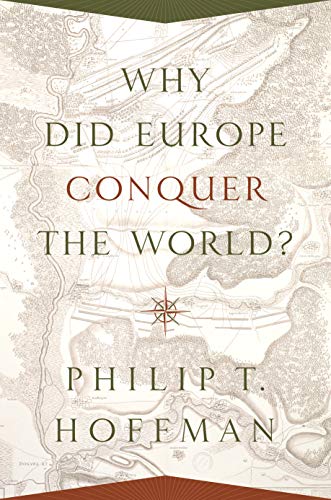
Inhaltsangabe
The startling economic and political answers behind Europe's historical dominance Between 1492 and 1914, Europeans conquered 84 percent of the globe. But why did Europe establish global dominance, when for centuries the Chinese, Japanese, Ottomans, and South Asians were far more advanced? In Why Did Europe Conquer the World?, Philip Hoffman demonstrates that conventional explanations-such as geography, epidemic disease, and the Industrial Revolution-fail to provide answers. Arguing instead for the pivotal role of economic and political history, Hoffman shows that if certain variables had been different, Europe would have been eclipsed, and another power could have become master of the world. Hoffman sheds light on the two millennia of economic, political, and historical changes that set European states on a distinctive path of development, military rivalry, and war. This resulted in astonishingly rapid growth in Europe's military sector, and produced an insurmountable lead in gunpowder technology. The consequences determined which states established colonial empires or ran the slave trade, and even which economies were the first to industrialize. Debunking traditional arguments, Why Did Europe Conquer the World? reveals the startling reasons behind Europe's historic global supremacy.
Die Inhaltsangabe kann sich auf eine andere Ausgabe dieses Titels beziehen.
Über die Autorin bzw. den Autor
Philip T. Hoffman is professor of business economics and professor of history at the California Institute of Technology.
Von der hinteren Coverseite
"Phillip Hoffman's book answers a question that economic historians have neglected: Why did Europe conquer the world starting about five hundred years ago? Hoffman stresses how incentives made Europe's princes unusually bellicose and willing to promote improvements in war technology. Combining wide reading, the judicious use of data, and economic models that distinguish Hoffman's explanation from that of earlier historians, Why Did Europe Conquer the World? represents the very best in economic history."--Timothy Guinnane, Yale University
"Why did Europe conquer the world? Philip Hoffman offers striking new answers to this old question. Hoffman's short answer is gunpowder or military technology. His longer answer is more unsettling: the political and geographical forces that made Europe's precocious economic development possible were inseparable from the arms race which enabled European states to win wars."--Cormac Ó Gráda, author of Eating People is Wrong, and Other Essays on Famine, Its Past, and Its Future
"Philip Hoffman upends the traditional story of why western Europe conquered the world. His elegant econometric model shows that by fighting constant wars with each other and never allowing a single hegemon to emerge, Western polities had greater incentives and opportunities to improve their military technology than their counterparts elsewhere. Anyone wanting to understand how economic theories are changing the ways we look at the past needs to read this book."--Daniel Chirot, University of Washington
"Beginning with the Spanish and Portuguese in the late fifteenth century, technological military superiority appears to have been the proximate cause of Europe's ever-expanding military dominance for the next five centuries. Where did this technological superiority come from? The answer provided in this convincing and tightly argued book is interesting and as definitive as such answers get."--Stergios Skaperdas, University of California, Irvine
„Über diesen Titel“ kann sich auf eine andere Ausgabe dieses Titels beziehen.
Suchergebnisse für Why Did Europe Conquer the World? (Princeton Economic...

Beispielbild für diese ISBN
Why Did Europe Conquer the World?
Verlag:
Princeton University Press, 2017
ISBN 10: 0691175845
ISBN 13: 9780691175843
Gebraucht
Paperback
Anbieter: World of Books (was SecondSale), Montgomery, IL, USA
Verkäuferbewertung 5 von 5 Sternen

Paperback. Zustand: Very Good. Between 1492 and 1914, Europeans conquered 84 percent of the globe. But why did Europe establish global dominance, when for centuries the Chinese, Japanese, Ottomans, and South Asians were far more advanced? In Why Did Europe Conquer the World?, Philip Hoffman demonstrates that conventional explanations--such as geography, epidemic disease, and the Industrial Revolution--fail to provide answers. Arguing instead for the pivotal role of economic and political history, Hoffman shows that if certain variables had been different, Europe would have been eclipsed, and another power could have become master of the world. Hoffman sheds light on the two millennia of economic, political, and historical changes that set European states on a distinctive path of development, military rivalry, and war. This resulted in astonishingly rapid growth in Europe's military sector, and produced an insurmountable lead in gunpowder technology. The consequences determined which states established colonial empires or ran the slave trade, and even which economies were the first to industrialize. Debunking traditional arguments, Why Did Europe Conquer the World? reveals the startling reasons behind Europe's historic global supremacy. Bestandsnummer des Verkäufers 00107011727
Gebraucht kaufen
EUR 9,75
Versand gratis
Versand innerhalb von USA
Versand innerhalb von USA
Anzahl: 1 verfügbar
Beispielbild für diese ISBN
Why Did Europe Conquer the World?
Verlag:
Princeton University Press, 2017
ISBN 10: 0691175845
ISBN 13: 9780691175843
Gebraucht
Paperback
Anbieter: World of Books (was SecondSale), Montgomery, IL, USA
Verkäuferbewertung 5 von 5 Sternen
Paperback. Zustand: Good. Between 1492 and 1914, Europeans conquered 84 percent of the globe. But why did Europe establish global dominance, when for centuries the Chinese, Japanese, Ottomans, and South Asians were far more advanced? In Why Did Europe Conquer the World?, Philip Hoffman demonstrates that conventional explanations--such as geography, epidemic disease, and the Industrial Revolution--fail to provide answers. Arguing instead for the pivotal role of economic and political history, Hoffman shows that if certain variables had been different, Europe would have been eclipsed, and another power could have become master of the world. Hoffman sheds light on the two millennia of economic, political, and historical changes that set European states on a distinctive path of development, military rivalry, and war. This resulted in astonishingly rapid growth in Europe's military sector, and produced an insurmountable lead in gunpowder technology. The consequences determined which states established colonial empires or ran the slave trade, and even which economies were the first to industrialize. Debunking traditional arguments, Why Did Europe Conquer the World? reveals the startling reasons behind Europe's historic global supremacy. Bestandsnummer des Verkäufers 00109856224
Gebraucht kaufen
EUR 9,75
Versand gratis
Versand innerhalb von USA
Versand innerhalb von USA
Anzahl: 1 verfügbar
Foto des Verkäufers
Why Did Europe Conquer the World? (The Princeton Economic History of the Western World)
Verlag:
Princeton University Press, 2017
ISBN 10: 0691175845
ISBN 13: 9780691175843
Gebraucht
Softcover
Anbieter: Zoom Books Company, Lynden, WA, USA
Verkäuferbewertung 5 von 5 Sternen
Zustand: very_good. Book is in very good condition and may include minimal underlining highlighting. The book can also include "From the library of" labels. May not contain miscellaneous items toys, dvds, etc. . We offer 100% money back guarantee and 24 7 customer service. Bestandsnummer des Verkäufers ZBV.0691175845.VG
Gebraucht kaufen
EUR 11,47
Versand gratis
Versand innerhalb von USA
Versand innerhalb von USA
Anzahl: 1 verfügbar
Beispielbild für diese ISBN
Why Did Europe Conquer the World?
Verlag:
Princeton University Press, 2017
ISBN 10: 0691175845
ISBN 13: 9780691175843
Gebraucht
Paperback
Anbieter: World of Books Inc, Montgomery, IL, USA
Verkäuferbewertung 4 von 5 Sternen

Paperback. Zustand: Good. Between 1492 and 1914, Europeans conquered 84 percent of the globe. But why did Europe establish global dominance, when for centuries the Chinese, Japanese, Ottomans, and South Asians were far more advanced? In Why Did Europe Conquer the World?, Philip Hoffman demonstrates that conventional explanations--such as geography, epidemic disease, and the Industrial Revolution--fail to provide answers. Arguing instead for the pivotal role of economic and political history, Hoffman shows that if certain variables had been different, Europe would have been eclipsed, and another power could have become master of the world. Hoffman sheds light on the two millennia of economic, political, and historical changes that set European states on a distinctive path of development, military rivalry, and war. This resulted in astonishingly rapid growth in Europe's military sector, and produced an insurmountable lead in gunpowder technology. The consequences determined which states established colonial empires or ran the slave trade, and even which economies were the first to industrialize. Debunking traditional arguments, Why Did Europe Conquer the World? reveals the startling reasons behind Europe's historic global supremacy. Bestandsnummer des Verkäufers CIN0691175845G
Gebraucht kaufen
EUR 11,59
Versand gratis
Versand innerhalb von USA
Versand innerhalb von USA
Anzahl: 1 verfügbar
Beispielbild für diese ISBN
Why Did Europe Conquer the World?
Verlag:
Princeton University Press, 2017
ISBN 10: 0691175845
ISBN 13: 9780691175843
Gebraucht
Paperback
Anbieter: World of Books Inc, Montgomery, IL, USA
Verkäuferbewertung 4 von 5 Sternen
Paperback. Zustand: Very Good. Between 1492 and 1914, Europeans conquered 84 percent of the globe. But why did Europe establish global dominance, when for centuries the Chinese, Japanese, Ottomans, and South Asians were far more advanced? In Why Did Europe Conquer the World?, Philip Hoffman demonstrates that conventional explanations--such as geography, epidemic disease, and the Industrial Revolution--fail to provide answers. Arguing instead for the pivotal role of economic and political history, Hoffman shows that if certain variables had been different, Europe would have been eclipsed, and another power could have become master of the world. Hoffman sheds light on the two millennia of economic, political, and historical changes that set European states on a distinctive path of development, military rivalry, and war. This resulted in astonishingly rapid growth in Europe's military sector, and produced an insurmountable lead in gunpowder technology. The consequences determined which states established colonial empires or ran the slave trade, and even which economies were the first to industrialize. Debunking traditional arguments, Why Did Europe Conquer the World? reveals the startling reasons behind Europe's historic global supremacy. Bestandsnummer des Verkäufers CIN0691175845VG
Gebraucht kaufen
EUR 11,59
Versand gratis
Versand innerhalb von USA
Versand innerhalb von USA
Anzahl: 1 verfügbar
Beispielbild für diese ISBN
Why Did Europe Conquer the World? (The Princeton Economic History of the Western World)
Verlag:
Princeton University Press, 2017
ISBN 10: 0691175845
ISBN 13: 9780691175843
Gebraucht
paperback
Anbieter: Chattanooga Public Library Foundation, Chattanooga, TN, USA
Verkäuferbewertung 4 von 5 Sternen
paperback. Zustand: Interior is excellent. very good cover. Bestandsnummer des Verkäufers 2502050013
Gebraucht kaufen
EUR 13,79
EUR 5,06 Versand
Versand innerhalb von USA
Versand innerhalb von USA
Anzahl: 1 verfügbar
Foto des Verkäufers
Why Did Europe Conquer the World?
Anbieter: GreatBookPrices, Columbia, MD, USA
Verkäuferbewertung 5 von 5 Sternen
Zustand: New. Bestandsnummer des Verkäufers 27910224-n
Neu kaufen
EUR 21,61
EUR 2,36 Versand
Versand innerhalb von USA
Versand innerhalb von USA
Anzahl: Mehr als 20 verfügbar
Foto des Verkäufers
Why Did Europe Conquer the World?
Verlag:
Princeton University Press, US, 2017
ISBN 10: 0691175845
ISBN 13: 9780691175843
Neu
Paperback
Anbieter: Rarewaves USA, HEBRON, KY, USA
Verkäuferbewertung 5 von 5 Sternen
Paperback. Zustand: New. Between 1492 and 1914, Europeans conquered 84 percent of the globe. But why did Europe establish global dominance, when for centuries the Chinese, Japanese, Ottomans, and South Asians were far more advanced? In Why Did Europe Conquer the World?, Philip Hoffman demonstrates that conventional explanations--such as geography, epidemic disease, and the Industrial Revolution--fail to provide answers. Arguing instead for the pivotal role of economic and political history, Hoffman shows that if certain variables had been different, Europe would have been eclipsed, and another power could have become master of the world. Hoffman sheds light on the two millennia of economic, political, and historical changes that set European states on a distinctive path of development, military rivalry, and war. This resulted in astonishingly rapid growth in Europe's military sector, and produced an insurmountable lead in gunpowder technology. The consequences determined which states established colonial empires or ran the slave trade, and even which economies were the first to industrialize. Debunking traditional arguments, Why Did Europe Conquer the World? reveals the startling reasons behind Europe's historic global supremacy. Bestandsnummer des Verkäufers LU-9780691175843
Neu kaufen
EUR 24,04
Versand gratis
Versand innerhalb von USA
Versand innerhalb von USA
Anzahl: Mehr als 20 verfügbar
Beispielbild für diese ISBN
Why Did Europe Conquer the World?
Anbieter: PBShop.store US, Wood Dale, IL, USA
Verkäuferbewertung 5 von 5 Sternen
PAP. Zustand: New. New Book. Shipped from UK. Established seller since 2000. Bestandsnummer des Verkäufers WP-9780691175843
Beispielbild für diese ISBN
Why Did Europe Conquer the World?: 54 (The Princeton Economic History of the Western World)
Verlag:
Princeton University Press, 2017
ISBN 10: 0691175845
ISBN 13: 9780691175843
Gebraucht
Paperback
Anbieter: WorldofBooks, Goring-By-Sea, WS, Vereinigtes Königreich
Verkäuferbewertung 5 von 5 Sternen
Paperback. Zustand: Very Good. The book has been read, but is in excellent condition. Pages are intact and not marred by notes or highlighting. The spine remains undamaged. Bestandsnummer des Verkäufers GOR009322183
Gebraucht kaufen
EUR 18,30
EUR 6,69 Versand
Versand von Vereinigtes Königreich nach USA
Versand von Vereinigtes Königreich nach USA
Anzahl: 2 verfügbar