
Verwandte Artikel zu Protecting the Ballot: How First-wave Democracies Ended...
Inhaltsangabe
How reforms limiting electoral misconduct completed the process of democratization
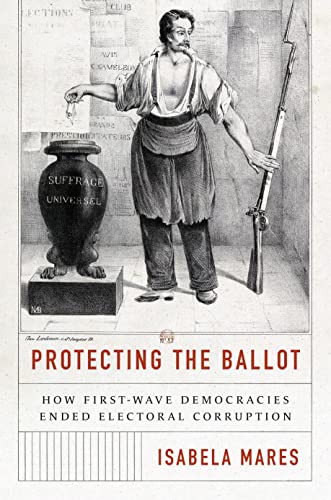
Between 1850 and 1918, many first-wave democracies in Europe adopted electoral reforms that reduced the incidence of electoral malfeasance. Drawing on analysis of parliamentary deliberations and roll-call votes in France, Germany, Belgium, and the United Kingdom, Protecting the Ballot explores how these electoral changes came about.
Reforms limiting electoral malfeasance came in a variety of forms. Some reforms imposed harsher punishments for bribing or the politicization of state resources during campaigns. Other changes improved electoral secrecy, providing better protection of voters’ autonomy. By mandating the presence of candidate representatives supervising electoral operations, reforms also reduced the incidence of electoral fraud. Isabela Mares documents how elite splits facilitated the formation of parliamentary majorities in support of electoral reforms. The political composition of these majorities varied across countries and across issue area, depending on the distribution of political resources and the economic and electoral costs incurred by politicians with opportunities to engage in malfeasance. Unpacking the electoral determinants of the demand for reforms, Mares offers an alternative to theories of democratization that emphasize economic considerations alone.
By studying the successful adoption of reforms limiting electoral irregularities in first-wave democratic transitions, Protecting the Ballot sheds light on the opportunities and obstacles for ending electoral wrongdoing in recent democracies.
Die Inhaltsangabe kann sich auf eine andere Ausgabe dieses Titels beziehen.
Über die Autorin bzw. den Autor
Isabela Mares is the Arnold Wolfers Professor of Political Science and the director of the European Union Center at Yale University. Her books include (with Lauren E. Young) Conditionality and Coercion: Electoral Clientelism in Eastern Europe and Taxation, Wage Bargaining, and Unemployment.
„Über diesen Titel“ kann sich auf eine andere Ausgabe dieses Titels beziehen.
Suchergebnisse für Protecting the Ballot: How First-wave Democracies Ended...

Beispielbild für diese ISBN
Protecting the Ballot How First-Wave Democracies Ended Electoral Corruption
Verlag:
Princeton University Press, 2022
ISBN 10: 0691240035
ISBN 13: 9780691240039
Gebraucht
Paperback
Anbieter: Michener & Rutledge Booksellers, Inc., Baldwin City, KS, USA
Verkäuferbewertung 5 von 5 Sternen

Paperback. Zustand: As New. Text clean and tight; 8vo 8" - 9" tall; 264 pages. Bestandsnummer des Verkäufers 248059
Gebraucht kaufen
EUR 17,95
EUR 5,23 Versand
Versand innerhalb von USA
Versand innerhalb von USA
Anzahl: 1 verfügbar
Foto des Verkäufers
Protecting the Ballot: How First-Wave Democracies Ended Electoral Corruption
Verlag:
Princeton University Press, 2022
ISBN 10: 0691240035
ISBN 13: 9780691240039
Gebraucht
Softcover
Anbieter: Goodwill of Greater Milwaukee and Chicago, Racine, WI, USA
Verkäuferbewertung 5 von 5 Sternen
Zustand: acceptable. Book is considered to be in acceptable condition. The actual cover image may not match the stock photo. Book may have one or more of the following defects: noticeable wear on the cover dust jacket or spine; curved, dog eared or creased page s ; writing or highlighting inside or on the edges; sticker s or other adhesive on cover; CD DVD may not be included; and book may be a former library copy. Bestandsnummer des Verkäufers SEWV.0691240035.A
Gebraucht kaufen
EUR 22,81
EUR 2,61 Versand
Versand innerhalb von USA
Versand innerhalb von USA
Anzahl: 1 verfügbar
Foto des Verkäufers
Protecting the Ballot: How First-Wave Democracies Ended Electoral Corruption
Verlag:
Princeton University Press, 2022
ISBN 10: 0691240035
ISBN 13: 9780691240039
Gebraucht
Softcover
Anbieter: Big River Books, Powder Springs, GA, USA
Verkäuferbewertung 5 von 5 Sternen
Zustand: very_good. This book is in Very Good condition. The cover and pages have minor shelf wear. Binding is tight and pages are intact. Bestandsnummer des Verkäufers BRV.0691240035.VG
Gebraucht kaufen
EUR 22,82
EUR 3,48 Versand
Versand innerhalb von USA
Versand innerhalb von USA
Anzahl: 1 verfügbar
Beispielbild für diese ISBN
Protecting the Ballot: How First-Wave Democracies Ended Electoral Corruption
Verlag:
Princeton University Press, Princeton, 2022
ISBN 10: 0691240035
ISBN 13: 9780691240039
Gebraucht
Paperback
Anbieter: Daedalus Books, Portland, OR, USA
Verkäuferbewertung 4 von 5 Sternen

Paperback. Zustand: Near Fine. Zustand des Schutzumschlags: No Dust Jacket. A nice, solid copy.; 6 X 0.75 X 9 inches; 241 pages. Bestandsnummer des Verkäufers 349139
Gebraucht kaufen
EUR 21,49
EUR 5,66 Versand
Versand innerhalb von USA
Versand innerhalb von USA
Anzahl: 1 verfügbar
Beispielbild für diese ISBN
Protecting the Ballot : How First-wave Democracies Ended Electoral Corruption
Anbieter: GreatBookPrices, Columbia, MD, USA
Verkäuferbewertung 5 von 5 Sternen
Zustand: New. Bestandsnummer des Verkäufers 44294114-n
Neu kaufen
EUR 32,48
EUR 2,30 Versand
Versand innerhalb von USA
Versand innerhalb von USA
Anzahl: Mehr als 20 verfügbar
Foto des Verkäufers
Protecting the Ballot
Verlag:
Princeton University Press, US, 2022
ISBN 10: 0691240035
ISBN 13: 9780691240039
Neu
Paperback
Anbieter: Rarewaves USA, HEBRON, KY, USA
Verkäuferbewertung 5 von 5 Sternen
Paperback. Zustand: New. How reforms limiting electoral misconduct completed the process of democratizationBetween 1850 and 1918, many first-wave democracies in Europe adopted electoral reforms that reduced the incidence of electoral malfeasance. Drawing on analysis of parliamentary deliberations and roll-call votes in France, Germany, Belgium, and the United Kingdom, Protecting the Ballot explores how these electoral changes came about.Reforms limiting electoral malfeasance came in a variety of forms. Some reforms imposed harsher punishments for bribing or the politicization of state resources during campaigns. Other changes improved electoral secrecy, providing better protection of voters' autonomy. By mandating the presence of candidate representatives supervising electoral operations, reforms also reduced the incidence of electoral fraud. Isabela Mares documents how elite splits facilitated the formation of parliamentary majorities in support of electoral reforms. The political composition of these majorities varied across countries and across issue area, depending on the distribution of political resources and the economic and electoral costs incurred by politicians with opportunities to engage in malfeasance. Unpacking the electoral determinants of the demand for reforms, Mares offers an alternative to theories of democratization that emphasize economic considerations alone.By studying the successful adoption of reforms limiting electoral irregularities in first-wave democratic transitions, Protecting the Ballot sheds light on the opportunities and obstacles for ending electoral wrongdoing in recent democracies. Bestandsnummer des Verkäufers LU-9780691240039
Neu kaufen
EUR 34,86
Versand gratis
Versand innerhalb von USA
Versand innerhalb von USA
Anzahl: Mehr als 20 verfügbar
Beispielbild für diese ISBN
Protecting the Ballot - How First-Wave Democracies Ended Electoral Corruption
Anbieter: PBShop.store US, Wood Dale, IL, USA
Verkäuferbewertung 5 von 5 Sternen
PAP. Zustand: New. New Book. Shipped from UK. Established seller since 2000. Bestandsnummer des Verkäufers WP-9780691240039
Beispielbild für diese ISBN
Protecting the Ballot : How First-wave Democracies Ended Electoral Corruption
Verlag:
Princeton University Press, 2022
ISBN 10: 0691240035
ISBN 13: 9780691240039
Gebraucht
Softcover
Anbieter: GreatBookPrices, Columbia, MD, USA
Verkäuferbewertung 5 von 5 Sternen
Zustand: As New. Unread book in perfect condition. Bestandsnummer des Verkäufers 44294114
Gebraucht kaufen
EUR 34,68
EUR 2,30 Versand
Versand innerhalb von USA
Versand innerhalb von USA
Anzahl: Mehr als 20 verfügbar
Beispielbild für diese ISBN
Protecting the Ballot
Anbieter: PBShop.store UK, Fairford, GLOS, Vereinigtes Königreich
Verkäuferbewertung 5 von 5 Sternen
PAP. Zustand: New. New Book. Shipped from UK. Established seller since 2000. Bestandsnummer des Verkäufers WP-9780691240039
Neu kaufen
EUR 33,87
EUR 4,85 Versand
Versand von Vereinigtes Königreich nach USA
Versand von Vereinigtes Königreich nach USA
Anzahl: 15 verfügbar
Beispielbild für diese ISBN
Protecting the Ballot: How First-Wave Democracies Ended Electoral Corruption
Anbieter: Kennys Bookshop and Art Galleries Ltd., Galway, GY, Irland
Verkäuferbewertung 5 von 5 Sternen
Zustand: New. 2022. Paperback. . . . . . Bestandsnummer des Verkäufers V9780691240039
Neu kaufen
EUR 33,07
EUR 9,50 Versand
Versand von Irland nach USA
Versand von Irland nach USA
Anzahl: Mehr als 20 verfügbar