
Verwandte Artikel zu Simon Starling (Phaidon Contemporary Artists Series)
Inhaltsangabe
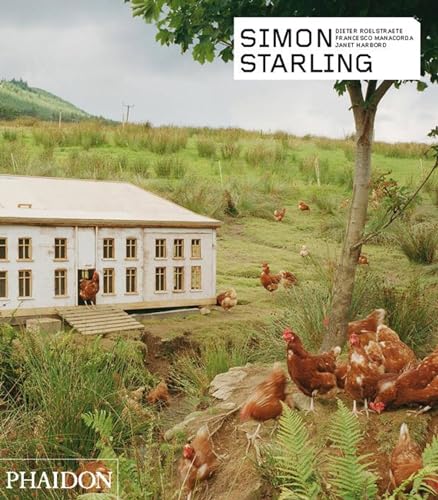
The first comprehensive monograph on a Turner-Prize-winning artist whose work encompasses historical research, scientific enquiry and a deep engagement with the materials of his art.
Die Inhaltsangabe kann sich auf eine andere Ausgabe dieses Titels beziehen.
Über die Autorin bzw. den Autor
Dieter Roelstraete is the Senior Curator at the Museum of Contemporary Art in Chicago, as well as a tutor at the Piet Zwart Institute in Rotterdam and at De Appel in Amsterdam. His writing has appeared in numerous books and exhibition catalogues, and he is an editor at the magazines Afterall, A Prior and FR David.
Francesco Manacorda is Director of Tate Liverpool. Formerly Curator at the Barbican Gallery in London, where his exhibitions included 'Radical Nature' (2009) and 'Martian Museum of Contemporary Art' (2008), he is also a visiting lecturer at London's Royal College of Art.
Janet Harbord is Professor of Film Studies at Queen Mary, University of London. Her books include Chris Marker: La Jetée (2009), The Evolution of Film: Rethinking Film Studies (2007) and Film Cultures (2002).
Von der hinteren Coverseite
When Marcel Duchamp shipped Constantin Brancusi's sculpture Bird in Space to Edward Steichen in 1926, New York customs officials refused to accept that it was a work of art, instead levying the standard import tariff for a manufactured object. A legal battle ensued, with the courts eventually declaring Bird in Space an artwork and therefore exempt from the tariff. Seventy-eight years later, visitors to Simon Starling's exhibition at New York's Casey Kaplan Gallery were confronted with Staling's own Bird in Space (2004): a two-ton slab of steel from Romania (Brancusi's country of origin) leaning against the gallery wall and propped up on three inflatable cushions. The United States had recently introduced a new import tax of twenty per cent on foreign metals, which Starling circumvented by labelling this unaltered chunk of European steel a work of art. Its plinth of cushioned air not only introduced a second, more representational valance to the work but also brought to bear the traditional sculptural parameters of weight, gravity and balance.
Starling's art frequently traffics in deception. It also traffics in traffic, meaning the circulation of goods, knowledge and people (usually the artist himself). Many of his works circle back on themselves, taking an idea on a journey that ends at its point of origin. Wilhelm Noack oHG (2006), for example, is an elaborate helical steel structure designed to loop a thirty-five-millimetre film of the workshop in which it was fabricated. The circuitous path that the film takes through the towering metal structure is the perfect visual metaphor for the work's own circular logic, a self-regulating system that adds up to much more than the sum of its parts.
Starling is a key figure in one of contemporary art's most significant recent developments: the linking of artistic practice and knowledge production. Although this tendency flourished with Conceptual art in the 1960s and 1970s, in recent years it has taken on a new intensity. Unlike the Conceptual artists, however, many of whom strove for a language-based dematerialized art, for Starling the object is always at the work's heart. Economies, ecologies, coincidences and convergences are all simply means to an end - although 'simply' may be the wrong word to describe the transformation of thousands of miles of travel and hundreds of years of history into a single sculpture, film or photograph.
Starling's other predecessors are the Land artists, such as Robert Smithson, with whom he shares a fascination with entropy and other natural forces. But he is truly an artist of the current age, setting out to understand and illustrate the complex processes through which the natural and human-made realms interact. The five platinum/palladium prints that constitute One Ton (2005) show a single view of a South African platinum mine. Together the five prints contain the precise amount of platinum salts that can be derived from one ton of ore, succinctly illustrating the enormous amount of energy required in the extraction of precious metals.
Born in England in 1967 and now living in Denmark, Starling has been the subject of solo exhibitions at museums around the world, including the Hiroshima City Museum of Art (2011), Kunstmuseum Basel (2005) and the Museum of Contemporary Art in Sydney (2002), and his work has been featured in major international group shows, such as the Venice Biennale (2009), the Moscow Biennial (2007) and the São Paulo Biennial (2005). Awards include the Turner Prize (2005), the Blinky Palermo Prize (1999) and the Paul Hamlyn Foundation Award for Artists (1999).
In the Survey, Dieter Roelstraete presents a comprehensive overview of Starling's work, examining circularity and serendipity and the their relationship to historical research. For the Interview, Francesco Manacorda and the artist discuss the central role of time in his work. Janet Harbord's Focus scrutinizes Wilhelm Noack oHG (2006) as an example of material cinema. Artist's Choice is a extract from Flann O'Brien's 1996 novel The Third Policeman, a fantastical conversation about bicycles swapping atoms with their riders. Artists Writings include five project statements, all of which consist, in varying proportions, of history, science and speculative fiction.
„Über diesen Titel“ kann sich auf eine andere Ausgabe dieses Titels beziehen.
Suchergebnisse für Simon Starling (Phaidon Contemporary Artists Series)

Beispielbild für diese ISBN
SIMON STARLING
Verlag:
Phaidon, London, 2012
ISBN 10: 0714864196
ISBN 13: 9780714864198
Gebraucht
Paperback
Erstausgabe
Anbieter: J. W. Mah, Burnaby, BC, Kanada
Verkäuferbewertung 5 von 5 Sternen

Paperback. Zustand: Fine. Zustand des Schutzumschlags: Very Good. 1st. (UK) Presumed 1st edition, No markings, Fine in Very Good dust jacket with 1" tear and crease to top edge of back cover. Wraps, 160pp, colour and B&W photos. This is the first comprehensive monograph on the Turner-Prize-winning artist. Starling is a key figure in one of contemporary art's most significant recent developments: the linking of artistic practice and knowledge production. Although this tendency flourished with Conceptual art in the 1960s and 1970s, in recent years it has taken on a new intensity. Unlike the Conceptual artists, however, many of whom strove for a language-based dematerialized art, for Starling the object is always at the work's heart. Economies, ecologies, coincidences and convergences are all simply means to an end - although 'simply' may be the wrong word to describe the transformation of thousands of miles of travel and hundreds of years of history into a single sculpture, film or photograph.(2.9 JM LVR 202/5 Size: 4to - over 9¾ - 12" Tall. Bestandsnummer des Verkäufers 07785
Gebraucht kaufen
EUR 21,73
EUR 8,70 Versand
Versand von Kanada nach USA
Versand von Kanada nach USA
Anzahl: 1 verfügbar
Beispielbild für diese ISBN
Simon Starling (Phaidon Contemporary Artists Series)
Anbieter: Bookoutlet1, Easley, SC, USA
Verkäuferbewertung 5 von 5 Sternen
Zustand: Very Good. Great shape! Has a publisher remainder mark. paperback Used - Very Good 2012. Bestandsnummer des Verkäufers IM-10029138
Gebraucht kaufen
EUR 29,94
EUR 3,47 Versand
Versand innerhalb von USA
Versand innerhalb von USA
Anzahl: 7 verfügbar
Beispielbild für diese ISBN
Simon Starling
Anbieter: Powell's Bookstores Chicago, ABAA, Chicago, IL, USA
Verkäuferbewertung 5 von 5 Sternen
Paperback. Zustand: Very Good. Zustand des Schutzumschlags: None. Minor shelf wear; light crimping at corners of wraps. Else a bright, clean copy. When Marcel Duchamp shipped Constantin Brancusi's sculpture Bird in Space to Edward Steichen in 1926, New York customs officials refused to accept that it was a work of art, instead levying the standard import tariff for a manufactured object. A legal battle ensued, with the courts eventually declaring Bird in Space an artwork and therefore exempt from the tariff. Seventy-eight years later, visitors to Simon Starling's exhibition at New York's Casey Kaplan Gallery were confronted with Staling's own Bird in Space (2004): a two-ton slab of steel from Romania (Brancusi's country of origin) leaning against the gallery wall and propped up on three inflatable cushions. The United States had recently introduced a new import tax of twenty per cent on foreign metals, which Starling circumvented by labelling this unaltered chunk of European steel a work of art. Its plinth of cushioned air not only introduced a second, more representational valance to the work but also brought to bear the traditional sculptural parameters of weight, gravity and balance. Starling's art frequently traffics in deception. It also traffics in traffic, meaning the circulation of goods, knowledge and people (usually the artist himself). Many of his works circle back on themselves, taking an idea on a journey that ends at its point of origin. Wilhelm Noack oHG (2006), for example, is an elaborate helical steel structure designed to loop a thirty-five-millimetre film of the workshop in which it was fabricated. The circuitous path that the film takes through the towering metal structure is the perfect visual metaphor for the work's own circular logic, a self-regulating system that adds up to much more than the sum of its parts. Starling is a key figure in one of contemporary art's most significant recent developments: the linking of artistic practice and knowledge production. Although this tendency flourished with Conceptual art in the 1960s and 1970s, in recent years it has taken on a new intensity. Unlike the Conceptual artists, however, many of whom strove for a language-based dematerialized art, for Starling the object is always at the work's heart. Economies, ecologies, coincidences and convergences are all simply means to an end - although 'simply' may be the wrong word to describe the transformation of thousands of miles of travel and hundreds of years of history into a single sculpture, film or photograph. Starling's other predecessors are the Land artists, such as Robert Smithson, with whom he shares a fascination with entropy and other natural forces. But he is truly an artist of the current age, setting out to understand and illustrate the complex processes through which the natural and human-made realms interact. The five platinum/palladium prints that constitute One Ton (2005) show a single view of a South African platinum mine. Together the five prints contain the precise amount of platinum salts that can be derived from one ton of ore, succinctly illustrating the enormous amount of energy required in the extraction of precious metals. Born in England in 1967 and now living in Denmark, Starling has been the subject of solo exhibitions at museums around the world, including the Hiroshima City Museum of Art (2011), Kunstmuseum Basel (2005) and the Museum of Contemporary Art in Sydney (2002), and his work has been featured in major international group shows, such as the Venice Biennale (2009), the Moscow Biennial (2007) and the São Paulo Biennial (2005). Awards include the Turner Prize (2005), the Blinky Palermo Prize (1999) and the Paul Hamlyn Foundation Award for Artists (1999). In the Survey, Dieter Roelstraete presents a comprehensive overview of Starling's work, examining circularity and serendipity and the their relationship to historical research. For the Interview, Francesco Manacorda and the artist discuss the central role of time in his work. Janet Harbord's Focus scrutinizes Wilhelm Noack oHG (2006) as an example of material cinema. Artist's Choice is a extract from Flann O'Brien's 1996 novel The Third Policeman, a fantastical conversation about bicycles swapping atoms with their riders. Artists Writings include five project statements, all of which consist, in varying proportions, of history, science and speculative fiction. . Bestandsnummer des Verkäufers 2035439
Gebraucht kaufen
EUR 29,59
EUR 6,53 Versand
Versand innerhalb von USA
Versand innerhalb von USA
Anzahl: 1 verfügbar
Beispielbild für diese ISBN
Simon Starling
Anbieter: Powell's Bookstores Chicago, ABAA, Chicago, IL, USA
Verkäuferbewertung 5 von 5 Sternen
Paperback. Zustand: Very Good. Zustand des Schutzumschlags: None. Minor shelf wear; bottom corner of rear wrap creased. Else a bright, clean copy. When Marcel Duchamp shipped Constantin Brancusi's sculpture Bird in Space to Edward Steichen in 1926, New York customs officials refused to accept that it was a work of art, instead levying the standard import tariff for a manufactured object. A legal battle ensued, with the courts eventually declaring Bird in Space an artwork and therefore exempt from the tariff. Seventy-eight years later, visitors to Simon Starling's exhibition at New York's Casey Kaplan Gallery were confronted with Staling's own Bird in Space (2004): a two-ton slab of steel from Romania (Brancusi's country of origin) leaning against the gallery wall and propped up on three inflatable cushions. The United States had recently introduced a new import tax of twenty per cent on foreign metals, which Starling circumvented by labelling this unaltered chunk of European steel a work of art. Its plinth of cushioned air not only introduced a second, more representational valance to the work but also brought to bear the traditional sculptural parameters of weight, gravity and balance. Starling's art frequently traffics in deception. It also traffics in traffic, meaning the circulation of goods, knowledge and people (usually the artist himself). Many of his works circle back on themselves, taking an idea on a journey that ends at its point of origin. Wilhelm Noack oHG (2006), for example, is an elaborate helical steel structure designed to loop a thirty-five-millimetre film of the workshop in which it was fabricated. The circuitous path that the film takes through the towering metal structure is the perfect visual metaphor for the work's own circular logic, a self-regulating system that adds up to much more than the sum of its parts. Starling is a key figure in one of contemporary art's most significant recent developments: the linking of artistic practice and knowledge production. Although this tendency flourished with Conceptual art in the 1960s and 1970s, in recent years it has taken on a new intensity. Unlike the Conceptual artists, however, many of whom strove for a language-based dematerialized art, for Starling the object is always at the work's heart. Economies, ecologies, coincidences and convergences are all simply means to an end - although 'simply' may be the wrong word to describe the transformation of thousands of miles of travel and hundreds of years of history into a single sculpture, film or photograph. Starling's other predecessors are the Land artists, such as Robert Smithson, with whom he shares a fascination with entropy and other natural forces. But he is truly an artist of the current age, setting out to understand and illustrate the complex processes through which the natural and human-made realms interact. The five platinum/palladium prints that constitute One Ton (2005) show a single view of a South African platinum mine. Together the five prints contain the precise amount of platinum salts that can be derived from one ton of ore, succinctly illustrating the enormous amount of energy required in the extraction of precious metals. Born in England in 1967 and now living in Denmark, Starling has been the subject of solo exhibitions at museums around the world, including the Hiroshima City Museum of Art (2011), Kunstmuseum Basel (2005) and the Museum of Contemporary Art in Sydney (2002), and his work has been featured in major international group shows, such as the Venice Biennale (2009), the Moscow Biennial (2007) and the São Paulo Biennial (2005). Awards include the Turner Prize (2005), the Blinky Palermo Prize (1999) and the Paul Hamlyn Foundation Award for Artists (1999). In the Survey, Dieter Roelstraete presents a comprehensive overview of Starling's work, examining circularity and serendipity and the their relationship to historical research. For the Interview, Francesco Manacorda and the artist discuss the central role of time in his work. Janet Harbord's Focus scrutinizes Wilhelm Noack oHG (2006) as an example of material cinema. Artist's Choice is a extract from Flann O'Brien's 1996 novel The Third Policeman, a fantastical conversation about bicycles swapping atoms with their riders. Artists Writings include five project statements, all of which consist, in varying proportions, of history, science and speculative fiction. . Bestandsnummer des Verkäufers 2035441
Gebraucht kaufen
EUR 29,59
EUR 6,53 Versand
Versand innerhalb von USA
Versand innerhalb von USA
Anzahl: 1 verfügbar
Beispielbild für diese ISBN
Simon Starling
Anbieter: PBShop.store UK, Fairford, GLOS, Vereinigtes Königreich
Verkäuferbewertung 5 von 5 Sternen
PAP. Zustand: New. New Book. Shipped from UK. Established seller since 2000. Bestandsnummer des Verkäufers FV-9780714864198
Neu kaufen
EUR 28,73
EUR 7,88 Versand
Versand von Vereinigtes Königreich nach USA
Versand von Vereinigtes Königreich nach USA
Anzahl: 15 verfügbar
Foto des Verkäufers
Simon Starling
Anbieter: GreatBookPrices, Columbia, MD, USA
Verkäuferbewertung 5 von 5 Sternen
Zustand: New. Bestandsnummer des Verkäufers 18465194-n
Neu kaufen
EUR 35,23
EUR 2,30 Versand
Versand innerhalb von USA
Versand innerhalb von USA
Anzahl: 15 verfügbar
Foto des Verkäufers
Simon Starling
Anbieter: GreatBookPrices, Columbia, MD, USA
Verkäuferbewertung 5 von 5 Sternen
Zustand: As New. Unread book in perfect condition. Bestandsnummer des Verkäufers 18465194
Gebraucht kaufen
EUR 35,94
EUR 2,30 Versand
Versand innerhalb von USA
Versand innerhalb von USA
Anzahl: 15 verfügbar
Beispielbild für diese ISBN
Simon Starling
Anbieter: Kennys Bookshop and Art Galleries Ltd., Galway, GY, Irland
Verkäuferbewertung 5 von 5 Sternen
Zustand: New. 2012. Paperback. First comprehensive monograph on the Turner-Prize-winning artist. Series: Contemporary Artists Series. Num Pages: 160 pages, 180 colour. BIC Classification: ACXJ5; AGB. Category: (G) General (US: Trade). Dimension: 291 x 252 x 17. Weight in Grams: 1034. . . . . . Bestandsnummer des Verkäufers V9780714864198
Neu kaufen
EUR 30,37
EUR 9,50 Versand
Versand von Irland nach USA
Versand von Irland nach USA
Anzahl: Mehr als 20 verfügbar
Beispielbild für diese ISBN
Simon Starling
Anbieter: Majestic Books, Hounslow, Vereinigtes Königreich
Verkäuferbewertung 4 von 5 Sternen

Zustand: New. pp. 160 Illus. (Col.). Bestandsnummer des Verkäufers 58161003
Neu kaufen
EUR 37,86
EUR 7,58 Versand
Versand von Vereinigtes Königreich nach USA
Versand von Vereinigtes Königreich nach USA
Anzahl: 3 verfügbar
Beispielbild für diese ISBN
Simon Starling
Anbieter: Kennys Bookstore, Olney, MD, USA
Verkäuferbewertung 5 von 5 Sternen
Zustand: New. 2012. Paperback. First comprehensive monograph on the Turner-Prize-winning artist. Series: Contemporary Artists Series. Num Pages: 160 pages, 180 colour. BIC Classification: ACXJ5; AGB. Category: (G) General (US: Trade). Dimension: 291 x 252 x 17. Weight in Grams: 1034. . . . . . Books ship from the US and Ireland. Bestandsnummer des Verkäufers V9780714864198
Neu kaufen
EUR 37,07
EUR 9,14 Versand
Versand innerhalb von USA
Versand innerhalb von USA
Anzahl: Mehr als 20 verfügbar