
Verwandte Artikel zu The business of everyday life: Gender, practice and...
The business of everyday life: Gender, practice and social politics in England, c.1600-1900 (Gender in History) - Softcover
Inhaltsangabe
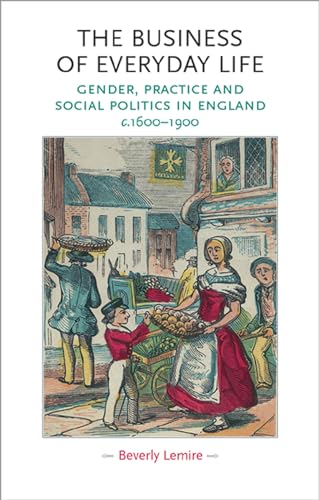
The book explores the previously under-researched patterns and practices that fashioned a modern consumer society, charting the evolving habits among English men and women across three centuries.
Die Inhaltsangabe kann sich auf eine andere Ausgabe dieses Titels beziehen.
Über die Autorin bzw. den Autor
Beverly Lemire is Professor of History and Henry Marshall Tory Chair at the University of Alberta, Canada.
Von der hinteren Coverseite
From 1600 to 1900 a growing consumerism fired the English economy, shaping the priorities of individuals, and determining the allocation of resources within families.
Everyday business might mean making a trip to the pawnbroker, giving a loan to a trusted friend of selling off a coat, all to make ends meet. Both women and men engaged in this daily budgeting, but women's roles were especially important in achieving some level of comfort and avoiding penury. In some communities, the daily practices in place in the seventeenth century persisted into the twentieth, whilst other groups adopted new ways, such as using numbers to chart domestic affairs and turning to the savings banks that appeared in the nineteenth century.In the material world of the past and in the changing habits of earlier generations lie crucial turning points. This book explores these previously under-researched patterns and practices that gave shape to modern consumer society.
Aus dem Klappentext
From 1600 to 1900 a growing consumerism fired the English economy, shaping the priorities of individuals, and determining the allocation of resources within families. Everyday business might mean making a trip to the pawnbroker, giving a loan to a trusted friend of selling off a coat, all to make ends meet. Both women and men engaged in this daily budgeting, but women s roles were especially important in achieving some level of comfort and avoiding penury. In some communities, the daily practices in place in the seventeenth century persisted into the twentieth, whilst other groups adopted new ways, such as using numbers to chart domestic affairs and turning to the savings banks that appeared in the nineteenth century. In the material world of the past and in the changing habits of earlier generations lie crucial turning points. This book explores these previously under-researched patterns and practices that gave shape to modern consumer society.
„Über diesen Titel“ kann sich auf eine andere Ausgabe dieses Titels beziehen.
Suchergebnisse für The business of everyday life: Gender, practice and...

Beispielbild für diese ISBN
The business of everyday life: Gender, practice and social politics in England, c.1600â"1900 (Gender in History)
Verlag:
Manchester University Press, 2012
ISBN 10: 0719072239
ISBN 13: 9780719072239
Gebraucht
Paperback
Anbieter: Midtown Scholar Bookstore, Harrisburg, PA, USA
Verkäuferbewertung 5 von 5 Sternen

Paperback. Zustand: Good. Good - Bumped and creased book with tears to the extremities, but not affecting the text block, may have remainder mark or previous owner's name - GOOD PAPERBACK Standard-sized. Bestandsnummer des Verkäufers M0719072239Z3
Gebraucht kaufen
EUR 12,19
EUR 5,34 Versand
Versand innerhalb von USA
Versand innerhalb von USA
Anzahl: 5 verfügbar
Beispielbild für diese ISBN
The business of everyday life: Gender, practice and social politics in England, c.1600â"1900 (Gender in History)
Verlag:
Manchester University Press, 2012
ISBN 10: 0719072239
ISBN 13: 9780719072239
Gebraucht
Paperback
Anbieter: Midtown Scholar Bookstore, Harrisburg, PA, USA
Verkäuferbewertung 5 von 5 Sternen
Paperback. Zustand: Very Good. crisp clean w/light shelfwear/edgewear - may have remainder mark Standard-sized. Bestandsnummer des Verkäufers 0719072239-01
Gebraucht kaufen
EUR 12,20
EUR 5,34 Versand
Versand innerhalb von USA
Versand innerhalb von USA
Anzahl: 1 verfügbar
Beispielbild für diese ISBN
The Business of Everyday Life: Gender, Practice and Social Politics in England, c.1600 - 1900
Verlag:
Manchester University Press, 2012
ISBN 10: 0719072239
ISBN 13: 9780719072239
Gebraucht
Softcover
Anbieter: Anybook.com, Lincoln, Vereinigtes Königreich
Verkäuferbewertung 5 von 5 Sternen
Zustand: Good. This is an ex-library book and may have the usual library/used-book markings inside.This book has soft covers. Clean from markings. In good all round condition. Please note the Image in this listing is a stock photo and may not match the covers of the actual item,450grams, ISBN:9780719072239. Bestandsnummer des Verkäufers 8980080
Gebraucht kaufen
EUR 13,47
EUR 15,47 Versand
Versand von Vereinigtes Königreich nach USA
Versand von Vereinigtes Königreich nach USA
Anzahl: 1 verfügbar
Foto des Verkäufers
Business of Everyday Life : Gender, Practice and Social Politics in England, c.1600-1900
Anbieter: GreatBookPrices, Columbia, MD, USA
Verkäuferbewertung 5 von 5 Sternen
Zustand: New. Bestandsnummer des Verkäufers 12832534-n
Neu kaufen
EUR 30,91
EUR 2,35 Versand
Versand innerhalb von USA
Versand innerhalb von USA
Anzahl: Mehr als 20 verfügbar
Beispielbild für diese ISBN
The business of everyday life
Anbieter: PBShop.store US, Wood Dale, IL, USA
Verkäuferbewertung 5 von 5 Sternen
PAP. Zustand: New. New Book. Shipped from UK. Established seller since 2000. Bestandsnummer des Verkäufers CX-9780719072239
Beispielbild für diese ISBN
The business of everyday life : Gender, practice and social politics in England, c.1600-1900
Print-on-DemandAnbieter: Chiron Media, Wallingford, Vereinigtes Königreich
Verkäuferbewertung 5 von 5 Sternen
PF. Zustand: New. This item is printed on demand. Brand new book, sourced directly from publisher. Dispatch time is 6-7 days from our warehouse. Book will be sent in robust, secure packaging to ensure it reaches you securely. Bestandsnummer des Verkäufers 6666-IUK-9780719072239
Neu kaufen
EUR 28,68
EUR 5,92 Versand
Versand von Vereinigtes Königreich nach USA
Versand von Vereinigtes Königreich nach USA
Anzahl: 20 verfügbar
Foto des Verkäufers
The Business of Everyday Life
Verlag:
Manchester University Press, GB, 2012
ISBN 10: 0719072239
ISBN 13: 9780719072239
Neu
Paperback
Anbieter: Rarewaves.com USA, London, LONDO, Vereinigtes Königreich
Verkäuferbewertung 5 von 5 Sternen
Paperback. Zustand: New. From 1600 to 1900 a growing consumerism fired the English economy, shaping the priorities of individuals, and determining the allocation of resources within families. Everyday business might mean making a trip to the pawnbroker, giving a loan to a trusted friend of selling off a coat, all to make ends meet. Both women and men engaged in this daily budgeting, but women's roles were especially important in achieving some level of comfort and avoiding penury. In some communities, the daily practices in place in the seventeenth century persisted into the twentieth, whilst other groups adopted new ways, such as using numbers to chart domestic affairs and turning to the savings banks that appeared in the nineteenth century. In the material world of the past and in the changing habits of earlier generations lie crucial turning points. This book explores these previously under-researched patterns and practices that gave shape to modern consumer society. Bestandsnummer des Verkäufers LU-9780719072239
Neu kaufen
EUR 34,61
Versand gratis
Versand von Vereinigtes Königreich nach USA
Versand von Vereinigtes Königreich nach USA
Anzahl: Mehr als 20 verfügbar
Foto des Verkäufers
Business of Everyday Life : Gender, Practice and Social Politics in England, c.1600-1900
Verlag:
Manchester University Press, 2012
ISBN 10: 0719072239
ISBN 13: 9780719072239
Gebraucht
Softcover
Anbieter: GreatBookPrices, Columbia, MD, USA
Verkäuferbewertung 5 von 5 Sternen
Zustand: As New. Unread book in perfect condition. Bestandsnummer des Verkäufers 12832534
Gebraucht kaufen
EUR 32,76
EUR 2,35 Versand
Versand innerhalb von USA
Versand innerhalb von USA
Anzahl: Mehr als 20 verfügbar
Foto des Verkäufers
The Business of Everyday Life
Verlag:
Manchester University Press, GB, 2012
ISBN 10: 0719072239
ISBN 13: 9780719072239
Neu
Paperback
Anbieter: Rarewaves USA, HEBRON, KY, USA
Verkäuferbewertung 5 von 5 Sternen
Paperback. Zustand: New. From 1600 to 1900 a growing consumerism fired the English economy, shaping the priorities of individuals, and determining the allocation of resources within families. Everyday business might mean making a trip to the pawnbroker, giving a loan to a trusted friend of selling off a coat, all to make ends meet. Both women and men engaged in this daily budgeting, but women's roles were especially important in achieving some level of comfort and avoiding penury. In some communities, the daily practices in place in the seventeenth century persisted into the twentieth, whilst other groups adopted new ways, such as using numbers to chart domestic affairs and turning to the savings banks that appeared in the nineteenth century. In the material world of the past and in the changing habits of earlier generations lie crucial turning points. This book explores these previously under-researched patterns and practices that gave shape to modern consumer society. Bestandsnummer des Verkäufers LU-9780719072239
Neu kaufen
EUR 35,95
Versand gratis
Versand innerhalb von USA
Versand innerhalb von USA
Anzahl: Mehr als 20 verfügbar
Beispielbild für diese ISBN
The business of everyday life
Anbieter: PBShop.store UK, Fairford, GLOS, Vereinigtes Königreich
Verkäuferbewertung 5 von 5 Sternen
PAP. Zustand: New. New Book. Shipped from UK. Established seller since 2000. Bestandsnummer des Verkäufers CX-9780719072239
Neu kaufen
EUR 31,27
EUR 4,93 Versand
Versand von Vereinigtes Königreich nach USA
Versand von Vereinigtes Königreich nach USA
Anzahl: 15 verfügbar