
Verwandte Artikel zu How the Brain Lost Its Mind: Sex, Hysteria, and the...
Inhaltsangabe
A noted neurologist challenges widespread misunderstandings about brain disease and mental illness.
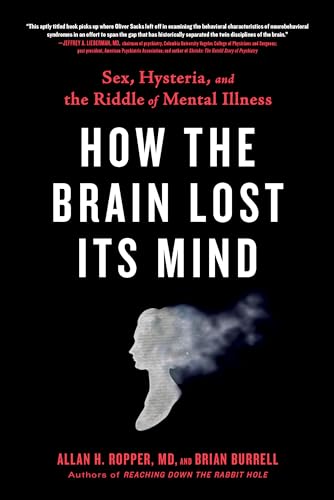
Why do we think of mental illness as a brain disease? Is there a difference between a sick mind and a sick brain? How the Brain Lost Its Mind, written by a prominent neurologist and a student of medical history, traces the origins of our ideas about insanity and the collision course that simply reduces the mind to the connections between nerve cells. Starting with syphilis of the brain, the disease that made insanity a medical problem and started the field of psychiatry, the authors study a host of famous and infamous characters--among them van Gogh, the Marquis de Sade, Nietzsche, Guy de Maupassant, and Al Capone.
How the Brain Lost Its Mind explains how we have twisted ourselves into the medicalization of every minor mood and thought, each with a pill to cure the psychopathology of ordinary daily life. How are we to understand serious disorders such as schizophrenia and Tourette's syndrome, in which the brain under the microscope is entirely normal? By delving into an overlooked history, this book shows how neuroscience and brain scans alone cannot account for a robust mental life, or a deeply disturbed one.
Die Inhaltsangabe kann sich auf eine andere Ausgabe dieses Titels beziehen.
Über die Autorin bzw. den Autor
Allan H. Ropper, M.D., is professor of neurology at Harvard Medical School and Raymond D. Adams Master Clinician of the Department of Neurology at Brigham and Women's Hospital. He is also a deputy editor of The New England Journal of Medicine and a fellow of the American Academy of Neurology, the Royal College of Physicians, and the American College of Physicians. Dr. Ropper is an author of the most widely consulted textbook of neurology, Principles of Neurology, currently in its eleventh edition, and coauthor with Brian David Burrell of Reaching Down the Rabbit Hole.
Brian David Burrell is a member of the mathematics faculty at the University of Massachusetts Amherst. A teacher and writer, he is the author of several books, including Postcards from the Brain Museum, The Words We Live By, and, jointly with Dr. Allan H. Ropper, Reaching Down the Rabbit Hole. He is an authority on brain collections worldwide, and has discussed his work on NBC's Today, C-SPAN's Booknotes, and NPR's Morning Edition.
Auszug. © Genehmigter Nachdruck. Alle Rechte vorbehalten.
Chapter 1
A Clinical Lesson
On a warm Paris afternoon in late spring, throngs of weary tourists swarm the narrow streets off the Boulevard Saint-Michel in search of a place to unwind after a day spent in the grueling pursuit of checklist tourism. Led around by docents and modern-day Baedekers, most of these vacationers have dashed through a handful of the city's five-star attractions, waved selfie sticks while plugged into audio tours, and can now be seen flowing into the Place Saint-Michel in a movable feast fanning out across the sidewalks and down the clogged alleyways feeding into the Rue de la Huchette.
Just around the corner from this bustling warren of conviviality, one of the most historically significant artworks in the city goes unnoticed, unvisited, and unappreciated. Sheltered in a vestibule of a stately neoclassical building, it presides over an oasis of solitude and calm. Because none of the guidebooks mention it, very few people are even aware it exists. It is a large painting, and over the century and a quarter since it was painted, it has lost its notoriety but not its significance. To understand this one painting is to understand everything that went wrong in the modern concept of mind and brain. It portrays nothing less than the original sin of neurology and psychiatry, one from which we are still trying to recover.
The colonnaded building housing the painting is perched on the Rue de l'ecole-de-Medecine, a two-minute walk from the bustle of the Place Saint-Michel. It is the home of Paris Descartes University, a satellite of the Sorbonne. Among other things it contains a museum of medical history: a cabinet of gruesome curiosities including an amputation kit used at the Battle of Waterloo, crude-looking instruments once used to remove bladder stones, and boxes of glass eyes. Admission costs three euros, but the painting can be viewed for free. At nine and a half by fourteen feet, it is too big for the museum's limited wall space and has been accommodated just outside of the main gallery, as if in an afterthought, in a skylighted foyer where, on a sunny day, the glare makes it difficult to take in as a whole. As a further indignity, it is unframed and almost casually hung, a sad fate for a work once hailed as "the success of the Salon of 1887."
The painting is by Andre Brouillet, a journeyman artist who studied with the great Jean-Leon Gerome, had a moment of passing fame, and then slid back into obscurity. He titled the work Une Leon Clinique a la Salpetriere (A Clinical Lesson at the Salpetriere Hospital), and at the Salon des Beaux Arts of 1887, an annual showcase of established and aspiring academically trained artists, it stood out by virtue of its striking subject. Rather than drawing upon the distant past, Brouillet chose to depict a contemporary event, one very much of the moment. The setting is a window-lit room in a hospital. A medical demonstration is in progress before a male audience. At first glance, it appears to be a group portrait of thirty finely rendered individuals. The center of attention is a young woman in a state of semiconsciousness and semi-undress. The scene is highly sexualized and frankly voyeuristic, hardly unusual in the world of academic painting. Two of its more obvious points of reference include a scandalous canvas by Gerome entitled The Slave Market in Rome, featuring a nude young woman standing on an auction block as buyers frantically make their bids. The other, a more subdued work, depicts Philippe Pinel, the aforementioned pioneer in the humane treatment of the insane, as he orders the unshackling of the madwomen at an asylum. Stripped of all context, the subjects of these works are young, vulnerable, exposed, unseeing or semiconscious women under the complete control and watchful eyes of men. In each case the historical moment trumps the sensational content, allowing the paintings to be peddled as art rather than as pornography.
A salon-goer of 1887, unlike the viewer of today, would have known exactly what was going on in Brouillet's canvas. A young woman under hypnosis will be induced to act out a series of seemingly unexplainable physical and mental tasks, during which needles will be passed through her hand with no sensation of pain, paralyses will appear on one side of her body, only to switch sides after the application of a magnet, and her perception, having become sensitized, will allow her to read thoughts and exhibit astounding feats of clairvoyance. Finally, as the piece de resistance, she will respond to a series of random suggestions from her handlers, ranging from the banal-"You are smelling a flower," "You see a snake"-to the fantastic-"You have survived a violent train crash," "You are Kutuzov at the Battle of Borodino." In response to each suggestion she will act out a series of tableaux vivants, all in service of advancing knowledge of one of the most baffling forms of neurosis known to medical science: hysteria.
The swooning woman at the center of the painting has a name: Blanche Wittman, also known as the Queen of the Hysterics. The man presiding over the scene is Jean-Martin Charcot, known as the father of clinical neurology, more reservedly as the father of French neurology (as if neurology were as regional as cuisine), and sometimes derisively as the Napoleon of the Salpetriere. Everyone in the painting can be identified by name and by profession, and a legend posted on the wall does just that. The group includes not just medical men but literary figures, artists, and statesmen, and they are there to lend gravitas to what was an elaborately crafted ritual and a highly controversial practice that might otherwise have appeared somewhat shady, if not scandalous.
Une Leon Clinique is a bright and crisp painting, both real and unreal: real in its vivid attempt to capture the likenesses of living men and women, unreal in its frozen formality. The more you look at it, the more impossible the scene appears. It was not commissioned, a rarity in a historical painting. Brouillet took a chance that the public and the press would want to see the most-talked-about phenomenon in Paris, especially if it featured the city's most famous physician and his most celebrated patient. He was right. Hailed by the critics of the time as "one of the most important artworks of the Salon," and possibly "the most sensational painting" out of the more than five thousand other works on display, it drew large crowds from the opening day. The Salon itself, an annual event put on by the French Academy of Beaux-Arts, drew up to a half million people to the Palais de l'Industrie during its two months' duration. Most of them would have made a beeline for Brouillet's large canvas because of its subject, its overt sexuality, its composition, and its sheer size. According to contemporary accounts, the crowds also came for the same reason Beatles fans were drawn to the cover of the Sgt. Pepper album. They wanted to see how many faces they could identify. Perhaps this explains the critic Louis de Meurville's dismissive remark, in the Gazette de France, that "it takes only a minute to admire the truthfulness of the characters and the light. Beyond that, there is nothing more to discover."
Meurville can be forgiven for focusing only on the surface quality of the work. He was not in a position to understand how Brouillet, in this one canvas, had inadvertently captured a seminal moment in the history of medicine. The scene he so carefully composed would foretell not only the birth of psychoanalysis but also a regrettable split between neurology and psychiatry, and the failure of medical science to take ownership of the study and treatment of mental illness. In short, Brouillet attempted to portray the culmination of a century's worth of bad science on the threshold of giving way to good science. In the end, he showed the very opposite.
Jean-Martin...
„Über diesen Titel“ kann sich auf eine andere Ausgabe dieses Titels beziehen.
Suchergebnisse für How the Brain Lost Its Mind: Sex, Hysteria, and the...

Foto des Verkäufers
How the Brain Lost Its Mind: Sex, Hysteria, and the Riddle of Mental Illness
Anbieter: Greenworld Books, Arlington, TX, USA
Verkäuferbewertung 5 von 5 Sternen

Zustand: very_good. Fast Free Shipping â" Very Good condition book with a firm cover and clean pages. Shows normal use and some light wear or limited notes markings. A solid, nice copy to enjoy. Bestandsnummer des Verkäufers GWV.0735214565.VG
Gebraucht kaufen
EUR 5,39
Versand gratis
Versand innerhalb von USA
Versand innerhalb von USA
Anzahl: 1 verfügbar
Beispielbild für diese ISBN
How the Brain Lost Its Mind: Sex, Hysteria, and the Riddle of Mental Illness
Anbieter: ThriftBooks-Dallas, Dallas, TX, USA
Verkäuferbewertung 5 von 5 Sternen
Paperback. Zustand: Good. No Jacket. Pages can have notes/highlighting. Spine may show signs of wear. ~ ThriftBooks: Read More, Spend Less. Bestandsnummer des Verkäufers G0735214565I3N00
Gebraucht kaufen
EUR 6,08
Versand gratis
Versand innerhalb von USA
Versand innerhalb von USA
Anzahl: 1 verfügbar
Beispielbild für diese ISBN
How the Brain Lost Its Mind: Sex, Hysteria, and the Riddle of Mental Illness
Anbieter: ThriftBooks-Dallas, Dallas, TX, USA
Verkäuferbewertung 5 von 5 Sternen
Paperback. Zustand: As New. No Jacket. Pages are clean and are not marred by notes or folds of any kind. ~ ThriftBooks: Read More, Spend Less. Bestandsnummer des Verkäufers G0735214565I2N00
Gebraucht kaufen
EUR 6,08
Versand gratis
Versand innerhalb von USA
Versand innerhalb von USA
Anzahl: 1 verfügbar
Beispielbild für diese ISBN
How the Brain Lost Its Mind: Sex, Hysteria, and the Riddle of Mental Illness
Anbieter: ThriftBooks-Dallas, Dallas, TX, USA
Verkäuferbewertung 5 von 5 Sternen
Paperback. Zustand: Very Good. No Jacket. May have limited writing in cover pages. Pages are unmarked. ~ ThriftBooks: Read More, Spend Less. Bestandsnummer des Verkäufers G0735214565I4N00
Gebraucht kaufen
EUR 6,08
Versand gratis
Versand innerhalb von USA
Versand innerhalb von USA
Anzahl: 1 verfügbar
Beispielbild für diese ISBN
How the Brain Lost Its Mind : Sex, Hysteria, and the Riddle of Mental Illness
Verlag:
Penguin Publishing Group, 2021
ISBN 10: 0735214565
ISBN 13: 9780735214569
Gebraucht
Softcover
Anbieter: Better World Books, Mishawaka, IN, USA
Verkäuferbewertung 5 von 5 Sternen
Zustand: Good. Pages intact with minimal writing/highlighting. The binding may be loose and creased. Dust jackets/supplements are not included. Stock photo provided. Product includes identifying sticker. Better World Books: Buy Books. Do Good. Bestandsnummer des Verkäufers 40415586-6
Gebraucht kaufen
EUR 6,56
Versand gratis
Versand innerhalb von USA
Versand innerhalb von USA
Anzahl: 1 verfügbar
Foto des Verkäufers
How the Brain Lost Its Mind: Sex, Hysteria, and the Riddle of Mental Illness
Anbieter: Bay State Book Company, North Smithfield, RI, USA
Verkäuferbewertung 5 von 5 Sternen
Zustand: very_good. Bestandsnummer des Verkäufers BSM.19KJ7
Gebraucht kaufen
EUR 6,81
Versand gratis
Versand innerhalb von USA
Versand innerhalb von USA
Anzahl: 1 verfügbar
Beispielbild für diese ISBN
How the Brain Lost Its Mind: Sex, Hysteria, and the Riddle of Mental Illness
Anbieter: HPB-Ruby, Dallas, TX, USA
Verkäuferbewertung 5 von 5 Sternen
Paperback. Zustand: Very Good. Connecting readers with great books since 1972! Used books may not include companion materials, and may have some shelf wear or limited writing. We ship orders daily and Customer Service is our top priority! Bestandsnummer des Verkäufers S_453002365
Gebraucht kaufen
EUR 3,89
EUR 3,34 Versand
Versand innerhalb von USA
Versand innerhalb von USA
Anzahl: 1 verfügbar
Beispielbild für diese ISBN
How the Brain Lost Its Mind: Sex, Hysteria, and the Riddle of Mental Illness
Anbieter: HPB Inc., Dallas, TX, USA
Verkäuferbewertung 5 von 5 Sternen
paperback. Zustand: Very Good. Connecting readers with great books since 1972! Used books may not include companion materials, and may have some shelf wear or limited writing. We ship orders daily and Customer Service is our top priority! Bestandsnummer des Verkäufers S_481485266
Gebraucht kaufen
EUR 5,07
EUR 3,34 Versand
Versand innerhalb von USA
Versand innerhalb von USA
Anzahl: 1 verfügbar
Beispielbild für diese ISBN
How the Brain Lost Its Mind : Sex, Hysteria, and the Riddle of Mental Illness
Anbieter: GreatBookPrices, Columbia, MD, USA
Verkäuferbewertung 5 von 5 Sternen
Zustand: New. Bestandsnummer des Verkäufers 40553926-n
Neu kaufen
EUR 12,56
EUR 2,35 Versand
Versand innerhalb von USA
Versand innerhalb von USA
Anzahl: 15 verfügbar
Beispielbild für diese ISBN
HowtheBrainLostItsMind Format: Paperback
Anbieter: INDOO, Avenel, NJ, USA
Verkäuferbewertung 5 von 5 Sternen
Zustand: New. Bestandsnummer des Verkäufers 9780735214569
Neu kaufen
EUR 14,95
Versand gratis
Versand innerhalb von USA
Versand innerhalb von USA
Anzahl: Mehr als 20 verfügbar