
Verwandte Artikel zu Turning: A Year in the Water
Inhaltsangabe
Longlisted for the 2018 Frank Hegyi Award for Emerging Authors
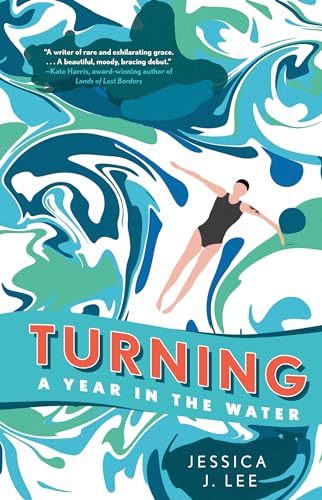
“Jessica J. Lee is a writer of rare and exhilarating grace. In Turning, she sounds the depths of lakes and her own life, never flinching from darkness, surfacing to fresh understandings of her place in the welter of natural and human history. A beautiful, moody, bracing debut.” —Kate Harris, award-winning author of Lands of Lost Borders
Through the heat of summer to the frozen depths of winter, Lee traces her journey swimming through 52 lakes in a single year, swimming through fear and heartbreak to find her place in the world
Jessica J. Lee swims through all four seasons and especially loves the winter. "I long for the ice. The sharp cut of freezing water on my feet. The immeasurable black of the lake at its coldest. Swimming then means cold, and pain, and elation."
At the age of twenty-eight, Jessica, who grew up in Canada and lived in England, finds herself in Berlin. Alone. Lonely, with lowered spirits thanks to some family history and a broken heart, she is there, ostensibly, to write a thesis. And though that is what she does daily, what increasingly occupies her is swimming. So she makes a decision that she believes will win her back her confidence and independence: she will swim fifty-two of the lakes around Berlin, no matter what the weather or season. She is aware that this particular landscape is not without its own ghosts and history.
This is the story of a beautiful obsession: of the thrill of a still, turquoise lake, of cracking the ice before submerging, of floating under blue skies, of tangled weeds and murkiness, of cool, fresh, spring swimming—of facing past fears of near-drowning and of breaking free.
When she completes her year of swimming, Jessica finds she has new strength, and she has also found friends and has gained some understanding of how the landscape both haunts and holds us.
This book is for everyone who loves swimming, who wishes they could push themselves beyond caution, who understands the deep pleasure of using the body's strength, who knows what it is to abandon all thought and float home to the surface.
Die Inhaltsangabe kann sich auf eine andere Ausgabe dieses Titels beziehen.
Über die Autorinnen und Autoren
JESSICA J. LEE is a British-Canadian-Taiwanese writer, environmental historian, and winner of the RBC Taylor Prize Emerging Author Award. She received a doctorate in environmental history and aesthetics in 2016, and her first book, Turning, was published in 2017. Jessica is the founding editor of The Willowherb Review. She lives in Berlin.
JESSICA J. LEE is a British-Canadian-Taiwanese writer, environmental historian, and winner of the RBC Taylor Prize Emerging Author Award. She received a doctorate in environmental history and aesthetics in 2016, and her first book, Turning, was published in 2017. Jessica is the founding editor of The Willowherb Review. She lives in Berlin.
Auszug. © Genehmigter Nachdruck. Alle Rechte vorbehalten.
A swimmer can sense the turning of the lake. There’s a moment in the season when the water changes. It isn’t something you can see, it’s something you can feel. In spring, the winter ice melts, and the warm and cold of the lake intermingle, flowing together. In summer, as the lake grows warm, a green froth of algae caps the surface of the water, and when it cools again in autumn, the green disappears. The air thins. The leaves flash red and gold. And the water ‘turns’.
You come to know the consistent cool of spring and the stagnant warmth at the top of a summer lake. When the water clears in the autumn, you can feel it: the lake feels cleaner on your arms, less like velvet and more like cut glass. And then winter comes, sharper than ever. Swimming year-round means greeting the lake’s changes.
There is an English expression for the lake’s changes: the ‘breaking of the meres’. It describes the point in late summer when shallow lakes – meres – turn a turbid blue-green, algae breaking atop the surface like yeast froths on beer. The Germans also have a word for the green of summer: umkippen. It describes the point when the water has turned to slick green, fizzling with iridescent algae.
But the breaking of the meres and umkippen capture only that single moment of algal rupture, the death of the lake from too much algae and too little oxygen. We tend to notice the obvious thing – the emerging sheen of an algal bloom – and reduce a word’s meaning to that tiny moment, that fleck of green on the surface.
The lake’s turning – ‘lake stratification’ and ‘overturn’ – runs deeper, taking in an entire year’s worth of changes in the water. Turning is perpetual. It points to the wider transformations in the water, as layers below billow and rearrange themselves beneath the surface. Even in winter, the lake is alive beneath the ice.
I long for the ice. The sharp cut of freezing water on my feet. The immeasurable black of the lake at its coldest. Swimming then means cold, and pain, and elation.
When I was twenty-eight, almost as if by accident, I was sent to Berlin on a five-month research placement. I moved into a second-floor Altbau flat, one of the crumbling, enormous apartments that looks straight out of a Stasi spy drama. And from this old place with an old cellar that had once been used for escape tunnels, I set out into a world of pine and silken water, of craggy cobbles and peeling paint.
Berlin resembled the other places I’ve called home – Canada, Britain – but only in glimpses: in the way the skeletal pines would edge the lake, in how the old stones would grow thick with moss. Pain, brightness, loss and renewal were layered in the landscape: in the lush shade of Tiergarten, which in my grandfather’s days was barren, razed and desperately carved up for allotments, and in the crooked edges of concrete that had slowly been dismantled as kids my age grew up. I was three when the Berlin Wall came down. I don’t remember it, but I came to know it in my own way.
The footprint of the Wall was turned into a hiking trail. Pavements stopped you in your tracks, Stolpersteine, brass stumbling stones marking the lost. Roads radiated out like a dial, a stretched palm pressed on to the city. I thought the roads here had to be so wide, if only to hold the ghosts.
Half a year later, as I was retreating from the deep end of depression, I surfaced with the bizarre notion that the solution to my problems lay in swimming. I felt furious that I had succumbed to the dark vacancy of my moods, as though it were my fault. My heart was broken. Above all, I thought that swimming might help me find some new place in the world in a year in which I’d changed address five times. A place in a city that wasn’t mine, and that held layered in its streets a century of change and grief, ghosts in the landscape. Naively, perhaps, I believed that if I could find that place in the middle of the lake where every feeling slipped away, I might undo the hurt.
I’d moved again – this time into a stark white room with ceilings thrice my height – but spent only a few moments unpacking and settling in before turning my eyes to the map. The city at its centre, cut through by a fan of broad avenues and the rivers, the sudden countryside at its edges. Hundreds of spots of blue multiplied exponentially as the city lines crept into the surrounding land. These lakes and rivers – their intricate weave of water laid on to the flat North German Plain by retreating glaciers in the last ice age – had worked a tiny hook into my heart, and I could do nothing for it but swim.
Perhaps it was a drastic response. In depression, I had become someone I hadn’t wanted to be, emptied and hardened. I felt that I had to respond to it in kind, as if lake water might blast away my sadness and fear. So I decided to swim for a year, in the hope of finding some reserve of joy and courage in myself. It was a means of greeting the ghosts – mine and others – as they appeared around unknown corners. I knew there was no untouched landscape here: there is hurt that cannot be undone. I wanted to find a way to negotiate it, to live with it.
Of all the lakes near to the city, I planned to swim in fifty-two, a whole year’s worth, stretching my swims out through each season. Prone to rules, I kept the parameters simple: no cars, no wetsuits. I could take friends from time to time. My daily life would continue as normal. I was in the final year of my doctorate, finalising and refining a dissertation in environmental history. I was living an ocean away from family and home. There was pressure to hold things together. Swimming would be a way of staying with my fears, a way of staying in place. Above all, I sought to find some balance in it.
The summer in Berlin began coolly and then arrived fully formed, hot. Bright swathes of sunlight stretched over the cobbles, and the sky painted itself cornflower blue. The temperature rose and the air thickened only slightly as a hot, dry June settled on the city.
I looked at the map, traced my fingers over the lakes I knew – Krumme Lanke, Weißer See, Liepnitzsee, Bötzsee, Mühlenbecker See – and decided, as if by habit, to start at the beginning. Krumme Lanke, my first German lake.
„Über diesen Titel“ kann sich auf eine andere Ausgabe dieses Titels beziehen.
Weitere beliebte Ausgaben desselben Titels

Suchergebnisse für Turning: A Year in the Water

Foto des Verkäufers
Turning: A Year in the Water
Anbieter: Zoom Books Company, Lynden, WA, USA
Verkäuferbewertung 5 von 5 Sternen

Zustand: very_good. Book is in very good condition and may include minimal underlining highlighting. The book can also include "From the library of" labels. May not contain miscellaneous items toys, dvds, etc. . We offer 100% money back guarantee and 24 7 customer service. Bestandsnummer des Verkäufers ZBV.0735233284.VG
Gebraucht kaufen
EUR 9,15
Versand gratis
Versand innerhalb von USA
Versand innerhalb von USA
Anzahl: 1 verfügbar
Beispielbild für diese ISBN
Turning: A Year in the Water
Anbieter: ThriftBooks-Dallas, Dallas, TX, USA
Verkäuferbewertung 5 von 5 Sternen
Paperback. Zustand: Very Good. No Jacket. May have limited writing in cover pages. Pages are unmarked. ~ ThriftBooks: Read More, Spend Less. Bestandsnummer des Verkäufers G0735233284I4N00
Gebraucht kaufen
EUR 9,48
Versand gratis
Versand innerhalb von USA
Versand innerhalb von USA
Anzahl: 1 verfügbar
Beispielbild für diese ISBN
Turning: A Year in the Water
Anbieter: ThriftBooks-Atlanta, AUSTELL, GA, USA
Verkäuferbewertung 5 von 5 Sternen
Paperback. Zustand: Very Good. No Jacket. May have limited writing in cover pages. Pages are unmarked. ~ ThriftBooks: Read More, Spend Less. Bestandsnummer des Verkäufers G0735233284I4N00
Gebraucht kaufen
EUR 9,48
Versand gratis
Versand innerhalb von USA
Versand innerhalb von USA
Anzahl: 1 verfügbar
Beispielbild für diese ISBN
Turning: A Year in the Water
Anbieter: Half Price Books Inc., Dallas, TX, USA
Verkäuferbewertung 5 von 5 Sternen
paperback. Zustand: Very Good. Connecting readers with great books since 1972! Used books may not include companion materials, and may have some shelf wear or limited writing. We ship orders daily and Customer Service is our top priority! Bestandsnummer des Verkäufers S_457385391
Gebraucht kaufen
EUR 7,21
EUR 3,02 Versand
Versand innerhalb von USA
Versand innerhalb von USA
Anzahl: 1 verfügbar
Foto des Verkäufers
Turning : A Year in the Water
Anbieter: GreatBookPrices, Columbia, MD, USA
Verkäuferbewertung 5 von 5 Sternen
Zustand: New. Bestandsnummer des Verkäufers 37654027-n
Neu kaufen
EUR 11,02
EUR 2,28 Versand
Versand innerhalb von USA
Versand innerhalb von USA
Anzahl: Mehr als 20 verfügbar
Beispielbild für diese ISBN
Turning Format: Paperback
Anbieter: INDOO, Avenel, NJ, USA
Verkäuferbewertung 5 von 5 Sternen
Zustand: New. Bestandsnummer des Verkäufers 9780735233287
Neu kaufen
EUR 13,38
Versand gratis
Versand innerhalb von USA
Versand innerhalb von USA
Anzahl: Mehr als 20 verfügbar
Beispielbild für diese ISBN
Turning (Paperback)
Verlag:
Random House Canada, Mississauga, 2020
ISBN 10: 0735233284
ISBN 13: 9780735233287
Neu
Paperback
Anbieter: Grand Eagle Retail, Bensenville, IL, USA
Verkäuferbewertung 5 von 5 Sternen
Paperback. Zustand: new. Paperback. Longlisted for the 2018 Frank Hegyi Award for Emerging AuthorsJessica J. Lee is a writer of rare and exhilarating grace. In Turning, she sounds the depths of lakes and her own life, never flinching from darkness, surfacing to fresh understandings of her place in the welter of natural and human history. A beautiful, moody, bracing debut. Kate Harris, award-winning author of Lands of Lost BordersThrough the heat of summer to the frozen depths of winter, Lee traces her journey swimming through 52 lakes in a single year, swimming through fear and heartbreak to find her place in the worldJessica J. Lee swims through all four seasons and especially loves the winter. "I long for the ice. The sharp cut of freezing water on my feet. The immeasurable black of the lake at its coldest. Swimming then means cold, and pain, and elation." At the age of twenty-eight, Jessica, who grew up in Canada and lived in England, finds herself in Berlin. Alone. Lonely, with lowered spirits thanks to some family history and a broken heart, she is there, ostensibly, to write a thesis. And though that is what she does daily, what increasingly occupies her is swimming. So she makes a decision that she believes will win her back her confidence and independence: she will swim fifty-two of the lakes around Berlin, no matter what the weather or season. She is aware that this particular landscape is not without its own ghosts and history. This is the story of a beautiful obsession: of the thrill of a still, turquoise lake, of cracking the ice before submerging, of floating under blue skies, of tangled weeds and murkiness, of cool, fresh, spring swimmingof facing past fears of near-drowning and of breaking free. When she completes her year of swimming, Jessica finds she has new strength, and she has also found friends and has gained some understanding of how the landscape both haunts and holds us. This book is for everyone who loves swimming, who wishes they could push themselves beyond caution, who understands the deep pleasure of using the body's strength, who knows what it is to abandon all thought and float home to the surface. Shipping may be from multiple locations in the US or from the UK, depending on stock availability. Bestandsnummer des Verkäufers 9780735233287
Foto des Verkäufers
Turning : A Year in the Water
Anbieter: GreatBookPrices, Columbia, MD, USA
Verkäuferbewertung 5 von 5 Sternen
Zustand: As New. Unread book in perfect condition. Bestandsnummer des Verkäufers 37654027
Gebraucht kaufen
EUR 11,34
EUR 2,28 Versand
Versand innerhalb von USA
Versand innerhalb von USA
Anzahl: Mehr als 20 verfügbar
Beispielbild für diese ISBN
Turning: A Year in the Water
Anbieter: Tangled Web Mysteries and Oddities, Kennebuunkport, ME, USA
Verkäuferbewertung 5 von 5 Sternen
paperback. Zustand: Good. Light reading and shelf wear. All the important parts have already been marked for you in pencil with helpful notations. Providing superior service since 2001. Dropshippers heartily welcomed. Bestandsnummer des Verkäufers 132562
Gebraucht kaufen
EUR 8,90
EUR 4,75 Versand
Versand innerhalb von USA
Versand innerhalb von USA
Anzahl: 1 verfügbar
Foto des Verkäufers
Turning
Anbieter: Rarewaves USA, OSWEGO, IL, USA
Verkäuferbewertung 5 von 5 Sternen
Paperback. Zustand: New. Bestandsnummer des Verkäufers LU-9780735233287