
Verwandte Artikel zu The Dissolution of the Financial State: A Marxian Examinatio...
The Dissolution of the Financial State: A Marxian Examination of the Political Economy of Money Since the 1930s (Heterodox Studies in the Critique of Political Economy) - Hardcover
Buch 2 von 4: Heterodox Studies in the Critique of Political Economy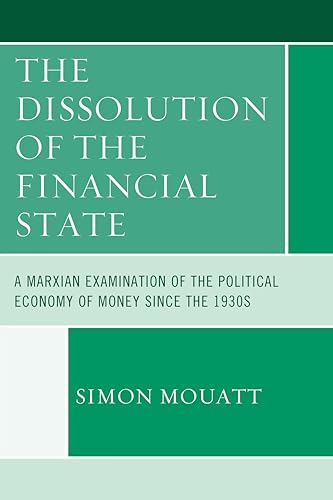
Inhaltsangabe
This book argues that post-Keynesian theories of endogenous money can be combined with Marxian analysis in order to give insight into the changing power relations between the state, finance sector and real economy since WW2. A key theme is that financial power, derived from the control of money-issue and its purchasing power, is determined by the state and market in varying proportions (depending on context) but that state sovereignty has been lost in recent decades. In addition, the growth of financial markets in recent decades, so-called financialization, has led many to assume that private finance is an important proximate driver of economic affairs in general. In contrast, the book argues that this provides insufficient explanation of events. To discuss financial factors as causes of financial crisis risks describing the phenomena without illustrating the root causes. Instead, the book argues that systemic drivers of capitalism (rooted in production), probably best understood by Marx, actually do provide a more plausible explanation of the causes of the financialization and erosion of state sovereignty. In addition, the Post-Keynesian descriptions of monetary processes are considered to best reflect the actual reality of the monetary system. This represents an interesting synthesis of the classical Marx with modern money theory. The interpretation of Marx used to explain this financial transformation has been named the Temporal Single System Interpretation, which illustrates Marx's value theory across periods and identifies a tendency towards falling profit rates. It is claimed that falling profits, in turn, are an underlying driver of the systemic propensity towards financialisation, crisis and stagnation. The empirical findings presented, taken from case studies of the UK and Germany, appear to support this view.
The central argument is that the response of agents (including the state) to the profit tendency has been a significant driver of the observed financial transformation. The book then concludes that this synthesis provides a more appropriate explanation of the historical transformation of the financial system since the Great Depression, than much of the financialization literature, and illustrates the source (and operation) of financial power in the modern capitalist state and market.
Die Inhaltsangabe kann sich auf eine andere Ausgabe dieses Titels beziehen.
Über die Autorin bzw. den Autor
Simon Mouatt is associate professor at Southampton Solent University.
„Über diesen Titel“ kann sich auf eine andere Ausgabe dieses Titels beziehen.
Suchergebnisse für The Dissolution of the Financial State: A Marxian Examinatio...

Beispielbild für diese ISBN
The Dissolution of the Financial State: A Marxian Examination of the Political Economy of Money Since the 1930s (Heterodox Studies in the Critique of Political Economy)
Anbieter: HPB-Red, Dallas, TX, USA
Verkäuferbewertung 5 von 5 Sternen

hardcover. Zustand: Good. Connecting readers with great books since 1972! Used textbooks may not include companion materials such as access codes, etc. May have some wear or writing/highlighting. We ship orders daily and Customer Service is our top priority! Bestandsnummer des Verkäufers S_370906687
Gebraucht kaufen
EUR 103,15
EUR 3,34 Versand
Versand innerhalb von USA
Versand innerhalb von USA
Anzahl: 1 verfügbar
Beispielbild für diese ISBN
Dissolution of the Financial State
Print-on-DemandAnbieter: PBShop.store UK, Fairford, GLOS, Vereinigtes Königreich
Verkäuferbewertung 5 von 5 Sternen
HRD. Zustand: New. New Book. Delivered from our UK warehouse in 4 to 14 business days. THIS BOOK IS PRINTED ON DEMAND. Established seller since 2000. Bestandsnummer des Verkäufers L1-9780739190371
Neu kaufen
EUR 132,15
EUR 5,92 Versand
Versand von Vereinigtes Königreich nach USA
Versand von Vereinigtes Königreich nach USA
Anzahl: Mehr als 20 verfügbar
Foto des Verkäufers
Dissolution of the Financial State : A Marxian Examination of the Political Economy of Money Since the 1930s
Anbieter: GreatBookPrices, Columbia, MD, USA
Verkäuferbewertung 5 von 5 Sternen
Zustand: New. Bestandsnummer des Verkäufers 23669470-n
Neu kaufen
EUR 136,50
EUR 2,35 Versand
Versand innerhalb von USA
Versand innerhalb von USA
Anzahl: Mehr als 20 verfügbar
Beispielbild für diese ISBN
Dissolution of the Financial State
Print-on-DemandAnbieter: PBShop.store US, Wood Dale, IL, USA
Verkäuferbewertung 5 von 5 Sternen
HRD. Zustand: New. New Book. Shipped from UK. THIS BOOK IS PRINTED ON DEMAND. Established seller since 2000. Bestandsnummer des Verkäufers L1-9780739190371
Neu kaufen
EUR 138,93
Versand gratis
Versand innerhalb von USA
Versand innerhalb von USA
Anzahl: Mehr als 20 verfügbar
Foto des Verkäufers
Dissolution of the Financial State : A Marxian Examination of the Political Economy of Money Since the 1930s
Anbieter: GreatBookPrices, Columbia, MD, USA
Verkäuferbewertung 5 von 5 Sternen
Zustand: As New. Unread book in perfect condition. Bestandsnummer des Verkäufers 23669470
Gebraucht kaufen
EUR 143,63
EUR 2,35 Versand
Versand innerhalb von USA
Versand innerhalb von USA
Anzahl: Mehr als 20 verfügbar
Beispielbild für diese ISBN
Dissolution of the Financial State : A Marxian Examination of the Political Economy of Money Since the 1930s
Anbieter: GreatBookPricesUK, Woodford Green, Vereinigtes Königreich
Verkäuferbewertung 5 von 5 Sternen
Zustand: New. Bestandsnummer des Verkäufers 23669470-n
Neu kaufen
EUR 132,14
EUR 17,68 Versand
Versand von Vereinigtes Königreich nach USA
Versand von Vereinigtes Königreich nach USA
Anzahl: Mehr als 20 verfügbar
Beispielbild für diese ISBN
The Dissolution of the Financial State: A Marxian Examination of the Political Economy of Money Since the 1930s (Heterodox Studies in the Critique of Political Economy)
Anbieter: Ria Christie Collections, Uxbridge, Vereinigtes Königreich
Verkäuferbewertung 5 von 5 Sternen
Zustand: New. In English. Bestandsnummer des Verkäufers ria9780739190371_new
Neu kaufen
EUR 143,22
EUR 13,30 Versand
Versand von Vereinigtes Königreich nach USA
Versand von Vereinigtes Königreich nach USA
Anzahl: Mehr als 20 verfügbar
Foto des Verkäufers
Dissolution of the Financial State : A Marxian Examination of the Political Economy of Money Since the 1930s
Anbieter: GreatBookPricesUK, Woodford Green, Vereinigtes Königreich
Verkäuferbewertung 5 von 5 Sternen
Zustand: As New. Unread book in perfect condition. Bestandsnummer des Verkäufers 23669470
Gebraucht kaufen
EUR 144,58
EUR 17,68 Versand
Versand von Vereinigtes Königreich nach USA
Versand von Vereinigtes Königreich nach USA
Anzahl: Mehr als 20 verfügbar
Beispielbild für diese ISBN
The Dissolution of the Financial State (Hardcover)
Verlag:
Bloomsbury Publishing Plc, Lanham, MD, 2015
ISBN 10: 0739190377
ISBN 13: 9780739190371
Neu
Hardcover
Anbieter: Grand Eagle Retail, Bensenville, IL, USA
Verkäuferbewertung 5 von 5 Sternen
Hardcover. Zustand: new. Hardcover. This book argues that post-Keynesian theories of endogenous money can be combined with Marxian analysis in order to give insight into the changing power relations between the state, finance sector and real economy since WW2. A key theme is that financial power, derived from the control of money-issue and its purchasing power, is determined by the state and market in varying proportions (depending on context) but that state sovereignty has been lost in recent decades. In addition, the growth of financial markets in recent decades, so-called financialization, has led many to assume that private finance is an important proximate driver of economic affairs in general. In contrast, the book argues that this provides insufficient explanation of events. To discuss financial factors as causes of financial crisis risks describing the phenomena without illustrating the root causes. Instead, the book argues that systemic drivers of capitalism (rooted in production), probably best understood by Marx, actually do provide a more plausible explanation of the causes of the financialization and erosion of state sovereignty. In addition, the Post-Keynesian descriptions of monetary processes are considered to best reflect the actual reality of the monetary system. This represents an interesting synthesis of the classical Marx with modern money theory. The interpretation of Marx used to explain this financial transformation has been named the Temporal Single System Interpretation, which illustrates Marxs value theory across periods and identifies a tendency towards falling profit rates. It is claimed that falling profits, in turn, are an underlying driver of the systemic propensity towards financialisation, crisis and stagnation. The empirical findings presented, taken from case studies of the UK and Germany, appear to support this view. The central argument is that the response of agents (including the state) to the profit tendency has been a significant driver of the observed financial transformation. The book then concludes that this synthesis provides a more appropriate explanation of the historical transformation of the financial system since the Great Depression, than much of the financialization literature, and illustrates the source (and operation) of financial power in the modern capitalist state and market. This book considers credit systems in the era of financialization and the erosion of state sovereignty in financial matters. Applying Marxs political economy and Post-Keynesian endogenous money theory to case studies from the UK and Germany, it argues that the best explanation for these phenomena can be found in the systemic drivers of capitalism. This item is printed on demand. Shipping may be from multiple locations in the US or from the UK, depending on stock availability. Bestandsnummer des Verkäufers 9780739190371
Beispielbild für diese ISBN
The Dissolution of the Financial State: A Marxian Examination of the Political Economy of Money Since the 1930s
Print-on-DemandAnbieter: THE SAINT BOOKSTORE, Southport, Vereinigtes Königreich
Verkäuferbewertung 5 von 5 Sternen
Hardback. Zustand: New. This item is printed on demand. New copy - Usually dispatched within 5-9 working days. Bestandsnummer des Verkäufers C9780739190371
Neu kaufen
EUR 154,22
EUR 18,37 Versand
Versand von Vereinigtes Königreich nach USA
Versand von Vereinigtes Königreich nach USA
Anzahl: Mehr als 20 verfügbar