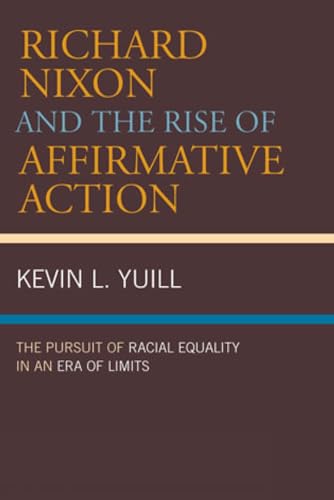
In this enlightening and original new work, Kevin Yuill combines extensive archival research with a careful analysis of the intellectual climate of the era to examine not only the conditions that made Nixon's affirmative action policy decisions possible in the 1970s but also what motivated Nixon to act in the way that he did. He argues that in order to fully understand why Nixon embraced affirmative action, one must fully take into account the shifting context of American liberalism in the 1970s. In particular, Yuill contends that although government-enforced affirmative action did not fit into the postwar, growth-oriented liberalism, it emerged as an important regulatory policy blueprint in an era increasingly characterized by diminished horizons for social policy.
Die Inhaltsangabe kann sich auf eine andere Ausgabe dieses Titels beziehen.
Kevin Yuill is senior lecturer in American studies at Sunderland University.
„Über diesen Titel“ kann sich auf eine andere Ausgabe dieses Titels beziehen.
Anbieter: Anybook.com, Lincoln, Vereinigtes Königreich
Zustand: Good. This is an ex-library book and may have the usual library/used-book markings inside.This book has soft covers. In good all round condition. Please note the Image in this listing is a stock photo and may not match the covers of the actual item,500grams, ISBN:9780742549982. Bestandsnummer des Verkäufers 9638575
Anzahl: 1 verfügbar
Anbieter: GreatBookPrices, Columbia, MD, USA
Zustand: New. Bestandsnummer des Verkäufers 4181869-n
Anzahl: 15 verfügbar
Anbieter: Grand Eagle Retail, Bensenville, IL, USA
Paperback. Zustand: new. Paperback. Richard Nixon is hardly remembered for his civil rights policies but there is no denying that, more than any other president, he is responsible for affirmative action. Noting Nixon's hostility towards busing, his political allegiances with segregationists, and the hostility of leading civil rights figures at the time, historians and political scientists have avoided explaining why the origins of modern affirmative action lie in the Nixon era. In this enlightening and original new work, Kevin Yuill combines extensive archival research with a careful analysis of the intellectual climate of the era to examine not only the conditions that made Nixon's policy decisions possible in the 1970s but also what motivated Nixon to act in the way that he did. He argues that in order to fully understand why Nixon embraced affirmative action, one must fully take into account the shifting context of American liberalism in the 1970s. In particular, Yuill contends that although government-enforced affirmative action did not fit into the postwar, growth-oriented liberalism, it emerged as an important regulatory policy blueprint in an era increasingly characterized by diminished horizons for social policy. Nixon's efforts in moving the focus of U.S. race relations from reform to indemnifying damages, Yuill argues, at least equals his contribution to the origins of affirmative action through policy innovations. Controversial and far-reaching, Richard Nixon and the Rise of Affirmative Action brings fresh research and a much-needed reinterpretation of a crucial yet still enigmatic period, president and policy. In this enlightening and original new work, Kevin Yuill combines extensive archival research with a careful analysis of the intellectual climate of the era to examine not only the conditions that made Nixon's affirmative action policy decisions possible in the 1970s but also what motivated Nixon to act in the way that he did. He argues that in order to fully understand why Nixon embraced affirmative action, one must fully take into account the shifting context of American liberalism in the 1970s. In particular, Yuill contends that although government-enforced affirmative action did not fit into the postwar, growth-oriented liberalism, it emerged as an important regulatory policy blueprint in an era increasingly characterized by diminished horizons for social policy. Shipping may be from multiple locations in the US or from the UK, depending on stock availability. Bestandsnummer des Verkäufers 9780742549982
Anbieter: INDOO, Avenel, NJ, USA
Zustand: New. Bestandsnummer des Verkäufers 9780742549982
Anbieter: GreatBookPrices, Columbia, MD, USA
Zustand: As New. Unread book in perfect condition. Bestandsnummer des Verkäufers 4181869
Anzahl: 15 verfügbar
Anbieter: Kennys Bookshop and Art Galleries Ltd., Galway, GY, Irland
Zustand: New. Series: American Intellectual Culture. Num Pages: 280 pages. BIC Classification: 1KBB; 3JJPL; HBJK; HBLW; HBTB; JFFJ; JFSL. Category: (UU) Undergraduate. Dimension: 229 x 154 x 17. Weight in Grams: 388. . 2006. Paperback. . . . . Bestandsnummer des Verkäufers V9780742549982
Anzahl: 15 verfügbar
Anbieter: Kennys Bookstore, Olney, MD, USA
Zustand: New. Series: American Intellectual Culture. Num Pages: 280 pages. BIC Classification: 1KBB; 3JJPL; HBJK; HBLW; HBTB; JFFJ; JFSL. Category: (UU) Undergraduate. Dimension: 229 x 154 x 17. Weight in Grams: 388. . 2006. Paperback. . . . . Books ship from the US and Ireland. Bestandsnummer des Verkäufers V9780742549982
Anzahl: 15 verfügbar
Anbieter: CitiRetail, Stevenage, Vereinigtes Königreich
Paperback. Zustand: new. Paperback. Richard Nixon is hardly remembered for his civil rights policies but there is no denying that, more than any other president, he is responsible for affirmative action. Noting Nixon's hostility towards busing, his political allegiances with segregationists, and the hostility of leading civil rights figures at the time, historians and political scientists have avoided explaining why the origins of modern affirmative action lie in the Nixon era. In this enlightening and original new work, Kevin Yuill combines extensive archival research with a careful analysis of the intellectual climate of the era to examine not only the conditions that made Nixon's policy decisions possible in the 1970s but also what motivated Nixon to act in the way that he did. He argues that in order to fully understand why Nixon embraced affirmative action, one must fully take into account the shifting context of American liberalism in the 1970s. In particular, Yuill contends that although government-enforced affirmative action did not fit into the postwar, growth-oriented liberalism, it emerged as an important regulatory policy blueprint in an era increasingly characterized by diminished horizons for social policy. Nixon's efforts in moving the focus of U.S. race relations from reform to indemnifying damages, Yuill argues, at least equals his contribution to the origins of affirmative action through policy innovations. Controversial and far-reaching, Richard Nixon and the Rise of Affirmative Action brings fresh research and a much-needed reinterpretation of a crucial yet still enigmatic period, president and policy. In this enlightening and original new work, Kevin Yuill combines extensive archival research with a careful analysis of the intellectual climate of the era to examine not only the conditions that made Nixon's affirmative action policy decisions possible in the 1970s but also what motivated Nixon to act in the way that he did. He argues that in order to fully understand why Nixon embraced affirmative action, one must fully take into account the shifting context of American liberalism in the 1970s. In particular, Yuill contends that although government-enforced affirmative action did not fit into the postwar, growth-oriented liberalism, it emerged as an important regulatory policy blueprint in an era increasingly characterized by diminished horizons for social policy. Shipping may be from our UK warehouse or from our Australian or US warehouses, depending on stock availability. Bestandsnummer des Verkäufers 9780742549982
Anzahl: 1 verfügbar
Anbieter: moluna, Greven, Deutschland
Zustand: New. Über den AutorBy Kevin YuillInhaltsverzeichnisIntroduction: An Almost Hopeless Holding Action Part I: From Myrdal to the Kerner Commission: The Rise and Fall of Barriers to Affirmative Action in the Pos. Bestandsnummer des Verkäufers 898552764
Anzahl: Mehr als 20 verfügbar
Anbieter: AussieBookSeller, Truganina, VIC, Australien
Paperback. Zustand: new. Paperback. Richard Nixon is hardly remembered for his civil rights policies but there is no denying that, more than any other president, he is responsible for affirmative action. Noting Nixon's hostility towards busing, his political allegiances with segregationists, and the hostility of leading civil rights figures at the time, historians and political scientists have avoided explaining why the origins of modern affirmative action lie in the Nixon era. In this enlightening and original new work, Kevin Yuill combines extensive archival research with a careful analysis of the intellectual climate of the era to examine not only the conditions that made Nixon's policy decisions possible in the 1970s but also what motivated Nixon to act in the way that he did. He argues that in order to fully understand why Nixon embraced affirmative action, one must fully take into account the shifting context of American liberalism in the 1970s. In particular, Yuill contends that although government-enforced affirmative action did not fit into the postwar, growth-oriented liberalism, it emerged as an important regulatory policy blueprint in an era increasingly characterized by diminished horizons for social policy. Nixon's efforts in moving the focus of U.S. race relations from reform to indemnifying damages, Yuill argues, at least equals his contribution to the origins of affirmative action through policy innovations. Controversial and far-reaching, Richard Nixon and the Rise of Affirmative Action brings fresh research and a much-needed reinterpretation of a crucial yet still enigmatic period, president and policy. In this enlightening and original new work, Kevin Yuill combines extensive archival research with a careful analysis of the intellectual climate of the era to examine not only the conditions that made Nixon's affirmative action policy decisions possible in the 1970s but also what motivated Nixon to act in the way that he did. He argues that in order to fully understand why Nixon embraced affirmative action, one must fully take into account the shifting context of American liberalism in the 1970s. In particular, Yuill contends that although government-enforced affirmative action did not fit into the postwar, growth-oriented liberalism, it emerged as an important regulatory policy blueprint in an era increasingly characterized by diminished horizons for social policy. Shipping may be from our Sydney, NSW warehouse or from our UK or US warehouse, depending on stock availability. Bestandsnummer des Verkäufers 9780742549982
Anzahl: 1 verfügbar