
Verwandte Artikel zu The Kurds in Turkey: EU Accession and Human Rights
Inhaltsangabe
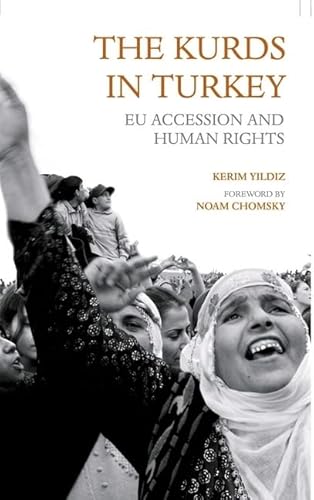
With a foreword by Noam Chomsky, this is the most up-to-date critical analysis of the problems faced by the Kurds in Turkey.
Turkey has a long history of human rights abuses against its Kurdish population – a population that stretches into millions. This human rights record is one of the main stumbling blocks in Turkey’s efforts to join the EU. The Kurds are denied many basic rights, including the right to learn or broadcast in their own language.
This book, written by a leading human rights defender, provides a comprehensive account of the key issues now facing the Kurds, and the prospects for Turkey joining the EU. Kerim Yildiz outlines the background to the current situation and explores a range of issues including civil, cultural and political rights, minority rights, internal displacement, and the international community’s obligations regarding Turkey.
Die Inhaltsangabe kann sich auf eine andere Ausgabe dieses Titels beziehen.
Über die Autorin bzw. den Autor
Kerim Yildiz is the Chief Executive of the Kurdish Human Rights Project, an innovative London-based human rights organisation that strategically challenges legislation and practices in order to secure redress for survivors of human rights violations and to prevent future abuses. A Kurd and former refugee from political persecution, he has written and spoken extensively on issues of human rights, minority rights and international law.
Auszug. © Genehmigter Nachdruck. Alle Rechte vorbehalten.
The Kurds in Turkey
EU Accession and Human Rights
By Kerim YildizPluto Press
Copyright © 2005 Kerim Yildiz
All rights reserved.
ISBN: 978-0-7453-2489-0All rights reserved.
Contents
Map of the area inhabited by Kurds, vii,
Acknowledgements, ix,
Foreword by Noam Chomsky, x,
List of Abbreviations, xxviii,
1. Introduction, 1,
2. Background, 4,
3. Turkey, the Kurds and the EU, 20,
4. Civil, Political and Cultural Rights in Turkey, 41,
5. Internal Displacement, 76,
6. The Kurds and Human and Minority Rights, 89,
7. Conflict in the Southeast, 104,
8. The International Dimensions to the Conflict, 118,
9. The EU and the Kurds, 133,
Notes, 150,
Index, 176,
CHAPTER 1
Introduction
The decision by the European Union (EU) of 17 December 2004 that Turkey is to become a candidate for accession heralds a new era for the Turkish Kurds. The logic of ethnic nationalism in Turkey has long generated attempts to repress Kurdish identity. Subject to unremitting attempts by the Turkish government to disband Kurdish networks, suppress cultural expression and quell dissent, the Kurds residing in southeast Turkey have borne decades of persecution effected through discriminatory legislation, forced displacement, judicial harassment, arbitrary detention, torture and extra-judicial execution. Now, for the first time since the ascendancy of Atatürk in 1923, EU accession has the potential to offer them a real prospect of lasting security in an open, pluralist society.
EU decision-makers, spurred on by the perceived political imperative of advancing the EU accession process, have, though, adopted a rather over-optimistic interpretation of the pro-EU reforms currently being enacted in Turkey. It seems to be everywhere presumed that a modern, pluralist democracy will inexorably follow the tentative, if outwardly dramatic human rights restructuring so far enacted in Turkey. Indeed, there is a widely held perception in Europe that the Turkish administration is somehow benign, and has simply made a few small errors in relation to human rights and its treatment of the Kurds.
Will this really prove the case? And can the EU's decision to open formal accession negotiations with Turkey despite a multitude of very important reservations over her fulfilment of the relevant criteria thus be justified? Turkish society and political structures have for decades been steeped in conservative, highly reactionary nineteenth-century inspired notions of the primacy of the nation state and the central role of an official, mono-ethnic nationalism. These ideological precepts have informed the view that values and interests separate from the state are dangerous, and particularly that expressions of identity which depart from the official designation of Turkey as a nation of ethnic Turks jeopardize the integrity of the state, however peaceful or moderate. Elements of the 'deep state' in Turkey which lurk behind her democratic façade remain extremely influential in ensuring that these strands of thinking remain current.
Turkey's treatment of the Kurds must be seen in this context. Turkish nationalism incorporates the concept that national integration is predicated upon one nation and a unitary, indivisible state. There were accordingly deemed to be no minorities in Turkey, since the presence of non-Turkish ethnic identities within the country's borders was the very inverse of what Turkish state-builders were trying to achieve. Legislative provisions thus prohibited distinctions to be made between citizens on the basis of ethnicity, and the constitution outlawed self-determination and regional autonomy.
As a people making up over 20 per cent of the population in Turkey and inhabiting a large, contiguous region on Turkey's borders with the Middle East, the Kurds were seen to constitute the greatest threat to Turkish conceptions of the integral nation state. Accordingly, Turkey has ruthlessly suppressed all expressions of Kurdish culture and punished assertions of Kurdish identity or pro-Kurdish political viewpoints. She has also fought an armed conflict against the Kurdistan Workers' Party (PKK), accompanied by extreme brutality by state security forces towards Kurdish civilians, and sought to dissipate Kurdish regional dominance in the Southeast by destroying over 3,000 Kurdish villages and forcibly displacing their inhabitants. Turkey has doggedly refused to conceive of the Kurdish issue as a political one stemming from her repressive treatment of the Kurds, and instead sees only the much narrower, security problem in the Southeast arising from the Kurdish separatist threat. Consequently, she propounds only military solutions, is extremely reticent about broadening Kurdish cultural rights for fear of fuelling separatist tendencies, and steadfastly refuses to engage in political dialogue with representatives of the Kurds.
The situation of the Kurds is a touchstone issue for Turkey in the EU accession process. Given Turkey's autocratic leanings evidenced in her behaviour towards the Kurds, her paranoia over countenancing pluralism and her increasingly desperate attempts to cling to outdated notions of the primacy of the nation state, can she truly be said to be democratizing?
These questions are given added pertinence by events unfolding in Iraq. The new regime there has explicitly demonstrated the feasibility of state-based autonomous solutions for the Kurds, setting an important precedent and endowing Kurdish claims for similar outcomes across the Kurdish regions with added legitimacy. Turkey, instead of moving in this direction though, is forging an anti-democratic alliance with Iran and Syria, fellow oppressors of the Kurds, in order to prop up their increasingly untenable joint positions on this issue.
The key question which this publication seeks to address is whether, behind all the fanfare of reform and rejuvenation of democracy, Turkey is really changing. How appropriate is it to open formal accession negotiations for EU membership? What should be Turkey's next steps? What prospects does EU accession hold for the Kurds?
CHAPTER 2Background
The Kurds, a tribal people with a cohesive and distinct identity who originate from the Zagros Mountains in northwest Iran, have endured a history of oppression and abuse. Ultimately denied the opportunity for independence provided for in the 1920 Treaty of Sèvres, the Kurds were later divided between the border areas of Turkey, Iraq, Iran and Syria where they were viewed with profound mistrust and hostility, their existence as a people was denied and they consequently endured decades of repression, violence and forced assimilation.
In Turkey, the birth of the new Republic under the tutelage of Kemal Atatürk in 1923 saw the imposition of a mono-ethnic nationalism which sought to extinguish the notion of a distinct Kurdish people. 'Security concerns', inspired by the location of Kurdish communities in Turkey's sensitive border regions, bolstered this aim. This came to a head after 1984, when a government-declared State of Emergency in the Southeast provided a framework for torture, killings, forced displacement, and severe restrictions on Kurdish cultural and political expression, against a backdrop of ongoing armed conflict.
THE KURDS
The Kurds, who are believed to number around 30 million, are widely believed to be the largest group of stateless people in the world. Despite this, they have maintained a strong ethnic identity for over two thousand years. As an ethnic group,...
„Über diesen Titel“ kann sich auf eine andere Ausgabe dieses Titels beziehen.
Suchergebnisse für The Kurds in Turkey: EU Accession and Human Rights

Foto des Verkäufers
The Kurds in Turkey: EU Accession and Human Rights
Verlag:
Pluto Press, LONDON, 2005
ISBN 10: 0745324894
ISBN 13: 9780745324890
Gebraucht
Hardcover
Erstausgabe
Anbieter: Tobo Books, Portsmouth, Vereinigtes Königreich
Verkäuferbewertung 5 von 5 Sternen

Hardcover. Zustand: Fine. Zustand des Schutzumschlags: Near Fine. 1st Edition. Fine book in slightly marked dustwrapper, bright sharp and unwrubbed. Excellent. Book. Bestandsnummer des Verkäufers 001170
Gebraucht kaufen
EUR 18,34
EUR 29,67 Versand
Versand von Vereinigtes Königreich nach USA
Versand von Vereinigtes Königreich nach USA
Anzahl: 1 verfügbar
Foto des Verkäufers
The Kurds in Turkey: EU Accession and Human Rights.
Anbieter: Kloof Booksellers & Scientia Verlag, Amsterdam, Niederlande
Verkäuferbewertung 4 von 5 Sternen

Zustand: very good. London : Pluto Press, 2005. Hardcover. 208 pp.- With an introduction by Chomsky, this is the most up-to-date analysis of the problems faced by Kurds in Turkey. English text. Condition : very good. Condition : very good copy. ISBN 9780745324890. Keywords : RECHT, asian law *2006-100 asian law Middle East. Bestandsnummer des Verkäufers 221880
Gebraucht kaufen
EUR 28,95
EUR 30,00 Versand
Versand von Niederlande nach USA
Versand von Niederlande nach USA
Anzahl: 1 verfügbar
Beispielbild für diese ISBN
The Kurds in Turkey: EU Accession and Human Rights (eng)
Anbieter: Brook Bookstore On Demand, Napoli, NA, Italien
Verkäuferbewertung 5 von 5 Sternen
Zustand: new. Bestandsnummer des Verkäufers eaf0380e23a7263fd5c1d458e40f39c5
Neu kaufen
EUR 78,97
EUR 5,50 Versand
Versand von Italien nach USA
Versand von Italien nach USA
Anzahl: Mehr als 20 verfügbar
Beispielbild für diese ISBN
The Kurds in Turkey
Anbieter: PBShop.store UK, Fairford, GLOS, Vereinigtes Königreich
Verkäuferbewertung 5 von 5 Sternen
HRD. Zustand: New. New Book. Shipped from UK. Established seller since 2000. Bestandsnummer des Verkäufers FW-9780745324890
Neu kaufen
EUR 80,00
EUR 5,96 Versand
Versand von Vereinigtes Königreich nach USA
Versand von Vereinigtes Königreich nach USA
Anzahl: 15 verfügbar
Beispielbild für diese ISBN
The Kurds in Turkey. EU Accession and Human Rights.
Anbieter: Kennys Bookshop and Art Galleries Ltd., Galway, GY, Irland
Verkäuferbewertung 5 von 5 Sternen
Zustand: New. With an introduction by Chomsky, this is the most up-to-date analysis of the problems faced by Kurds in Turkey. Num Pages: 208 pages, 1 map. BIC Classification: JPVH. Category: (G) General (US: Trade); (P) Professional & Vocational; (UP) Postgraduate, Research & Scholarly; (UU) Undergraduate. Dimension: 215 x 135 x 20. Weight in Grams: 413. . 2005. Hardback. . . . . Bestandsnummer des Verkäufers V9780745324890
Neu kaufen
EUR 91,88
EUR 9,50 Versand
Versand von Irland nach USA
Versand von Irland nach USA
Anzahl: Mehr als 20 verfügbar
Foto des Verkäufers
The Kurds in Turkey - EU Accession and Human Rights. Foreword by Noam Chomsky.
ISBN 10: 0745324894
ISBN 13: 9780745324890
Gebraucht
Hardcover
Anbieter: Inanna Rare Books Ltd., Skibbereen, CORK, Irland
Verkäuferbewertung 5 von 5 Sternen
Zustand: Sehr gut. 14 cm x 22 cm. XXIX, 182 pages. One black and white map. Original Hardcover with illustrated dustjacket. Excellent, close to new condition. Includes for example the following essays: Turkey, the Kurds and the EU / Civil, Political and Cultural Rights in Turkey / The EU and the Kurds etc. Bestandsnummer des Verkäufers 60559AB
Gebraucht kaufen
EUR 78,00
EUR 28,00 Versand
Versand von Irland nach USA
Versand von Irland nach USA
Anzahl: 1 verfügbar
Foto des Verkäufers
Kurds in Turkey : Eu Accession and Human Rights
Anbieter: GreatBookPrices, Columbia, MD, USA
Verkäuferbewertung 5 von 5 Sternen
Zustand: New. Bestandsnummer des Verkäufers 3498556-n
Neu kaufen
EUR 104,96
EUR 2,35 Versand
Versand innerhalb von USA
Versand innerhalb von USA
Anzahl: Mehr als 20 verfügbar
Beispielbild für diese ISBN
The Kurds in Turkey: EU Accession and Human Rights
Anbieter: Ria Christie Collections, Uxbridge, Vereinigtes Königreich
Verkäuferbewertung 5 von 5 Sternen
Zustand: New. In English. Bestandsnummer des Verkäufers ria9780745324890_new
Neu kaufen
EUR 101,59
EUR 13,40 Versand
Versand von Vereinigtes Königreich nach USA
Versand von Vereinigtes Königreich nach USA
Anzahl: Mehr als 20 verfügbar
Beispielbild für diese ISBN
The Kurds in Turkey: EU Accession and Human Rights
Anbieter: THE SAINT BOOKSTORE, Southport, Vereinigtes Königreich
Verkäuferbewertung 5 von 5 Sternen
Hardback. Zustand: New. New copy - Usually dispatched within 4 working days. Bestandsnummer des Verkäufers B9780745324890
Neu kaufen
EUR 98,32
EUR 18,36 Versand
Versand von Vereinigtes Königreich nach USA
Versand von Vereinigtes Königreich nach USA
Anzahl: Mehr als 20 verfügbar
Beispielbild für diese ISBN
The Kurds in Turkey EU Accession and Human Rights
Anbieter: Revaluation Books, Exeter, Vereinigtes Königreich
Verkäuferbewertung 5 von 5 Sternen
Hardcover. Zustand: Brand New. new title edition. 216 pages. 8.50x5.50x0.75 inches. In Stock. Bestandsnummer des Verkäufers __0745324894
Neu kaufen
EUR 105,28
EUR 11,87 Versand
Versand von Vereinigtes Königreich nach USA
Versand von Vereinigtes Königreich nach USA
Anzahl: 2 verfügbar