
Verwandte Artikel zu Cold Intimacies: The Making of Emotional Capitalism
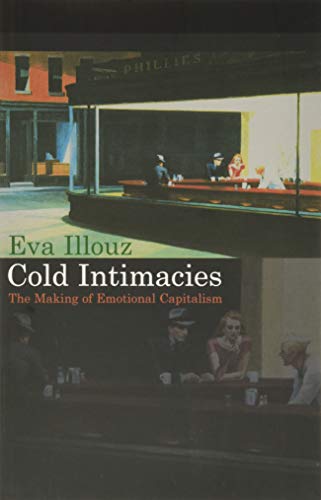
Inhaltsangabe
It is commonly assumed that capitalism has created an a-emotional world dominated by bureaucratic rationality; that economic behavior conflicts with intimate, authentic relationships; that the public and private spheres are irremediably opposed to each other; and that true love is opposed to calculation and self-interest.
Eva Illouz rejects these conventional ideas and argues that the culture of capitalism has fostered an intensely emotional culture in the workplace, in the family, and in our own relationship to ourselves. She argues that economic relations have become deeply emotional, while close, intimate relationships have become increasingly defined by economic and political models of bargaining, exchange, and equity. This dual process by which emotional and economic relationships come to define and shape each other is called emotional capitalism. Illouz finds evidence of this process of emotional capitalism in various social sites: self-help literature, women's magazines, talk shows, support groups, and the Internet dating sites. How did this happen? What are the social consequences of the current preoccupation with emotions? How did the public sphere become saturated with the exposure of private life? Why does suffering occupy a central place in contemporary identity? How has emotional capitalism transformed our romantic choices and experiences? Building on and revising the intellectual legacy of critical theory, this book addresses these questions and offers a new interpretation of the reasons why the public and the private, the economic and the emotional spheres have become inextricably intertwined.
Die Inhaltsangabe kann sich auf eine andere Ausgabe dieses Titels beziehen.
Über die Autorin bzw. den Autor
E. Illouz, Professor of Sociology, The Hebrew University of Jersalem
Von der hinteren Coverseite
It is commonly assumed that capitalism has created an a-emotional world dominated by bureaucratic rationality; that economic behavior conflicts with intimate, authentic relationships; that the public and private spheres are irremediably opposed to each other; and that true love is opposed to calculation and self-interest.
Eva Illouz rejects these conventional ideas and argues that the culture of capitalism has fostered an intensely emotional culture in the workplace, in the family, and in our own relationship to ourselves. She argues that economic relations have become deeply emotional, while close, intimate relationships have become increasingly defined by economic and political models of bargaining, exchange, and equity. This dual process by which emotional and economic relationships come to define and shape each other is called emotional capitalism. Illouz finds evidence of this process of emotional capitalism in various social sites: self-help literature, women's magazines, talk shows, support groups, and the Internet dating sites. How did this happen? What are the social consequences of the current preoccupation with emotions? How did the public sphere become saturated with the exposure of private life? Why does suffering occupy a central place in contemporary identity? How has emotional capitalism transformed our romantic choices and experiences? Building on and revising the intellectual legacy of critical theory, this book addresses these questions and offers a new interpretation of the reasons why the public and the private, the economic and the emotional spheres have become inextricably intertwined.
Aus dem Klappentext
It is commonly assumed that capitalism has created an a-emotional world dominated by bureaucratic rationality; that economic behavior conflicts with intimate, authentic relationships; that the public and private spheres are irremediably opposed to each other; and that true love is opposed to calculation and self-interest.
Eva Illouz rejects these conventional ideas and argues that the culture of capitalism has fostered an intensely emotional culture in the workplace, in the family, and in our own relationship to ourselves. She argues that economic relations have become deeply emotional, while close, intimate relationships have become increasingly defined by economic and political models of bargaining, exchange, and equity. This dual process by which emotional and economic relationships come to define and shape each other is called emotional capitalism. Illouz finds evidence of this process of emotional capitalism in various social sites: self-help literature, women's magazines, talk shows, support groups, and the Internet dating sites. How did this happen? What are the social consequences of the current preoccupation with emotions? How did the public sphere become saturated with the exposure of private life? Why does suffering occupy a central place in contemporary identity? How has emotional capitalism transformed our romantic choices and experiences? Building on and revising the intellectual legacy of critical theory, this book addresses these questions and offers a new interpretation of the reasons why the public and the private, the economic and the emotional spheres have become inextricably intertwined.
„Über diesen Titel“ kann sich auf eine andere Ausgabe dieses Titels beziehen.
Suchergebnisse für Cold Intimacies: The Making of Emotional Capitalism

Foto des Verkäufers
Cold Intimacies: The Making of Emotional Capitalism
Anbieter: Picky Books, Akron, OH, USA
Verkäuferbewertung 5 von 5 Sternen

Paperback. Zustand: Good. Nice exterior condition, but pencil notes throughout by the previous owner, a recently retired professor of sociology. Bestandsnummer des Verkäufers 260825030
Gebraucht kaufen
EUR 9,04
EUR 7,02 Versand
Versand innerhalb von USA
Versand innerhalb von USA
Anzahl: 1 verfügbar
Beispielbild für diese ISBN
Cold Intimacies: The Making of Emotional Capitalism
Anbieter: Textbooks_Source, Columbia, MO, USA
Verkäuferbewertung 5 von 5 Sternen
Paperback. Zustand: Good. 1st Edition. Ships in a BOX from Central Missouri! May not include working access code. Will not include dust jacket. Has used sticker(s) and some writing or highlighting. UPS shipping for most packages, (Priority Mail for AK/HI/APO/PO Boxes). Bestandsnummer des Verkäufers 000852282U
Gebraucht kaufen
EUR 15,05
EUR 3,50 Versand
Versand innerhalb von USA
Versand innerhalb von USA
Anzahl: 1 verfügbar
Foto des Verkäufers
Cold Intimacies : The Making of Emotional Capitalism
Anbieter: GreatBookPrices, Columbia, MD, USA
Verkäuferbewertung 5 von 5 Sternen
Zustand: New. Bestandsnummer des Verkäufers 4381837-n
Neu kaufen
EUR 17,93
EUR 2,32 Versand
Versand innerhalb von USA
Versand innerhalb von USA
Anzahl: Mehr als 20 verfügbar
Foto des Verkäufers
Cold Intimacies (Paperback)
Verlag:
John Wiley and Sons Ltd, Oxford, 2007
ISBN 10: 0745639054
ISBN 13: 9780745639055
Neu
Paperback
Erstausgabe
Anbieter: Grand Eagle Retail, Bensenville, IL, USA
Verkäuferbewertung 5 von 5 Sternen
Paperback. Zustand: new. Paperback. It is commonly assumed that capitalism has created an a-emotional world dominated by bureaucratic rationality; that economic behavior conflicts with intimate, authentic relationships; that the public and private spheres are irremediably opposed to each other; and that true love is opposed to calculation and self-interest. Eva Illouz rejects these conventional ideas and argues that the culture of capitalism has fostered an intensely emotional culture in the workplace, in the family, and in our own relationship to ourselves. She argues that economic relations have become deeply emotional, while close, intimate relationships have become increasingly defined by economic and political models of bargaining, exchange, and equity. This dual process by which emotional and economic relationships come to define and shape each other is called emotional capitalism. Illouz finds evidence of this process of emotional capitalism in various social sites: self-help literature, women's magazines, talk shows, support groups, and the Internet dating sites. How did this happen? What are the social consequences of the current preoccupation with emotions? How did the public sphere become saturated with the exposure of private life? Why does suffering occupy a central place in contemporary identity? How has emotional capitalism transformed our romantic choices and experiences? Building on and revising the intellectual legacy of critical theory, this book addresses these questions and offers a new interpretation of the reasons why the public and the private, the economic and the emotional spheres have become inextricably intertwined. It is commonly assumed that capitalism has created an a-emotional world dominated by bureaucratic rationality; that economic behavior conflicts with intimate, authentic relationships; that the public and private spheres are irremediably opposed to each other; and that true love is opposed to calculation and self-interest. Shipping may be from multiple locations in the US or from the UK, depending on stock availability. Bestandsnummer des Verkäufers 9780745639055
Foto des Verkäufers
Cold Intimacies : The Making of Emotional Capitalism
Anbieter: GreatBookPrices, Columbia, MD, USA
Verkäuferbewertung 5 von 5 Sternen
Zustand: As New. Unread book in perfect condition. Bestandsnummer des Verkäufers 4381837
Gebraucht kaufen
EUR 18,22
EUR 2,32 Versand
Versand innerhalb von USA
Versand innerhalb von USA
Anzahl: Mehr als 20 verfügbar
Beispielbild für diese ISBN
Cold Intimacies: The Making of Emotional Capitalism Format: Paperback
Anbieter: INDOO, Avenel, NJ, USA
Verkäuferbewertung 5 von 5 Sternen
Zustand: New. Brand New. Bestandsnummer des Verkäufers 9780745639055
Neu kaufen
EUR 20,90
Versand gratis
Versand innerhalb von USA
Versand innerhalb von USA
Anzahl: Mehr als 20 verfügbar
Foto des Verkäufers
Cold Intimacies
Anbieter: Rarewaves.com USA, London, LONDO, Vereinigtes Königreich
Verkäuferbewertung 5 von 5 Sternen
Paperback. Zustand: New. It is commonly assumed that capitalism has created an a-emotional world dominated by bureaucratic rationality; that economic behavior conflicts with intimate, authentic relationships; that the public and private spheres are irremediably opposed to each other; and that true love is opposed to calculation and self-interest. Eva Illouz rejects these conventional ideas and argues that the culture of capitalism has fostered an intensely emotional culture in the workplace, in the family, and in our own relationship to ourselves. She argues that economic relations have become deeply emotional, while close, intimate relationships have become increasingly defined by economic and political models of bargaining, exchange, and equity. This dual process by which emotional and economic relationships come to define and shape each other is called emotional capitalism. Illouz finds evidence of this process of emotional capitalism in various social sites: self-help literature, women's magazines, talk shows, support groups, and the Internet dating sites. How did this happen? What are the social consequences of the current preoccupation with emotions? How did the public sphere become saturated with the exposure of private life? Why does suffering occupy a central place in contemporary identity? How has emotional capitalism transformed our romantic choices and experiences? Building on and revising the intellectual legacy of critical theory, this book addresses these questions and offers a new interpretation of the reasons why the public and the private, the economic and the emotional spheres have become inextricably intertwined. Bestandsnummer des Verkäufers LU-9780745639055
Neu kaufen
EUR 21,01
Versand gratis
Versand von Vereinigtes Königreich nach USA
Versand von Vereinigtes Königreich nach USA
Anzahl: Mehr als 20 verfügbar
Beispielbild für diese ISBN
Cold Intimacies (eng)
Anbieter: Brook Bookstore On Demand, Napoli, NA, Italien
Verkäuferbewertung 5 von 5 Sternen
Zustand: new. Bestandsnummer des Verkäufers b03f242331914e7bec9ad66f3847b60e
Neu kaufen
EUR 21,36
EUR 4,00 Versand
Versand von Italien nach USA
Versand von Italien nach USA
Anzahl: Mehr als 20 verfügbar
Beispielbild für diese ISBN
Cold Intimacies The Making of Emotional Capitalism
Anbieter: Revaluation Books, Exeter, Vereinigtes Königreich
Verkäuferbewertung 5 von 5 Sternen
Paperback. Zustand: Brand New. 1st edition. 144 pages. 8.00x5.25x0.50 inches. In Stock. Bestandsnummer des Verkäufers __0745639054
Neu kaufen
EUR 17,95
EUR 11,63 Versand
Versand von Vereinigtes Königreich nach USA
Versand von Vereinigtes Königreich nach USA
Anzahl: 1 verfügbar
Beispielbild für diese ISBN
Cold Intimacies
Anbieter: Majestic Books, Hounslow, Vereinigtes Königreich
Verkäuferbewertung 4 von 5 Sternen

Zustand: New. pp. 144. Bestandsnummer des Verkäufers 7474952
Neu kaufen
EUR 23,60
EUR 7,56 Versand
Versand von Vereinigtes Königreich nach USA
Versand von Vereinigtes Königreich nach USA
Anzahl: 3 verfügbar