
Verwandte Artikel zu The Posthuman
Inhaltsangabe
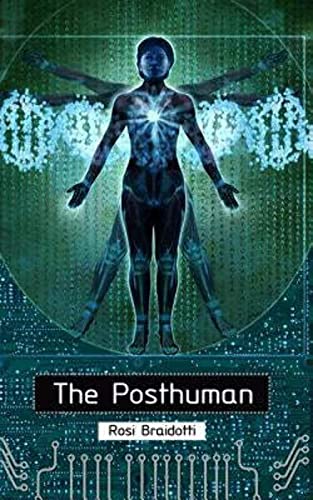
The Posthuman offers both an introduction and major contribution to contemporary debates on the posthuman. Digital 'second life', genetically modified food, advanced prosthetics, robotics and reproductive technologies are familiar facets of our globally linked and technologically mediated societies. This has blurred the traditional distinction between the human and its others, exposing the non-naturalistic structure of the human. The Posthuman starts by exploring the extent to which a post-humanist move displaces the traditional humanistic unity of the subject. Rather than perceiving this situation as a loss of cognitive and moral self-mastery, Braidotti argues that the posthuman helps us make sense of our flexible and multiple identities.
Braidotti then analyzes the escalating effects of post-anthropocentric thought, which encompass not only other species, but also the sustainability of our planet as a whole. Because contemporary market economies profit from the control and commodification of all that lives, they result in hybridization, erasing categorical distinctions between the human and other species, seeds, plants, animals and bacteria. These dislocations induced by globalized cultures and economies enable a critique of anthropocentrism, but how reliable are they as indicators of a sustainable future?
The Posthuman concludes by considering the implications of these shifts for the institutional practice of the humanities. Braidotti outlines new forms of cosmopolitan neo-humanism that emerge from the spectrum of post-colonial and race studies, as well as gender analysis and environmentalism. The challenge of the posthuman condition consists in seizing the opportunities for new social bonding and community building, while pursuing sustainability and empowerment.
Die Inhaltsangabe kann sich auf eine andere Ausgabe dieses Titels beziehen.
Über die Autorin bzw. den Autor
Rosi Braidotti is a distinguished university professor at Utrecht University and founding director of the Centre for the Humanities.
Von der hinteren Coverseite
This book offers an original and accessible introduction to the contemporary debates on the notion of the posthuman. It develops two lines of argument. First, contemporary market economies profit from the control and commodification of all forms of life. ‘Second Life', genetically modified food, advanced prosthetics, robotics and reproductive technologies are familiar facets of our globally linked and technologically mediated societies. This high degree of bio-technological development results in hybridization, erasing categorical distinctions between the human and other species, seeds, plants, animals and machines. The dislocations produced by posthuman cultures therefore make possible a critique of anthropocentrism. Post-anthropocentric politics, as exemplified by environmentalism, encompass not only other species but also the sustainability of our planet as a whole.
The second line of argument is concerned with the shape of contemporary philosophical debates about the human. Braidotti explores the extent to which a post-humanist perspective displaces the traditional unity and universality of the subject. Rather than perceiving this as a loss of cognitive self-mastery and ethical decency, she argues that the posthuman condition helps us make sense of, and find a new moral compass within, our globalised culture. The book concludes by providing some intellectual and ethical guidelines for the new and alternative modes of non-anthropocentric thinking that are emerging today. The challenge of the posthuman condition is to seize the opportunities for creating new forms of social bonding and community building, while pursuing economic sustainability, empowerment and social justice.
„Über diesen Titel“ kann sich auf eine andere Ausgabe dieses Titels beziehen.
Weitere beliebte Ausgaben desselben Titels

Suchergebnisse für The Posthuman

Beispielbild für diese ISBN
The Posthuman
Anbieter: New Legacy Books, Annandale, NJ, USA
Verkäuferbewertung 5 von 5 Sternen

paperback. Zustand: Good. Fast shipping and order satisfaction guaranteed. A portion of your purchase benefits Non-Profit Organizations, First Aid and Fire Stations! Bestandsnummer des Verkäufers mon0000151716
Gebraucht kaufen
EUR 10,68
EUR 2,16 Versand
Versand innerhalb von USA
Versand innerhalb von USA
Anzahl: 1 verfügbar
Foto des Verkäufers
The Posthuman
Anbieter: Books for Life, LAUREL, MD, USA
Verkäuferbewertung 5 von 5 Sternen
Zustand: acceptable. Book is in acceptable condition. May have shelf wear, edge wear, and spine wear, but a very readable copy. May not come with supplemental materials if applicable. Does not include original dustcover jacket. Possibly Ex Library Copy. Bestandsnummer des Verkäufers LFM.950C
Gebraucht kaufen
EUR 13,10
Versand gratis
Versand innerhalb von USA
Versand innerhalb von USA
Anzahl: 1 verfügbar
Beispielbild für diese ISBN
The Posthuman
Anbieter: Better World Books, Mishawaka, IN, USA
Verkäuferbewertung 5 von 5 Sternen
Zustand: Good. Pages intact with minimal writing/highlighting. The binding may be loose and creased. Dust jackets/supplements are not included. Stock photo provided. Product includes identifying sticker. Better World Books: Buy Books. Do Good. Bestandsnummer des Verkäufers 15400108-20
Gebraucht kaufen
EUR 15,28
Versand gratis
Versand innerhalb von USA
Versand innerhalb von USA
Anzahl: 1 verfügbar
Beispielbild für diese ISBN
The Posthuman
Anbieter: Webster's Bookstore Cafe, Inc., State College, PA, USA
Verkäuferbewertung 5 von 5 Sternen
paperback. Zustand: Very Good. Contains marginalia and/or underlining. Light shelf wear. Else clean and tight. Bestandsnummer des Verkäufers mon0000155321
Gebraucht kaufen
EUR 10,70
EUR 4,76 Versand
Versand innerhalb von USA
Versand innerhalb von USA
Anzahl: 1 verfügbar
Beispielbild für diese ISBN
The Posthuman
Anbieter: Hilltop Book Shop, Marshfield, WI, USA
Verkäuferbewertung 5 von 5 Sternen
paperback. Zustand: Good. Paperback in good condition. Light edge wear to covers and pages. Pages will have some underlining and marking, but they remain in good reading condition. Binding is secure. No spine creases. Our feedback says it all! Feel confident when you order from Hilltop Book Shop. Bestandsnummer des Verkäufers 2505110004
Gebraucht kaufen
EUR 11,60
EUR 4,55 Versand
Versand innerhalb von USA
Versand innerhalb von USA
Anzahl: 1 verfügbar
Beispielbild für diese ISBN
The Posthuman
Anbieter: Benjamin Books, Ottawa, ON, Kanada
Verkäuferbewertung 5 von 5 Sternen
Soft cover. Zustand: Very Good. Bestandsnummer des Verkäufers 023181
Gebraucht kaufen
EUR 8,92
EUR 10,40 Versand
Versand von Kanada nach USA
Versand von Kanada nach USA
Anzahl: 1 verfügbar
Beispielbild für diese ISBN
The Posthuman [Paperback] Braidotti, Rosi
Anbieter: Turtlerun Mercantile, Albuquerque, NM, USA
Verkäuferbewertung 1 von 5 Sternen

Paperback. Zustand: New. Bestandsnummer des Verkäufers OK-EJT7-SUYR
Neu kaufen
EUR 13,38
EUR 6,32 Versand
Versand innerhalb von USA
Versand innerhalb von USA
Anzahl: 1 verfügbar
Foto des Verkäufers
Posthuman
Anbieter: GreatBookPrices, Columbia, MD, USA
Verkäuferbewertung 5 von 5 Sternen
Zustand: New. Bestandsnummer des Verkäufers 6027648-n
Neu kaufen
EUR 17,53
EUR 2,29 Versand
Versand innerhalb von USA
Versand innerhalb von USA
Anzahl: Mehr als 20 verfügbar
Beispielbild für diese ISBN
The Posthuman Format: Paperback
Anbieter: INDOO, Avenel, NJ, USA
Verkäuferbewertung 5 von 5 Sternen
Zustand: New. Bestandsnummer des Verkäufers 9780745641584
Neu kaufen
EUR 19,86
Versand gratis
Versand innerhalb von USA
Versand innerhalb von USA
Anzahl: Mehr als 20 verfügbar
Foto des Verkäufers
Posthuman
Anbieter: GreatBookPrices, Columbia, MD, USA
Verkäuferbewertung 5 von 5 Sternen
Zustand: As New. Unread book in perfect condition. Bestandsnummer des Verkäufers 6027648
Gebraucht kaufen
EUR 17,87
EUR 2,29 Versand
Versand innerhalb von USA
Versand innerhalb von USA
Anzahl: Mehr als 20 verfügbar