
Verwandte Artikel zu Transformations of Late Antiquity: Essays for Peter...
Inhaltsangabe
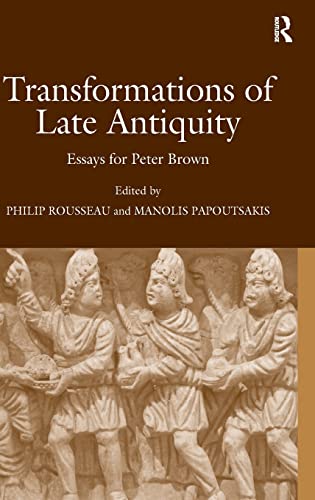
'Transformation' is a notion apposite to essays in honour of Peter Brown. 'The transformation of the classical heritage' is a theme to which he has devoted, and continues to devote, much energy. All the essays here in some way explore this notion of transformation; the late antique ability to turn the past to new uses, and to set its wealth of principle and insight to work in new settings.
Die Inhaltsangabe kann sich auf eine andere Ausgabe dieses Titels beziehen.
Über die Autorin bzw. den Autor
Philip Rousseau is Andrew W. Mellon Professor of Early Christian Studies, and Director, Center for the Study of Early Christianity, Catholic University of America, USA; Manolis Papoutsakis is Lecturer in Syriac and Classical Armenian Languages and Literatures, Princeton University, USA.
„Über diesen Titel“ kann sich auf eine andere Ausgabe dieses Titels beziehen.
Weitere beliebte Ausgaben desselben Titels

Suchergebnisse für Transformations of Late Antiquity: Essays for Peter...

Beispielbild für diese ISBN
Transformations of Late Antiquity: Essays for Peter Brown
Anbieter: Books Do Furnish A Room, Durham, NC, USA
Verkäuferbewertung 4 von 5 Sternen

Hardcover. Zustand: Very Good. Zustand des Schutzumschlags: Good. 1st Edition. Pages unmarked. Dust jacket glossy. Small tear in DJ at upper edge of spine. Binding square & firm. Book. Bestandsnummer des Verkäufers 126079
Gebraucht kaufen
EUR 49,01
EUR 4,67 Versand
Versand innerhalb von USA
Versand innerhalb von USA
Anzahl: 1 verfügbar
Beispielbild für diese ISBN
Transformations of Late Antiquity: Essays for Peter Brown
Anbieter: Windows Booksellers, Eugene, OR, USA
Verkäuferbewertung 5 von 5 Sternen

Hardcover with dust jacket. Book and DJ are in very good condition 345 pp. Bestandsnummer des Verkäufers 743167
Gebraucht kaufen
EUR 49,01
EUR 6,49 Versand
Versand innerhalb von USA
Versand innerhalb von USA
Anzahl: 1 verfügbar
Beispielbild für diese ISBN
The Transformation Of Late Antiquity
Anbieter: Basi6 International, Irving, TX, USA
Verkäuferbewertung 5 von 5 Sternen
Zustand: Brand New. New. US edition. Expediting shipping for all USA and Europe orders excluding PO Box. Excellent Customer Service. Bestandsnummer des Verkäufers ABEOCT25-114549
Foto des Verkäufers
Transformations of Late Antiquity: Essays for Peter Brown.
Anbieter: Borkert, Schwarz und Zerfaß GbR, Berlin, Deutschland
Verkäuferbewertung 5 von 5 Sternen
Zustand: Sehr gut. XX, 345 p. From the library of Prof. Wolfgang Haase, long-time editor of ANRW and the International Journal of the Classical Tradition (IJCT). - Slightly rubbed and bleached jacket, otherwise very good and clean. / Leicht beriebener und verblichener Umschlag, sonst sehr gut und sauber. - Contents: Contributors -- Editors' Preface: Philip Rousseau and Manolis Papoutsakis -- Abbreviations -- Peter Brown: Select Bibliography -- I Between Marrou and Brown: Transformations of Late Antique Christianity by Robert Markus -- II Old and New Rome: Roman Studies in Sixth-Century Constantinople by Averil Cameron -- III Old and New Rome in the Late Antique Near East by Glen Bowersock -- IV Regulations for an Association of Artisans from the Late Sasanian or Early Arab Period by Sebastian Brock -- V Crosses, Icons and the Image of Christ in Edessa: The Place of Iconophobia in the Christian-Muslim Controversies of Early Islamic Times by Sidney H. Griffith -- VI Alle origini della tradizionepagana su Costantino e il senato romano by Rita Lizzi Testa -- VII Four Funerals and a Wedding: This World and the Next in Fourth-Century Rome by John Matthews -- VIII Les reticences de saint Augustin face aux legendes hagiographiques dapres la lettre Divjak 29* by Claude Lepelley -- IX Language, Morality and Cult: Augustine and Varro by Philip Rousseau -- X A World Full of Stories by Charlotte Roueche -- XI Safe-Conducts to Heaven: Holy Men, Mediation and the Role of Writing byClaudia Rapp -- XII Book Burning as Purification by Judith Herrin -- XIII Gregorio Magno e i Libri dei Re by Lellia Cracco Ruggini e Giorgio Cracco -- XIV The Late Antique Origins of the Lunatic Asylum? by Peregrine Horden -- XV Family Men: Masculinity and Philosophy in Late Antiquity by Susanna Elm -- XVI Radegundis peccatrix: Authorizations of Virginity in Late Antique Gaul by Julia M.H. Smith -- XVII Gemistus Plethon and Platonic Political Philosophy by Peter Garnsey. - This book focuses on a simple dynamic: the taking in hand of a heritage, the variety of changes induced within it, and the handing on of that legacy to new generations, Our contributors suggest, from different standpoints, that this dynamic represented the essence oflate antiquity. As Roman society, and the societies by which it was immediately bounded, continued to develop, through to the late sixth and early seventh centuries, the interplay between what needed to be treasured and what needed to be explored became increasingly self-conscious, versatile, and enriched. By the time formerly alien peoples had established their post-classical polities, and Islam began to stir in the East, the novelties were more clearly seen, if not always welcomed; and one witnesses a stronger will to maintain the momentum of change, of a forward reach. At the same time, those in a position to play now the role of heirs were well able to appreciate how suited to their needs the Roman past might be, but how, by taking it up in their turn, they were more securely defined and yet more creatively advantaged. Transformation is a notion apposite to essays in honour of Peter Brown. The transformation of the classical heritage is a theme to which he has devoted, and continues to devote, much energy. All the essays here in some way explore this notion of transformation; the late antique ability to turn the past to new uses, and to set its wealth of principle and insight to work in new settings. To begin, there is the very notion of what it meant to be Roman, and how that notion changed. Subsequent chapters suggest ways in which fundamental characteristics of Roman society were given new form, not least under the impact of a Christian polity. Augustine, naturally, finds his place; and here the emphasis is on the unfettered stance that he took in the face of more broadly held convictions - on miracles, for example, and the errors of the pagan past. The discussion then moves on to examine the very definition of what a Christian culture should look like - in the eyes, for example, of Gregor)' the Great, who stands in so many respects, at least in the western narrative, as the doorkeeper to a later age. The final chapters carry us into worlds that are more clearly post-classical, clearly medieval and Byzantine. ISBN 9780754665533 Sprache: Englisch Gewicht in Gramm: 99 Original cloth with dust jacket. Bestandsnummer des Verkäufers 1170919
Gebraucht kaufen
EUR 98,00
EUR 40,00 Versand
Versand von Deutschland nach USA
Versand von Deutschland nach USA
Anzahl: 1 verfügbar
Beispielbild für diese ISBN
Transformations of Late Antiquity
Anbieter: Basi6 International, Irving, TX, USA
Verkäuferbewertung 5 von 5 Sternen
Zustand: Brand New. New. Delivery takes 25-30 days. Excellent Customer Service. Bestandsnummer des Verkäufers POD-543418
Neu kaufen
EUR 149,33
Versand gratis
Versand innerhalb von USA
Versand innerhalb von USA
Anzahl: Mehr als 20 verfügbar
Beispielbild für diese ISBN
Transformations of Late Antiquity.Essays for Peter Brown
Verlag:
Ashgate Publisher, U.K., 2009
ISBN 10: 0754665534
ISBN 13: 9780754665533
Gebraucht
Hardcover
Anbieter: Luigi De Bei, PREGANZIOL, TV, Italien
Verkäuferbewertung 2 von 5 Sternen

Hardback. Zustand: As New. Zustand des Schutzumschlags: As New. Imprint: Ashgate Illustrations: Includes 1 b&w illustration Published: February 2009 Format: 234 x 156 mm Extent: 366 pages Binding: Hardback ISBN: 978-0-7546-6553-3 Imprint: Ashgate Illustrations: Includes 1 b&w illustration Published: February 2009 Format: 234 x 156 mm Extent: 366 pages Binding: Hardback ISBN: 978-0-7546-6553-3 Price : Euro 98,00.- BL Reference: 937'.09 LoC Control No: 2008016618 Print friendly information sheet Send to a friend Edited by Philip Rousseau, Catholic University of America, USA and Manolis Papoutsakis, Princeton University, USA This book focuses on a simple dynamic: the taking in hand of a heritage, the variety of changes induced within it, and the handing on of that legacy to new generations. Our contributors suggest, from different standpoints, that this dynamic represented the essence of 'late antiquity'. As Roman society, and the societies by which it was immediately bounded, continued to develop, through to the late sixth and early seventh centuries, the interplay between what needed to be treasured and what needed to be explored became increasingly self-conscious, versatile, and enriched. By the time formerly alien peoples had established their 'post-classical' polities, and Islam began to stir in the East, the novelties were more clearly seen, if not always welcomed; and one witnesses a stronger will to maintain the momentum of change, of a forward reach. At the same time, those in a position to play now the role of heirs were well able to appreciate how suited to their needs the 'Roman' past might be, but how, by taking it up in their turn, they were more securely defined and yet more creatively advantaged. 'Transformation' is a notion apposite to essays in honour of Peter Brown. 'The transformation of the classical heritage' is a theme to which he has devoted, and continues to devote, much energy. All the essays here in some way explore this notion of transformation; the late antique ability to turn the past to new uses, and to set its wealth of principle and insight to work in new settings. To begin, there is the very notion of what it meant to be 'Roman', and how that notion changed. Subsequent chapters suggest ways in which fundamental characteristics of Roman society were given new form, not least under the impact of a Christian polity. Augustine, naturally, finds his place; and here the emphasis is on the unfettered stance that he took in the face of more broadly held convictions ¿ on miracles, for example, and the errors of the pagan past. The discussion then moves on to examine the very definition of what a Christian culture should look like ¿ in the eyes, for example, of Gregory the Great, who stands in so many respects, at least in the western narrative, as the doorkeeper to a later age. The final chapters carry us into worlds that are more clearly post-classical, clearly medieval and Byzantine. Contents: Preface, Philip Rousseau and Manolis Papoutsakis; Peter Brown: select bilbliography; Between Marrou and Brown: transformations of late antique Christianity, Robert Markus; Old and new Rome: Roman studies in 6th-century Constantinople, Averil Cameron; Old and new Rome in late antique Near East, Glen Bowersock; Regulations for an association of artisans from the late Sasanian or early Arab period, Sebastian Brock; Crosses, icons and the image of Christ in Edessa: the place of early iconophobia in the Christian-Muslim controversies of early Islamic times, Sidney H. Griffith; Alle origini della tradizione pagana su Constantino e il senato romano, Rita Lizzi Testa; Four funerals and a wedding: this world and the next in 4th-century Rome, John Matthews; Les réticences de saint Augustin face aux légends hagiographiques d'après la lettre Divjak 29*, Claude Lepelley; Language, morality and cult: Augustine and Varro, Philip Rousseau; A world full of stories, Charlotte Roueché; Safe-conducts to heaven: holy men, mediation and the role of writing, Claudia Rapp; Book burning as purificatio. Bestandsnummer des Verkäufers 006105
Gebraucht kaufen
EUR 125,00
EUR 37,00 Versand
Versand von Italien nach USA
Versand von Italien nach USA
Anzahl: 1 verfügbar
Beispielbild für diese ISBN
Transformations of Late Antiquity: Essays for Peter Brown
Print-on-DemandAnbieter: THE SAINT BOOKSTORE, Southport, Vereinigtes Königreich
Verkäuferbewertung 5 von 5 Sternen
Hardback. Zustand: New. This item is printed on demand. New copy - Usually dispatched within 5-9 working days. Bestandsnummer des Verkäufers C9780754665533
Neu kaufen
EUR 173,60
EUR 18,38 Versand
Versand von Vereinigtes Königreich nach USA
Versand von Vereinigtes Königreich nach USA
Anzahl: 5 verfügbar
Foto des Verkäufers
Transformations of Late Antiquity : Essays for Peter Brown
Anbieter: GreatBookPricesUK, Woodford Green, Vereinigtes Königreich
Verkäuferbewertung 5 von 5 Sternen
Zustand: As New. Unread book in perfect condition. Bestandsnummer des Verkäufers 5722697
Gebraucht kaufen
EUR 179,10
EUR 17,51 Versand
Versand von Vereinigtes Königreich nach USA
Versand von Vereinigtes Königreich nach USA
Anzahl: Mehr als 20 verfügbar
Foto des Verkäufers
Transformations of Late Antiquity : Essays for Peter Brown
Anbieter: GreatBookPrices, Columbia, MD, USA
Verkäuferbewertung 5 von 5 Sternen
Zustand: New. Bestandsnummer des Verkäufers 5722697-n
Neu kaufen
EUR 194,84
EUR 2,28 Versand
Versand innerhalb von USA
Versand innerhalb von USA
Anzahl: Mehr als 20 verfügbar
Beispielbild für diese ISBN
Transformations of Late Antiquity
Anbieter: Mispah books, Redhill, SURRE, Vereinigtes Königreich
Verkäuferbewertung 4 von 5 Sternen
Hardcover. Zustand: Like New. LIKE NEW. SHIPS FROM MULTIPLE LOCATIONS. book. Bestandsnummer des Verkäufers ERICA77307546655346
Gebraucht kaufen
EUR 169,50
EUR 29,18 Versand
Versand von Vereinigtes Königreich nach USA
Versand von Vereinigtes Königreich nach USA
Anzahl: 1 verfügbar